Latest AI News

Bring Back Purpose-Built Machine Learning, Says Zoho’s AI Research Head
The answer to token maxing is not less AI. It is purpose-built machine learning and right-sized models, says Zoho’s Ramprakash Ramamoorthy.
View

AI Infrastructure and Sovereignty Imperative: Why the Stakes Have Never Been Higher
A new report from the World Economic Forum and Bain & Company states that the infrastructure decisions governments make today will shape their economic competitiveness for decades to come.
View
DuckDuckGo Installs Rise 30% Amid Backlash Over Google AI Search
DuckDuckGo says users are increasingly turning to its AI-free search options and privacy-centric browsing experience.
View

OpenAI Codex Usage in India Jumps 27x in 2026
India is now among the top five countries globally for Codex adoption and among the top ten for engagement.
View

Employees Want to Share Data for AI-Powered Healthcare, But They’re Nervous About It
To what extent are employees willing to share their personal health data, and who gets access to it?
View

Anthropic Surpasses OpenAI With $965 Bn Valuation, Launches Claude Opus 4.8
Anthropic reported that its annualised revenue run rate crossed $47 billion.
View
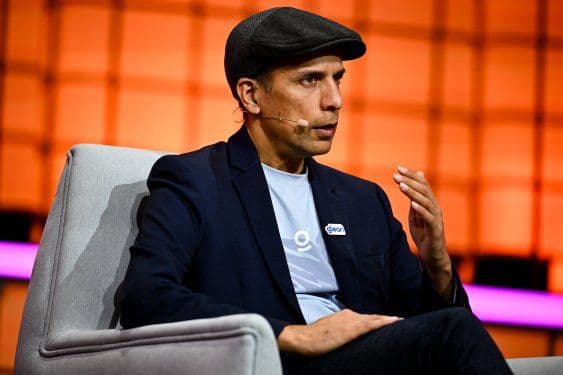
Glean’s top line crosses $300M as AI budget-cutting becomes its major selling point
Glean, a company often described as the Google for enterprise, said it has reached $300 million in annual recurring revenue (ARR), a three-fold increase from the $100 million milestone it reached just 15 months ago. While many AI startups are growing at a blistering pace, Glean’s progress is particularly remarkable. After years of essentially being the only player in the category, the seven-year-old startup is accelerating its growth as tech giants enter the enterprise AI search market with rival products. “The first four or five years of our existence, we had no competition,” Glean CEO Arvind Jain told TechCrunch. “Given how important search is to make AI work in the enterprise, every single company in the world wants to be in this space.” Tech heavyweights building Glean-like tools include Google, Microsoft, OpenAI, Anthropic, Salesforce, and Atlassian. Jain maintains that there’s value in being a first mover in the space, but that it’s also equally important to offer a better product. What Glean does better than its competition, according to Jain, comes down to the deep understanding that its AI tools have of customers’ business needs. Glean’s AI achievesthis knowledge— a concept captured by the new, popular term “context graph” — by connecting to and learning from enterprises’ internal software systems. Jain claims that Glean’s context graph also helps enterprises cut AI computing costs. “If you connect your AI to Glean, it gives you all the information that you need to do your work, and that results in AI consuming far fewer tokens compared to if you unleash AI onto your systems directly,” Jain said. That’s because with Glean, AI ends up performing fewer operations, he added. At a time when many companies are blowing through their AI budgets, those token cost savings have become a major selling point for the company. “One of the things you know our customers really like about Glean is the fact that we can reduce your AI bill significantly,” he said. The company, which was last valued at $7.2 billion when it raised a $150 million Series F last June, offers various pricing structures to its customers, which include Databricks, Reddit, Pinterest, and Samsung. According to Jain, Glean offers both a consumption-based model, where clients pay per use, and a hybrid model that combines a fixed monthly fee for active users with separate usage fees for model consumption. Glean is definitely not the first company to do this, but it’s worth pointing out that the company’s $300 million milestone cannot be fully described as traditional ARR, because a consumption model by definition doesn’t have a strictly recurring component. Pure consumption pricing models depend on fluctuating user activity rather than predictable subscription renewals, therefore a portion of Glean’s topline is more accurately described as anannualized revenue run rate. Glean did not immediately respond to a request for comment; this post will be updated if the company replies.
View

Just like gold and oil, we’ll soon be able to trade AI token futures
The most important market of the future could be in LLM tokens — and financial groups are rushing to build new infrastructure for them. China’s Shanghai Futures Exchange is currently designing a derivatives market for AI tokens, Reutersreports. The news comes as major derivatives exchangeCME Groupand theIntercontinental Exchange(the owner of the NYSE) have separately said they’re working on launching futures contracts for renting GPUs. GPU markets are still maturing, but given the wide range of companies using, selling, and renting GPUs, there’s a robust market for spot prices on GPU rental, typically charged by the hour. According to data fromAI Mining Co., which tracks daily GPU rental pricing across 28 marketplaces and cloud providers, median prices for Nvidia H100 GPUs ranged from $1.40 to $4.27 per hour across 13 marketplaces, while the average price for H200 GPUs were between $2.34 and $5 per hour across 10 marketplaces. And just over the past seven days, average H100 prices ranged from $2.79 to $3.33. But while mature markets exist for GPUs, there’s less infrastructure around tokens themselves — the fundamental building blocks of contemporary AI models. Enterprise plans for major AI companies are commonly denominated in tokens: OpenAI, for example, charges $5 per million input tokens, and $30 per million output tokens if you want to use the API for its latest GPT-5.5 model. Even cloud providers are increasingly offering the opportunity to charge per token, as inAmazon’s Bedrock system. The effort comes amid an unprecedented buildout of AI infrastructure. Cloud service providers, private equity firms, and infrastructure players alike have poured hundreds of billions into building data centers, anticipating that demand for GPUs and compute will continue to rise. An emerging crop of globalneocloud companiesis also vying for a piece of this demand. Some of these new entrants are specializing, focusing on inference, while others are competing with cloud giants like Oracle, AWS, and Google Cloud to offer their services to AI companies. By targeting AI tokens, the Shanghai exchange’s derivative product would be tied to how AI companies price their services, giving businesses, investors, and data center operators a way to hedge against the cost of compute.
View

Anthropic raises $65 billion, nears $1T valuation ahead of IPO
Anthropic has snagged$65 billion in fundingat a $965 billion post-money valuation in its latest funding round, marking what could be the AI startup’s last private fundraising before debuting on the public markets. The Series H round was co-led by Altimeter Capital, Dragoneer, Greenoaks, Sequoia Capital, Capital Group, Coatue, D1 Capital Partners, and others. Institutional investors including Baillie Gifford, Blackstone, Brookfield, D.E. Shaw Ventures, DST Global, and Fidelity Management & Research participated in the round. Strategic infrastructure partners, including Samsung, SK Hynix, and Micron, also joined the round. A portion of the round — $15 billion — is also made up of previously committed investments from hyperscalers, including$5 billion from Amazonannounced in April. TechCrunchreported last monththat Anthropic was close to closing a $50 billion round, with investors clamoring to get on the cap table. One institutional investor had even pledged as much as $5 billion just to get a meeting with Anthropic CFO Krishna Rao. Anthropic plans to use the new funds to “advance our safety and interpretability research, expand compute to meet growing demand for Claude, and scale the products and partnerships our customers rely on.” The round comes the same day that Anthropic released its newClaude Opus 4.8 model,which touts better capabilities in agentic tasks, advanced coding, and focus on honesty and self-correction. The AI startup is alsoreportedlyplanning to more widely launch models that are on par with its powerful cybersecurity model Mythos, which it has only released in limited fashion due to potential safety concerns. The company has seen increased growth since its last funding round, particularly among enterprise customers that rely on Claude Code. The company said its run rate revenue crossed $47 billion earlier this month, andThe Wall Street Journal recently reportedthat the startup expects a 130% revenue surge to bring it to its first operating profit. “Claude’s latest advancements have driven large-scale adoption among the world’s most demanding organizations. This momentum positions Anthropic to lead the next phase of AI innovation and capture the enormous opportunity ahead,” said Brad Gerstner, founder and CEO of Altimeter Capital. Anthropic has been in tight competition with OpenAI for fundraising and user growth in advance of their respective IPOs. OpenAI last raised awhopping $122 billion roundin March at an $852 billion post-money valuation. Elon Musk’s SpaceX — whichmerged with xAIearlier this year — is targeting a $2 trillion valuation in itspending IPO, and seeking to raise more than $75 billion.
View
Asana acquires no-code agent-builder StackAI
Asana has acquired the workflow automation company StackAI for $75 million, part of a larger effort to position itself as an AI-native workplace platform. StackAI’s founders, Tony Rosinol and Bernard Aceituno, will join Asana as part of the acquisition. Asana framed the acquisition as part of its broader AI pivot, in which it seeks to build its platform into “the operating system for human-agent teams.” The announcement was announced Thursday afternoon to coincide with Asana’s earnings and investor call. Builtas an AI workflow-automation system, StackAI designs agents to operate within existing business systems, pulling in data from systems like Salesforce, Slack, and Gsuite. Part of Y Combinator’s Winter ’23 cohort, the company has faced fierce competition from automation tools like Zapier as well as AI labs like OpenAI and Anthropic. StackAI had raised just under $20 million, according to PitchBook data, with most of it coming in a recent $16 million Series A round.That roundincluded funding from Gradient, Epaklon Capital, Lobby VC, LifeX Ventures, and Vercel CEO Guillermo Rauch. While users are likely most familiar with Asana’s work management system, the company has released a number of AI-oriented products in recent years, most notably the AI Studio agent builder andAI Teammatesseries of pre-built automations. While equivalent tools are available from major labs, Asana sees its deep integration into existing corporate workflows as a key advantage, allowing it to distill context and training data that would otherwise be unavailable. Asana has struggled on public markets during the AI era, losing more than half its market cap value since the introduction of ChatGPT — a spiral that grew worse with the departure of founder Dustin Moskovitz as CEO last March. But revenue has continued to grow steadily, and the new leadership is confident that its human-agent products will enable it to rebound. “This acquisition accelerates our roadmap and takes us into the next phase of human-agent work,” said CEO Dan Rogers in a statement. “We’re already seeing real momentum with AI Teammates and AI Studio … StackAI now lets them go further, agentifying the most complex business processes end-to-end.”
View

The internet is being rebuilt for machines
Cloud infrastructure has long been designed around humans who search, click, scroll, and stream in a steady and predictable fashion. AI agents behave differently. They can unleash a swell of activity, spinning up multiple sub-agents that query hundreds of databases, search documents, and call APIs in seconds and then disappear as quickly as they arrived. Under that premise, Amazon is redesigning a core piece of its cloud infrastructure. On Thursday, AWSlaunched its next generation of OpenSearch Serverless, a fully managed search and vector database — essentially a system for storing and retrieving information at scale — that’s designed specifically for agentic workloads. AWS says the new system can instantly scale up when agents trigger tasks and scale back down to zero when idle. The launch reflects a growing realization across the tech industry: infrastructure originally designed for a human-driven internet doesn’t work as well in a world increasingly populated by agents. While AI agents still represent a relatively small portion of internet activity, machine-generated traffic is already significant, and poised to grow. Cloudflare says bots accounted for 31% of overall HTTP traffic over the last six months. AI crawlers, search engines, and assistants made up roughly a quarter of all bot requests during that period. “Non-human traffic will exceed human traffic sometime in the first half of 2027,” saidLi Yi Ohlsen, senior product manager at Cloudflare, to TechCrunch. At Google’s I/O developer conference last week, the company said users will be able to startdelegating tasksto AI systems, like researching purchases, booking travel, browsing the web, and interacting with apps. But the buck doesn’t stop at consumer-focused AI agents. Enterprises are increasingly deploying agents internally and for their customers, creating new kinds of machine-generated traffic behind the scenes. As a result, cloud providers and infrastructure companies have been reckoning with how to adapt systems built for humans to a world of agents that are constantly and autonomously retrieving information, invoking tools, and generating machine-to-machine traffic. That’s where AWS’s new OpenSearch Serverless comes in. “The timing is straightforward. Agents are moving from experimentation into production, and they create traffic patterns that previous infrastructure simply wasn’t designed for,” Tia White, general manager for Amazon OpenSearch Service, told TechCrunch. “They spike without warning, they go idle without notice, and enterprise needs search that keeps up without paying for empty or idle compute.” The key technical change with this new generation is that it decouples compute from storage, allowing compute to scale up in seconds to accommodate agent traffic bursts and to scale down to zero, so customers pay $0 when agents are idle. “Previously, even in our prior Serverless version, you had to have at least one instance operational and running because storage and compute were coupled,” White said. “You couldn’t just automatically spin up [compute] at the rate you needed to, so you always had idle compute reserved for your workload, whether you were using it or not.” Think of it like always paying for a parking space, even when you’re not using it. With AWS’s upgraded Serverless, it’s more like paying for a metered parking spot. At launch, OpenSearch Serverless will integrate natively with AI development platforms like Vercel and Kiro, so developers can deploy production-ready search and vector backends for agents without managing infrastructure. The shift is emerging across the cloud industry. Databricks andSnowflakeare repositioning themselves as AI memory and retrieval systems for enterprise data. Microsoft has rolled outupdates to Azuredesigned to handle AI agent bursts and share memory between agents. Cloudflare, in a similar vein to Amazon,last month introducedinfrastructure aimed at giving agents persistent environments and instant scalability. The more companies deploy AI agents, the more pressure there will be to redesign infrastructure around machine-generated workloads, which in turn could make agents cheaper and easier to deploy at larger scales. Loading the player…
View
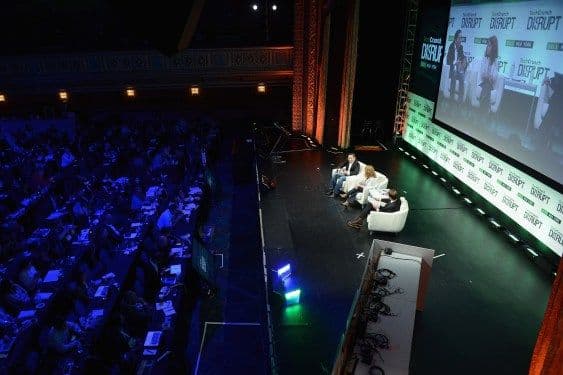
2 days left: Lock in ticket savings of up to $410 to TechCrunch Disrupt 2026
Early Bird pricing ends tomorrow, May 29, at 11:59 p.m. PT. After that, prices forTechCrunch Disrupt 2026go up. Miss this, and you’ll be paying more for the same access to one of the most anticipated tech epicenters of the year.Register nowto secure discounts of up to $410 on your pass, or up to 30% ongroup passes. If you want to raise capital, hire top talent, launch your startup, or discover your next portfolio company, missingDisruptfrom October 13–15 at San Francisco’s Moscone West is not an option. Here’s what you’ll gain by attending: Founder Pass: Accelerate growth with the right insights, tools, and connections. Meet investors aligned with your startup. Investor Pass: Discover standout startups and expand your portfolio with curated access. Use matchmaking tools to make every conversation count. This window to the lowest ticket rates of the year is closing at 11:59 p.m. PT tomorrow, May 29.Register nowto secure your ticket with up to a $410 discount. Or save up to 30% withcommunity passesof 4+.
View