Latest AI News
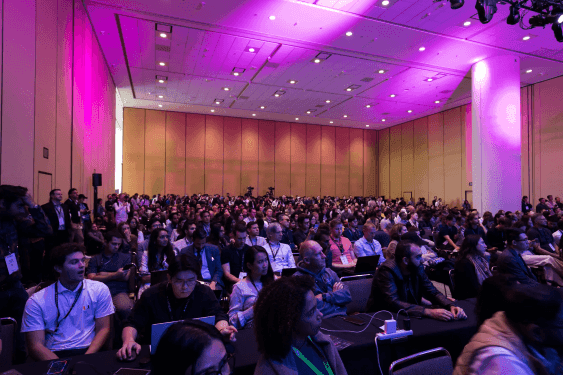
Final 24 hours to save up to $410 on your TechCrunch Disrupt 2026 ticket
This is it. The countdown is almost over. You now have until tonight at 11:59 p.m. PT to lock in Early Bird savings of up to $410 forTechCrunch Disrupt 2026before prices increase. If Disrupt has been on your must-attend list, this is your final chance to secure the lowest available rates before the next price jump hits. Once the deadline passes, so do the savings. Register nowand join 10,000+ founders, investors, operators, and innovators at Moscone West in San Francisco from October 13–15 for three days packed with networking, startup discovery, and conversations shaping the future of tech.Bring a plus-one at 50%, orbring a group to get an up to 30% discount. TechCrunch Disrupt is where startup momentum accelerates. The event brings together the people actively building, funding, and scaling what’s next across AI, fintech, SaaS, climate, cybersecurity, consumer tech, and beyond. Attendees come to Disrupt for: With300+ exhibiting startups,Startup Battlefield 200, curated networking experiences, and multiple stages of programming, Disrupt is built to help attendees make meaningful connections and real business progress. Disrupt is designed for founders raising capital, investors sourcing opportunities, operators scaling companies, and innovators looking for an edge. Whether you’re launching your next startup, growing your network, or tracking the future of technology, Disrupt puts you in the room with the people driving the industry forward. Every year, Disrupt brings together hundreds of influential voices across startups and venture capital. Past speakers have included leaders from the companies and firms shaping the future of AI, enterprise software, fintech, consumer tech, and more. This year will deliver the same high-caliber experience, with200+ sessionsacross six industry-focused stages, plus roundtables and breakouts covering scaling, AI, fintech, infrastructure, robotics, and emerging technologies.Explore the growing agendato see the latest sessions and speaker announcements. Speakers include: Early Bird savings of up to $410 end tonight at 11:59 p.m. PT. After that, ticket prices increase. Register nowto secure your TechCrunch Disrupt 2026 pass at a low rate before the deadline expires. Bringing more than just you?Save 50% on a second ticket, or up to30% on community passes.
View
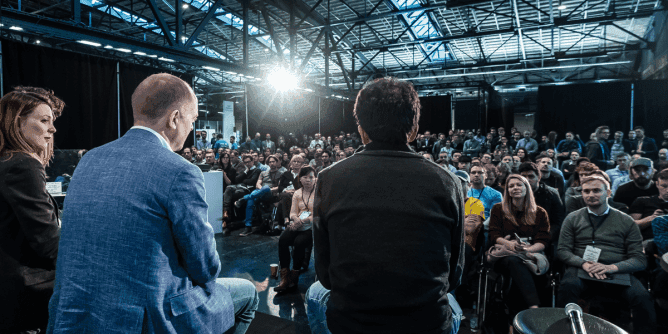
Today is the last day to apply to speak at TechCrunch Disrupt 2026
TechCrunch Disrupt 2026returns October 13–15 to Moscone West in San Francisco — and applications to speak are open for just a few more hours. We’re inviting founders, investors, operators, and technology experts to apply for a chance to take the stage at one of the most influential tech events of the year. More than 10,000 startup and VC leaders will gather at Disrupt 2026 to explore what’s next in AI, scaling, fintech, infrastructure, robotics, and the future of innovation. Applications close tonight at 11:59 p.m. PT.Apply nowto share your expertise and help shape the conversations defining the tech industry. We’re looking for high-impact speakers to lead one of two session types: Breakout Sessions: A 30-minute talk (up to 4 speakers, including a moderator) with a 20-minute audience Q&A. Capacity: 100 attendees. Roundtables: A 30-minute speaker-led group discussion, designed for up to 40 participants. No slides or AV — just insight and conversation. Each application will be carefully reviewed by our editorial team. Finalists will be selected for the Audience Choice vote — where TechCrunch readers choose which sessions make it to the Disrupt Stage. Learn more about speaking onDisrupt’s Call for Content page. If you have actionable insights, real-world experience, and a desire to contribute meaningfully to the tech ecosystem, we want to hear from you.Submit your application before today’s deadline.
View
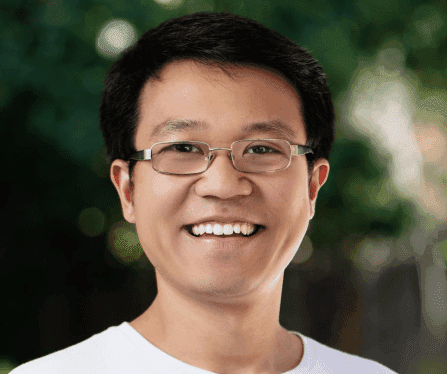
Cognition’s Scott Wu says AI coding agents shouldn’t replace humans
Cognition CEO Scott Wu made headlines again this week when his two-year-old AI coding agent startupraised $1 billion at a $26 billion valuation. Cognition is the maker of Devin, one of the first and, arguably, most successful AI coding agents. Devin, the CEO says, “naturally owns tasks end to end.” In fact, in theblog postannouncing that raise, Cognition laid out a vision where “we are shifting to a world of self-driving software development.” So, could Devin replace, say, a mid-level L4 programmer? Yes, and no, Wu told TechCrunch. “We’ve never thought about it as replacing humans. I know it’s like a scenario, folks have said these things. It has never been our view.” In this wild year of 2026 when every dayanother tech CEO announces layoffsin the name of supplanting workers with AI, Wu says he especially doesn’t want coders to lose their jobs. “We are all programmers ourselves,” he explained. “I started coding when I was nine.” In fact, Wu has been called one of the most accomplished child competitive programmers of all time, according toa recent profile in Colossus. As a second-grader, Wu won a nationwide math competition for seventh-graders, which launched a childhood filled with math and programming tournaments. It also introduced him to other wunderkinds who went on to launch other AI tech startups, like Scale AI founder Alexandr Wang. So, he tells TechCrunch, the idea was never to make human programmers obsolete. “When we started building Devin, it’s kind of a funny thing,” he mused, “but we really just thought of it as: this is your buddy who helps you build more.” In fact, he showed off a little stuffed animal holding a computer, his own Devin teddy bear of sorts, that he keeps on his desk. He thinks of it as a physical symbol of the Devin AI coder “This is my buddy that helps you build more.” Wu doesn’t want AI agents to take the joy of programming away from people. “It’s not a secret, most software engineers love building software, right?” he said. “If you ask them why, what they’ll basically tell you is, ‘Well, it’s like I get to build things from nothing. I can make my whole idea that I have, and turn it into a product. I can turn it into an experience.’” Just like visual development environments abstracted software creation away from machine instructions, he views agents as another layer of abstraction between envisioning a software product and producing it. Yet, Cognition says that Devin’s role in its own company is to ship nearly all the software. The company says that 89% of code committed by its engineers was committed by Devin, and the rest by local agents in Windsurf, the AI coding competitorit acquired last year. Wu explains that his agent’s role is largely to do the kinds of long-tail maintenance tasks that many programmers don’t like to do anyway: bringing old software up to date; moving applications off one platform and onto another. Agents will free programmers “from a lot of the toil, and so they can do much more of the creation side,” he promises. So Wu bristles at the idea of Devin “replacing” human coders. While he says it can work independently, it works at “somewhere between a junior and a mid-level engineer” depending on the task at hand. As for the concept of self-driving software, where the agent learns and improves itself so that one day it will work at higher levels (“recursive” is the latest buzzword in AI these days), Wu says. “I think we are in for a wild ride.” He sees agents entering other fields where they will learn tasks, from customer service to medicine, but hopes the goal will be to augment human workers in those areas, too. “Code and software has been the first to move, but we’ll see this happen in all these other industries,” he predicts. “One thing that’s been clear to us since the beginning is, it should always be up to the human what to do … you really see this in software engineering, but I think it’s true in all these other professions too.”
View

After Nvidia’s $20B not-aqui-hire, AI chip startup Groq reportedly raising $650M
Groq is looking to raise $650 million in new funding from existing investors, sources tellAxios, as it leans into its inference neocloud business that relies on its homegrown AI chip and systems. In December, Groq struck one of those not-an-acquisition agreements with Nvidia fora reported $20 billionwhich involved the departure of some top-level senior Groq employees to the chip giant and the licensing of Groq’s hardware technology to Nvidia. That deal was good news for the startup’s investors who got paid out in cash with what would have been Nvidia’s largest purchase, if the deal was a full-acquisition, Axios reports. Now these investors have been asked to pony up and back the company’s plans to grow its inference cloud business, which lets developers and enterprises host their inference hungry apps. Inference is the processing that happens after an AI prompt and is currently a much bigger need in the AI world than model training. The new direction is led right now by Groq’s interim CEO and CFO, Adam Winter and Matt Eng, respectively. In some ways, the $650 million in funding is guaranteed. Axios reports that Groq’s backers Disruptive and Infinitium have agreed to fill the round should other existing investors not want their pro-rata shares.
View
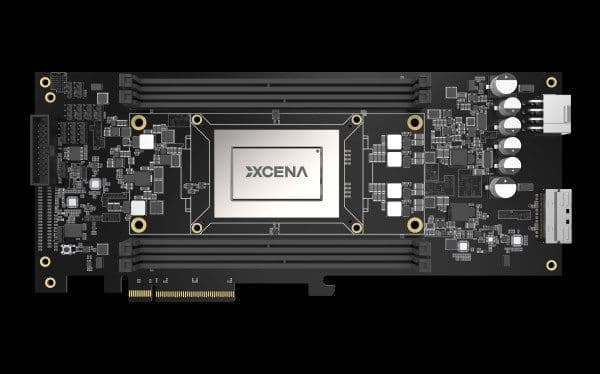
This chip startup just raised $135M on a bet that AI’s biggest bottleneck isn’t compute — it’s memory
Every time you ask ChatGPT a question, your request triggers a data relay race. Information leaves memory, passes through a CPU for preprocessing, travels to a GPU for heavy computation, and then makes its way back — and that entire journey repeats for every single word the AI generates. The bottleneck is structural — it means routing through some of the most expensive and power-intensive chips in the industry on every single request. That inefficiency is exactly whatXCENA, a startup with offices in South Korea and the U.S., is trying to solve. The four-year-old startup has designed a chip that places compute capabilities much closer to DRAM — the fast, short-term memory chips that store data a processor is actively using — allowing routine data operations to be handled near memory, without the costly round trips between CPUs, GPUs, and memory. If it works at scale, the implications for AI infrastructure costs could be significant, which largely explains investor enthusiasm around the country. Indeed, XCENA just raised $135 million in a Series B at a valuation of $570 million, bringing its total raised to $185 million. XCENA CEO Jin Kim co-founded the startup in 2022 alongside CTO Dohun Kim and CPO Harry Juhyun Kim, all veterans of Samsung and SK Hynix, the memory giants that supply chips powering Nvidia’s GPUs. “CPUs and GPUs have both gotten smarter over the decades. Memory never did. XCENA wants to change that,” Kim said in an interview with TechCrunch. “The recent rise in memory prices and related stocks points to a broader shift in AI infrastructure toward memory-centric architectures,” he added. (This month, the three companies that dominate the global memory chip market — Samsung, SK Hynix, and Micron — each crossed a trillion-dollar valuation for the first time.) XCENA is betting its business on the thesis that “inference isn’t just a compute problem; it’s increasingly a memory scaling problem,” said Kim. XCENA’s chip, the MX1, connects to the CPU through CXL (Compute Express Link) — essentially a dedicated express lane between the processor and memory — processing data before it ever needs to leave the memory module. It brings compute to the data, not the other way around. The company claims that what used to require 10 servers could potentially run on just one. “While GPUs excel at matrix multiplication — the heavy math behind AI model training — much of the surrounding data orchestration, including preprocessing, KV cache management (the system that stores prior conversation context so a model doesn’t have to reprocess it), and data caching, still runs on CPUs. Our chip handles those tasks directly within the memory module itself,” Kim said. Demand for memory solutions has surged since the second half of last year, and the company believes the timing is working in its favor. Conversations with several global memory vendors are in early stages, though Kim declined to name them. The company’s ideal customers are hyperscalers spending tens of billions a year on AI infrastructure, where even a small gain in memory efficiency can mean hundreds of millions in savings. The MX1 is still a prototype. Mass production chips are scheduled to roll off Samsung’s foundry lines by the end of 2026, with the company expecting to generate revenue starting in 2027. While neural processing unit (NPU) makers are competing to challenge Nvidia for training workloads, XCENA is targeting the memory-intensive layer that sits underneath all of it. XCENA’s closest rivals include Astera Labs and Marvell, both Nasdaq-listed companies working on next-generation memory connectivity. Marvell is a large, established player already working in the same space, Kim said, adding that the differentiator comes down to intellectual property. “We have thousands of cores,” Kim said. Based on public specs, Marvell’s approach relies on a handful of general-purpose cores by comparison. Those cores are built on RISC-V — an open source chip design blueprint — and optimized specifically for data processing,with each core deliberately kept small and efficient. Beyond the cores themselves, XCENA designs its own internal memory hierarchy, interconnect bus, and DRAM controller — a level of vertical integration that most chip companies, including larger rivals, typically outsource. Seoul-based VC firms Altinum and IMM Investment co-led the Series B round, along with Corstone Asia and existing investors SBI Investment and Mirae Asset Capital. The company, which has more than 90 staff across offices in Pangyo, a tech hub outside Seoul, and Sunnyvale, is also in conversations with international investors about additional funding.
View
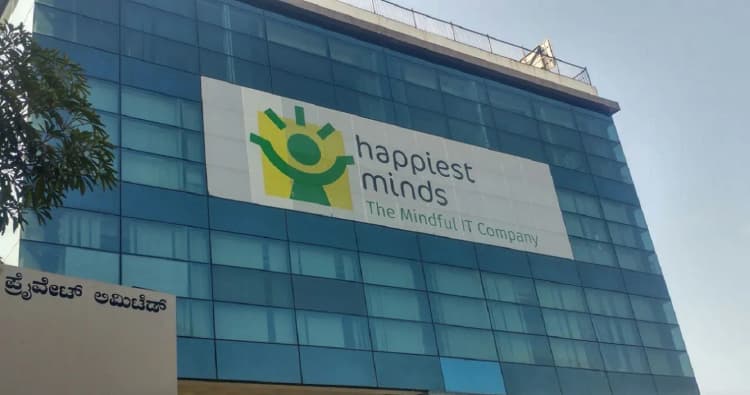
Happiest Minds Sees AI-led Momentum in FY26, But Can it Escape the Mid-Tier Trap?
Happiest Minds’ AI business is growing rapidly, but the real challenge is whether the mid-tier IT firm can scale fast enough to stand out in an increasingly crowded AI services market.
View

Sarvam AI Begins Hiring for New San Francisco Office
The hiring drive comes amid reports that Sarvam is in talks to raise up to $300 million at a valuation of up to $1.5 billion.
View

Enterprise AI Has a Massive Problem, and It’s Not the Models
Organisations recognise that good data quality and governance are crucial for sustainable AI in personalised customer engagement.
View

PwC India, Leah Expand Alliance to Drive Enterprise AI Adoption
Partnership focuses on agentic AI deployments across finance, HR, procurement and enterprise ops.
View

Airbus, BMW Partner with Mistral AI as Europe Pushes for AI Independence
The partnerships highlight Europe’s push to build trusted AI US alternatives for aerospace, defence and automotive industries.
View

CHiPS Deploys Salesforce MuleSoft for Chhattisgarh’s Digital Dwaar Platform
CHiPS plans to expand API integrations across state departments and applications, strengthen governance and security frameworks.
View

Bring Back Purpose-Built Machine Learning, Says Zoho’s AI Research Head
The answer to token maxing is not less AI. It is purpose-built machine learning and right-sized models, says Zoho’s Ramprakash Ramamoorthy.
View