Latest AI News

Sources: Anthropic could raise a new $50B round at a valuation of $900B
Investor interest in Anthropic has reached a feverish pitch. The maker of the Claude AI assistant has received multiple preemptive offers to raise fresh capital of around $50 billion at a valuation in the $850 billion to $900 billion range, according to half a dozen sources familiar with the matter.BloombergandBusiness Insiderreported earlier this month that Anthropic received multiple preemptive bids at an $800 billion valuation, but at that time, the company had not yet committed to a fundraise. Sources say, however, that Anthropic is finding it difficult to resist the pressure to secure more funding in what could be its final round of private fundraising before a potential IPO. The company is expected to make a definitive decision on the round and its valuation at a board meeting in May, one person told TechCrunch. The round is expected to total $40 billion to $50 billion, according to people familiar with the company. But investor demand appears to be much higher given the company’s rapid growth, which shows no sign of slowing. Investors are clamoring to get into the round. One institutional investor prepared to commit as much as $5 billion has yet to secure a meeting with Anthropic CFO Krishna Rao, according to a source. Anthropic announced this month that its annual revenue run rate has surpassed $30 billion, which is a dramatic increase from roughly $9 billion at the end of 2025. The company’s run rate is currently closer to $40 billion, one of the people with knowledge of the company’s financials said. Antrhopic declined to comment. A large portion of that revenue is driven by Anthropic’s AI coding capabilities, specifically through its Claude Code and Cowork platforms. Many investors believe the company is only scratching the surface of its potential, given the massive opportunity to expand its offerings into new industries, including finance, life sciences, and healthcare. Anthropic raised its last round at a$380 billionvaluation in February. If the company proceeds with another fundraise at the terms described by TechCrunch’s sources, it will not only more than double its valuation but also match or surpass that of its chief rival. Also in February, OpenAI closed a record-breaking $122 billion round at an $852 billion post-money valuation.
View
Amazon’s cloud business is surging — and so is its capital spending
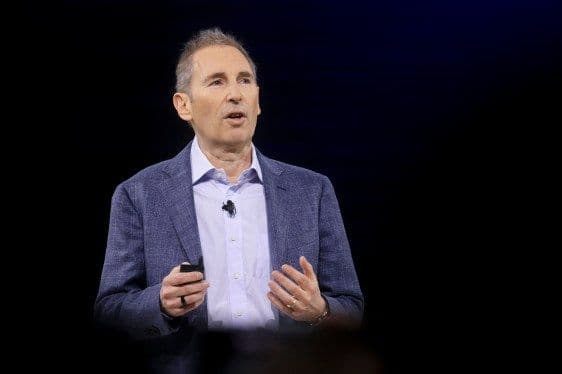
Amazon was one of several tech giants that on Wednesday beat Wall Street’s first-quarter earnings expectations, offering more financial evidence that the AI boom continues to reward companies that supply the picks and shovels. Amazon’s cloud business is the latest example. Amazon Web Services, buoyed by itsrole in fueling the AI boom, saw its net sales increase 28% year-over-year, climbing to $37.6 billion, the company said Wednesday. It was the fastest growth rate for AWS in 15 quarters, Amazon president and CEO Andy Jassy said during the company’s earnings call. Jassy attributed AWS’ success to its role in providing compute to the AI industry. “It’s very unusual for business to grow this fast on a base this large. The last time we saw growth at this clip, AWS was roughly half the size,” Jassy said. “We’ve never seen a technology grow as rapidly as AI. Amazon is already a leader, and companies continue to choose AWS for AI.” Jassy compared the business unit’s growth to the aughts. “To put our growth in perspective, three years after AWS launched, it had a $58 million revenue run rate. [During] the first three years of this AI wave, AWS’s AI revenue run rate is over $15 billion — nearly 260 times larger.” Even as money flows into its cloud business, Amazon is also sinking increasingly large gobs of capital into building out the infrastructure that supports that cloud. Jassy said on Wednesday that capital expenditure growth would continue in the near term. “The faster AWS grows, the more short-term capex we’ll spend,” he said. “AWS has to lay out cash for land, power, buildings, chips, servers, and networking gear, in advance of when we can monetize it.” Jassy positioned these investments as short-term cash burn for a long-term payoff, noting that these capital expenditures fund assets like data centers that last more than 30 years or chips, servers, and networking gear that have a useful life for five to six years. Jassy did attempt to quell investor fears that the e-commerce giant was spending too much on infrastructure. He also provided more than a hint at how that kind of spending would affect free cash flow. “In times of very high growth like now — where the capex growth meaningfully outpaces the revenue growth — the early years, free cash flow is challenged,” he said. Amazon’s first-quarter earnings report reflects the pull on free cash flow. T he company reported that free cash flow decreased to $1.2 billion for the trailing twelve months, driven primarily by a year-over-year increaseof $59.3 billion in purchases of property and equipment — much of its related to AI. That’s a 95% drop from the $25.9 billion in free cash flow it had in the first quarter of 2025. “We’ve been through this cycle with the first big AWS growth wave, and like the results. We expect to feel similarly about this next wave with much larger potential downstream revenue and free cash flow,” he added. The e-commerce giant’soverall sales, meanwhile, rose 17% to $181.5 billion on a year-over-year basis. Sales grew 12% in North America and 19% throughout the rest of the world, the company reported.
View

Parallel Web Systems hits $2B valuation five months after its last big raise
Parallel Web Systems, the AI agent-tool startup founded by former Twitter CEO Parag Agrawal, has raised a $100 million Series B at a $2 billion valuation led by Sequoia. Existing investors Kleiner Perkins, Index Ventures, Khosla Ventures, First Round Capital, Spark Capital, and Terrain Capital also participated,the company said. This raise comes just five months after the startupannounced its $100 millionSeries A at a $740 million valuation led by Kleiner and Index, and brings the total capital it raised to $230 million. Parallel offers a suite of web search and research APIs specifically for AI agents and names customers such as Clay, Harvey, Notion, and Opendoor. It says its customers include banks and hedge funds (though it has not named them). The confidence of investors in Agrawal’s startup has to be particularly gratifying for him after his time at Twitter ended with a subsequent lawsuit. Elon Muskfamously fired himand all the top execs after he bought Twitter. Those execs, including Agrawal, sued, alleging that Musk failed to pay the $128 million in severance pay they believe they were owed. In October,Musk settled the casefor undisclosed terms. In addition to some big-name customers, Parallel tells TechCrunch it has over 100,000 developers using its products.
View

Is AI video just a prequel? Runway’s CEO thinks world models are next
AI-generated video has gone from novelty to creative tool almost overnight, and Runway has a front row seat to the shift. The New York-based company has raised close to $860 millionat a $5.3 billion valuation, and its models are going toe-to-toe with the most well-funded labs in the world, including Google and OpenAI. The technology goes way beyond making videos: Runway is now pushing into general world models with applications in gaming, robotics, and maybe something closer to general intelligence. On this episode of TechCrunch’s Equity podcast, host Rebecca Bellan sits down with Runway co-founder and CEO Cristóbal Valenzuela to talk about where video generation goes from here, and why Runway’s ambitions now reachwell beyond Hollywood. Listen to the full episode to hear about: Subscribe to Equity onYouTube,Apple Podcasts,Overcast,Spotifyand all the casts. You also can follow Equity onXandThreads, at @EquityPod.
View
OpenAI, Amazon Announce Multi-Year Strategic Partnership as Microsoft’s Exclusive Deal Ends
Hours after OpenAI and Microsoft revealed the amended non-exclusive partnership, the ChatGPT maker has started forging new partnerships. On Monday, the San Francisco-based artificial intelligence (AI) giant announced a multi-year strategic partnership with Amazon and its cloud division, Amazon Web Services (AWS). The multi-faceted deal brings the latest OpenAI AI models to AWS customers, allows the AI firm to source additional compute, and includes a massive financial investment from the Seattle-based e-commerce giant. Amazon has also hosted several OpenAI models on its Bedrock platform in a limited preview.
View

Meet Shapes, the app bringing humans and AI into the same group chats
Shapes, an app where humans and AI characters chat together in shared group conversations, is emerging from stealth with $8 million in seed funding. Think Discord, but with AI characters alongside humans. Founded in 2022, Shapes has more than 400,000 monthly active users. The app’s founders, Anushk Mittal and Noorie Dhingra, believe that Shapes can address issues around “AI Psychosis,” which refers to cases where prolonged interactions with AI chatbots or AI companions can cause individuals to develop delusions or paranoia. Instead of isolating people with one-on-one interactions with AI, Shapes allows people to connect with AI within their everyday interactions with real people. “Today, all of our conversations with AI are very private and one-on-one, but that’s not really how humans collaborate and communicate with each other,” Shapes CEO Mittal told TechCrunch in an interview. “Our lives run on group chats. That’s where we spend all of our time. That’s where we talk and communicate with each other. It’s just natural to bring in AI into those same conversations where AI has all of the context and is readily available to help you.” In the app, AI characters, called “Shapes,” are viewed as any other user and can interact in all the same ways humans can. They’re clearly labeled as “Shapes” for transparency, but they aren’t restricted. Users can create their own Shapes and set their personalities. The company says users have already created three million Shapes to add into group chats. Many Shapes are rooted in fandom, as the app serves as a way for fans to deep-dive on subculture and meet other fans. When users sign up for the app, they’re asked to choose their interests so the app can recommend a selection of group chats they might be interested in joining. While some may question the need for adding AI into group chats, Mittal and Dhingra believe one of the main reasons group chats die is that some participants don’t want to be the first person to send a message. Shapes solves this, as AI agents can initiate conversations and play a key role in keeping them going. Additionally, users don’t have to worry about not getting a response to their messages because Shapes will always acknowledge and respond to them. Unlike AI companions on other apps that need to be summoned, Shapes have free will and can decide when to message. It’s worth noting that although the popular chatbot ChatGPT already allows AI and humans to converse in group chats, those conversations operate differently from Shapes. For example, when you create a group chat in ChatGPT, it’s mostly for planning or brainstorming. On Shapes, however, it’s all about social, community-style interactions with AI characters that have various personalities. The startup is aware that not everyone will want to bring AI into their group conversations, which is why the app is designed for a specific type of online user. “Shapes is about human conversations,” Mittal said. “It’s more of a next-gen chat app than an AI app. The demographic is people who are obsessively online, who spend a lot of time online connecting and sharing. Those are the users who come in and they get an opportunity to obsess about their interests, and the AI acts as a facilitator in those conversations.” Shapes’ growth has been driven by word of mouth, Mittal says, with the app seeing a sixfold increase in users since the start of the year. The company also says that thousands of users spend two to four hours in the app each day. As for the new funding, the company plans to use it to accelerate development and user acquisition. The round was led by Lightspeed, with participation from AI Capital Partners, AI Grant, and angel investors.
View

Firestorm Labs raises $82M to take drone factories into the field
In a Pacific conflict, the nearest U.S. drone factory is thousands of miles away. Ships and planes carrying parts to the front lines would be vulnerable to attack. Defense startupFirestorm Labsthinks the answer is a drone factory that fits inside a shipping container. The company announced on Wednesday that it has raised $82 million in Series B funding led by Washington Harbour Partners with participation from NEA, Ondas, In-Q-Tel, Lockheed Martin, Booz Allen Ventures, Geodesic, Motley Fool Ventures, and others, bringing its total funding to $153 million. Firestorm didn’t start out as a factory company. It began as a drone maker, but when customers started asking to move production closer to the front lines, the founders saw an opportunity to pivot. Firestorm Labs CEO Dan Magy is a serial defense tech entrepreneur. His co-founders bring complementary backgrounds: Chad McCoy is a career special operations veteran, and CTO Ian Muceus holds over a dozen patents in 3D printing. The San Diego-based startup makes xCell, a containerized manufacturing platform that can print drone systems in under 24 hours. The drones aren’t locked into a single purpose. Depending on mission requirements, they can be configured for surveillance or electronic warfare, Magy told TechCrunch. When asked whether the platforms are capable of lethal operations, Magy confirmed they are. All platforms are delivered to uniformed Department of Defense operational commands, who deploy them in accordance with military doctrine. It’s not just startups like Firestorm taking notice. The Pentagon has made contested logistics — keeping weapons and supplies moving under fire — one of only six national critical technology areas. Firestorm generates revenue through hardware sales and government contracts across all branches of the U.S. military. The Air Force contract carries a $100 million ceiling, though only $27 million has been obligated so far. The technology has already seen real-world use. Currently, two xCell units are deployed domestically; one with the Air Force Research Laboratory in Rome, New York, and one with Air Force Special Operations Command in Florida, Magy said. Firestorm declined to specify which units in the Indo-Pacific are using xCell, though the company says the platform is operational in the region. Inside each xCell container sits an industrial-grade HP 3D printer that prints the body and shell of each drone. Under the deal, Firestorm holds a five-year global exclusive with HP to use its industrial 3D printing technology in mobile deployment units, Magy said. The weapons themselves are not 3D-printed and are added separately, according to Magy. The Army has also used xCell to print replacement parts for a Bradley Fighting Vehicle on-site, parts that would otherwise take months to procure, the CEO noted. The problem runs deeper than distance. Fixed manufacturing sites are themselves targets, a vulnerability Ukraine learned the hard way. And modern conflict moves fast. Lessons from Ukraine show drone designs can change within days, not months, Magy said. For Firestorm, the Indo-Pacific is the main event, where the company says the logistics challenges of modern conflict are hardest to solve. The startup aims for xCell to reach full operational deployment there, “ideally within the next two years,” Magy told TechCrunch.
View

More Gemini features are coming to Google TV
Googleannouncedon Wednesday a new wave of AI-powered features coming to Google TV, alongside a dedicated short-form video feed that brings YouTube Shorts directly to the home screen. At the center of this update are more Gemini capabilities. Within the Gemini tab, a “Create” button lets users experiment with generative AI tools Nano Banana and Veo. These are rolling out first on Gemini-enabled TCL TVs in the U.S., with broader device support expected later. Nano Banana, Google’s image-generation and editing model, lets users transform photos using simple voice prompts. Users can swap outfits, change backgrounds, or generate entirely new scenes. Google is positioning the feature as a shared, living-room experience, encouraging playful prompts like asking the AI to make “my dad wear a ridiculous outfit” to get a laugh from family and friends. Veo, on the other hand, allows users to create clips from scratch or animate still images by describing a scenario. For instance, “make my grandfather moonwalk in space.” Google Photos is also getting an upgrade on Google TV. With Gemini-powered search, users can quickly surface specific memories, like vacations or birthday parties, without digging through their entire library. Results are displayed in a browsable format, making it easy to view images full-screen or launch a slideshow. There’s also a new “Remix” feature that lets users apply artistic styles such as watercolor or oil painting to their photos. Meanwhile, “Dynamic Slideshows” introduces animated layouts, frames, and color treatments. Users can turn any Google Photos collection into a vivid, TV-ready slideshow by selecting Google Photos in the screensaver settings. Beyond AI tools, Google is also leaning into the growing popularity of short-form video. Coming soon, a new “Short videos for you” row will appear on the Google TV home screen, starting with content from YouTube Shorts. The move comes on the heels ofYouTuberecently introducing an option to hide Shorts on mobile, suggesting mixed user demand. Still, Google hints this could expand beyond Shorts in the future, potentially to other platforms.Instagramhas already expanded its TV app to Google TV devices in the U.S. earlier this year.
View
Google Photos uses AI to make the iconic closet from ‘Clueless’ a reality
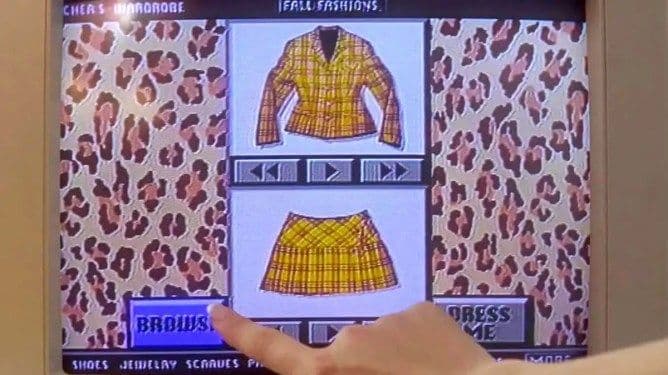
Google Photos on Wednesdayannounceda new AI-powered feature that will soon turn photos of your clothes into a digital closet where you can create new outfit ideas, and even virtually try on your creations. Yes, the idea takes obvious inspiration from Cher’s iconic virtual wardrobe featured in the movie “Clueless,” where she could scroll through her various ensembles while deciding what to wear. Google says the new feature will leverage AI technology to automatically create a copy of your wardrobe that’s based on the pieces of clothing appearing in your Google Photos library. From the app, you’ll be able to filter items by category — like tops, bottoms, jewelry, and more — then mix and match them to create different outfits. The idea of a digital closet in “Clueless” was meant to highlight Cher’s life of privilege. As a result,the fashion industryand various startups have long sought to recreate the feeling of easy outfit creation. Google is betting that AI technology will make it possible for anyone to have access to a similar tool, one that could improve over time as AI advances. Those outfit ideas can either be shared with friends or saved to a digital moodboard, where you could save ideas for different occasions, like travel, events, date nights, work, and more. In addition, another feature will let you virtually try on items to preview the looks. The feature is not yet live, but Google says it will roll out to Google Photos on Android later this summer, followed by iOS, where it will be found under “Collections.” It will compete with existing apps likeAcloset,Combyne,Pureple,Wearing, and others. The company didn’t go into detail about how the AI works, but notes it will recognize the clothing and accessories featured in your library to create its individual snapshots. Of course, while the AI may be able to pull images from well-lit, full-body photos, we imagine you would get better results by taking the time to photograph your clothes yourself, much as Cher had.
View

Karnataka Borrows the Swiss Playbook to Turn Quantum Labs into Products
Karnataka looks to replicate Switzerland’s research-to-market model as it builds Q-City and expands its quantum ecosystem.
View

Maharashtra Approves AI Policy 2026 With ₹10,000 Crore Investment, Targets 1.5 Lakh Jobs
Around two lakh youth will be trained in AI technologies to create a workforce aligned with emerging industry demand.
View

Anthropic’s Claude Can Now Complete Creative Tasks in Adobe, Blender and Autodesk
Anthropic appears to be focusing on design and creativity-focused tasks. After releasing Claude Design, a new design and visual output-focused artificial intelligence (AI) tool last week, the company is now releasing a set of new connectors to allow its chatbot to perform complex creativity tasks in third-party platforms. These connectors were developed in partnership with several software brands, including Adobe, Autodesk, Blender, and more. The San Francisco-based AI firm also highlighted several ways users will be able to use Claude for tasks requiring creativity and imagination.
View