Latest AI News
Google Search as you know it is over
The era of the “ten blue links” is officially over. At its Google I/O conference on Tuesday, Google unveiled an AI-powered overhaul of Search centered around a reimagined “intelligent search box” — what the company describes as the biggest change to this entry point to the web since the search box debuted more than 25 years ago. Instead of returning a simple list of links, Google Search will drop users into AI-powered interactive experiences at times. Google is also introducing tools that can dispatch “information agents” to gather information on a user’s behalf, along with tools that let users build personalized mini apps tailored to their needs. Loading the player… The resulting experience will no longer look much like how people envision Google Search, which has long been defined by ranked links to websites that have the information you need. With the revamped Search experience, the new search box simply expands to accommodate longer, more conversational queries, rather than making you decide what type of search experience or mode you want to choose at the start of your query. It will also have a new AI-powered query suggestion system that goes beyond autocomplete to help people craft more complex and nuanced queries, Google says. Google’s AI Overviews will also allow users to ask follow-up questions in AI Mode, beginning Tuesday, the company noted. Google is also introducing agentic capabilities and AI-powered interactive features into the search experience. This means people will spend even less time clicking the traditional blue links that Google Search used to return. Starting this summer, people will be able to create, customize, and manage multiple new “information agents” within Google Search. These agents can work in the background 24/7 to track changes on the web and alert you to new information. For instance, you could have an agent track market movements based on customer parameters, Google suggests. While the underlying technology here is powered by AI, which makes it more capable, the idea itself is not a new one. In 2003, Google launchedGoogle Alerts, a change-detection service that emailed users when new web results matched their search terms. The web was smaller and more manageable then, of course, so this became a part of many information workers’ tool sets. (That service still existsin some form but is no longer the way most web users go about acquiring new information.) Information-gathering agents are an evolution of Google Alerts. Beyond spotting changes, they can make sense of them, too. “You could send an alert to track market movements in a particular sector with very specific parameters, and the agent will map out a monitoring plan for you, including the tools and the data it needs to access — like our real-time finance data,” Google’s head of Search, Liz Reid, explained in a press briefing. “And it will then keep track of those changes and let you know when the conditions are met, and provide a synthesized update with links and information you can dive into further,” she added. This shift means that “searching the web” will increasingly be performed by AI agents rather than humans. Instead, people will focus more on acting on the information those agents provide instead of manually clicking links. Links will become an afterthought with the coming changes to the Search results experience, which builds on Google’s earlier launches of AI search features, like its short summaries known as AI Overviews and its conversational search, AI Mode. AI Overviews are now used by more than 2.5 billion monthly users; meanwhile, its conversational search mode, launched last year, now tops 1 billion monthly users. (ChatGPT, for comparison, has900 million weekly active users, as of earlier this year. This suggests that ChatGPT is now seeing more frequent engagement, with users coming back repeatedly throughout the week, while Google has more total unique people touching its AI features over the course of a month.) Now, thanks to a combination of Gemini andGoogle Antigravity, the company’s agentic development platform, Search results will begin to look more like interactive web pages. “Search can build custom experiences just for your individual questions, from dynamic layouts, interactive visuals to persistent and stateful project spaces that you can return to again and again,” says Reid. One of the ways Google is integrating these new capabilities is with “generative UI” (user interface), where it builds custom widgets and visualizations on the fly in answer to users’ search questions. You can imagine, for example, how a question about black holes in space could lead to an interactive visual that brings the concept to life, Reid said, adding that users can then ask follow-up questions and see Google respond with brand-new visuals in real time. Google says the new system was built in partnership with the Google DeepMind team and uses Gemini Flash 3.5. It will roll out to everyone who uses Google, free of charge, this summer. In addition, Google will allow users to tap into Antigravity to build their own customizable, stateful experiences — think “mini apps” — directly in Search using natural-language commands. Again, this isn’t so much about information retrieval as it is about action. For instance, you could build a meal-planning app using information from your own calendar to help you decide what to prep and when to eat, or a fitness app created for your specific goals. Combined, these changes will likely further decimate Google referrals to publishers, which have already been suffering from declining referrals due to AI Overviews. This has put some ad-dependent media operations out of business, and now things will likely get worse. There’s little time left for publishers to adapt. The new search box is arriving this week, and generative UI is arriving this summer. Both are free. The mini-app-building feature and information agents will roll out first to Google AI Pro and Ultra subscribers this summer. But Google’s long-term plan is to make its AI technology more broadly accessible, including its personal AI agent Spark, which will eventually be free, as will many of the AI features. “Part of the reason we focus on delivering frontier models — highly capable, but also very efficient, fast, and at a lower price — is because we want to bring it to as many people as possible, and so I think that’s an area where we will shine,” Google CEO Sundar Pichai said in a press briefing ahead of I/O.
View
With Gemini 3.5 Flash, Google bets its next AI wave on agents, not chatbots
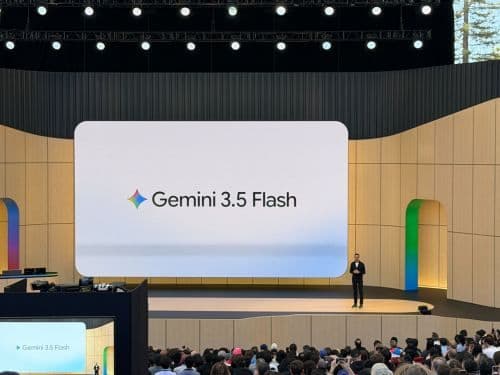
Google launched on Tuesday Gemini 3.5 Flash, a new AI model that the company says is its strongest yet for coding and autonomous AI agents. The model, which was introduced at the company’s annual Google I/O developer conference, can independently execute coding pipelines, manage research projects, and, in internal tests, build an operating system entirely from scratch. The release signals Google’s shift from pitching AI as a conversational tool to AI as an agentic tool. It’s not just answering questions, but planning, building, and iterating on real work with minimal human input. Koray Kavukcuoglu, DeepMind’s chief technologist, told reporters on Monday ahead of the public launch: “3.5 Flash offers an incredible combination of quality and low latency. It outperforms our latest frontier model, 3.1 Pro, on nearly all the benchmarks,” including coding, agentic tasks, and multimodal reasoning. He added that it is 4x faster than other frontier models, a speed that’s ideal for coding and agentic tasks, but that Google has “taken it to another level” by developing an optimized version of Flash that’s 12x faster with the same quality. That speed is central to Flash’s design for agentic work, where multiple AI agents run at the same time on long-running tasks, according to Kavukcuoglu. Onstage at I/O, Google engineer Varun Mohan, demonstrated agents spawning off to work on separate components before coming together to build a full operating system inside Antigravity, the company’s agentic development platform and IDE. Kavukcuoglu said Flash 3.5 was co-developed with Antigravity so that agents could have a “native environment where they can live, work, and execute.” At I/O, Google released Antigravity 2.0, a stand-alone desktop application designed around agent-first development. The gains are showing up beyond demos. Google says 3.5 Flash’s agentic capabilities are already creating impact among partners, like banks and fintechs automating multi-week workflows, or data science teams finding insights in complex data environments. The model can run autonomously for multiple hours, though Tulsee Doshi, Google’s senior director and head of product, said it will at times pause and ask for user input when it hits a decision point or permission issue that requires human judgment. When Google releases its forthcoming 3.5 Pro model, the two are designed to work in tandem. Doshi told TechCrunch that “3.5 Pro becomes your orchestrator, your planner, and then it actually can leverage Flash to be the various sub-agents. I think it really comes down to where do you really want that reasoning power, where you actually want that larger model that can really push on the reasoning side versus where do you have tasks that really do merit good brute force tool use capabilities?” Now, 3.5 Flash is the default model in the Gemini app and in AI Mode in Search globally. At I/O, Google also announced agentic capabilitiescoming to Search, letting users create, customize, and manage AI agents directly on the platform. The new model will also powerGemini Spark, Google’s new personal AI agent designed to run 24/7 to help consumers manage their digital life. Providing that level of AI capability for average consumers comes with scrutiny. Google is currently facing a lawsuit after a man nearly committed a mass casualty event and died by suicide following weeks of chatting with Gemini last year. The implications for harm only grow when making powerful autonomous agents available more broadly. Google says Gemini 3.5 has strengthened cyber and CBRN (chemical, biological, radiological, and nuclear) safeguards and is better calibrated to engage with sensitive questions rather than refuse them outright. Gemini 3.5 Flash is available generally today via Antigravity, the Gemini API, and Gemini Enterprise, as well as through the Gemini app and AI mode in Search.
View
Google’s Genie world model can now simulate real streets with Street View
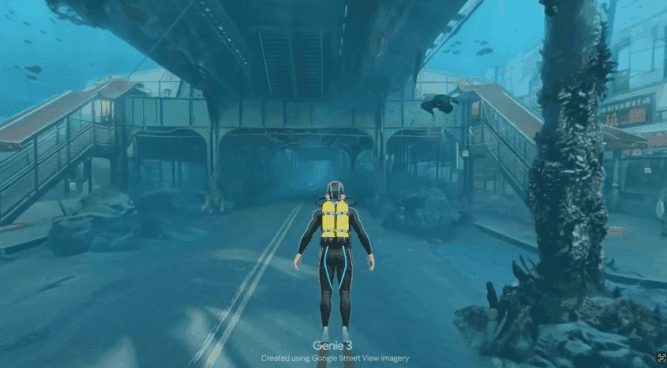
We’ve all pulled up Street View on Google Maps to show a friend what our childhood home looked like, or dropped that little person icon onto the streets of Paris to see if we booked a hotel in a cool neighborhood. Imagine being able to do that, but in a more immersive, interactive way that allows you to really simulate the street and its environs, and even do things like adjust the weather or see what it would look like in a “Day After Tomorrow” scenario. That’s one of the goals of Google’s latest integration. Starting today, Google DeepMind is connecting Street View toProject Genie,the company’s general-purpose world model that can generate diverse, interactive environments. The new feature launched during theGoogle I/O 2026developer conference. “It’s really powerful for both the agent [and robotics] use case and for humans to play with, and that’s always been the thesis of Genie,” Jack Parker-Holder, a research scientist on DeepMind’s open-endedness team, told TechCrunch. He gave the example of a new robot being deployed in London, which rarely sees the sun. Genie could, Parker-Holder says, simulate those scarce occasions when the sun glints off the Victorian housing, so the rays don’t shock the robot when it happens. Loading the player… “Simultaneously, you might say, ‘I’m going to New York City, but not this time of year,’” he continued. “‘It’s going to be snowy. I want to see what that block looks like in the snow.’” Google has been collecting Street View data for 20 years via cars with cameras and individuals strapped with “tracker backpacks.” The tech giant has collected north of 280 billion images across 110 countries and seven continents. “With Street View, we have imagery from a large quantity of the world,” Jack said. “You can imagine how potentially powerful it is to combine this rich source of real-world information and data with an ability to simulate worlds.” Google released its latest world modelGenie 3 for research previewlast August and opened up access to the tool to Google AI Ultra subscribers in the U.S. in January, allowing customers to create interactive game worlds from text prompts or images. The goal is to use Genie for educational experiences, gaming, and robotics training. Genie 3 is already helping to powerone of Waymo’s simulatorsto train its self-driving cars on “exceedingly rare events” like tornadoes or casual elephant encounters. Adding Street View data to that could help Waymo prepare to launch in more cities around the globe. Waymo has its own simulator that it relied on to scale to 11 U.S. cities and test its AI driver in several more. The difference with Genie, says Parker-Holder, is that those are all from the car’s point of view. Street View allows for not only simulating a world anchored to a real place, but also shifting the point of view to other types of agents, like a human or a robot. Google is launching Street View in Genie to some Ultra users in the United States starting today, with access rolling out at scale over time. Global Ultra users will gain access over the next few weeks, per the company. The researchers’ goal is to put this new capability into as many hands as possible, per Diego Rivas, a product manager at DeepMind. He cautioned that Street View in particular and Genie in general is still an experiment, so there’s much to improve upon in terms of accuracy. In the samples the Google team showed me — including an underwater simulation of a neighborhood I used to live in — the results are impressive and recognizable, but still video game quality rather than photorealistic. The models are also not yet physics-aware, meaning they don’t yet understand cause and effect. For example, in a simulation of a woman running through a snowy Joshua Tree, she ran right through cacti and bushes. Compare that to, say, Google’s image generator Nano Banana — which can now generate perfect text in infographics — or its video generator Veo — which understands that paper boats drift on water currents, smoke disperses into the air, and fabric drapes over forms. Physics isn’t hard-coded into these models; they learn it intuitively over time through passive observation, as a living being would. “I think for this kind of model, it’s maybe six to 12 months behind video in terms of the accuracy and quality, so I think it’s something we will solve,” Parker-Holder said. Jonathan Herbert, director of Google Maps who started on the Street View team as an intern 12 years ago, said that Genie can’t yet create a faithful reconstruction of a street. He thinks the real breakthrough is the AI’s spatial continuity. If you turn 360 degrees, the AI correctly remembers and simulates the environment behind you. From that point on, the model can build a new environment on top of that. “We have long thought about how we can build out the best and richest model of the world on top of Street View data,” Herbert said. “It’s definitely been an idea of ours to use Maps Data in new ways and for new kinds of AI research for a pretty long time.” Google Search as you know it is over Google updates Gemini app to take on ChatGPT and Claude Google introduces Gemini Spark, a 24/7 agent assistant with Gmail integration How to use Google’s new information agents
View

Google takes a page out of Meta’s book, announces new audio-powered smart glasses
Google is getting (back) into the smart glasses game. At Google I/O on Tuesday, the company announced a new partnership with Warby Parker and Gentle Monster to produce a new line of AI-powered glasses. The company says that the devices will be built to pair with Android and iOS devices and were designed in collaboration with Samsung. They will be available later this year, the company said. Google is calling the new devices “audio glasses,” in that users will be able to issue verbal commands to them and get things done via its ecosystem of apps and services, including Gemini. The user simply talks to their glasses (the demo shared on Tuesday involved a Googler ordering a coffee online by merely talking to the glasses), and the device, when synced, complies. Google has dabbled in smart glasses a number of times over the years. It notoriously launchedGoogle Glassyears ago, which ultimately helped spawn the derogatory term “glassholes.” The smart glasses space has changed a little bit since then, however. Lately, major companies — most notably Meta — and a small army of startups and smaller firms, have invested in the space.
View

Elon Musk said Sam Altman “stole” a non-profit — but the trial showed he had similar aims
The jury’s speedydecision to rejectElon Musk’s lawsuit against the other founders of OpenAI and Microsoft confirmed what we saw in the courtroom: Musk’s case was a weak one, in part because he waited so long to file it. Watching the closing arguments last week, OpenAI’s attorneys detailed point-by-point how the law was on their client’s side, while the plaintiffs team focused on Sam Altman’s apparentlack of credibilityand expressed disbelief that anyone would disagree with Musk’s accusations. The final effect was that, after the verdict, some found it hard to believe Musk had lost — including the man himself. In a post he later deleted, Musk called Judge Yvonne Gonzalez Rogers a “terrible activist Oakland judge,” then announced his plans to appeal, declaring “there is no question to anyone following the case in detail that Altman & Brockman did in fact enrich themselves by stealing a charity.” But Altman and Brockman weren’t the only figures who benefitted from OpenAI’s non-profit investments. As much as Musk and his legal team tried to make the trial about Altman, the proceedings revealed just as much about Musk himself. One incident that came out in court showed Musk benefiting from OpenAI in an uncomfortably familiar way. Greg Brockman testified that in 2017, Musk asked him to bring a team of OpenAI researchers down to Tesla’s headquarters to help with the autopilot team for a few weeks. “It was pretty clear that was not something we could say no to,” Brockman said. Brockman described taking a team of leading scientists, including Andrej Karpathy, Ilya Sutskever, and Scott Grey, to consult with the “demoralized” Tesla workers. They helped come up with ideas to improve the vehicle’s self-driving technology, with Sutskever telling the team that if they could find 10,000 images of a tricky corner case, they would be able to fix their software. Musk even asked Brockman to recommend employees to fire, which he declined to do. Another person familiar with the episode confirmed Brockman’s account, and said Tesla did not reimburse OpenAI for the time and effort of its employees. Musk’s family office, Excession, didn’t reply to a request for comment. The heart ofMusk’s caseis that Altman, Brockman and OpenAI committed a “breach of charitable trust” — that Musk donated funds for a specific charitable purpose, and his cofounders instead used them for something else. He also accuses them of “unjust enrichment” due stock and other benefits from OpenAI’s for-profit. In the case of the OpenAI scientists parachuting into Tesla, Musk’s charitable donations were intended to hire scientists focused on securing the benefits of AGI. Instead, he had them work for free at his for-profit company. Dorothy Lund, a Columbia Law School professor and the co-host of theBeyond Unprecedented podcast, told TechCrunch that this arrangement wouldn’t be legal, calling it “a bit rich for Musk to be suing for breach of a charitable trust, when he appears to have been redirecting assets in a way that was inconsistent with that mission.” It’s true that the self-driving work involved artificial intelligence, but witnesses for Musk emphasized that Tesla’s self-driving project was very different from OpenAI’s research agenda. That’s in part because Karpathy left OpenAI for Tesla shortly after this incident. OpenAI’s attorneys portrayed the departure as Musk violating his duty to the lab, where he was co-chair of the board, by recruiting one of its key researchers to his own company. The other fact that no doubt influenced the jury was the amount of time Muskspent tryingto gain sole control of a potential OpenAI for-profit affiliate in 2017. Musk deployed good cop, bad cop tactics in an attempt to convince his cofounders to let him have total control of OpenAI’s for-profit affiliate — giving them free Teslas, and threatening to withhold his donations. His efforts put his attorneys in a tricky spot, facing a need to convince the jury there was a significant difference between what Musk envisioned, and the for-profit that was ultimately created. They suggested a “small adjunct” for-profit would be permissible, though OpenAI’s witnesses showed non-profits with large commercial arms are common. Indeed, there’s a very plausible counter-factual where Musk took one of the offers his cofounders made to split their equity more evenly, and finds himself today as one of OpenAI’s largest shareholders — just not the controlling one. But several times during the trial, Musk’s associates testified that he refuses to invest in any business he could have sole control over. The failure of Musk’s claims because he filed them too late has been cited as a technicality, but the statute of limitations has substance behind it: People and businesses make important decisions and spend resources based on their understanding that what they are doing is permissible. If someone like Musk waits too long to sue, then the cost of unravelling all those decisions can outweigh a just reimbursement. No members of the jury have spoken about how they arrived at their verdict. However, they were asked to consider if, before Aug. 5, 2021, Muskshouldhave known that OpenAI was spending resources outside its mission or launching for-profit affiliate. The answer to that is clear: Musk himself was doing those things.
View
From teen hacker to Iron Dome researcher, this founder raised $28M to fight AI phishing
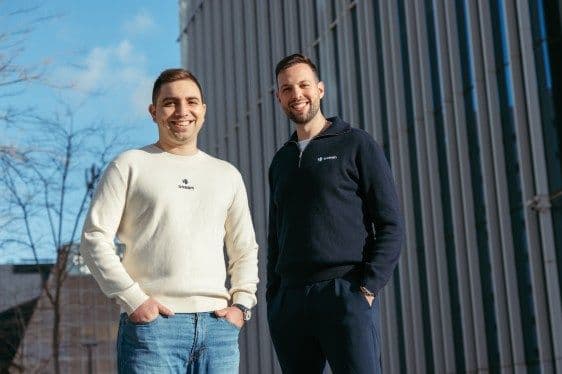
Shay Shwartz knows a lot about email phishing attacks. As a teenager, he made money as a hacker, but after getting caught at age 16, he realized he could use his cyber talents to prevent attacks rather than launch them. He went on to spend about a decade in top-tier cybersecurity roles, leading major projects for Israel’s elite defense and intelligence units, including work connected to the Iron Dome project, before joining Axis, the startup later acquired by HPE. All along, he had been itching to launch his own startup, and two years ago, he finally took the plunge. His startup Ocean, an agentic email security platform built to fight AI-powered attacks, just emerged from stealth mode with $28 million in total funding. The round was led by Lightspeed Venture Partners, with participation from Picture Capital and Cerca Partners. High-profile angel investors also joined the round, including Wiz co-founder and CEO Assaf Rappaport, as well as Yevgeny Dibrov and Nadir Izrael, the co-founders of Armis, which recently sold to ServiceNow for $7.75 billion. While established vendors like Proofpoint and Mimecast, along with newer players like Abnormal Security, help detect standard phishing attacks, Shwartz (pictured right next to co-founder and CTO Oran Moyal) argues that AI requires a different defensive approach. In the past, only highly sophisticated hackers could pull off spear-phishing due to the sheer amount of time, research, and manual labor needed to launch targeted attacks. “AI just made the entire process automatic, so the scale is much, much bigger now,” Shwartz told TechCrunch. “I can instruct LLM to go and understand exactly who you are, harvest large amount of public information, and create those phishing attacks very targeted against you.” Ocean claims its AI can thoroughly analyze the context of every incoming email to detect fraud and impersonation attempts. The startup is already reviewing billions of emails each month for customers including Kayak, Kingston Technology, and Headspace. Shwartz said Ocean built a small language model tailored to quickly analyze emails, understand the sender’s intent, and evaluate it against the user’s specific organizational context. “This is like having a guard in every door,” Shwartz said. “This is how we make the inbox a safe place with high hygiene.”
View
How to use Google’s new AI agents to go beyond your standard searches
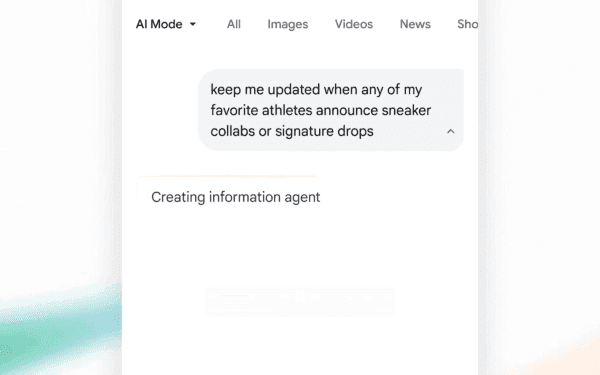
At theGoogle I/O 2026keynote, the tech giantrevealed new agentic capabilities in Search, where users can create, customize, and manage multiple AI agents to stay updated on topics of interest. The announcement is part of Google’s larger push toward agentic AI systems that can take initiative and assist with ongoing tasks instead of answering one question at a time. Unlike traditional search tools that respond only when prompted, Google’s information agents are designed to operate continuously in the background, 24/7, helping users stay informed about their interests without needing to repeatedly search for the same information every day. Instead of delivering a list of links, the agents can synthesize information from multiple sources, explain why something matters, compare perspectives, and provide actionable insights. In many ways, the agents represent the next evolution of Google Alerts, the notification service Google launched in 2003. However, these agents are designed to go beyond simple notifications. For instance, someone following the stock market could create an information agent focused on specific companies, share price, or economic trends. The agent could monitor market activity throughout the day, track breaking news, summarize earnings reports, alert users when major changes happen, and provide summaries and links to learn more. It could also help with everyday tasks, such as tracking flight prices for upcoming trips, monitoring sports teams and live events, following breaking news, keeping tabs on housing or job market trends, and tracking weather or traffic. To use the feature, users can open AI Mode in Search and enter a prompt. For example: “Keep me updated on nearby movie tickets for ‘The Mandalorian and Grogu.’” When something relevant appears, the Google app sends a push notification. You’ll also see your active tracked topics in your AI Mode history, where you can jump back in to manage, refine, or turn off an alert. Information agents will be available this summer. The company is first rolling them out to Google AI Pro and Ultra subscribers in the U.S., then to additional markets later on. In addition to these information agents, Google also introduced amajor redesign of Search, including what it describes as a reimagined “intelligent search box,” the company’s biggest change to Search in more than 25 years. The new interface is designed to support longer, more conversational queries. There’s also a new AI-powered query suggestion system that goes beyond traditional autocomplete, helping users craft nuanced and context-aware searches. Google Search as you know it is over Google updates Gemini app to take on ChatGPT and Claude Google introduces Gemini Spark, a 24/7 agent assistant with Gmail integration How to use Google’s new information agents
View
OpenAI co-founder Andrej Karpathy joins Anthropic’s pre-training team
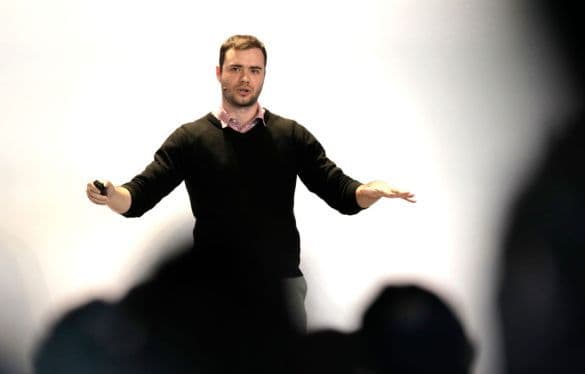
Andrej Karpathy, the AI researcher who co-founded and formerly worked at OpenAI and previously led AI at Tesla, has joined Anthropic. “I’ve joined Anthropic,” Karpathyposted on XTuesday. “I think the next few years at the frontier of LLMs will be especially formative. I am very excited to join the team here and get back to R&D.” Personal update: I've joined Anthropic. I think the next few years at the frontier of LLMs will be especially formative. I am very excited to join the team here and get back to R&D. I remain deeply passionate about education and plan to resume my work on it in time. Karpathy started this week at Anthropic, where he is working on pre-training under team lead Nick Joseph. Pre-training is responsible for the large-scale training runs that give Claude its core knowledge and capabilities, according to the company. It’s also one of the most expensive, compute-intensive phases of building a frontier model. An Anthropic spokesperson told TechCrunch that Karpathy will start a team focused on using Claude to accelerate pre-training research. Karpathy is one of the few researchers who can bridge the gap between LLM theory and large-scale training practice. Tapping him to build such a team is a clear sign from Anthropic that it believes AI-assisted research, rather than pure compute, is how it stays competitive with OpenAI and Google. While at OpenAI, Karpathy focused on deep learning and computer vision until he departed in 2017 to join Tesla. He led Tesla’s Full Self-Driving (FSD) and Autopilot programs before leaving in 2022.He then went back to OpenAI for one year before leaving again in 2024 tostart Eureka Labs, a startup dedicated to applying AI assistants to education. Karpathy hasn’t shared many updates on Eureka Labs since its launch, and it’s not clear if the renowned researcher will continue with the startup. He has also taught an online course calledNeural Networks: Zero to Herothat helps students learn to build neural networks from scratch in code, and he has aYouTube channelwhere he semi-regularly posts lectures on LLMs and AI. “I remain deeply passionate about education and plan to resume my work on it in time,” Karpathy said. TechCrunch has reached out to Karpathy for comment. Separately, Anthropic has alsobrought onChris Rohlfto its frontier red team, which stress-tests advanced AI models against severe threats. Rohlf is a veteran of the cybersecurity industry with more than 20 years of experience. He previously worked at Yahoo’s well-respected cybersecurity team known as “The Paranoids,” and more recently at Meta, where he worked for six years before joining Anthropic. Rohlf was also a fellow at Georgetown’s Center for Security and Emerging Technology, where he worked on the CyberAI project. “We have a real opportunity in front of us to dramatically improve cyber security with AI,” Rohlf said in apost on X. “I can’t think of a better company or team to join at this critical moment in time.”
View

Building an AI Operating System for India’s Construction Sector
Founded in 2021 by IIT Roorkee alums, Powerplay started by digitising site-level workflows for mid-sized contractors and has since evolved into a proactive AI layer for construction operations.
View
Google Brings AI Educator Series to India, Partners With UNICEF to Boost Learning Outcomes
Google’s initiatives, announced at the Education World Forum 2026 in London, will cover teacher training in six Indian languages and span four countries.
View
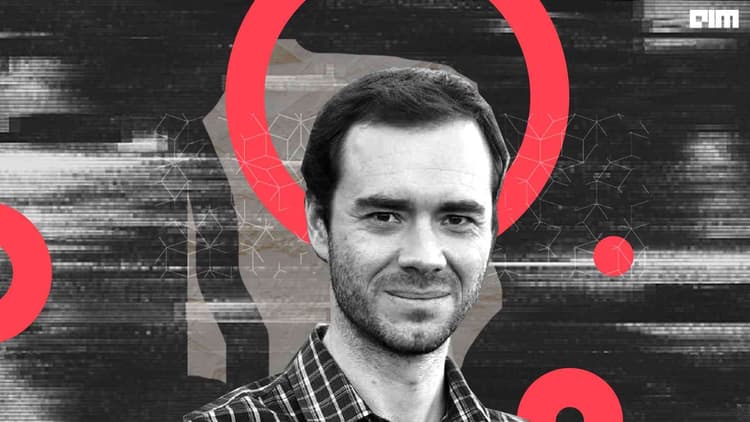
Andrej Karpathy Joins Anthropic
While Anthropic was already led by former OpenAI executive Dario Amodei, Karpathy’s arrival adds another prominent early OpenAI figure to its ranks.
View

Perplexity Users Claim Their Usage Limit Was Significantly Reduced, Company Reportedly Responds
Several Perplexity users woke up last week to find their accounts' usage significantly reduced. Sharing their frustrations online, these users highlighted that the rate limits were cut short to the point that their daily usage was getting exhausted in just a few queries. The list of impacted users includes those on the free tier and those paying for a subscription. After spending multiple days in confusion, the artificial intelligence (AI) company has reportedly issued a statement, shedding light on the reason behind the throttling exercise.
View