Latest AI News
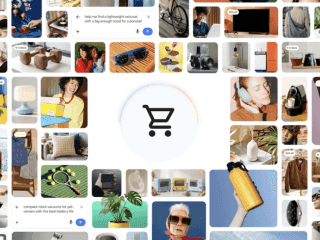
Google IO 2026: Google Showcases Universal Cart That Lets Users Shop in Search, YouTube and Gmail
Google hosted its annual developer conference, the Google I/O 2026, on Tuesday. During the keynote, the Mountain View-based tech giant showcased various new features and functionalities that are either rolling out or will be integrated into different Google products later this year, including YouTube, Gmail, Search, and Workspace. However, one of the major highlights of the events was the tech giant's new Universal Cart tool that will provide contextual suggestions, find deals, and enable online payments across the company's product lineup. The new functionality starts working in the background when a user adds a particular product to their Universal Cart.
View

As Foreign Capital Flees India, Startup Founders are Left With Only One Option
Foreign investors are increasingly frustrated by India’s regulatory complexity, weak exit options, and inflated valuations.
View
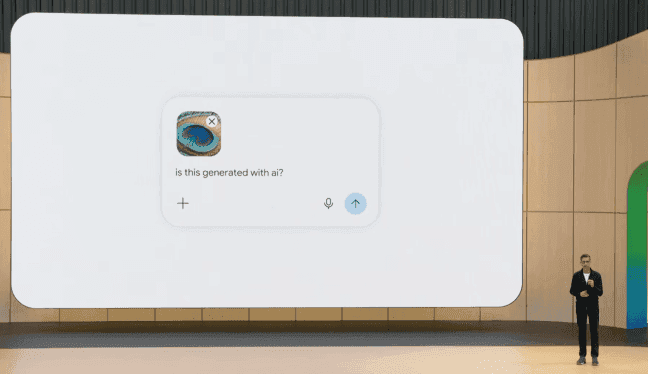
OpenAI is making it easier to check if an image was made by their models
With AI image generators widely available online and more sophisticated than ever, it’s never been harder to tell if an image is authentic. But on Tuesday, OpenAI announced two new measures to help fight the problem. The company has committed to an open standard called C2PA, which adds a clear signal in metadata that an image was generated by AI. OpenAI is also partnering with Google to include an invisible watermark called SynthID, which will be harder to detect, but also harder to erase if bad actors try to cover their tracks. The new protections only apply to images generated by OpenAI products, so they won’t affect the flood of imagery coming from less reputable AI tools; they can help ensure that OpenAI isn’t part of the problem. OpenAI is also previewing a public verification tool that will check for both signals, allowing users to easily test whether an image was generated using AI. Initially, the tool will only extend to images generated by OpenAI products; the company hopes to expand it to cover other tools over time. Founded in 2021, the Coalition for Content Provenance and Authenticity (C2PA) is a non-profit dedicated to mitigating the harmful effects of AI imagery on public discourse. The C2PA standard has been adopted by a range of Google products, but adoption remains inconsistent across the industry. Because the C2PA signal is clearly accessible in the metadata of each file, it can be manipulated, and is most useful among trusted users. SynthID is a newer effort designed to be a more robust measure to meddling. Developed by Google, the SynthID watermark is designed to persist even when bad actors attempt to remove it, either through screenshots, resizing or digital manipulation. The two systems are meant to complement each other, with each addressing the other’s weaknesses. “Watermarking can be more durable through transformations like screenshots, while metadata can provide more information than a watermark alone,” OpenAI noted in its announcement. “Together, they make provenance more resilient than either layer would be on its own.”
View

Google takes a page out of Meta’s book, announces new audio-powered smart glasses at IO 2026
Google is getting (back) into the smart glasses game. At Google I/O on Tuesday, the company announced a new partnership with Warby Parker and Gentle Monster to produce a new line of AI-powered glasses. The company says that the devices will be built to pair with Android and iOS devices and were designed in collaboration with Samsung. They will be available later this year, the company said. Google is calling the new devices “audio glasses,” in that users will be able to issue verbal commands to them and get things done via its ecosystem of apps and services, including Gemini. The user simply talks to their glasses (the demo shared on Tuesday involved a Googler ordering a coffee online by merely talking to the glasses), and the device, when synced, complies. Google has dabbled in smart glasses a number of times over the years. It notoriously launchedGoogle Glassyears ago, which ultimately helped spawn the derogatory term “glassholes.” The smart glasses space has changed a little bit since then, however. Lately, major companies — most notably Meta — and a small army of startups and smaller firms, have invested in the space. Google Search as you know it is over Google updates Gemini app to take on ChatGPT and Claude Google introduces Gemini Spark, a 24/7 agent assistant with Gmail integration How to use Google’s new information agents
View
You can now talk to your Gmail inbox, as seen at Google IO 2026
Google isn’t finished infusing AI into your inbox. On Tuesday attheir IO 2026 developer conference, the tech giant announced an expansion of its“AI Inbox” functionality for Gmail, which is adding conversational AI features. That means you can ask Gmail about things in your inbox instead of typing in search terms. The company says the Gemini AI-powered feature, called Gmail Live, will help you quickly find information buried in your inbox. Perhaps you need information about your upcoming flight, the time of your dentist appointment, the door code for your Airbnb rental, or some details about an event at your kid’s school, for instance. Before, you’d have to type in keywords in the search box (or maybe type in someone’s email address or domain) to try to narrow down your search. That doesn’t always make emails easy to find, however, especially if the search term is something found across several messages. “Gmail Live can answer naturally phrased questions, respond to follow-up questions, and pivot if you need to interrupt it,” Devanshi Bhandari, product lead for Gmail, explained in a briefing ahead of Google’s annual developer conference, Google I/O, where the feature was first introduced to the public. It’s another way that Google is trying to showcase how its AI technology can drive real-world improvements to products used by millions of consumers, at a time when many outside the tech industry are questioning the value of AI, as new data centers get built in their backyards, driving up their power bills. Being able to point to something as simple as making it easier to find something that’s lost in your email inbox — an experience nearly everyone has suffered at some point — could be a practical and positive use case for AI … or at least, Google hopes. Bhandari demonstrated Gmail Live to reporters, asking the tool a series of questions about things in the inbox, like a child’s show-and-tell project and their class trip, plus hotel and flight information for a trip to Detroit. Similar to using a stand-alone AI chatbot like Gemini or ChatGPT, Gmail users can ask these questions aloud in natural language, and the chatbot responds. In the demo, Gmail Live also understood nuances between things like “field trip” and “trip” and was able to jump from one topic to another, Bhandari pointed out. Plus, the AI can pull granular details from emails, like a hotel room number, or infer which people you’re asking about, even when they’re not explicitly named. Similar voice technology is also coming to its to-do list, Google Keep, the company noted. Notably, Gmail Live is not replacing traditional Gmail search — it’s just another option. Google may have learned that not everyone is ready for an AI-only experience after it “upgraded”Google Photos with AI-powered searchto much backlash.Google Photos later rolled back the feature,making the use of AI optional after numerous complaints. Gmail is also gaining other new capabilities, including ready-to-send drafts, instant file access, and the ability to manage to-dos by marking individual tasks as done. Plus, theAI Inbox experience, which launched earlier this year, will expand beyond Google AI Ultra subscribers to reach Google AI Pro and Plus subscribers as well. This allows you to see an overview of the tasks and items to catch up on that are buried in your inbox, all on one page. The voice-powered Gmail Live feature, however, will roll out later this summer and will initially be limited toGoogle AI Ultra subscribers. Google Search as you know it is over Google updates Gemini app to take on ChatGPT and Claude Google introduces Gemini Spark, a 24/7 agent assistant with Gmail integration How to use Google’s new information agents
View
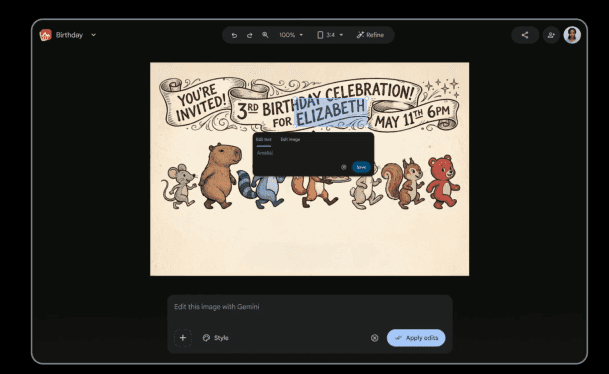
Google just declared itself a contender in AI design at IO 2026
Google announced atits annual Google I/O eventon Tuesday that it’s launching Pics, a new AI-powered design and image-generation app for Google Workspace. The tech giant says it designed the app to be accessible to everyone, from teachers to small business owners. With Pics, users can generate everything from social media graphics and invitations to marketing materials and mock-ups using simple text prompts, without needing any editing skills or advanced tools. By giving users an easy way to generate visuals, Google is looking to take on popular design apps like Canva, as well as products from AI-native competitors likeClaude Designfrom Anthropic. Google’s entry into the space signals that AI-powered design is fast becoming a core competitive arena — with real stakes for any business that depends on visual content. The new app is launching to a group of testers at I/O and will be rolling out to Google AI Ultra subscribers this summer, Google says. The company acknowledges that although AI models today can generate high-quality images, it’s still difficult to modify just one part of an image. If you get an image that’s almost perfect but want to change a small detail, you have to write an entirely new prompt and hope the AI doesn’t alter too much. That’s why Pics not only generates images but also makes them easily editable. Loading the player… Users can enter a prompt, and Pics will generate what they need. Gemini powers the editing layer, making every element in a generated design or image fully adjustable. You can write a new prompt to make changes, but you can also simply click the part you want to change and leave a comment — much like leaving feedback in Google Docs. You can also edit directly, without leaving a comment or writing a prompt. For example, if you create a birthday party invitation and want to change the time listed on the card, you can do so manually. Pics is powered by Nano Banana 2, which Google says is a strong fit for the app because it supports precise text rendering, real-world knowledge, and detailed visual output. Pics is also built natively into Google Workspace, enabling visual collaboration across its apps. Once you’re happy with your design, you can download, copy, print, or share it with others. You can also pass it to someone else for a final round of edits before it goes out, Google says. Google Search as you know it is over Google updates Gemini app to take on ChatGPT and Claude Google introduces Gemini Spark, a 24/7 agent assistant with Gmail integration How to use Google’s new information agents
View
Google I/O 2026: Gemini Spark Brings Agentic Experiences Across Google Docs, Slides and More Apps
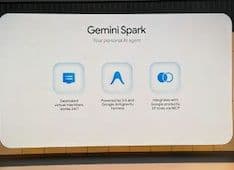
Google announced Gemini Spark, a personal AI agent that can take actions on the user's behalf during the Google I/O 2026 developers conference at the Shoreline Amphitheatre in California on Tuesday. The agentic AI tool is powered by Gemini 3.5 and is built on the Mountain View-based tech giant's Antigravity integrated development environment (IDE). Gemini Spark runs on dedicated virtual machines on Google Cloud and is integrated with Google tools.
View
Google I/O 2026: Gemini Omni for AI Videos, Gemini 3.5 Series Models Unveiled
Google I/O 2026 was hosted on Wednesday, giving everyone a first look at the new features and products the company will be rolling out to users and enterprises. Google CEO Sundar Pichai kicked off the keynote session and announced new artificial intelligence (AI) tools, such as Docs Live. However. It wasn't until DeepMind CEO Demis Hassabis took the stage that the company revealed its most exciting innovation, Gemini Omni. Separately, the company also introduced the Gemini 3.5 series models for users.
View

Google IO 2026: Here’s Everything That Was Announced From Gemini 3.5 Flash to Gemini Omni
Google I/O 2026, the latest edition of the Mountain View-based tech giant's developer conference, was hosted by the company on Friday. During the keynote, Google's head Sundar Pichai announced various new AI features and tools for Google products. Moreover, the company executive revealed the number of tokens the tech giant is now processing per month to provide AI-generated results for its users, which is up seven times from the same month last year. On top of this, the tech giant has introduced more Gemini-powered tools across its products, including YouTube, Gmail, and Search. The company has also released its latest Gemini 3.5 Flash model.
View

Google’s Gemini Omni turns images, audio, and text into video — and that’s just the start
When Google launchedGemini three years ago, the goal was to build a multimodal large language model — a single neural network that was trained on text, image, audio, and video and could generate content in any of those formats. Today, at its Google I/O developer conference, the company took a concrete step toward that goal with Gemini Omni, a new family of multimodal models that Google CEO Sundar Pichai says will be able to “create anything from any input.” Omni will start with video. Users can now combine images, audio, video, and text, and rather than simply stitching those inputs together, Omni reasons across all of them to produce a consistent output. The result is high-quality videos that reflect an understanding of physics, culture, history, and science. Omni also lets users edit photos with plain text commands rather than complex editing software, similar toGoogle’s Nano Banana. Google already has a dedicated video model,Veo, that lets users turn text and images into videos, and evendirect and customize avatars. But Google DeepMind director of product management Nicole Brichtova says that today’s release is more than a Veo update: “It’s the next step towards the progression of combining the intelligence of Gemini with the rendering capabilities of our media models.” One example that Koray Kavukcuoglu, DeepMind’s chief technologist, gave reporters during a media briefing on Monday: When Omni was given a simple prompt like “a claymation explainer of protein folding,” it quickly rendered a video of a stop-motion explainer with a voice-over that said, “Proteins start as chains of amino acids. They fold into patterns like the alpha helix and flat sections called beta sheets, forming a perfect three-dimensional shape.” The long-term vision for Omni is broader, involving the model being used to do things like generate images from audio, or audio from video. “When we first announced Gemini, it was our first AI model to be natively multimodal,” Pichai said during the briefing. “We knew that training it on a combination of text, code, audio, images, and video would give it a deeper understanding of the world. With world models, AI is moving from predicting text to simulating reality. Gemini Omni is the next step in that direction.” As part of the release, users will also be able to create videos with their own digital avatars — something OpenAI popularized on its now-defunct Sora app with Cameos. To prevent deepfakes, users will have to go through a dedicated product onboarding, which involves recording themselves and speaking out a series of numbers, per Brichtova. The avatar then gets stored for future use. Additionally, all videos created with Omni will include Google’s SynthID digital watermark, which allows users to verify if videos were generated via the Gemini products. The first model in the family is Gemini Omni Flash, which will roll out today to the Gemini app, YouTube Shorts, and AI creative studio Flow. Flash will be capable of rendering 10 seconds of video, which Brichtova says isn’t a model limitation, but rather a decision based both on a desire to get it into more hands and an anticipation that most users won’t want to make much longer videos yet. Longer video durations are in the pipeline for the near future, though. Google seems to be pitching Omni Flash as more of a consumer tool. The examples Brichtova and Gabe Barth-Maron, a research engineer at DeepMind, gave on a call with TechCrunch of uses for digital avatars were all personal: Making a video of yourself winning an award or going to the moon, or removing a passerby from the background of a video you took on vacation. Barth-Maron put it more simply: “They’re like personalized memes.” “We definitely did focus on making this easy to use for consumers,” Brichtova said. “Not many video models have breached that chasm with consumers, so this is our play to do that.” The ease of use comes with a caveat: Brichtova and Barth-Maron noted that editing prompts will need to be highly specific, otherwise Omni risks over-editing or unintentionally altering elements the user wanted to keep — a problem Nano Banana users would have run into. Despite the near-term consumer focus, Omni’s enterprise andcreative implicationsare obvious, and Google will make Omni available via API in the coming weeks. The avatar-generating tool — a capability that is available today on Shorts — is something Google expects content creators to pick up. But more broadly, an end-to-end multimodal workflow could be transformative for advertisers and filmmakers. Startup Luma AI is building something similar,an agentic toolthat can generate an entire ad campaign based on a short brief and a product image, powered by its own “unified” model. “We’re actually pretty proud of the model’s text-rendering capabilities, which is really useful for things like advertising,” Brichtova said. “If you want a product somewhere, or even just a slogan, it needs to be accurate … We definitely anticipate filmmakers and other kinds of creators are going to be using this model as well.” The more professional use cases might be better served by the Omni Pro model, which should perform better across all Omni tasks. Google hasn’t said when it will release Pro yet, but Brichtova said that will happen when “we feel like we’re at a point where we have a step change above Flash.”
View
Google’s AI Studio now lets anyone build Android apps in minutes
The AI coding boom is now coming directly for Android app development. On Tuesday, Googleannouncednew native Android app creation capabilities in its web-basedGoogle AI Studio,shrinking a process that takes weeks of setup and coding down to minutes. The company also said that consumers will be able to use Gemini AI to find the apps they need, both on the Play Store and the web, expanding opportunities for developers to have their apps discovered. Google says the new capabilities could make sense for anyone from a seasoned developer looking to prototype a new app quickly to a first-time creator. By offering the ability to essentially vibe-code Android apps via web-based tools, Google is ramping up the competition with other AI-powered development tools, like Cursor, Replit, Lovable, Claude Code, and others, while also opening up Android development to a new type of user: a non-technical creator. The news also represents an expansion of Google’s earlier addition ofAI-powered coding with Geminiin itsdesktop versionof Android Studio. The apps are built with theKotlinprogramming language using Google’s Jetpack Compose toolkit and with support integration with hardware sensors like GPS, Bluetooth, and NFC, the company says. However, the resulting creations, for now, are only meant to be used personally, as publishing for family and friends is still on the roadmap. The company suggests the technology could be used for the creation of personal utilities and simple social apps, hardware-enabled experiences, or AI-powered experiences. For now, would-be app developers can use the embedded Android Emulator directly in a web browser to preview and interact with the app as it’s being built. Users can then install the app on their Android phone over a USB cable connected to their computer, using the integrated Android Debug Bridge (adb). For those looking to take their project further,AI Studiocan automatically create the app record, package the bundle, and upload it to an internal testing track inGoogle Play Consolefor developers. This allows users to continue to iterate on their app while updating on their devices along the way. Those who want to take the next steps to publishing the app more publicly can hand off this version of the project to Android Studio by downloading a zip file and exporting it directly to GitHub. In time, Google plans to allow creators to publish their apps for use by family and friends and will add support for Firebase integrations (Firestore, Firebase Auth, Firebase App Check, and other tooling). In doing so, the company is imagining an Android app ecosystem where users find apps from among their own network of friends, not just the Play Store. However, for the latter, Google is infusing AI into the experience here, too. A new “Ask Play” AI-powered overlay will allow users to discover new apps by having natural conversations with AI within the Play Store. Perhaps more importantly, apps will begin to be surfaced with users’ conversations with Google’s Gemini virtual assistant, exposing developers’ apps to millions of users. This will roll out in the weeks ahead across Gemini on the web and on Android. Later this year, Gemini will also surface over 450,000 movies and TV shows, plus where to livestream sports, which can directly link users from their queries to a developer’s Android app with the content in question. While Google previewed a number ofAndroid-related announcements last week, it held back on sharing the news of the native Android app development until Tuesday’s start of its annual developer conference, Google I/O. That suggests the company believes this is bigger news and more closely tied to its idea of putting AI to real-world use, as was the larger theme of this year’s event, where AI was spread across Google products, from workspace productivity apps to AI tools, search, mobile apps, and more.
View
Google’s AI now lets you talk to your Gmail inbox
Google isn’t finished infusing AI into your inbox. On Tuesday, the tech giant announced an expansion of its“AI Inbox” functionality for Gmail, which is adding conversational AI features. That means you can ask Gmail about things in your inbox instead of typing in search terms. The company says the Gemini AI-powered feature, called Gmail Live, will help you quickly find information buried in your inbox. Perhaps you need information about your upcoming flight, the time of your dentist appointment, the door code for your Airbnb rental, or some details about an event at your kid’s school, for instance. Before, you’d have to type in keywords in the search box (or maybe type in someone’s email address or domain) to try to narrow down your search. That doesn’t always make emails easy to find, however, especially if the search term is something found across several messages. “Gmail Live can answer naturally phrased questions, respond to follow-up questions, and pivot if you need to interrupt it,” Devanshi Bhandari, product lead for Gmail, explained in a briefing ahead of Google’s annual developer conference, Google I/O, where the feature was first introduced to the public. It’s another way that Google is trying to showcase how its AI technology can drive real-world improvements to products used by millions of consumers, at a time when many outside the tech industry are questioning the value of AI, as new data centers get built in their backyards, driving up their power bills. Being able to point to something as simple as making it easier to find something that’s lost in your email inbox — an experience nearly everyone has suffered at some point — could be a practical and positive use case for AI … or at least, Google hopes. Bhandari demonstrated Gmail Live to reporters, asking the tool a series of questions about things in the inbox, like a child’s show-and-tell project and their class trip, plus hotel and flight information for a trip to Detroit. Similar to using a stand-alone AI chatbot like Gemini or ChatGPT, Gmail users can ask these questions aloud in natural language, and the chatbot responds. In the demo, Gmail Live also understood nuances between things like “field trip” and “trip” and was able to jump from one topic to another, Bhandari pointed out. Plus, the AI can pull granular details from emails, like a hotel room number, or infer which people you’re asking about, even when they’re not explicitly named. Similar voice technology is also coming to its to-do list, Google Keep, the company noted. Notably, Gmail Live is not replacing traditional Gmail search — it’s just another option. Google may have learned that not everyone is ready for an AI-only experience after it “upgraded”Google Photos with AI-powered searchto much backlash.Google Photos later rolled back the feature,making the use of AI optional after numerous complaints. Gmail is also gaining other new capabilities, including ready-to-send drafts, instant file access, and the ability to manage to-dos by marking individual tasks as done. Plus, theAI Inbox experience, which launched earlier this year, will expand beyond Google AI Ultra subscribers to reach Google AI Pro and Plus subscribers as well. This allows you to see an overview of the tasks and items to catch up on that are buried in your inbox, all on one page. The voice-powered Gmail Live feature, however, will roll out later this summer and will initially be limited to Google AI Ultra subscribers.
View