Latest AI News

The pope’s AI encyclical isn’t really about AI
Pope Leo XIV published hisfirst encyclicalon Monday, dubbedMagnifica Humanitas,on “safeguarding the human person in the time of artificial intelligence.” And while AI is the hook, the problems Leo focuses on are older and more pervasive: inequality, war, the erosion of democracy, and the concentration of power in the hands of those who don’t necessarily care whether humanity writ large remains magnificent. Throughout the 200-page document, which the pope presented alongside Anthropic co-founder Chris Olah, Leo argues that technology built and governed by a small elite cannot, by definition, serve the common good. “When such power is concentrated in the hands of a few, it tends to become opaque and evade public oversight, increasing the risk of distorted forms of development that give rise to new dependencies, exclusions, manipulations and inequalities,” he writes. “In fact, as with every major technological shift, AI tends to amplify the power of those who already possess economic resources, expertise and access to data,” the encyclical continues, highlighting concerns that elites can use their power to “shape information and consumption patterns, influence democratic processes and steer economic dynamics to their own advantage.” The encyclical comes a few days after President Donald Trumpdelayed signing his executive order on AI,which would have given the government oversight over new models before they are released,reportedlyon the urging of VC investor and former White House AI czar David Sacks. Pope Leo called for AI to be guided by “clear criteria and effective oversight” grounded in participation from communities that will be affected by it. More concretely, Leo called for an end to the AI arms race “for ever more powerful algorithms and larger datasets” that companies and countries believe will “secure geopolitical or commercial dominance.” “To disarm means discrediting the assumption that technical power automatically confers the right to govern,” he wrote. Again, these dynamics predate AI. Pope Leo XIII’s 1891 Rerum Novarum addressed the same concentration of power during the Industrial Revolution, but we needn’t look back that far. Elon Musk’s acquisition of Twitter and deployment of the platform to help elect Trump; thehundreds of millions flowingfrom tech elites into super PACs to block AI regulation — the kind of pattern that clearly inspired Leo XIV’s work. The pope comes to the same conclusion that many have arrived at: the surreal power and capabilities of today’s AI raise the stakes enormously. Notre Dame Law School professor Paolo Carozza, a member of the Pontifical Academy of Social Sciences and chair of the Meta Oversight Board, told TechCrunch that AI-driven misinformation and deepfakes have “corroded our capacity to recognize what’s true and what’s not true, and that really has consequences for democratic politics.” The tech industry’s practice of “harvesting and manipulating” human data, he added, poses “fundamental challenges to cognitive freedom.”
View

What ClickUp’s mass layoff tells us about the future of work
AI’s biggest champions have argued for some time that the technology will usher in an era of unprecedented productivity gains, richly rewarding workers who harness it while displacing those who don’t. Zeb Evans, CEO of the collaboration software startup ClickUp, claims that this shift is imminent. Last Thursday, Evansannounced on Xthat the company, which was last valued in 2021at $4 billion, had laid off 22% of its workforce yet characterized that reduction as not a cost-cutting measure, but rather a radical embrace of AI that will propel the company to the next level. “Most savings from this change will flow directly back into the people who stay. We’ll be introducing million-dollar salary bands. If you create outsized impact using AI, you’ll be paid outside of traditional bands,” Evans wrote. ClickUp recently introduced roughly 3,000 internal AI agents to handle a wide range of complex tasks on behalf of its employees, according to aFortune articlepublished several days ago. Instead of performing the work themselves, staff members are now expected to direct these agents and ultimately review the output to ensure it meets the company’s standards. Evans’s goal, according to his X post, is for AI to turbocharge ClickUp into a “100x org.” ClickUp is not alone in its hope that AI agents will provide massive productivity gains. In fact, according to a recent Gartner survey, about 80% of companies using autonomous tech have cut jobs. However, the study found that workforce reductionsaren’t necessarily translatinginto meaningful financial returns. While Gartner’s findings suggest some companies use unproven AI as an excuse to downsize, ClickUp maintains it is not one of them. Evans told TechCrunch via email that the startup is indeed seeing productivity gains from AI agents. Not only is ClickUp measuring those efficiencies internally, but it’s also apparently gearing up to include them in a forthcoming product for its customers. “Instead of gamifying token cost, we gamify value created and time saved,” Evans wrote. In recent months, a growing number of companies have started monitoring employee token consumption, using it as a metric to see who is actually adopting AI tools. Butcritics arguethat “tokenmaxxing”—as this concept is known—is the wrong metric because it simply racks up AI expenses. “The people that automate their jobs with AI will always have a job,” Evans claimed in his post. But if AI keeps taking over more tasks, ClickUp will eventually need fewer and fewer people, eliminating those who fail to automate their functions well. Tech circles have long theorized about this scenario. One extreme example of a high-profile startup using AI automation to the max already exists. Polsia, a one-year-old startup that claims to handle all software operations for solopreneurs, is run by just one person: its founder and CEO, Ben Broca. That efficiency is apparently paying off: Polsia just raised$30 millionat a $250 million valuation.
View

OpenAI Offers $445,000 to Study Self-Improving AI
The researcher would work on areas such as defending AI systems against data poisoning attacks.
View

Google’s AI Overviews Reportedly Broke Down When Users Searched ‘Disregard’ or ‘Stop’
Google Search's integrated artificial intelligence (AI) experience, AI Overviews, reportedly suffered a snag over the weekend. When users searched specific keywords, such as “disregard” or “stop,” the dedicated space is said to glitch and stop showing any information. This results in a wide blank space that users reportedly had to scroll past to see any results. The new glitch surfaced just days after the Mountain View-based tech giant announced the redesigned, AI feature-rich Search experience. Notably, the company has fixed the issue.
View
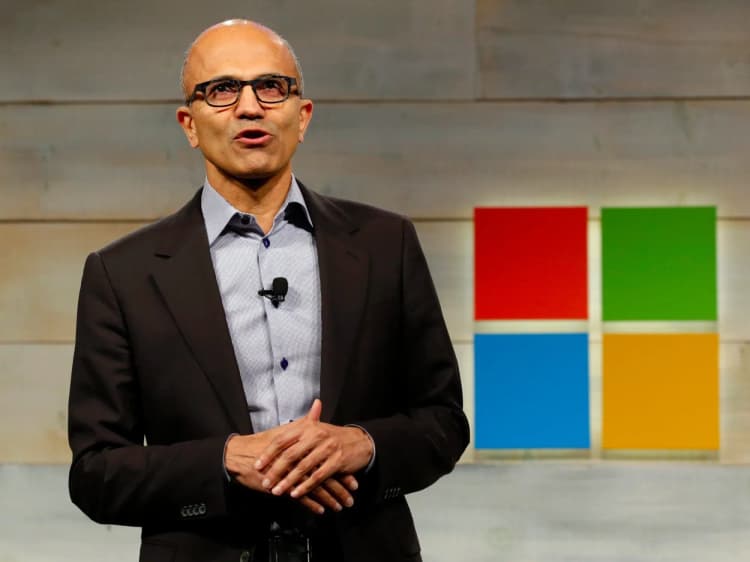
Microsoft Replaces Claude Code With GitHub Copilot CLI
The move is partly tied to cost-cutting efforts, with Microsoft’s financial year ending on June 30.
View

Persistent Systems Teams Up With Kong to Simplify Enterprise AI Governance
The collaboration will combine Persistent’s enterprise modernisation expertise with Kong’s API connectivity platform to help businesses govern, integrate and manage AI workloads at scale.
View

LTM Bags AI-Led IT Infra Modernisation Mandate from UK’s SSP Group
LTM has partnered with UK-based SSP Group to modernise its IT infrastructure and application support operations.
View
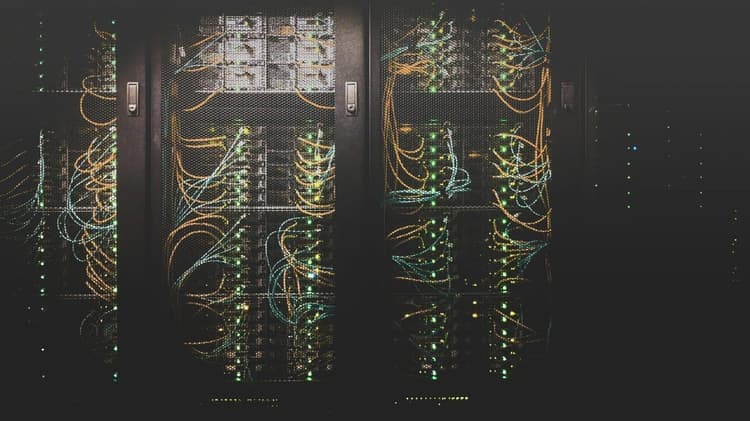
How Combined Cycle Gas Turbines Keep the World’s Data Centres Alive
The digital economy runs on data. And for now, data runs on gas—extracted from the ground, burned in turbines, and transformed with extraordinary efficiency into the electricity that keeps the servers running.
View

With Indian IT Entry Roles Automated, Freshers Now Need Meta Skills
AI is not just eliminating entry-level IT jobs. It is raising the bar for what a fresher must know to get through the door.
View

AI is Breaking Data Centre Cooling Systems, But to India's Advantage
As AI workloads multiply and power densities soar, data centres are racing to overhaul the cooling infrastructure to keep their operations alive.
View

Apple to Introduce Improved Genmoji, Image Playground Upgrades With iOS 27 Update: Mark Gurman
Apple is believed to preview iOS 27 at its WWDC event in June. The next-generation operating system is expected to offer improved Apple Intelligence features with an enhanced AI-powered image generation experience. A new report by Bloomberg's Mark Gurman suggests that Apple's image generation models used in Genmoji and Image Playground will get notable upgrades in visual quality. The reported improvements are expected to be noticeable in Genmoji and Image Playground. Earlier reports indicated that Apple is working on support for third-party AI image-generation models in iOS 27.
View

Apple Is Reportedly Working on a New Gen AI Website Ahead of WWDC 2026
Ahead of Apple's annual Worldwide Developers Conference (WWDC), a new development has surfaced. As per the report, the Cupertino-based tech giant is readying a new “Gen AI” website, which could be showcased at WWDC 2026. It is currently non-functional and shows a connection timed out error, but the website appears to be registered. This means it could be stopped from going live on the server side. The purpose of the website is not clear immediately, but it indicates that artificial intelligence (AI) could be a major topic in this year's event.
View