Latest AI News
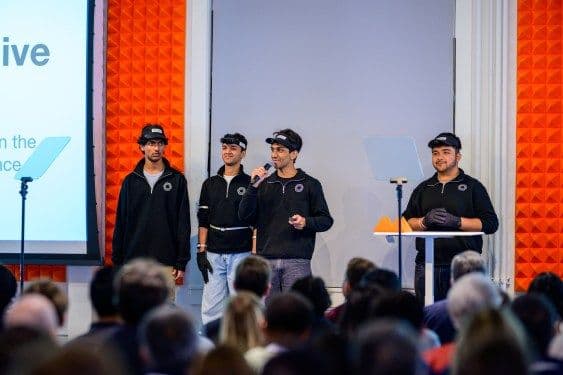
This startup is betting India’s gig economy can train the world’s robots
In the last few years, India’sonline food delivery markethas grown significantly, with both Zomato and Swiggy going public and the number of cloud kitchens increasing. Meanwhile, startups working on home services, such as on-demand household staffing platforms like Urban Company,Snabbit, andPronto, have gained popularity. Silicon Valley-based startupHuman Archiveis tapping into this trend, partnering with these companies to have workers wear special caps with cameras to collect egocentric (first-person point of view) video data of everyday tasks that could be used to train robots. Without naming specific partners, the startup said it is working with companies in the home services, hotel, and restaurant sectors to collect egocentric data, and it says it has more than 1,000 active headsets deployed across multiple locations. On the back of that traction, Human Archive said Tuesday it has raised $8.2 million in funding from Wing Venture Capital, NVP Capital, Y Combinator, and angels from OpenAI, Nvidia, Google, Mercor, AfterQuery, BAIR, SAIL, Brad Boa, and Meta. The startup was founded by three students from UC Berkeley and one from Stanford — Samay Maini, Rushil Agarwal, Shloke Patel, and Raj Patel, the latter two being cousins. (Raj Patel is CEO.) All four have research backgrounds spanning robotics, hardware, and tactile data. The company’s founding is a direct bet on where the AI industry is heading. As robotics labs and frontier AI companies race to build machines that can perform physical tasks in the real world, they face a critical bottleneck — a shortage of high-quality, real-world training data showing humans doing everyday work. Human Archive’s bet is that the workers staffing India’s booming gig economy represent an untapped and scalable source of exactly that data. While Human Archive is working with multiple partners, the startup said it was rejected by many Indian home services companies, including Pronto and Urban Company, for a collaboration. The company’s rejection by major players became public fodder last weekend, when Indian outlet Entrackrreportedthat Pronto is actively seeking partnerships to collect worker data for robotics training and that Snabbit had held early discussions with Human Archive before the project fell apart. Urban Company CEO Abhiraj Singh Bhalrespondedon X, stating the company would not engage in such arrangements — prompting Patel tofire backthat Urban Company would soon be forced to reconsider or risk losing relevance to customer churn. Co-founder Rushil Agarwal was blunter still, posting that Pronto founder Anjali Sardana hadlaughedat him and called him “stupid” when he raised the idea of a data partnership. Pronto acknowledged the conversations but said it chose not to move forward. Across the country, other startups are collecting egocentric data fromdifferent work environments, including factory floors. To differentiate itself, Human Archive is using and developing additional devices, such as tactile gloves, a full-body motion capture suit, and wrist cameras to capture data, including motion and tactile force, synchronously aligned with RGB-D (color imagery paired in real time with depth information), to sell to AI labs. The startup believes that video data alone is not sufficient but that pairing it with other sensor data makes it much more valuable. Initially, Human Archive used makeshift setups or off-the-shelf rigs to capture the data. Now it is working on custom hardware that works together and captures different kinds of data. It already has more than 50 different devices deployed to collect different data points. “To capture data, we started with iPhones; then we built our own custom rigs and caps. Now we have more than seven different hardware products that we use interchangeably across different modalities. After data collection from different devices, we worked on synchronizing data from all these different sources,” Patel said in a call. The company said it is developing ways to fine-tune AI models with its own data and test them on robots to evaluate task effectiveness. By doing this, the startup can demonstrate the quality of its data to potential customers and post-train internal models. Zach DeWitt, a partner at Wing VC, said the startup has a unique advantage in collecting data from multiple sensors. “No one else in the world has been able to synchronize and collect headset RGB-D, force feedback, full-body motion capture, and synchronized chest and wrist camera data at scale. They’ve been doing internal model training on this data, and every major lab and university is interested in running experiments on it due to the novelty of the sensors and the scale of the new dataset they are releasing soon,” he told TechCrunch. Despite rejection from notable players in the home services industry, Human Archive teamed up with smaller startups to offer discounted services to customers. When a worker arrives at a home, consumers are offered a choice through the app: pay a discounted price in exchange for consenting to data collection, or pay the full price for an unrecorded visit. Patel mentioned that customers have been happy to opt for the former, as disputes about service quality are common, and video recordings can help resolve them. The company pays workers a base rate of $1 per hour for participating in egocentric data collection. A report from the Economic Times suggests that other companies pay ₹250 to ₹400 per hour (roughly $2.63 to $4.20). Patel said competitors pay more than Human Archive, but its on-the-ground presence in India allows it to keep compensation lower. “Human Archive’s network provides immediate, flexible earning opportunities globally, lowering the barrier to participating in the AI economy. We see this as a critical bridge that funds immediate livelihoods while building the infrastructure for a safer, more productive future,” DeWitt said. Beyond wage payment, there are privacy concerns around data collection via video recording. It is not clear what information Human Archive gives workers about how their footage is used. The company said that its commercial contracts are compliant with India’sDigital Personal Data Protection (DPDP) Act, as it displays a privacy policy notice, along with consent information detailing the purpose of data collection and how it is processed. The company said all data is anonymized and faces are blurred from recordings. Last week, Moneycontrolreportedthat India’s Ministry of Electronics and Information Technology is looking into the consent mechanisms and data-collection practices of startups collecting egocentric data through home service workers. While Human Archive largely collects data in India, it has started expanding into Southeast Asia and the U.S. The company is also building a platform for anyone to participate in data collection and earn money. It also wants to offer customers in the U.S. services like cleaning or cooking in exchange for data collection by participating workers — though these programs are just in an early pilot stage. Multiple well-funded startups areracingto buildphysical AI. Doing so requires massive amounts of training data showing humans at work — and Human Archive is one of the players competing to serve that demand. Whether its approach can scale will hinge on the partnerships it strikes and the uniqueness and volume of the data it can collect to satisfy the appetite of physical AI labs.
View

DeepSeek Slashes V4 Pro Prices by 75% Permanently
The company’s aggressive pricing strategy is expected to increase pressure on AI companies globally.
View

India is Not Ready for Mythos Tsunami
With Anthropic claiming Mythos identified over 10,000 critical vulnerabilities in just one month, Indian regulators and banks are bracing for a fresh wave of AI-driven cyber threats.
View

Why Big Tech’s AI-Driven Layoffs Have Failed to Deliver Value
AI-driven layoffs may free up budget, but cutting jobs doesn't create returns. The companies winning the AI race aren't replacing people, they're investing in them.
View

Google Introduces Gemini 3.5 Flash Low to Help Antigravity Users Maximise Usage
Ever since Google restructured its Gemini plans to a compute-based usage system, it has struggled to provide users of its agentic coding platform, Antigravity, with enough tokens. The Mountain View-based tech giant, last week, announced a shift from the message-based usage to one that measures the number of tokens exhausted. Once the new system was rolled out, users began complaining about hitting rate limits on Antigravity very quickly. Things were so bad that the tech giant had to increase the Antigravity rate limit twice, but it appears even that was less. Now, the company is solving the problem with a new Gemini 3.5 Flash variant.
View

Rajasthan Partners With Wadhwani AI to Deploy AI Tools for Agriculture Services
The foundation will provide technical support to the state government for a period of three years without any financial burden on the government.
View

AI Models Can Now Overhaul Policies Like GST. But Should They Be Trusted?
The biggest challenge of a CGE model is that most AI systems are trained on metrics of developed economies.
View

Shunya Labs Releases Open Standard for Stuttering Annotation
SAML is an XML-based specification that extends W3C SSML standards and includes schema validation to ensure interoperability across tools.
View

TCS launches Sovereign Cloud Offering in Europe to Focus on Data Localisation
TCS’ SovereignSecure Cloud platform targets governments and regulated sectors as enterprises across the EU step up focus on data sovereignty, regulatory compliance, and secure AI adoption.
View

India’s Voice AI Boom is Missing One Thing—and All India Radio Already Has It
AIR represents one of the most comprehensive repositories of spoken Indian languages.
View

5 days left: Save up to $410 on TechCrunch Disrupt 2026 passes before prices increase
Five days. That’s all that’s left to lock in one of the smartest advantages you can give yourself as a founder, investor, or operator right now. Early Bird savings forTechCrunch Disrupt 2026end May 29 at 11:59 p.m. PT.Register nowto save up to $410 before prices increase and secure your spot at the center of the startup ecosystem. Advancing from idea to IPO takes time and how you spend that time can make the difference in whether you stall or scale. Many think it’s the pitch that slows things down. But in reality, it’s access. Fundraising is a long game of chasing proximity. Cold outreach. Missed intros. Weeks waiting for replies that never come. You spend as much time trying to get in front of the right investors as you do refining your story. Without access, capital is moving. Deals are getting done. Just not with you. WhenDisruptcomes to Moscone West in San Francisco, October 13–15, 2026, access isn’t accidental because it’s built into the experience. Those who attend can access: YourDisruptticket gives you access to candid, tactical, and unfiltered insights from active founders, top-tier investors, and operators scaling real companies like: Explore the sessions these tech leaders will lead on theagenda page. Andregisterbefore May 29 at 11:59 p.m. PT to save up to $410 and show up with more opportunities to connect, fundraise, and scale. WhenDisrupt hits San Francisco, more than 10,000 founders, investors, and operators, along with300+ startups, will gather with one goal: advance deals. That changes the pace of doing business immediately. Instead of months of back-and-forth, conversations start — and move faster. You’re engaging across: You’re not burning through resources trying to get into a meeting — you’re already in one. Disrupt is apremier global startup eventwhere the ecosystem converges to move ideas, deals, and companies forward. And when youregister before May 29, you can save up to $410 before rates increase. Secure your pass before this limited-time pricing ends. AtDisrupt, you’re face-to-face with investors who can ask questions on the spot, understand how you think beyond your deck, and evaluate your vision directly. You can read signals immediately to determine what resonates, what doesn’t, and where to adjust. That kind of feedback loop compresses timelines. What normally takes weeks begins to take shape in a single day — especially as you move between sessions, meetings, and conversations across the venue. 80+ Side Events across the Bay Area for networking, workshops, and social connections extend the value of your Disrupt ticket. Register nowwhile Early Bird pricing is still available and maximize every opportunity to build momentum before prices go up. Don’t settle for collecting contacts when you can come to Disrupt to connect capital to opportunity.Find your ticket matchand plan how you’ll spend your time here. With more than 20,000 curated meetings and dedicated environments like investor receptions and structured networking,Disruptlets you hear directly from founders and investors actively deploying capital and scaling companies. The value is in starting conversations that go somewhere, and bringing someone with you helps turn more of those conversations into real opportunities. Register nowto save up to $410 before Early Bird pricing ends May 29 at 11:59 p.m. PT. After that, ticket prices increase — and so does the cost of waiting. If fundraising is already on your roadmap, waiting doesn’t make it easier. It just delays access. Secure your TechCrunch Disrupt 2026 pass today and save up to $410 before prices go up. Put yourself in the room where deals actually start — and where the next stage of your company can take shape. Register nowbefore Early Bird pricing ends May 29 at 11:59 p.m. PT.
View

Startup Battlefield 200 applications close in days: Apply before May 27
The deadline to apply or nominate forStartup Battlefield 200is Friday, May 27. This program is your shot at VC access, global visibility, TechCrunch coverage, and $100,000 in equity-free funding. If you’re building a breakout startup — or know a founder who is — now is the time to move. Apply todayfor the opportunity to take theTechCrunch Disrupt Stagealongside 200 of the world’s most promising early-stage startups. Pre-Series A founders, this is your last call: the strongest startups are already entering the arena, and the application window is closing fast. If your startup has already been nominated,don’t wait to finish your application. The final week always moves quickly, and last-minute submissions risk getting buried as applications surge ahead of Friday’s deadline. Know a startup that deserves the spotlight?Nominate them nowso they still have time to apply before May 27. Some of the most consequential companies in tech history didn’t launch with splashy fundraising announcements. They started with a pitch. Dropbox demoed to a room full of skeptics. Cloudflare took the stage before most people understood what edge networking meant. Discord was still a scrappy gaming startup called Hammer & Chisel. They all passed through the same crucible: Startup Battlefield 200. That’s not a coincidence — it’s a pattern. And it starts with an application. Startup Battlefield 200has never been a competition for the most polished companies. It’s a competition for the most promising ones. Pre-launch is fine. No revenue is fine. What matters is whether what you’re building genuinely changes something — not incrementally, but meaningfully. If you or a founder you know is building something impactful, then the application itself becomes the first pitch.Apply before May 27. Startup Battlefield 200is where breakout companies get discovered. Selected startups will showcase live on the Disrupt Stage in front of 10,000+ attendees, leading VCs, global media, and the broader TechCrunch audience. This is your opportunity to gain investor exposure, receive direct VC feedback, and prove your company belongs among the next generation of category-defining startups. Every one of the 200 selected companies receives: And every selected company pitches, whether on the Disrupt Stage or the Pitch Showcase Stage. Both put founders in front of the investors, media, and partners who attend Disrupt specifically to find what’s next. You don’t need to make the top 20 for this experience to change your trajectory.Get started by nominating and applying here. More than 1,700 companies have competed in Startup Battlefield 200. Together, they’ve raised over $32 billion and generated more than 250 exits, including acquisitions by Microsoft, Google, Salesforce, Uber, and Amazon. The network runs so deep that alumni have even acquired each other: Dropbox acquired fellow Battlefield 200 alum DocSend in 2021. This is also the same launchpad that helped accelerate companies like Fitbit, Trello, and Mint. Behind every one of those outcomes was a founder willing to make a bet on themselves publicly, in front of people who were paying attention.Apply and learn more here. We’re looking for ambitious early-stage startups building innovative, potentially category-defining products. Applications are open globally across all industries. Most selected companies are pre-Series A, though select Series A startups may qualify on a case-by-case basis. To apply, startups should have: Thousands apply every year. Only 200 are selected. Just 20 finalists pitch live on the Disrupt Stage. One startup takes the crown and wins $100,000 in equity-free funding. The founders who wait until they feel ready often wait too long. You do not need to be polished. You need to be promising. If you’ve been sitting on this, here’s the reality: the worst outcome is you don’t get selected this cycle — and you come back next year with a stronger application because you went through the process. The stage matters. The community lasts. The milestone is real. But the deadline is now one week away. If you’re building something category-defining — or know a startup that deserves the spotlight —submit your nomination and complete your application before Friday, May 27.
View