Latest AI News

Cognite Recognised as a Best Firm for Data Engineers
The certification is based on structured feedback from data engineering and AI professionals within the organisation
View

AI Influencers are Coming for the Creator Economy
Human influencers bring lived experience and spontaneity, while AI influencers excel at narrative continuity, frequency, and precision at scale.
View
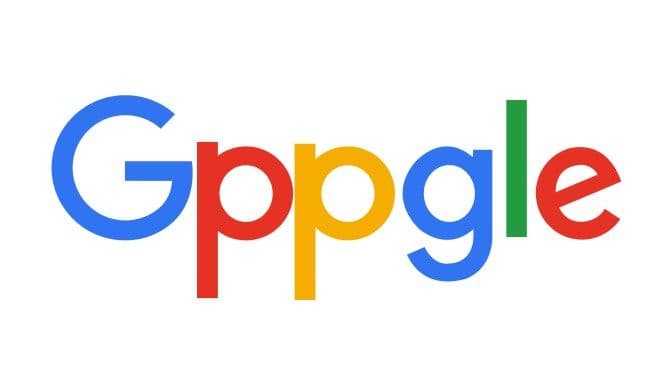
Why Google’s AI can’t spell Google (or anything else)
How many Ps are in Google? According to Google, there are two. There’s also is also “exactly 1 ‘r’ in the word ‘poop’,” Google’s AI Overview says, as well as two ‘d’s in the word journalism, yet spelled it: j-o-u-r-n-a-d-i-s-m. Google did at least identify that there is one P in the last name of the U.S. president, but spelled it as t-r-p-u-m. You didn’t need to be a prophet to predict thatGoogle’s AI-forward Search overhaulwas going to go over poorly. We’ve done this before. The first time Google added AI Overviews to Search, the feature ended upciting satirical posts from The Onion and Reddit, advising people to eat rocks and put glue on their pizza. This time around, as Google doubles down on its commitment to make generative AI the centerpiece of its 29-year-old flagship product, it’s not surprising to see it stumble. Google is revamping its entire search engine to this btwpic.twitter.com/PIR4llFhiV “Counting within words has been a known challenge for LLMs, and we’re working to fix this particular issue,” Google told TechCrunch in an emailed statement. These basic spelling errors may seem familiar. LLMs, the kind of artificial intelligence that powers chatbots and other text-generators, are not built to understand spelling. It’s been a running joke for years that whenever a company unveils a new AI model, you should ask ithow many ‘r’s are in the word strawberry. These AI models — which can code an app in seconds, or solve problems that have stumped mathematicians for decades — are about as good as a kindergartener at spelling. Google’s AI overview woes reach beyond silly spelling mistakes though. Google already patched an issue from last week in which searching the word “disregard” would yield what looked like a dictionary definition of the word, only the definition was shown as, “Understood. Let me know whenever you have a new prompt or question!” But these spelling errors have remained amusing because they’re so difficult to quash. As researchers havepreviously explainedwhen we’ve asked about these spelling conundrums, AI doesn’t perceive sentences as units of language made up of words and letters. Many LLMs are built on transformers models, which break down text into tokens, which can be full words, syllables, or letters, depending on the model. Instead of “reading” like a human would, the AI converts the text into numerical representations of itself, which are then contextualized to help the AI come up with a logical response. “LLMs are based on this transformer architecture, which notably is not actually reading text. What happens when you input a prompt is that it’s translated into an encoding,” Matthew Guzdial, an AI researcher and assistant professor at the University of Alberta,told TechCrunch. “When it sees the word ‘the,’ it has this one encoding of what ‘the’ means, but it does not know about ‘T,’ ‘H,’ ‘E.’” The token-based architecture that powers LLMs like Google’s AI overview is inherently limiting, and researchers haven’t been optimistic that they can solve the spelling problem. “It’s kind of hard to get around the question of what exactly a ‘word’ should be for a language model, and even if we got human experts to agree on a perfect token vocabulary, models would probably still find it useful to ‘chunk’ things even further,” Sheridan Feucht, a PhD student studying large language model interpretability at Northeastern University,told TechCrunch. “My guess would be that there’s no such thing as a perfect tokenizer due to this kind of fuzziness.” This isn’t necessarily an urgent problem on researchers’ minds, since the utility of LLMs doesn’t come in their capacity to spell. But these blatant failures help us remember that AI is not perfect, even if it may sometimes seem like an all-knowing power beyond our comprehension. We cannot blindly trust AI outputs without double-checking their accuracy.
View
Meta launches Instagram, Facebook, and WhatsApp subscriptions, with more to come, including AI plans
Meta is doubling down on its subscription offerings. On Wednesday, the social networking giant announced it’s now rolling out its consumer subscription plans globally for its flagship apps, Instagram, Facebook, and WhatsApp, and beginning tests of new subscriptions for businesses, creators, and Meta AI users. For a few dollars per month, consumers subscribing to Instagram Plus ($3.99/mo), Facebook Plus ($3.99/mo), or WhatsApp Plus ($2.99/mo) will gain access to extra features, like profile customization, super reactions, and story insights, among other things. In anannouncement, Meta’s head of product Naomi Gleit noted that “more fun features” will be added in the future. Meanwhile, Meta will begin testing other offerings, including professional plans for creators and businesses, and AI-focused plans for all users. These new tests will be branded as “Meta One,” which will serve as the company’s home for its subscription offerings going forward. Metaconfirmed it was planning a subscription offeringearlier this year, with itsinitial testsrolling out in the spring. The idea behind the plans aimed at consumers is to provide additional features for power users who want more from their social apps. It also allows Meta to diversify its revenue streams beyond advertising by extracting more value from its existing audience of billions, given the limited growth opportunities for these apps, which have already achieved global saturation. The new “Plus” plans are tailored to each individual app, with Facebook Plus and Instagram Plus focused more on social expression, while WhatsApp Plus focuses on personalization and messaging. However, the company tells us the new plans don’t replace its existing offering,Meta Verified, which is focused on verification, impersonation protection, and extra support. (This could change in time, but for now, Meta is not winding down the older plans.) For starters, the new Instagram Plus plan gives subscribers access to extra features, like the ability to see how many people have rewatched your Story in aggregate, as well as the ability to create unlimited audience lists for Stories, beyond the “Close Friends” option. Users will also be able to spotlight a story once a week for additional views, extend a story beyond 24 hours, preview a story without showing up as a viewer, search their story viewer list to see who is watching, and more. Users will also be able to post straight to their profile and highlight without showing up on their followers’ feeds. There are also other features like Super Heart animated reactions for Stories, custom app icons, customizable fonts for profile bios, and access to additional pins for your profile. These features are designed to better serve creators and those looking to grow their following and understand their audience, but could also appeal to heavy users. Facebook Plus offers a similar set of features to Instagram Plus. WhatsApp Plus, however, offers other features, like app themes, custom ringtones, additional pinned chats, list customization, premium stickers, and more. Alongside the launch, Meta says it will begin testing even more subscription plans, which is where things start to get confusing. For Meta AI users, it will test two plans — Meta One Plus ($7.99/mo) and Meta One Premium ($19.99/mo) with the same features, but the Premium plan unlocks more capacity on higher compute queries. That means the Premium plan would offer deeper reasoning for complex tasks (i.e., more of “thinking mode” in the Meta AI app or on the web). It would also offer move video and image generation capabilities across Meta’s apps. Meta AI will remain free for more casual users, but these plans follow the same path as those put forth by other AI model providers that charge for additional compute and heavier usage. The plans will later expand in the weeks to come with more benefits for those who use AI glasses, Meta says. The AI plans will start testing next month, initially in Singapore, Guatemala, and Bolivia. Two other plans for creators and businesses will begin tests later this week, in markets including Saudi Arabia, Morocco, Thailand, and Bangladesh. The Meta One Essential plan ($14.99/mo) will offer the Verified badge, impersonation protection, and an enhanced linksheet where users can link out to their online presence across social channels and the web, similar to Meta Verified. The more expensive Meta One Advanced plan ($49.99/mo) will include the Essential plan benefits, as well as the ability to be featured in the Facebook feed, appear higher in Facebook and Instagram search results, gain attention with a bold “Follow” button on Reels, and automatically send “follow” invitations to people who engage with your content. It can also help creators and businesses drive people to their website or shop through links in Instagram posts, Instagram Reels, and through enhanced Facebook and Instagram profiles with their expanded linksheets. These plans, not surprisingly, include better analytics, including deeper, competitive insights on Instagram, and custom audience insights on Facebook. Advanced plan subscribers will have access to optimized scheduling tools, tools to share access with other account moderators (without sharing a password), and notifications that alert you when others on Facebook or Instagram reuse your content so you can request a label crediting your original reel. Gleit acknowledged that Meta is still experimenting with these AI and professional plans for the time being, but aims to bring them all together under Meta One, where they will then continue to be updated and expanded over time.
View

Your SEO strategy is optimized for a search engine that no longer exists.
Google I/O made it official: AI-generated answers are now front and center in search, and most brands have almost no visibility into how AI is describing them to their customers. For anyone who has spent years building a strategy around 10 blue links, the rules just changed in a pretty significant way. On this episode of TechCrunch’sEquitypodcast, Rebecca Bellan caught up withMatt Thompson, VP of partnerships atScrunch, a startup positioning itself at the center of the AI search shift, to talk about what Google’s changes mean and what marketers and founders should actually do about it. Listen to the full episode to hear: Subscribe to Equity onYouTube,Apple Podcasts,Overcast,Spotifyand all the casts. You also can follow Equity onXandThreads, at @EquityPod.
View

Payroll startup Remote says it grew revenue 50% per employee without adding headcount
Remote, a seven-year-old, Amsterdam-based payroll service provider, says it recentlysurpassed $300 million in annual recurring revenueand became cash-flow positive. But the real story, it insists, is what happened behind the scenes: a 50% increase in revenue per employee after the startup adopted AI at every level of the organization. “As we are talking, on the second screen of my laptop, I have five different Claude instances running, building different things — and some of those are for me, but a lot of them are for Remote,” CEO Job van der Voort tells TechCrunch. This includes a Slack agent that summarizes discussions, as well as experiments with agentic AI; but the bigger picture is that Remote is now generating more revenue without increasing its headcount. According to van der Voort, the recipe behind these efficiency gains is AI adoption well beyond the CEO’s office or engineering department. Employees across all functions have been launching apps in Remote Labs, an internal marketplace built on the company’s own technology, and which shares similarities with the AI capabilities that the company is now opening up for its clients. Similarly to what Remote has been doing for its own processes, it is now helping clients create custom workflows. “We know that we’re ahead of most companies in that sense,” says van der Voort. “So we set up Remote Build, which is essentially what investors like to call ‘forward-deployed engineers’ — essentially people who work [directly] with our customers and prospects to do similar things inside of their organizations.” Van der Voort claims these gains could compound further. He says Remote’s core payroll business has grown more than 300% year over year — growth he attributes largely to AI adoption, though the company has not provided independent verification of that figure. Remote also says it now serves tens of thousands of companies navigating global employment compliance, a number that, like its ARR milestone, comes from the company itself. While Remote’s bread and butter is precisely this complexity, its staff also found relief in removing some of the repetitive and bureaucratic work required to pay workers in almost every country. “Obviously we’ve been automating a lot of that; that’s what we do,” says van der Voort. “But with AI that became easier, and arguably more fun than ever before.” Even though there’s nothing fun about payroll per se, van der Voort is also excited about the market opportunity it represents for his company. Despite its name — which might suggest a focus on distributed or remote workforces — he insisted the company targets all types of businesses, and the vast majority of its clients employ people in offices. “We do payroll for everybody, period.” Remote’s competitors largely went a different direction. Many went on to adopt an “all-in-one” HR platform model. But Remote sees the current AI wave and the subsequent commoditization of software as validation for its decision to stay focused on a hard problem. This also means that Remote has partners, and it is prepared to get out of the way to let them leverage AI. The recently launchedRemote MCPan interface based on the Model Context Protocol — a standard that lets AI agents securely interact with external software — grants AI agents and external platforms direct access to payroll and compliance data, allowing platforms like BambooHR and Workday to use Remote as an underlying engine. This goes hand in hand with the rise of agentic AI, which could see many companies virtually disappear — in a good way. “So if you use ChatGPT or Claude, you can control all of Remote; if you really wanted to, you don’t have to interact with our platform anymore,” van der Voort says. “I think that’s where the future goes.” According to van der Voort, the next step will be for AI agents to interact directly with Remote — with all the security standards required for an organization that deals with sensitive financial and personal information like payroll data. His own OpenClaw assistant — an open-source personal AI agent he named Jim — has served as an early explorer. “Jim can interact with Remote, and we build it in such a way that it is secure, so I don’t have to worry about my agent doing crazy stuff and messing things up. He has access to what he needs, but he cannot do destructive things. Those are the kinds of things that we’re really excited about, and it gives you a little bit of a taste of the future.” What’s happening internally at Remote may be another taste of the future. Like other tech companies,such as Spotify, it has embraced AI-powered coding, and the volume of contributions from its engineers has risen more than 60% over the last year. “And that’s accelerating, because if you look over the last month, more than 85% of all of our code is written by AI.” This has reduced Remote’s hiring plans, but hasn’t caused any job cuts, van der Voort says. He also noted that the company had not been planning a big recruitment campaign to begin with. “But certainly in some departments our plans were to hire more people than we did. [… ] What we’re doing now very actively is evaluating: ‘Do we actually need more people, or do we want to spend more time on upskilling the people that we have to use AI tools, and directly spending more money on AI?’.” His role is to “make sure that the company doesn’t run out of money and grows as fast as possible,” but rising AI costs aren’t a concern for him. “Our spend on AI is increasing, but we keep track of it, so it’s something that we’re happy with; and because we become more efficient as a company, we have some space to spend that on AI and those initiatives.” Remote’s trajectory offers one of the cleaner data points yet in the broader conversation about AI’s real business impact. The company isn’t just using AI to move faster — it’s using it to restructure how it scales. More revenue per employee, deferred hiring, and an expanding product surface area without proportional headcount growth is the operating model many companies are chasing. Another reason why van der Voort is happy with AI is that it has improved his own role. “This adds a whole new fun angle, I would say.”
View

In more good news for Amazon, Snowflake signs $6B deal with AWS for AI CPU chips
Cloud data storage giant Snowflake has signed a new $6 billion five-year agreement with Amazon Web Services, the companiesannouncedon Wednesday. Snowflake has always run on AWS, though obviously, these days, it is also available on Microsoft Azure and Google Cloud. For comparison on just how big this deal is for these companies, Snowflake has sold $7 billion worth of its services via AWS Marketplace total since it was founded in 2012, AWS says. So this new contract is close to all the money it has ever brought in from that cloud. It can do that because Snowflake’s customers are accelerating their spending on AWS as of late, Snowflake says, doubling in 2025 to $2 billion for that calendar year alone. What’s driving the growth is, naturally, AI. Snowflake has been offering its AI building tool, Cortex AI, for a couple of years now. It’s a tool that makes sense: Snowflake is where much of an enterprise’s data lives. The AI tool can provide features like a text interface for database queries (just ask, in regular language), summary reports, and so on. Of particular note is that Snowflake is signing this contract for more access to AWS’s home-grown ARM-based CPU chip, Graviton. As AI moves from training to daily usage to automation via agents, CPU usage skyrockets. While GPUs handle training and reasoning, CPUs handle most of the rest of the tasks associated with AI, particularly agents. Amazon CEO Andy Jassylast month boasted that Amazon’s own homegrown AI chipsoffer “better price-performance” than Nvidia’s offerings, though AWS still uses Nvidia’s chips in its cloud. Demand is so high for AI processing that cloud providers like AWS are deploying chips as fast as they can. On top of that, all of the major AI model makers (and many other AI offerings) have architected their apps specifically for Nvidia’s chips. Still, Amazon’s own chips are a more affordable option for the cloud giant to deploy. Amazon, ever the price-conscious company, says it passes those savings along to its customers. Consequently, these chips are luring in new multi-billion-dollar deals. Last month, for instance, AWS signed a deal to providemillions of Graviton chips to Metafor its growing AI compute needs. That was a big win for AWS because Meta had signed a $10 billion deal with Google Cloud a few months earlier. More than that, these deals are serving as notice to Nvidia that competitive CPUs from the cloud giants are attempting to come for its lunch. Google has also been making its own AI chips for years. Microsoft just launched itsMaia AI chip in January. Not surprisingly, Nvidia CEO Jensen Huang said last week that he’s more than ready to defend, and even grow, his turf. The new AI-specific CPU his company launched, called Vera,represents a ‘brand new” $200 billion market for Nvidia, he proclaimed after delivering another record-breaking quarter last week. And he’s already sold $20 billion worth, he said. While Nvidia may not be giving up market share to Amazon or any cloud provider that easily, AWS’s multi-billion-dollar cloud deals show how AI is lifting its boat. Whichever companies benefit most from the rise of AI in our work and home lives, the cloud providers are getting their share.
View

China is increasingly keeping its best AI talent to itself
For China’s top AI researchers, the borders are quickly closing. Researchers, startup founders and executives at private firms are nowreportedlysubject to travel restrictions, with some of the industry’s most prominent figures required to seek government approval before heading abroad. The restrictions reflect a wider shift in how Beijing manages the brain-drain in the AI sector, which has seenskyrocketing demand for talentto train and tweak AI models as the global tech industry taps into this new avenue to seek growth. In March 2025, the Wall Street Journalreportedthat Chinese authorities had been advising top AI founders and researchers to avoid traveling to the U.S., an early signal of just how closely Beijing has come to guard AI as both an economic asset and anational security priority. Restrictions appear to have intensified in the wake of Beijing narrowing its focus onthe Manus-Meta deal. China has barred Manus’ two co-founders from leaving the country while its regulators investigate whether Meta’s $2 billion acquisition of the AI startup runs afoul of Beijing’s foreign investment rules, according toThe Financial Times. The co-founders of Manus are now said to beexploring optionsto fulfill Beijing’s demand to unwind the deal, including raising about $1 billion from external investors to buy back the company from the social media giant. The AI race between the East and the West is closer than it’s ever been.Stanford’s latest indexshows the performance gap between the top U.S. and Chinese models had shrunk to just 2.7% as of March 2026, from about31%in 2023, raising fresh questions about how long America can hold its lead. The U.S. still dominates in terms of model quality and high-impact patents, but China is fast catching up if not outpacing American AI labs, in publications, citations and patent volume. In addition to travel restrictions, China reportedly plans to keep a check on U.S. capital flowing into its top AI firms, requiring government sign-off before tech companies like Moonshot AI, StepFun, and ByteDance can accept American capital, perBloomberg reportedin April. The news of travel restrictions follows a series of escalating economic countermeasures: in 2025, Beijing imposedtwo rounds of export controls on 14 rare earth materialscritical to high-tech military manufacturing, and separately barredstate-funded data centersfrom deploying foreign AI chips.
View

TechCrunch Disrupt 2026 Early Bird ticket savings end in 3 days
There are only 3 days left to save up to $410 on your ticket toTechCrunch Disrupt 2026. Early Bird pricing ends May 29 at 11:59 p.m. PT, and once the deadline passes, ticket prices increase. If you plan to attend one of the most influential gatherings in tech this year,now is the time to lock in your passbefore rates go up again. From October 13–15 at Moscone West in San Francisco, TechCrunch Disrupt brings together 10,000+ founders, investors, operators, and innovators driving the future of technology. Whether you’re raising capital, scouting investments, hiring talent, launching a startup, or building strategic partnerships, Disrupt is designed to put you in the middle of the conversations shaping what’s next. Here’s what you’ll gain by attending: Founder Pass: Connect with investors, gain practical insights, and access the tools and relationships that help startups grow faster. Investor Pass: Meet emerging startups, discover new investment opportunities, and maximize every conversation with curated networking tools. The countdown is on. Early Bird pricing disappears May 29 at 11:59 p.m. PT.Secure your ticket nowand save up to $410 before rates increase.
View

SOND, a sleep tech startup from Bose’s former head of sleep, exits stealth with $7M
Traditionally, sleep earbuds have been designed to mask outside noise and promote sleep with calming sounds. But today, a Boston-based startup calledSONDis introducing a new type of earbuds designed to actively intervene to encourage better sleep. Founded by apairof MIT grads, one who is Bose’s former Head of Global Sleep, SOND emerged from stealth on Wednesday with $7 million in funding. Together with the funding, the company introduced its debut product: Dreambuds, a closed-loop, in-ear system that captures 12 physiological signals from the wearer, then acts on them in real-time to help consumers get better sleep. Its initial investment of the $7 million comes from E14 Fund (an MIT-affiliated fund), Crosslink Capital, Ubiquity Ventures, Alumni Ventures, Meach Cove Capital, and Boston Scientific co-founder, John Abele. To work, the device tracks signals like respiration, heart rate variability, cardiorespiratory coupling, sleep staging, body position, snoring, and seismocardiography (SCG, or the mechanical vibrations of the chest wall produced by the beating heart). This sensor data streams in real-time to a cloud-based AI sleep coach that then selects a sleep audio program, or generates one on demand, learning over time which ones work best for the individual user. Users can also interact with the AI sleep coach directly by speaking, asking for sleep insights, or for specific sleep programs from SOND’s proprietary library of over 500 audio programs. (Users can also opt to stream podcasts through the case, if they prefer.) The AI coach can also generate audio, like a sleep story with a certain theme, when asked. Notably, the startup was co-founded and is led by CEOYadid Ayzenberg, who previously worked at Bose as its Head of Sleep Products, where he launched Bose’s Sleepbuds 2 and ran the company’s portfolio of other sleep products. When Bose decided to strategically exit the sleep business, Ayzenberg realized it presented an opportunity to form a startup dedicated to new products in this space, which led him to found SOND in February 2022. “I had spent, at this time, a significant amount of time around physiology, around sensors, around audio…I was meant to do this,” Ayzenberg told TechCrunch, while sitting at an outdoor cafe alongside co-founder and CTO Amir Lazarovich, formerly a senior software engineering manager at Google, alongside their prototype Dreambuds device. The co-founders met at MIT, a meeting that also had to do with sleep. Lazarovich, who was studying distributed systems, had just moved into a family dorm and didn’t have a mattress; Ayzenberg offered him one from his room to use instead. That chance encounter some fourteen years ago led to a lifelong friendship. After MIT, Ayzenberg founded a startup called The Sync Project, which mapped music to physiological factors like heart rate and heart rate variability. The startup was acquired by Bose after four years, and ultimately led to his work with the second generation of Sleepbuds. Bose customers often wanted more from their Sleepbuds than noise cancellation, Ayzenberg says: they also wanted sensors to track their sleep and help them improve it. At the time, technology was not quite at the point of being able to bundle a lot of sensors into a small, AirPods-like form factor while still conserving the device’s battery, however. But by the time Bose was exiting sleep wearables, that had changed. However, Ayzenberg cautioned, the Dreambuds shouldn’t be thought of as what could have been Bose’s Dreambuds III. Instead, he admits the earbuds from competitor Ozlo are more likely what would have been the next step. “We did something entirely different. Maybe the form factor is an earbud, but that’s where it ends,” he said. The system itself runs end-to-end without requiring a phone. Instead, Dreambuds’ charging case included Wi-Fi, Bluetooth, an OLED display, physical buttons, and a speaker. The latter will help you to wake up via your alarm even if you fall asleep before putting in the earbuds. The goal is to stop users from needing to pick up their phone to control the sleep tech’s system. “We have a running joke — we say giving an insomniac a phone is like running an AA meeting in a liquor store,” Ayzenberg says, with a laugh. “The idea here is that all you do is take the buds out and they’ll resume your sleep plan,” he explains. “You can also switch to other sleep plans. And you can talk to the coach, just double-tap and say, ‘I’m having trouble sleeping. I want this, or I want that.’” The sleep coach can help with particular sleep problems by referring to its data about what’s worked for you in the past, whether that was a breathing exercise, a calming track, a soundscape, binaural beats, or something else. Ayzenberg confirms the AI coach will never talk to you unless you engage it with the double-tap gesture, as he acknowledges that it could otherwise startle users or even creep them out. Lazarovich adds that the AI coach will respond based on the user’s current context. “For example, if you engage right before bedtime, it would ask you, ‘Are you ready to wind down?’ But if you engage after you woke up, it would ask you ‘How was your night?’,” he says. In addition to hearing your results from the AI coach, Dreambuds owners can review their data and hypnograms (sleep cycle graphs) in the companion app to learn more about their sleep patterns. The buds themselves have a unique look, as the team put the sensors facing out — opting for an artistic pattern of sensors instead of trying to hide the technology. The buds also feature wide-frequency drivers for high-fidelity audio, along with microphones and sensors for motion detection. SOND has run a couple of comfort studies and betas, and now aims to bring the devices into mass production by Q2 2026, following a crowdfunding campaign to raise additional funds. The company is currently accepting reservations on itswebsite.
View

ElevenLabs’ new music-generation model can switch genres mid-track
Voice AI companyElevenLabslauncheda new version of its music-generation model, called Music v2, that can switch genres mid-track. The company said that the model is designed to handle both complexity in vocals and composition. The new release comes nearly 10 months after the startuplaunched the first version of its music-generation model. ElevenLabs noted that the model can go from opera to heavy metal and back, deliver fast rap without losing coherence, and add non-musical sound effects to a track. With the new model, artists can pick a part of a song and re-create it using prompts without touching other parts of the track. Plus, instead of generating short clips, artists can build a song by sections, including the intro, verse, and chorus, then stitch them together. ElevenLabs added that the model performs more reliably across languages, lyrics, vocals, and arrangements. In the last few months, AI labs have been racing to release models that can generate professional-grade music.Google,Stability AI, andSunohave also released new music-generation models with capabilities to generate longer and more complex tracks. At the Google I/O developer conference, Google added the ability to easily create covers, edit songs by sections, and generate music videosusing its Flow Musictool. ElevenLabs emphasized that the new model is built on licensed data and cleared for commercial use, so users can freely use the tracks.Strikingdealswith labels is key, given that other AI music startups, likeSunoandUdio, faced court cases over copyright issues. The new model is available on ElevenLabs’ ElevenCreative tool for marketing and branding teams, along with its newly launchedElevenMusic platform for creating AI-generated songs, with availability on ElevenAPI coming soon.
View
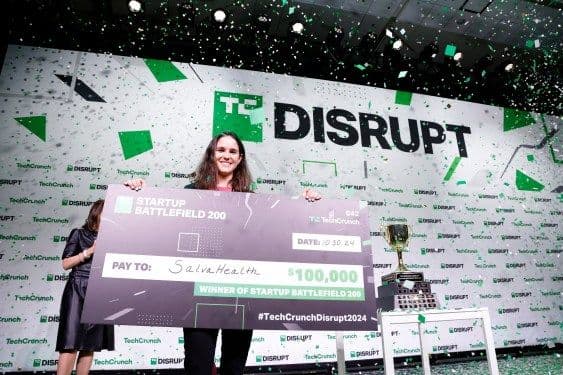
Startup Battlefield 200 applications close today: Nominate a founder or submit your startup
Today is the final day to apply or nominate a startup forStartup Battlefield 200. Once the clock strikes 11:59 p.m. PT, the window closes on your chance to compete for $100,000 in equity-free funding, gain global visibility, connect directly with investors, and launch on theTechCrunch Disrupt stage. If you’re building a breakout startup — or know a founder who is — this is the moment to move. Apply nowfor the opportunity to join 200 of the world’s most promising early-stage startups at TechCrunch Disrupt. Founders, this is it. The application window closes tonight. The strongest startups are already in the arena, and applications always surge in the final hours. If your company has been nominated but you haven’t completed your application yet, don’t risk missing your shot by waiting until the last minute. And if you know a startup that deserves investor attention, media exposure, and a global stage,nominate them nowwhile there’s still time to apply before the deadline. Some of the most influential companies in tech history didn’t begin with perfect pitches or massive funding rounds. They started by taking a chance. Dropbox demoed to skeptics before cloud storage was mainstream. Cloudflare pitched before most people understood edge infrastructure. Discord entered as a scrappy gaming startup called Hammer & Chisel. All of them came through Startup Battlefield. That’s because Startup Battlefield 200 has never been about rewarding the most polished companies. It’s about identifying the most promising ones. Pre-launch is fine. Early traction is fine. No revenue is fine. What matters is whether you’re building something that genuinely changes an industry. The application itself is your first pitch. And today is your final opportunity to make it. Startup Battlefield 200 is where breakout startups get discovered. Selected companies will showcase at TechCrunch Disrupt in front of 10,000+ attendees, leading venture capital firms, global media, and the broader TechCrunch audience. Founders gain direct investor access, live exposure, and the opportunity to prove they belong among the next generation of category-defining companies. Every selected startup receives: Every selected company pitches live, whether on the Disrupt Stage or the Pitch Showcase Stage. Both put founders directly in front of investors, media, customers, and partners looking for what’s next. You do not need to win the competition for this experience to change your company’s trajectory. The exposure you get from this alone could be what pushes the needle. More than 1,700 startups have participated in Startup Battlefield over the years. Together, they’ve raised over $32 billion and produced more than 250 exits, including acquisitions by Microsoft, Google, Salesforce, Uber, and Amazon. Alumni include companies like Dropbox, Cloudflare, Discord, Fitbit, Mint, and Trello. Behind every one of those success stories was a founder willing to put their company forward before the rest of the world caught up. We’re looking for ambitious early-stage startups building innovative, potentially category-defining products. Applications are open globally across industries. Most selected startups are pre-Series A, though select Series A companies may qualify. To apply, startups should have: Thousands apply every year. Only 200 are selected. Just 20 finalists pitch on the main Disrupt Stage. One startup wins $100,000 in equity-free funding. The founders who change industries rarely wait until they feel completely ready. They apply before certainty exists. If you’ve been debating whether to submit, this is your final chance. The deadline closes tonight at 11:59 p.m. PT. If you’re building something category-defining — or know a startup that deserves the spotlight —submit your nomination and complete your applicationbefore time runs out.
View