Latest AI News
Lovable launches its vibe coding app on iOS and Android
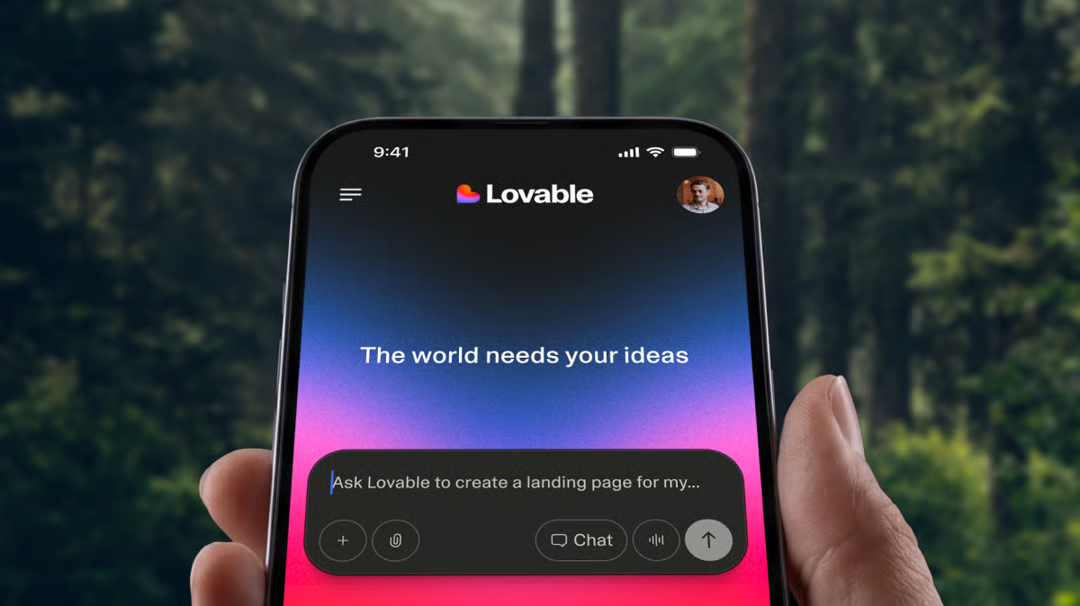
Apple’s recentcrackdownon vibe-coding apps hasn’t held up Lovable’s launch of its no-code AI app builder, which isnow availableas a mobile app onAppleandGoogle’sapp stores. The vibe coding startup’s new mobile app is being pitched to would-be app builders as a way to code on the go via voice or text AI prompts that let you capture your ideas as they pop into your head. That means you can kick off Lovable to work on your random app idea from anywhere, letting its agent run autonomously after receiving your input. The new app will also allow you to switch back and forth between your computer and phone to pick up where you left off on a given project and receive notifications when a build is ready for review. The app’s arrival comes shortly after Apple addressed what vibe coding apps can and can’t do on its App Store. The tech giantrecently blocked updatesto popular vibe coding tools, including Replit and Vibecode, for violations of its developer guidelines. Simply put, Apple wasn’t banning vibe-coding apps themselves, but it won’t allow apps that download new code or change their functionality, as that presents a security risk to end users. (It also means that Apple’s App Review team can’t properly vet the app during the approval process.) Apple also temporarilyremovedthe vibe-coding app Anything from the App Store for similar reasons, but the appreturnedafter making changesearlier this month. To comply with Apple’s rules, the vibe coding apps are no longer able to run their generated apps inside the host app. Instead, those app previews were moved to web browsers. Lovable has also seemingly complied with these rules as its new app touts the ability to turn ideas into “working websites or web apps.”
View

With $680 Mn in Q1, Indian AI Startups Have Found Their Mojo. But for How Long?
Investors are increasingly backing AI startups that can demonstrate monetisation, customer stickiness, and scalable enterprise use cases.
View

Taylor Swift Files to Trademark Voice, Image to Protect Her Likeness From AI Deepfakes: Report
Musician Taylor Swift has reportedly filed to trademark her voice and image. As per reports, the move comes amid rising artificial intelligence (AI)-generated deepfakes that, in particular, have affected celebrities and public figures. The pop superstar is said to have filed applications to trademark two samples of her audio and an image of her performing on the stage during her Eras tour. The application is currently in the review period, and the US government body will have to decide if the audio sample qualifies for trademark.
View
Otter’s new feature lets users search across their enterprise tools
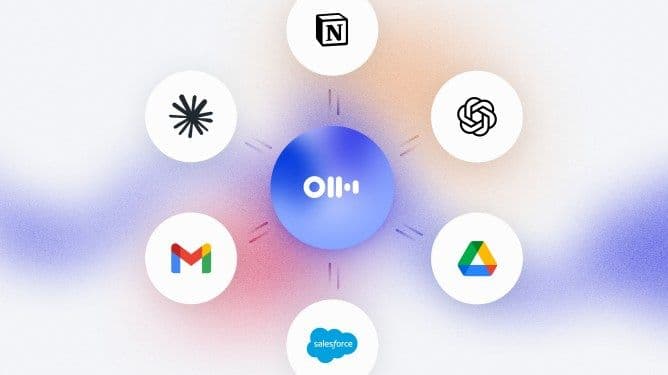
AI meeting notetaker apps have realized that transcribing meetings and providing summaries alone is not enough to justify their business models and valuations. They now want to act as a full workspace where users bring in data from different sources, search across all of it, and make decisions about their business. Following notetakers like Read AI, Fireflies.ai, and Fathom, Otter is now launching enterprise search by acting as a Model Context Protocol (MCP) client. That means it can connect to and pull data from outside apps and services using a common standard that AI tools are rapidly adopting. Otter has been around for nearly a decade now, but it has been making moves toward becoming an enterprise productivity tool in the last few months. Last October, the company launched a way fororganizations to build custom MCPs to access Otter data outside the app. The company’s latest move is more about bringing outside data into the app. With this launch, users can connect their Gmail, Google Drive, Notion, Jira, and Salesforce accounts and query that data along with existing meeting data. The company said that it will soon allow connections with Microsoft Outlook, Teams, SharePoint, and Slack. Users can not only search for data across these tools but can also push meeting summaries to Notion or draft a Gmail message. The company said that it has also redesigned its AI assistant to be consistently present across the whole interface, so users can ask questions anytime. The assistant can understand the context of the screen, such as a particular meeting or a channel, and answer questions accordingly. Meanwhile, most notetakers are followingGranola’s leadand allowing fora botless meeting capture— recording meetings using a device’s system audio rather than having a bot join the call. Otter said that it brought this feature to the Mac app late last year, and is now launching a Windows app with a similar feature. There has been a debate around meeting note-taking with bots (where a bot joins the meeting) or without bots. Otter CEO Sam Liang said that the company’s enterprise customers prefer when a meeting notetaker joins the call. “When we talk to enterprise customers, most of them actually prefer the note taker that joins the Zoom meeting because it provides the transparency. They also prefer the meeting notes to be shared with all the meeting attendees, so that the note is not limited to one person,” he told TechCrunch over a call. Otter said that it has a deduplication feature that prevents a swarm of bots from joining a meeting simultaneously to avoid situations where there are more bots than humans on a call. Last year, the company said it had25 million users and $100 million in annual recurring revenue. While the company didn’t provide a new set of financials, it said that the platform now has 35 million users.
View
Vertiv Acquires Liquid-Cooling Specialist to Bolster AI Infrastructure Capabilities
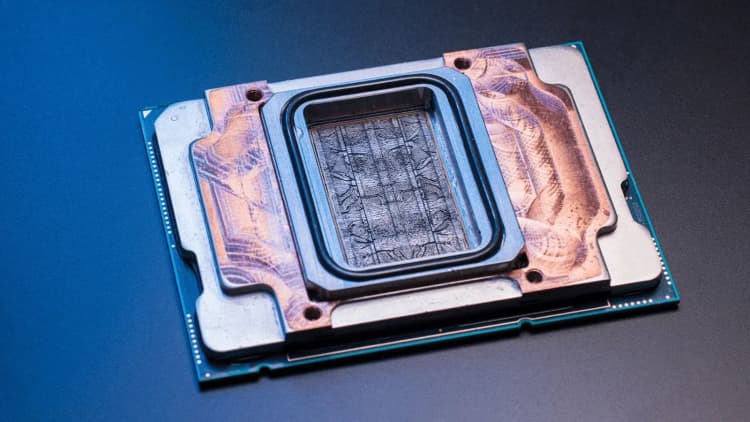
As AI workloads push rack densities beyond the limits of air cooling, operators need integrated thermal solutions that work from the chip to the cooling tower.
View

Is NVIDIA’s Golden Age—and Monopoly—Coming to an End?
The AI chip market is growing fast, but NVIDIA’s dominance is under pressure as big cloud companies build their own chips.
View

The $20 Billion Bet: Why OpenAI-Cerebras Deal is Far More Strategic Than You Think
In the AI infrastructure arms race, speed, capital, and control of the supply chain have become critical. OpenAI and Cerebras are now bound together by all three.
View
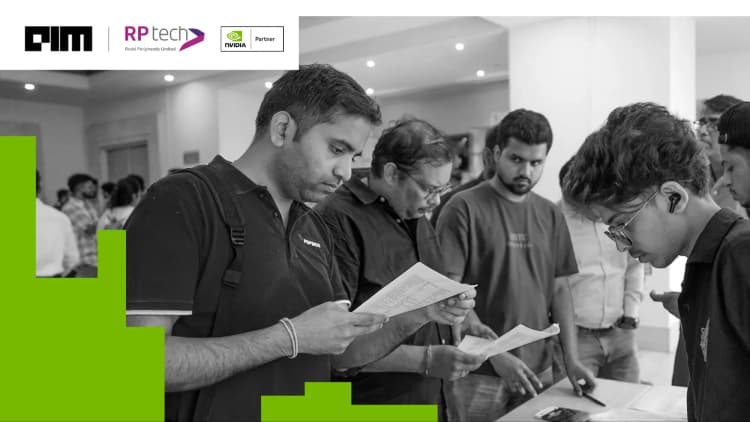
Inside GenAI Meetup Hosted by RPTech, an NVIDIA Partner, in Association With AIM in Hyderabad
The session explored how developers can build, fine-tune, and deploy AI models locally without relying entirely on cloud APIs.
View

Zurich Insurance Group Launches GCC in Hyderabad to Accelerate AI & Technology Capabilities
The Hyderabad GCC will function as a strategic extension of the company’s global operating model.
View
OpenAI, Microsoft Make Major Changes to Partnership, Remove the AGI Clause
OpenAI and Microsoft's exclusive partnership is now officially over. On Monday, both companies announced several changes to their existing deal, including the removal of key exclusivity clauses. Additionally, the amended partnership has also ended the vaguely worded artificial general intelligence (AGI) clause, which dictated several “if-this-then-that” scenarios. The new agreement is now clearer and lets both companies better safeguard their interests. Interestingly, the second stage of contract negotiations between Microsoft and OpenAI has occurred just six months after the two entities agreed to let the ChatGPT maker create a for-profit entity.
View
NVIDIA Leases 7.6 Lakh Sq ft Office Space in Bengaluru for ₹1,230 Crore Over 10 Years
The space is located at Bagmane Capital – Memphis South Tower and spans 12 floors.
View

Reliance to Build India’s Largest AI Data Centre Cluster in Andhra, to Invest $17 Bn
The project is expected to be completed by 2030.
View