Latest AI News
MathCo partners with Google Cloud to push ‘workflow native AI’ adoption
MathCo has partnered with Google Cloud to help enterprises move beyond isolated AI use cases and embed intelligence directly into end-to-end workflows.
View
Deeptech or Deep Hype? Decoding Uttar Pradesh’s Roadmap Post Puch AI
With GCC and startup policies armed with incentives, Uttar Pradesh hopes to sprint to the front of deeptech innovation. But its startup ecosystem still shows signs of structural immaturity.
View

Karnataka Pioneers SpaceTech Centre of Excellence to Boost Commercial Innovation
The Centre is designed to bridge the gap between research and real-world applications by enabling the commercialisation of space technologies.
View
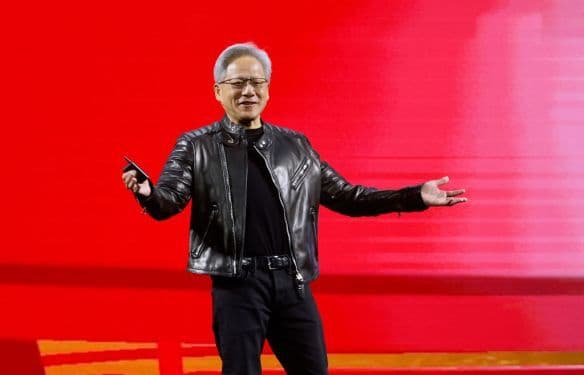
As workers worry about AI, Nvidia’s Jensen Huang says AI is ‘creating an enormous number of jobs’
When it comes to the specter of AI’s labor-displacing potential, Jensen Huang thinks that the American worker has nothing to fear. Duringa conversationMonday night with MSNBC’s Becky Quick hosted by the Milken Institute — an economic policy think tank, the jovial Nvidia CEO said that AI was an industrial-scale generator of jobs, not the harbinger of mass unemployment that so-called “AI doomers” have often accused it of being. A number of different topics were broached during the talk, but a central theme that kept coming back was the ongoing economic anxiety surrounding the AI industry and whether it was something Americans should be legitimately worried about. At one point Quick noted: “This is happening so quickly. Is there a bigger dislocation than we’ve seen in the past that leads to greater inequality? And what do we do about that?” Throughout the night, Huang struck an optimistic note. “AI creates jobs,” Huang asserted during the discussion, adding that “AI is [the] United States’ best opportunity to re-industrialize” itself. Huang noted that the AI industry is powered by a new breed of industrial factories—the kinds producing the hardware that acts as critical infrastructure for the AI business. (Huang’s company notably sells a lot of that hardware.) Those factories necessarily need workers, as does the rest of the blossoming AI industry. Just because a specific task is automated, that doesn’t mean that a person’s entire job is going to be replaced, Huang reasoned. People who believe this “misunderstand that the purpose of a job and the task of a job are related” but not ultimately the same thing, he said. In other words, Huang’s argument is that even when AI takes over a discrete task within a role, the broader function that employee serves in an organization is likely to remain. Relatedly, Huang was critical of people who allege AI will dominate humanity or that it will wipe out huge sectors of the economy. “My greatest concern is that we scare…people—all the people that we’re telling these science fiction stories to, to the point where AI is so unpopular in the United States, or people are so afraid of it, that they don’t actually engage it,” he said. Ironically, much of the “doomer” rhetoric has been generatedby the AI industry itself, and critics maintain that such hyperbole has been used as a marketing gimmick designed to gin up buzz and excitement for products that aren’t anywhere near the capabilities that such rhetoric suggests. It remains to be seen what kind of long-term impact AI will have on the overall economy. That said, reputable financial and academic organizations have suggested that asmuch as 15% percent of jobsin the U.S. will be eliminated over the next several years as a result of AI.
View
Misleading CVs are Forcing AI Hiring to Rethink How Talent is Identified & Evaluated
Because historical hiring was itself biased—favouring certain schools, companies, and demographics—the AI reproduces those biases at scale.
View
OpenAI’s cozy partner Cerebras is on track for a blockbuster IPO
In the long-running saga that is Cerebras Systems’ IPO, the finish line is finally in sight. The AI chipmakersaidon Monday that it is preparing to sell 28 million shares at $115 to $125 a share. This would raise $3.5 billion and give it a $26.6 billion market cap at the high end. That would be a nice bump in just a couple of months for the late investors who piled into its$1 billion Series Hat a $23 billion valuation in February. It would also be a boon to OpenAI and a few of its executives. Should Cerebras pull off an initial public offering at or above the high end, this will be the largest tech IPO of 2026 so far. It could also prove the appetite for even bigger blockbuster offerings in the wings, like SpaceX and possibly OpenAI and Anthropic. Cerebras offers an AI-specific chip called the Wafer-Scale Engine 3 that challenges GPU-based AI chips. Cerebras says its chip is faster for inference while using less power than such competitors. Inference is the compute needed to process user prompts. A long list of top-name investors stands to gain from a healthy IPO. Rick Gerson’s Alpha Wave; Benchmark (via partner Eric Vishria); Lior Susan’s Eclipse; Fidelity; and Foundation Capital (via partner Steve Vassallo) are its largest shareholders with more than a 5% stake, accordingto the company’s SEC filing. The company says its list of investors also includes 1789 Capital, Abu Dhabi Growth Fund, Abu Dhabi’s G42, Altimeter, AMD, Atreides Management, Coatue, Moore Strategic Ventures, Tiger Global, Valor Equity Partners, and VY Capital. Plus, Cerebras names onits websitea long list of angel investors, too. These include OpenAI founder and CEO Sam Altman, OpenAI founder and president Greg Brockman, former OpenAI chief scientist (now founder of his own AI startup) Ilya Sutskever, OpenAI board member and Quora CEO Adam D’Angelo, Sun Microsystems and Arista co-founder Andy Bechtolsheim, Intel CEO Lip-Bu Tan, and several other tech luminaries. While Sam Altman’s stake wasn’t large enough to disclose in the SEC filings, he was quoted in its S-1. That’s because Cerebras’ relationship with OpenAI is even more noteworthy than its angel investors. This relationship was even presentedas evidence by Elon Musk in his lawsuit with OpenAI.OpenAI had at one point considered acquiring Cerebras, according to legal filings by Musk’s attorneys that claim he was unaware of all of the OpenAI execs’ personal investments in the company. That deal never happened, but OpenAI did become one of Cerebras’ largest customers. In fact, in December, OpenAI loaned Cerebras $1 billion, secured by warrants that allow OpenAI to buy over 33 million shares, the S-1 discloses. So while OpenAI is not a large shareholder now, it could become one. Cerebras had hoped to go public in 2024 but was delayed due to a federal review of an investment from Abu Dhabi-based cloud provider G42, which was (and still is, the chip company says) a major customer. That IPO attempt was ultimately shelved. A year later, Cerebras sought to raise more cash. In September,it raised$1.1 billion at an $8.1 billion post-money valuation led by Fidelity and Atreides. A few months later, Cerebras signed its new multi-year agreement worth morethan $10 billionwith OpenAI that included the loan and warrants. In February, it raised the $1 billion Series H, its last mega round. Should investors eat up the IPO, then OpenAI and its executives stand to gain in more ways than one. That seems likely. Banks are already fielding $10 billion worth of orders for the $3.5 billion worth of shares on offer,Bloomberg reports.That kind of demand indicates that the company will likely price its shares even higher than this announced range, raising even more cash for itself and more value for its investors.
View
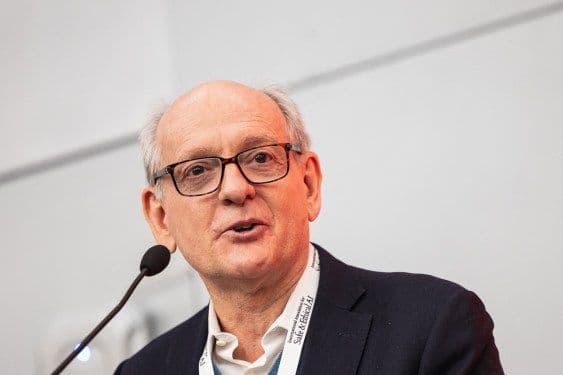
Elon Musk’s only AI expert witness at the OpenAI trial fears an AGI arms race
When do we take AI doomers seriously? That’s a key subtext of Elon Musk’s attempt to shut down OpenAI’s for-profit AI business. His attorneys argue that the organization was set up as a charity focused on AI safety and lost its way in pursuit of lucre. To prove that, they cite old emails and statements from the organization’s founders about the need for a public-spirited counterweight to Google DeepMind. Today, they called the only expert witness to speak directly to AI technology: Stuart Russell, a University of California, Berkeley computer science professor who has studied AI for decades. His job was to offer background on AI and establish that this technology is dangerous enough to worry about. Russell signed anopen letterin March 2023 calling for a six-month pause in AI research. In a sign of the contradictions here, Musk also signed the same letter, even as he was launching xAI, his own for-profit AI lab. Russell told jurors and Judge Yvonne Gonzalez Rogers that there were a variety of risks associated with the development of AI, ranging from cybersecurity threats to problems with misalignment and the winner-take-all nature of developing artificial general intelligence (AGI). Ultimately, he said that there was a tension between the pursuit of AGI and safety. Russell’s larger concerns about the existential threats of unconstrained AI didn’t get aired in open court after objections from OpenAI’s attorneys led the judge to limit Russell’s testimony. But Russell has long been a critic of the arms-race dynamic created by frontier labs around the globe competing to reach AGI first and called for governments to regulate the field more tightly. OpenAI’s attorneys spent their cross-examination establishing that Russell wasn’t directly evaluating the organization’s corporate structure or its specific safety policies. But this reporter (as well as the judge and the jurors) will be weighing how much value to put on the relationship between corporate greed and AI safety concerns. Virtually every one of the OpenAI founders have strenuously warned about the risks of AI, while also emphasizing the benefits, attempting to build AI as fast as possible — and hatching plans for AI-focused for-profit enterprises they would control. From the outside, a clear issue here is the growing realization inside OpenAI after its founding that the organization simply needed more compute spend if it was to succeed. That money could only come from for-profit investors. The founding team’s fear of AGI in the hands of a single organization pushed them to seek the capital that ultimately tore the team apart, creating the arms race we know today — and bringing us to this lawsuit. The same dynamic is already playing out at a national level: Senator Bernie Sanders’ push for a lawimposing a moratoriumon data center construction echoes AI fears enunciated by Elon Musk, Sam Altman, Geoffrey Hinton, and others. Hodan Omaar, who works at the trade organization the Center for Data Innovation, objected to Sanders citing their fears without their hopes, telling TechCrunch that “it is unclear why the public should discount everything tech billionaires say except when their words can be recruited to fill gaps in a precarious argument.” Now, both sides of the case are asking the court to do just that: take part of Altman’s and Musk’s arguments seriously, but discount the parts that are less useful for their legal argument. Correction: The article was updated to correct the name of Stuart Russell, University of California, Berkeley computer science professor.
View

Image AI models now drive app growth, beating chatbot upgrades
Image model releases are driving growth for AI mobile apps, generating 6.5x more downloads than traditional model updates, according to a new report from app intelligence provider Appfigures. This marks a shift from earlier days, when the release ofnew modelspowering theconversational experiencesdrove more demand, alongside the new features like avoice chat interface. For instance, ChatGPT and Gemini each added tens of millions of new downloads after releasing their respective image models,Appfiguresfound. For Google’s Gemini, the release of its image model Nano Banana drove an additional 22+ million downloads in the 28 days following the introduction of theGemini 2.5 Flash image model last August. This launch lifted the app’s downloads by more than 4x over that period, the data showed. Meanwhile, ChatGPT added more than 12 million incremental installs in the 28 days after the introduction ofits GPT-4o image model in Marchof last year. That’s roughly 4.5x more downloads than it saw for its GPT-4o, GPT-4.5, and GPT-5 model releases, Appfigures pointed out. Other model releases followed similar trends, though on a smaller scale. Meta AI’s introduction of its AI video feed Vibes added an estimated 2.6 million incremental downloads in the 28 days after itsSeptember 2025 release. (Yes, technically, this is a video model, but it’s ultimately about visual content, not just text.) Still, the report cautioned, additional downloads don’t always translate into increased mobile revenue. Instead, new image model releases give people a reason to install the app and try out its improved image-generation capabilities. That doesn’t mean they’ll necessarily convert to paying subscribers. For example, Appfigures noted that Nano Banana drove only $181,000 in estimated gross consumer spending during the 28-day window following its release, even though it produced a larger spike in downloads than ChatGPT’s 4o image model release. Meta AI’s launch of Vibes also led to additional downloads, but no meaningful revenue. Among the three, only ChatGPT turned the increased attention into actual dollars. OpenAI’s 4o image-generation model led to an estimated $70 million in gross consumer spending over the 28 days after its launch, compared with its prior baseline, Appfigures said. The company also looked at DeepSeek in its analysis, but it didn’t fit the pattern. While DeepSeek R1 drove 28 million downloads afterits January 2025 release, it wasn’t a typical model comparison event. This was DeepSeek’s breakout moment, when it went from being relatively unknown to an overnight sensation as the tech industry learned about the techniques it used to train its AI models at a fraction of the cost of its competitors. This case highlights how curiosity can drive downloads — though in this instance, the interest wasn’t tied to an image model.
View
DoorDash adds AI tools to speed up merchant onboarding, edit photos of dishes
DoorDash on Monday added new AI-powered tools that let merchants speed up onboarding, edit photos to make dishes look better, and create websites based on their app listings. The onboarding tool works similarly to the oneAmazon launched in 2024. Merchants can point the tool to their website, from which it will automatically fetch information such as photos, store hours, and menu items to create a listing on the app. Merchants can review and edit all of this information before publishing the listing. DoorDash has also revamped its video library. The library now lets merchants tag dishes in videos so that customers can order those items directly. The library also shows stats such as total views, video-driven sales, and new customer sales. Restaurants are getting a few photo-editing tools, too: AI Retouch can replace backgrounds, sharpen images, and optimize lighting without changing the dish; and AI Replate manipulates pictures of dishes so they look like they’re plated professionally, changing lighting and color. Merchants can also provide a reference image to apply a particular style to an existing image. “At DoorDash, we’re constantly building tools to help merchants succeed, from their very first day on the platform, to every order after. These new tools reflect our belief that the right technology should remove friction, not add it, so merchants can focus on what they do best: making great food and delivering incredible customer experiences,” Brian Tolkin, head of merchant product at DoorDash, said in a statement. The company is adding new features to itscommerce platformas well, one of which lets restaurant owners spin up a website based on existing DoorDash content, such as menu items and photos. The company said during a test of the new feature merchants saw order conversion rates of nearly 10% on average. The company has also added a new marketing campaign builder that lets merchants automate content creation, email outreach, and scheduling.
View
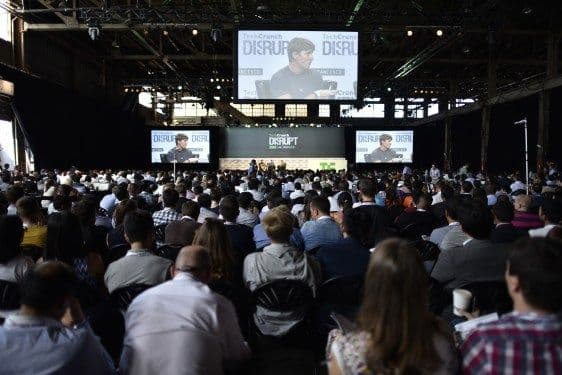
5 days only: Bring a partner or colleague and get 50% off a second TechCrunch Disrupt 2026 pass
This is it. The BOGO offer is live. For a limited time, buy one pass toTechCrunch Disrupt 2026andget 50% off a second of the same ticket type. This is a short window to bring someone with you — and get more out of being there. Bring a colleague. A co-founder. A partner. The BOGO offer ends May 8 at 11:59 p.m. PT.After that, prices go up, and you’ll be paying more for the same access.Lock in your 50% off a second pass savings now. No one person can coverDisrupton their own. From October 13–15 in San Francisco,300+ showcasing startupsand 10,000+ founders, investors, and tech leaders come together for three days of 250+ tactical sessions, conversations, and connections that move fast — and change trajectories. When you attend with a colleague, peer, or partner, you don’t just experience more — you make better use of what you hear, who you meet, and: It’s a simple shift, but it changes the outcome.Find your ticket match. Disruptbrings together startup and VC leaders focused on what it takes to build and scale right now. You’ll find value if you’re: The value comes from connecting with people working through the same challenges and learning from those who’ve already done it. Explore theDisrupt events pageto see what’s planned. Who you bring matters — choose the right pass. The buy one, get one 50% off deal applies when youpurchase two of the same ticket typeforDisruptby May 8, making it easy to bring someone from your team. Buy one Investor pass andget a second one for 50% off — a $499 savings. Connect directly with founders, access curated networking, and spend time where deal flow happens. Bringing another investor or partner helps you compare signals and act faster. Buy one Founder pass andget a second one for 50% off — a $399 savings. Meet investors aligned with your stage, challenge your thinking, and hear what’s working from operators. Attending with a co-founder or teammate helps you divide and move quickly. If you’re ready to pitch,Startup Battlefield 200gives you a shot at VC exposure, TechCrunch coverage, and a $100,000 equity-free prize. Buy one Attendee pass andget a second one for 50% off — up to $444 savings. Built for product, engineering, growth, and go-to-market teams, this pass gives you access to stages, breakouts, and networking to optimize your roadmap to revenue systems. Buy one Non-profit pass andget a second one for 50% off — a $214 savings. Connect with builders and investors and explore how emerging tech applies to your work. Bringing a peer helpsturn what you hear into something usable. Buy one Expo+ pass andget a second one for 50% off — a $149 savings. Go behind the scenes of disruptive startups. Use the show floor to scout talent, demo emerging tech, and land your next role at a high-growth company, while covering more ground with your plus-one. The value of this limited-time discount goes far beyond saving on a secondDisruptpass. It’s about deepening relationships and making the most of the time you’ll spend in San Francisco. It’s the difference between attending and turning conversations into deals, hires, and next steps. This offer is only here for five days.Buy one pass and get a second pass for 50% offwhile you still can. Once the offer ends, the opportunity to attend together at this price does too. Buy one pass. Get 50% off the second (same ticket type). Decide who you’re bringing, andlock in your passes before May 8 at 11:59 p.m. PT.Secure your passes now forDisruptand amplify the value you get from being here.
View
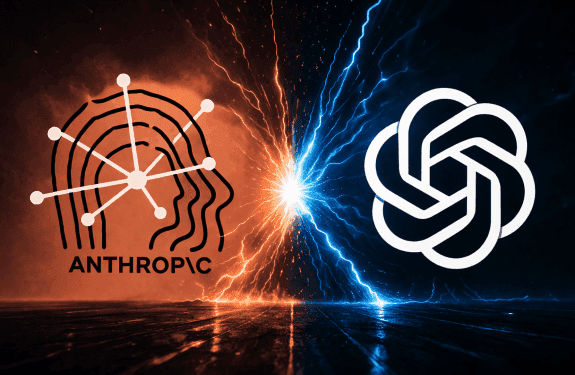
Anthropic and OpenAI are both launching joint ventures for enterprise AI services
On Monday, Anthropicannounceda joint venture focusing on deploying enterprise AI services. Blackstone, Hellman & Friedman, and Goldman Sachs will be founding partners in the new venture, which is backed by a group of VCs, hedge funds, and private equity firms, including Apollo Global Management, General Atlantic, GIC, Leonard Green, and Sequoia Capital. The Wall Street Journal, which first reported news of the partnership,reported the new venture was valued at $1.5 billion, which includes a $300 million commitment each from Anthropic, Blackstone, and Hellman & Friedman. The announcement comes just as Anthropic’s chief rival is preparing to make a similar move. Mere hours before the Anthropic announcement,Bloomberg reportedthat OpenAI was raising funds for a new venture called The Development Company, along very similar lines. OpenAI’s venture would operate at a larger scale, raising $4 billion from 19 investors against a $10 billion valuation. Named investors include TPG, Brookfield Asset Management, Advent and Bain Capital, with no apparent overlap in investment between the OpenAI venture and Anthropic’s competitor. The overall logic of the two ventures is the same, raising money from alternative asset managers to create new channels for enterprise AI deals. The ventures will presumably get preferred sales access to their investors’ portfolio companies, while the investors will capture more value from any resulting contracts. The new capital will also allow more engineering resources to be devoted to each individual, embracing the forward-deployed engineer (FDE) model popularized by Palantir. As Anthropic put it in its announcement: “An engagement might begin with the company’s engineering team sitting down with clinicians and IT staff to build tools that fit into the workflows that staff already use… Engagements like this will run across mid-sized companies across industries, each shaped by the people closest to the work.” The new ventures come as both AI labs fundraise at a blistering pace, while circling possible IPOs. OpenAI announced $122 billion in new fundingat the end of March, against a valuation of $852 billion.TechCrunch reported last weekthat Anthropic is in the final stages of its own funding round, seeking $50 billion of new funding against a $900 billion valuation.
View
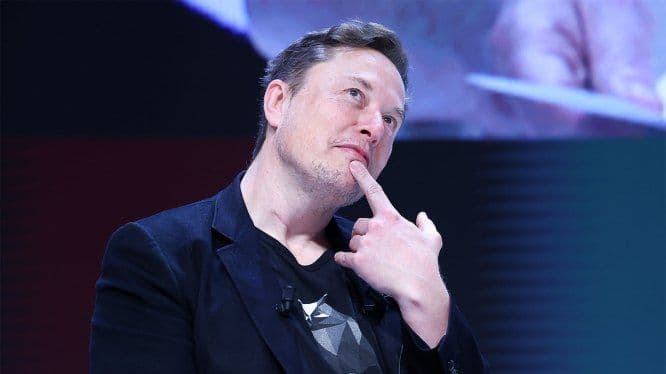
Elon Musk sent ominous texts to Greg Brockman, Sam Altman after asking for a settlement, OpenAI claims
Two days before the Elon Musk vs. OpenAI trial began last week, Musk texted the model maker’s president and co-founder Greg Brockman. Musk suggested to Brockman that OpenAI settle the suit. After Brockman replied by suggesting both sides drop their suits, the exchange went off the rails, with Musk responding: “By the end of this week, you and Sam will be the most hated men in America. If you insist, so it will be.” So says a new filing submitted onSunday by OpenAI’s lawyers.The filing didn’t include copies of the text exchange, and most of it was dedicated to convincing the judge why this exchange on settlement talks should be admitted into evidence. The judge, however, was not having it — ruling the exchange inadmissible, per TechCrunch reporter Tim Fernholz,who is on site covering the trial. The implication, however, is clear. Musk’s lawsuit seeks to unwind OpenAI’s for-profit structure, require its tech be made available to the public, strip Microsoft’s licensing agreement, and compel OpenAI to pay him general, compensatory, and punitive damages plus his lawyer’s fees. After OpenAI’s lawyers publicly shared this “settle-or-else” text,observers instantly clockedthat maybe this trial isn’t about Musk’s concern for AI safety, but about demanding money from its success while kneecapping a rival. This is, essentially, what OpenAI’s countersuit alleges. Meanwhile, the trial continues.
View