Latest AI News

Hark raises $700M Series A for its secretive “universal” AI interface
What will it take to launch the first must-have AI consumer product? Maybe $700 million. At least according to Hark, an AI lab building models and hardware for an AI personal assistant, which said on Thursday that it had raised that much in a Series A round that values it at $6 billion post-money. The mega round was led by Parkway Venture Capital, and included Align Ventures, AMD Ventures, ARK Invest, Brookfield, Greycroft, Intel Capital, Prime Movers Lab, Qualcomm Ventures, Salesforce Ventures, and TamarackGlobal. (Phew!) Perhaps what’s most notable about the fundraise is how little Hark has revealed aboutwhat it is building. Founder and CEO, Brett Adcock, also the entrepreneur behind robotics company Figure.AI and electric aircraft builder Archer, launched Hark in late 2025 with $100 million of his own money to develop an agentic AI system that serves as a universal interface with the digital world. Hark expects to release its first multi-modal models this summer, which it says will power a personal AI platform that works with existing products and services. The company expects to follow that with hardware devices built specifically for those systems. The fresh cash will be spent on recruiting top talent for hardware, product design and AI research, and on securing compute and components. The company currently has 70 employees, and runs a data center with Nvidia B200 GPUs. Abidur Chowdhury (pictured above in a promo video), a former Apple product executive, is Hark’s director of design. He declined to reveal new details of what he’s working on when TechCrunch peppered him with questions this week, but said investors were impressed by a series of demos from his team. “I haven’t seen anything that feels like something that will really help like the normal person,” Chowdhury said, speaking of the AI products on the market. “People are really building things to help people make software, and it’s working, and it’s really impactful, but we haven’t really seen that for the normal person yet.” He noted that while Anthropic is prioritizing coding tools and OpenAI is moving in the same direction ahead of its IPO, few companies are focused solely on building interfaces and native hardware the way Hark is. “With this focus, with this great team that we have, and this round that we’ve raised, I think we can make something really special in this space,” Chowdhury said. Still, there are more questions than answers. One challenge will be providing the context of a customer’s life to an AI assistant without making the people around the user uncomfortable or violating their privacy. Wearables like Meta’s existing glasses or the forthcoming Android spectacles don’t seem to have solved this problem. When asked how he might square this particular circle, Chowdhury only smiled. “Sounds like that would make a great product.”
View
Spotify adds AI-powered Q&A and briefing generation features to podcasts
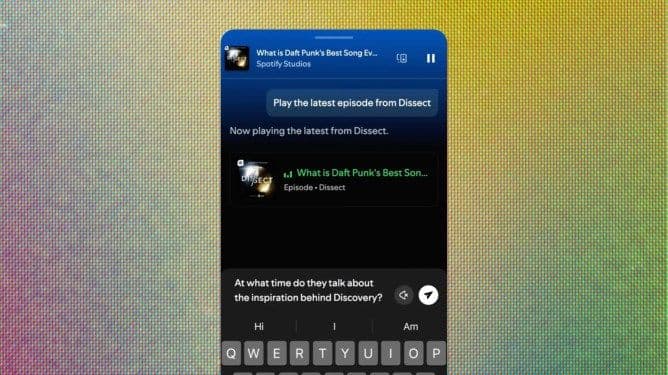
For users, Spotify has been a place to consume podcasts made by other creators. The company wants to change that by introducing a personal podcast feature, which uses AI to generate podcasts for users based on an idea or a custom prompt. Earlier this month, the company released aGitHub-based command-linetool for Claude Code and Codex that allows users to create a podcast and save it to their own Spotify library. The company said that, soon, users would be able to create podcasts directly within the Spotify app. They can also schedule them to create daily or weekly briefs for topics they have a recurring interest in. Plus, they can also create one-off podcasts to understand a topic. Users can make a request like “Share my daily city updates, and tell me about local concerts from artists I love,” or “Help me understand economics in five minutes,” to create a podcast and have it saved to the library for personal consumption. What’s more, users can add links, PDFs, and text, and choose a custom voice to generate podcasts. The company is taking a leaf out ofNotebookLM, ElevenLabs reader, and formerNotebookLM devs’ app Huxeto create personal podcasts on any topic. Spotify also released a dedicated desktop app called Studio by Spotify Labs, which can connection wth users’ email and calendar to create personalized briefings. In addition, the company is rolling out an AI-powered Q&A feature for Premium mobile users in the U.S., Sweden, and Ireland today. With this, users can ask questions about the episode they are listening to or a concept mentioned in the podcast to get answers. They can also ask for podcast recommendations on specific topics. The new addition comes after the company released a prompt-basedfeature to create podcast playlists in April. Until now, Spotify has been pushing people to consume more video podcasts. The company said that users who streamed a video podcast were up 50% year-on-year. With this release, Spotify wants users to engage more with the app by asking questions about a podcast, which is akin toAsk YouTube, released by Google earlier in the week, and creating their own interest-based podcasts. For podcast makers, Spotify is making its creator sponsorship tool available to manage brand partnerships. Plus, it is also adding a way for creators to charge a subscription to unlock exclusive content and experiences. Social platforms likeInstagram, Facebook, andSnapalready offer a similar product to content creators.
View

Spotify takes on Google’s NotebookLM with its new app
One of the common features for companies to build in the age of AI is to connect services like email, calendar, documents, and notes to create a daily brief in text or audio format. Spotify is also giving in to this temptation and releasing a new standalone desktop app called Studio by Spotify Labs for this purpose. Today, the company released the ability for users to explore a topic by creating a podcast about it. Spotify is also adding personal context to this podcast generation tool. And, because in 2026 companies can’t refrain from adding agents to their apps, the new Studio app has an agent that can browse the web and fetch personal information to create a personal podcast. For instance, the tool can create a daily briefing or a podcast based on your email and schedule. Users can also make a multistep request like “Create a daily audio brief for my road trip through Italy. Walk me through my day using my calendar and bookings. Recommend a memorable dinner spot near where I’ll be. And end with a podcast recommendation I’d love for the drive” to generate a podcast. All these AI-generated podcasts are saved in your Spotify library for personal consumption and are synced across devices. They are not available publicly. The audio company warned that this is an early preview of the app, and AI can make mistakes and may output unreliable content all the time. Loading the player… The company is releasing this app in research preview to more than 20 markets. It said that the app will be available to select users who are 18 years or older. The tool will compete with Google’s NotebookLM, which started popularizingpodcast generation based on selected source material a few years ago. And in true Google fashion, the company also released another separate feature to createa daily podcast based on the Discover feed. Since then, the format of creating a podcast to explore a topic or get daily briefings has been adopted by companies likeAdobeandElevenLabsand apps likeHeroandHuxe. Spotify’s launch of the desktop app follows thecompany’s recent debut of a command-line tool for users of coding tools like Claude Code or Codexto create personal podcasts and save them to their Spotify library. With the new Studio app and personal podcast feature, non-coders can now also take advantage of this offering. The launch is another example of how Spotify wants to be involved in all things audio. With its desktop app, Spotify could offer more integrations for creating podcasts in the future. Plus, it could use the new app to capture system audio to become a Granola-style notetaker. While this is a speculation, we have seen startups likeRewindand Cluely become meeting-notetakers, so it could become another area of interest for the company further down the road.
View

Spotify launches an ElevenLabs-powered audiobook creation tool
Alongside tools for AI-generated podcasts, Spotify on Thursday introduced a new, ElevenLabs-powered AI tool for self-publishing audiobooks within the Spotify for Authors platform. The company said at its Investor Day event that the feature will launch in beta this June on an invite-only basis, initially with support for the English language only. The AI-powered audiobook generation won’t bind authors to an exclusive contract, meaning they are free to publish their generated audiobooks anywhere. The news builds onSpotify’s previous partnership with ElevenLabs, which allowed writers to submit audiobooks created on the voice AI startup’s platform to Spotify. The audio streaming platform also already had a partnership withGoogle Play Booksto allow for digitally narrated content. However, it may have wanted authors to access newer voice models that sound more expressive and human-like, like those offered by ElevenLabs. Notably, ElevenLabs had released itsown self-publishing platform for authors in 2025. Spotify is also expanding its “Spotify for Authors” platform to support 10 more languages, including French, Canadian French, German, Dutch, Latin American Spanish, Swedish, Finnish, Icelandic, Danish, and Norwegian. In addition, the company will expand its Audiobook+ plans this year to allow for higher listening limits and will add new options for students and families in the future. (Spotify didn’t specify any pricing or usage details for these plans in its announcement, however.) To date, Spotify has clocked in over a million Audiobook+ subscriptions, and it is on track to generate $100 million in annualized recurring revenue for the platform. At the event, the company introduced a new way for users to ask questions using natural language for audiobook discovery. This summer, Spotify will also expand a feature that allows users to create prompt-based playlists forpodcastsandmusicto include audiobooks, it said. Spotify has increased its focus on audiobooks heavily in the last few years and has managed to build its catalog to 700,000 titles. The company brought the program tointernational markets,made an investment in non-English titles,enabled in-app purchases, andreleased audiobook charts. This year, it also started a program for authors to sellphysical books in the U.S. and the U.K. Through these initiatives, the company has managed to bump up listening hours by 60% year-on-year, the company claims. Spotify also said that more than half of its audiobook listeners started in the last year.
View

OpenAI Model Solves 80-Year-Old Geometry Problem
The proof was independently checked by external mathematicians, while a companion paper explaining the argument and its implications was also released.
View

Google’s Gemini Offers Agentic Design Creation With New Adobe and Canva Connectors
Google is trying hard to turn Gemini into a super app that can handle not only different tasks, but tasks in different apps and platforms. The Mountain View-based tech giant is achieving this through the underlying artificial intelligence (AI) models' agentic capabilities and third-party connectors. The first allows the chatbot to take actions via external tools, and the second allows Gemini access to third-party data hubs and platforms. The latest to announce dedicated connectors for the chatbot are Adobe and Canva.
View
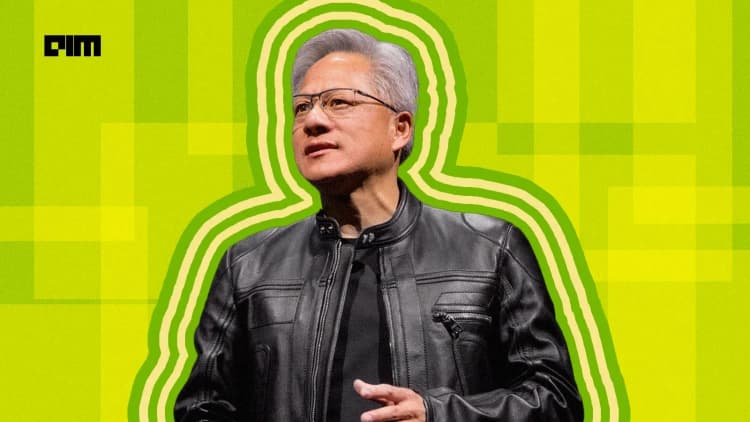
NVIDIA Hits Record Quarter With $81.6 Bn Revenue as Blackwell Fuels AI Spending
The chipmaker forecasts another strong quarter as Blackwell demand and AI infrastructure spending continue to rise.
View
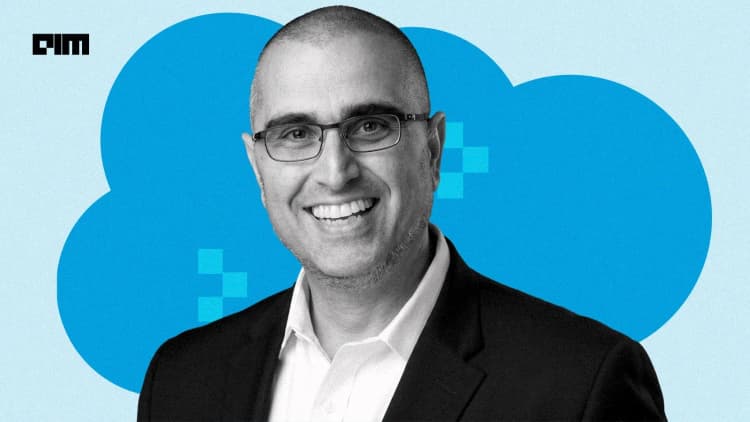
Salesforce is Already Close to Crushing Last Year’s 12.3 Tn Tokens Record
Salesforce redeployed 3,000 employees into sales roles as AI agents took over repetitive operational tasks across the company.
View
Figma Brings AI Agent for Real-Time Design Collaboration
The launch adds to Figma’s existing AI products, including its prompt-to-prototype tool, Figma Make, and the Figma Model Context Protocol server.
View

Tamil Nadu Creates Dedicated AI Ministry in Cabinet Reshuffle
After Kerala, Tamil Nadu also got a dedicated Ministry for Artificial Intelligence.
View

Mphasis Partners With ISB to Set Up AI Hub, Commits ₹20 Cr
Mphasis, through its foundation arm, will fund a new AI hub to drive applied research, policy insights, and responsible AI adoption.
View

Indian Developers Don’t Trust AI Code. This GCC Wants to Change That
Indian engineering teams spend more time checking AI-generated code even as software supply chain risks grow.
View