Latest AI News

Elon Musk can’t hear you over the sound of his $1.75 trillion IPO
The SpaceX S-1 is finally here, and the story it tells goes way further than rockets. The filing runs to 36 pages of risk factors alone, and the numbers inside match the ambition: a $28 trillion total addressable market, a pay package tied to establishing a Mars colony, and a valuation target that would make it the largest IPO in American history. On this episode of TechCrunch’sEquitypodcast, Kirsten Korosec, Anthony Ha, and Sean O’Kane dig into what the filing actually says, what it leaves out, and whether any of this math connects to reality. Listen to the full episode to hear about: Subscribe to Equity onYouTube,Apple Podcasts,Overcast,Spotifyand all the casts. You also can follow Equity onXandThreads, at @EquityPod.
View

How VCs and founders use inflated ‘ARR’ to crown AI startups
Last month, Scott Stevenson, co-founder and CEO of the legal AI startup Spellbook, took to X in an effort to expose what he called a “huge scam” among AI startups: inflation of the revenue figures that they announce publicly. “The reason many AI startups are crushing revenue records is because they are using a dishonest metric. The biggest funds in the world are supporting this and misleading journalists for PR coverage,” he wrote in his tweet. Stevenson isn’t the first to claim that annual recurring revenue (ARR) — a metric historically used to sum up annual revenue of active customers under contract — is being manipulated by some AI companies beyond recognition. Certain aspects of ARR shenanigans have been the subject of multipleother newsreportsandsocialmedia posts. However, Stevenson’s tweet seemed to have struck a particular nerve within the AI startup community, drawing over 200 reshares and comments fromhigh-profile investors, manyfounders, anda fewheadlines. “Scott at Spellbook did a great job of highlighting some of what you might describe as bad behavior on the part of some companies,” Jack Newton, co-founder and CEO of legal startup Clio, told TechCrunch, adding that the post brought much-needed awareness to the topic, referring to anexplanatory postfrom YC’s Garry Tan about proper revenue metrics. TechCrunch spoke with over a dozen founders, investors, and startup finance professionals to assess whether the ARR inflation is as pervasive as Stevenson suggests. Indeed, our sources, many of whom spoke on the condition of anonymity, confirmed that fudged ARR in public declarations is a common occurrence among startups, and how, in many cases, investors are aware of the exaggerations. The main obfuscation tactic is substituting “contracted ARR,” sometimes referred to as “committed ARR” (CARR), and simply calling it ARR. “For sure they are reporting CARR” as ARR, one investor said. “When one startup does it in a category, it is hard not to do it yourself just to keep up.” ARR is a metric established and trusted since the cloud era to indicate total sales of products where usage, and therefore payments, is metered out over time. Accountants don’t formally audit or sign off on ARR primarily because generally accepted accounting principles (GAAP) focus on historical, already-collected revenue, rather than future revenue. ARR was intended to show the total value of signed-and-sealed sales, typically multiyear contracts. (Today, this concept tends to go by another name: remaining performance obligations.) Meanwhile, the term “revenue” is typically reserved for money already collected. CARR is supposed to be another way to track growth. But it’s a much squishier metric than ARR because it counts revenue from signed customers that aren’t onboarded yet. One VC told TechCrunch that he has seen companies where CARR is 70% higher than ARR, even though a significant chunk of that contracted revenue will never actually materialize. CARR “builds on the ARR concept by adding committed but not yet live contract values to total ARR,” Bessemer Venture Partners (BVP)wrote in a blog postback in 2021. Critically, though, BVP says, the startup is supposed to adjust CARR to take into account expected customer churn (how many customers leave) and “downsell” (those who decide to buy less). The main problem with CARR is counting revenue before a startup’s product is implemented. If implementation is lengthy or goes awry, clients might cancel during the trial before all — or any — of the contracted revenue has been collected. Several investors told TechCrunch that they directly know of at least one high-profile enterprise startup that reported it surpassed $100 million in ARR, when only a fraction of that revenue came from currently paying customers. The rest was from contracts that hadn’t been deployed yet and in some cases may take a long time to implement the technology. One former employee at a startup that routinely reported CARR as ARR told TechCrunch that the company counted at least one substantial, yearlong free pilot as ARR. The company’s board, including a VC from a large fund, was aware that the revenue from the eventual paying part of the contract had been counted in ARR during the lengthy pilot program, the person said. The board was also aware that the customer could cancel before paying the full contract amount. The obvious problem with using CARR and calling it ARR is that it is far more susceptible to being “gamed” than traditional ARR. If a startup doesn’t account realistically for churn and downsell, CARR could be inflated. For instance, a startup could offer big discounts for the first two years of a three-year contract and count the whole three years as CARR (or ARR), even though customers may not stick around to pay the higher prices in year three. “I think Scott [Stevenson] is right. I’ve heard all sorts of anecdotes as well,” Ross McNairn, co-founder and CEO of legal AI startup Wordsmith told TechCrunch about ARR misrepresentations. “I speak to VCs all the time. They’re like, ‘There are some choppy, choppy standards out.’” Most cases are slightly less extreme. For instance, an employee at another startup described a discrepancy where marketing materials claimed $50 million in ARR, while the actual figure was $42 million. However, this person claimed that investors had access to the company’s books, which accurately reflected the lower amount. The source said some startups and their investors are comfortable playing fast and loose with their public metrics in part because AI startups are growing so quickly that an $8 million gap is viewed as a rounding error they’ll grow into quickly. There’s another issue surrounding all those public ARR declarations. Sometimes founders use another measurement with the same “ARR” acronym and a similar name: annualized run-rate revenue. This ARR is also controversial because it extrapolates current revenue over the next 12 months based on a given period’s haul (e.g., a quarter, month, week, or even a day). Since many AI companies charge based on usage or outcomes, that method of calculating annualized run-rate ARR can be misleading because revenue is no longer locked into predictable contracts. Most people interviewed for this story said that ARR overstatements of all kinds are hardly a novel phenomenon, but startups have become far more aggressive amid the AI hype. “The valuations have gotten higher, and so the incentives are stronger to do it,” Michael Marks, a founding managing partner at Celesta Capital, told TechCrunch. In the age of AI, startups are expected to grow much faster than ever before. “Going from 1 to 3 to 9 to 27 is not interesting,” Hemant Taneja, CEO and managing director of General Catalyst, said on the20VC podcastlast September, referring to the millions in ARR a startup is traditionally projected to hit each year. “You got to go like 1 to 20 to 100.” The pressure to show rapid growth is prompting some VCs to support, or at least overlook, startups presenting inflated ARR figures to the public. “There are definitely VCs in on this because they’re incentivized to create a narrative that they have runaway winners. They’re incentivized to get press coverage for their companies,” Stevenson told TechCrunch. Newton, whose legal AI startup Clio was valued at$5 billionlast fall, also alleges that VCs are often aware but silent about ARR misrepresentations. “We see some investors looking the other way when their own companies are inflating numbers because it makes them look good from the outside in,” he told TechCrunch. Other investors who spoke with TechCrunch say there is no reason for VCs to expose the overstatements. By turning a blind eye to public pronouncements of inflated ARR, VCs are effectivelyhelping to kingmaketheir own portfolio companies. When a startup publicly reports high revenue, it is more likely to attract the best talent and customers who believe the company is the undisputed winner in its category. “Investors can’t call it out,” a VC told TechCrunch. “Everyone has a company monetizing CARR as ARR.” Still, anyone intimately familiar with the industry’s intricacies has a hard time believing that some of these startups actually reached $100 million in ARR within a few years of launch. “To everyone who’s inside, it just feels fake,” said Alex Cohen, co-founder and CEO of health AI startup Hello Patient. “You read the headlines and you’re like, ‘I don’t believe it.’” However, not all startups feel comfortable representing growth by reporting CARR instead of ARR. They prefer to be clean and clear about their numbers in part because they understand that public markets measure software companies on ARR rather than CARR. These founders prioritize transparency. Wordsmith’s McNairn, who remembers the struggle startups faced justifying high valuations after the 2022 market correction, said he doesn’t want to create an even higher hurdle by exaggerating his startup’s revenue. “I think it is short-sighted, and I think that when you do things like that for a short-term gain, you’re overinflating already crazy high multiples,” he said. “I think it’s super bad hygiene, and it’s going to come back and bite you.”
View
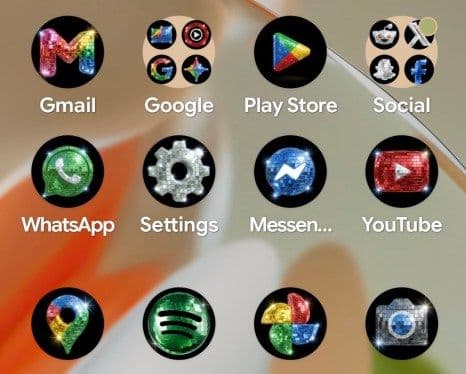
Google goes for the glitter with disco-ball icons: ‘Are y’all sure you still want this?’
So bad, it’s good? Google on Friday joined in the disco ball icon fun taking place on home screens everywhere. After Spotify’stemporarynew disco ball app icon, released to celebrate the company’s 20th anniversary, drewextensive online backlash(and a bit of praise for those who like a little kitsch!), Google decided to get in on the joke and rolled out a custom set of Android app icons sporting a similar disco ball theme. On X, Android ecosystem head Sameer Samat posted, “Your wish is our command. Disco icons available on Pixel as of today…Are y’all sure you still want this?” Your wish is our command. Disco icons available on Pixel as of today.… Are y'all sure you still want this ?? 😅@DurvidImel@RaceJohnsonhttps://t.co/S9dwLZRtHlpic.twitter.com/nvevL7fTSb His post included a screenshot of a Pixel phone fully decked out with sparkly, disco-ball-inspired icons, which looks just as terrible (incredible??) as it sounds. The new icons are available through Pixel’s relatively new custom icons feature, which allows users to choose from different AI-generated styles for their app icons. Before this, users could only customize their icons by changing their colors to match the phone’s wallpaper and theme. The custom icons feature rolled out inMarch’s Pixel Drop— Google’s term for its periodic feature updates to Pixel phones — introducing app icon templates like a hand-drawn “Scribbles” aesthetic, a gold look called “Treasure,” a colorful, painted style dubbed “Easel,” and others. Earlier this week, Samat had jokinglytweeted, “Should we make this icon pack happen on Android?” alongside a Chrome icon turned into a disco ball. Should we make this icon pack happen on Android??@RaceJohnson😅https://t.co/Xbd5xlIVzhpic.twitter.com/nZDhAlGHfL Silly as it may be, Google actually made it happen. Many people had complained about the Spotify icon, calling it ugly, prompting the company toremindthem it was just a temporary sitch. “Alright, we know glitter is not for everyone,” the streamer wrote. Google, seemingly, disagrees. As off-brand as its disco-themed icons are, there’s also something whimsical about turning your whole homescreen into a sparkly landscape of little apps. (And, in case you missed it,the Zillennials are really into whimsyright now, The New York Times reports, describing their “playful response to a difficult world.”) Upon seeing Google’s release, X user and former Pixly co-founder Race Johsnonquipped, “When your home screen gets bottle service.”Said another, “Omg it’s awful. I’ll take it!”
View
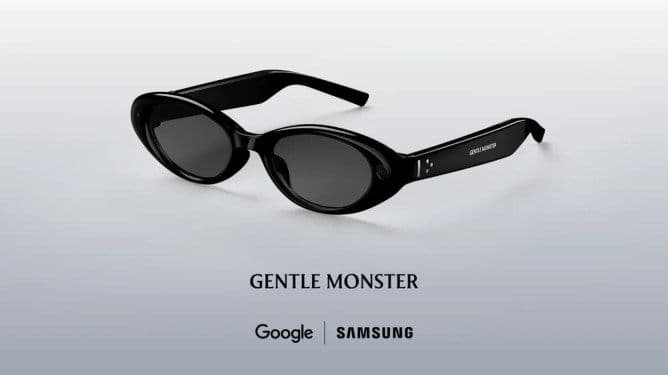
We tried Google’s AI glasses and they’re almost there
At the Google I/O developer conference this week, we had the opportunity for a brief hands-on with Google’s upcoming AI-powered glasses — not theaudio-only glassesthat the company said will begin shipping this fall but rather the glasses that offer a combined audio and visual experience. Firstannouncedat last year’s event, these Android XR glasses offer an in-lens display that puts helpful information in front of you, overlaid on top of the real world. This includes widgets that could display things like the weather, walking directions, Uber pickup details, live translation, and more — even widgets you designed yourself using AI. The glasses will also pair with iOS and Android phones, the company noted, both in the audio-only format and in the future display version. The eyewear with the display is meant to be the next step beyond the first generation of audio glasses coming out later this year. The glasses were developed in partnership with Warby Parker, Gentle Monster, and Samsung, blending Google’s technology with their brands’ design aesthetics. The glasses we tested, meanwhile, were still very much a prototype, although one polished enough to now be tested externally. The reps demoing the XR glasses explained that the prototype allowed Google to not worry about some of the cosmetic details related to different styles and shapes, so it could instead focus on experimenting with the display technology more freely and its impacts on battery life. That means these spectacles are very different from any future shipping version of glasses, in terms of fit, shape, dimensions, and attention to detail. Rather, it’s more like being able to experiment with the “insides” of the glasses, while still in a basic, comfortable frame. The shipping version of the glasses will be able to detect when the glasses are placed on your head and taken off, but the ones we tried didn’t have this feature. To activate Gemini, you perform a two-second press on the right side of the glasses’ frame. A startup chime sounds, letting you know that Gemini is on and listening. In the demo version, starting Gemini also starts the camera at the same time, but the shipping version will allow the user to configure whether they want to turn on the camera when Gemini starts. In an initial test, we played music via the glasses by asking Gemini to play a favorite artist. The venue was too noisy to evaluate the sound quality, unfortunately, as the music was dialed up to the maximum volume and was still relatively hard to hear crisply and in detail. But the initial impression from this limited experience was that the glasses would not be a great substitute for higher-quality earbuds, though they would do if you just wanted some music while you were outside, walking, hiking, or doing chores around the house. The advantage of not having earbuds in is that you can more easily hear someone talking, compared with the transparency mode experiences on devices like Apple’s AirPods. To turn the music off, tap once on the side of the frame, around the middle, as if tapping on your temple. In the second test, we pressed the photo capture button to take a photo of a person. The display was off, so the picture was transferred to our phone and watch. (You’ll later be able to capture video with a long press, but this option was not available to test with the prototype. In the case of video, you would see a video thumbnail preview instead of a photo.) You can also simply ask Gemini to take a photo without having to press the photo button, and perform some sort of AI manipulation on the result. For instance, you can say something like, “Take a photo and turn the person into an anime character.” The photo is sent to the phone, then to the Gemini and Nano Banana servers, and then returns in its edited version. At the Google I/O venue, where Wi-Fi was under a heavy load, the round-trip took around 45 seconds. With the display enabled, you’ll see a simple home screen appear in your field of view. The demo version had some widgets preloaded that showed the weather and a countdown to Google’s I/O event. You could also build quick launchers into specific apps, like Google Maps or Translate, if those were among your main use cases for the glasses. The prototype had just one display over the right eye, but the platform can support both single and dual displays, as well as audio-only glasses. The image itself was a little fuzzy, but we chalked this up to our prescription contacts, which involve wearing one lens optimized for distance on one side, and one optimized for near vision on the other. When we closed one eye, the image came into better focus, but the experience almost immediately left us with some eye strain above the right eye, and it’s unclear if the prescription was entirely to blame. One of the best demos was of the language translation experience on the glasses, which is backed by the Google Translate app on the phone. One of the demonstrators spoke rapid Spanish, and the glasses automatically detected the language and showed the text in English on the display, while Gemini spoke English in our ear. We could see world travelers buying the glasses for this experience alone. We should note that Translate will work on the audio-only glasses, too, just without the text being displayed on the glasses. Instead, you could see the transcription on the phone, if needed, in addition to the real-time audio feedback. Another demo involved using the glasses to navigate. While obviously we couldn’t go out on a walk and leave the venue to test its accuracy, we could get an idea of how it works. You can start the Google Maps experience by asking Gemini to navigate to a destination — which can even be as vague as something like “the nearest coffee shop.” Gemini will activate Google Maps on the phone, and after a brief delay while the experience loads, the glasses will display turn-by-turn directions. When you are looking forward, your next turn information will be displayed. But if you need to get oriented in space, look down at the ground to see your blue dot on a map. You can also turn to the left and right to rotate in space, just like you would try to get the blue dot to point the right way on your phone. Then when you look up again, you can keep walking without the map being in your way. Because the experience is tied to Google Maps on your phone, saved destinations like “home” and “work” will already be available. We were also able to briefly use the glasses to identify a variety of objects in our view and ask questions about them. The glasses initially struggled to identify the replica of a Monet painting on a shelf in front of us, but that’s because the prototype didn’t automatically enable the camera — it had to be turned on again from the app. Still, it took a couple of questions before Gemini said that it looked like a Monet even after we moved in closer to focus on the Monet signature in the bottom left. Other tests were smoother, as the glasses immediately identified the plant on the shelf and answered questions about different recipes in a book. Still, these were things you could do today with Google Lens (or other AI models integrated in chatbot apps), though we suppose it’s interesting to be able to do them without having to pull your phone out. Google says it will have more to share about its Android XR display glasses later this year, when it expands its trusted tester program. In the meantime, the company believes that audio will suffice for some users’ needs, which is perhaps a smart way to spin the fact that it doesn’t have its display glasses ready, despite the competition from Meta and Snap on this front. Like the display version, the audio glasses also provide access to Google’s Gemini AI, which you hear privately through the glasses’ frame speakers. You can do things like listen to music through the glasses, press a button to take a photo, make a call, or tap into your phone apps from these glasses, as you can on the future display versions. Tapping into other third-party apps wasn’t among the items we demoed, but the glasses will allow users to tell Gemini to do things like “take the ingredients from this recipe and add them to my shopping list.” In another example that Google showcased during the event’s keynote, the glasses could see a meal that the wearer was cooking on the stove and offer feedback about the meal, like whether the meat was fully done yet.
View
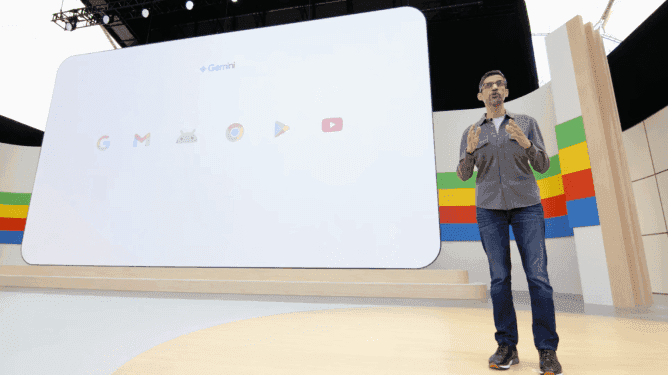
You can no longer Google the word ‘disregard’
Earlier this week, Google rolled outa completely new Search experience, foregrounding AI summaries and kicking the traditional “ten blue links” far down the page. But the sheer scale of Google Search means there are lots of edge cases that the company doesn’t seem to have considered. For instance, this is what you’ll now get if you type the word “disregard” into Google Search. Google has been catching some flack onsocialmediafor this, and it’s easy to see why. As you’ll notice, the Merriam-Webster link is still in there, but you have to scroll past a huge block of empty space. For most users, that single reply is the only thing you’ll see. And crucially, the AI response serves no conceivable value to a user searching the word “disregard.” It’s just a broken tool. For context, here is the same search in Bing, which has been less aggressive about its AI summaries. It’s not perfect, but there is some useful information to be found here. I have been a professional tech journalist for nearly fifteen years, and before today, I cannot think of a single time when a Bing search result was more valuable than the Google equivalent. There really is a first time for everything!
View

Gemini, What's for Lunch? Voice AI Chatbots are Now Telling Kids What to Eat
From personalised meal plans to emotional reassurance, children are increasingly trusting AI tools to navigate insecurities and peer pressure.
View

OpenAI Beats Anthropic by Nearly $1 Bn in Quarterly Revenue
Both OpenAI and Anthropic are planning to go public this year.
View

From American to Southwest: Inside Hyderabad’s Rise as Aviation GCC Capital
Southwest Airlines plans to scale its Hyderabad GCC centre to nearly 1,000 employees.
View
BDIA Pushes for Sovereign Digital Infrastructure Framework to Power India’s AI & Data Economy
The event also marked the formal public launch of BDIA as a not-for-profit industry association focused on advancing sovereign digital infrastructure.
View
ByteDance’s CapCut Teams Up With Google Gemini for Conversational AI Image Editing
Chinese app CapCut and Google are deepening their collaboration by integrating AI-powered creative editing workflows into the Gemini app.
View

Why Karnataka's ₹1,000 Cr Quantum Bet Stands Out in South India
Karnataka Minister NS Boseraju believes the state's existing infrastructure, research institutions, startup ecosystem, and global technology brand give it a significant quantum head start
View
Gemini Users Left Frustrated as Google Shifts to Compute-Based Usage Limits
Google is quietly restructuring the Gemini app's usage limit. After adding a weekly limit and releasing the new usage dashboard earlier this week, the Mountain View-based tech giant is now adopting a compute-based usage limit approach. Ditching the existing message-based count means users' usage will now be measured by the number of tokens they consume, which can significantly reduce their actual usage. Just hours after the change was rolled out, several users took to social media to complain that they hit the rate limit much sooner than before.
View