Latest AI News

Uber Limits AI Coding Tool Spend to $1,500 Per Employee a Month: Report
The company has introduced monthly spending limits on agentic coding tools, including Claude Code and Cursor, after exhausting its AI coding budget earlier this year.
View

OpenAI Wants Codex to Replace More Than Coding
New update marks OpenAI’s push to make Codex a platform for analysts, designers, sales teams, investors, and other knowledge workers.
View

How India's Data Centre Boom Is Stoking a Crisis It Cannot Afford
As cooling costs soar and cities run dry, the country's AI ambitions risk being built on dangerously depleted foundations.
View

Microsoft Launches Scout, an Autonomous AI Agent Built on OpenClaw for Microsoft 365
Microsoft Scout is integrated with Microsoft 365 services, including Teams, Outlook, OneDrive, and SharePoint.
View

Cyera eyes $12B valuation at 80x ARR multiple despite operating losses
Data storage security companyCyerais finalizing a round led by Evolution Equity Partners of at least $300 million at a $12 billion valuation, according to four people with knowledge of the deal. Calcalistwas first to report the funding deal, although TechCrunch’s sources added new details about the company and its financials. Cyera has surpassed $150 million in annual recurring revenue (ARR), three people familiar with the matter told TechCrunch, though it remains far from profitable. The deal values Cyera at 80 times its ARR, a multiple that’s even higher than investors assign to many fast-growing AI startups. Sources told TechCrunch the company is spending money faster than it makes it. Some of those costs are directed at hiring sales staff. According to PitchBook, Cyera has added 500 jobs so far this year. Cyera’s spokeperson said that “the numbers cited are factually and significantly inaccurate.” Evolution Equity Partners didn’t respond to a request for comment. The new round is expected to come just five months after Cyera announced that it had raised a $400 million Series F at a$9 billion valuationled by Blackstone with participation from existing investors, including Accel, Coatue, Lightspeed, Redpoint, Sapphire, Sequoia, Cyberstarts, and others. The upcoming round will bring Cyera’s total capital haul to at least $2 billion. Cyera, which was founded in 2021, has benefited as enterprises turn to its platform to safeguard their data from attackers weaponizing AI. When it announced its Series F, the company claimed its customers comprised one-fifth of the Fortune 500, and its revenue had more than tripled in 2025. In recent months, the company has used its capital to finance operating losses as well as acquire other cybersecurity startups, including Index Ventures-backed Ryft and a less than one-year-old Genie Security.
View
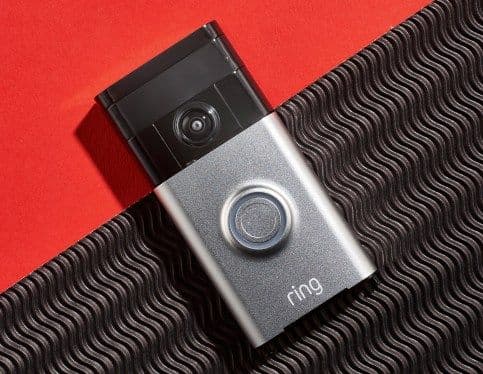
Amazon faces class action lawsuit over Ring facial-recognition feature
Amazon wassuedon Monday over alleged privacy violations from its Ring doorbell cameras. The class action lawsuit, filed in Seattle by Virginia resident Charles Sigwalt, claims that Ring’s Familiar Faces feature stores images of passersby without consent. Ring announced the Familiar Faces feature last September and faced pushback from consumer protection organizations like theEFF, as well asSenator Ed Markey(D-MA). But the company moved forward with its plans to launch the feature in December. Familiar Faces lets Ring users identify people who regularly come to their home through AI facial recognition. That way, if a regular guest, like a family member, mail carrier, or neighbor, comes to the door, the device will be able to recognize them and deliver more specific notifications like “Dad is at the door,” rather than “A person is at the door.” Ring users have to opt in to this feature, but privacy advocates noted that the people who walk past these Ring doorbells have not consented to these facial-recognition scans. That same concern is at the center of this class action lawsuit. According to the lawsuit, “Millions of other Americans passed by a Ring security camera and unknowingly had their facial recognition information collected.” Amazon did not immediately respond to a request for comment. At the time the feature was released, the company stated that face data is encrypted and never shared; unidentified faces are automatically removed after 30 days. Amazon’s Ring has a record of concerning behaviors regarding user privacy. In 2023, Amazonsettledwith the Federal Trade Commission (FTC) and paid a $5.8 million fine over allegations that the company’s staff and contractors had improperly accessed private videos from women customers; the FTC’s complaint said that every employee had full access to every customer video, even if the worker had no need to access that footage. Ring has also maintained relationships with law enforcement and oncegrantedpolice the ability to request Ring footage from users without a warrant. After airing a Super Bowl ad to introduce Search Party, an AI-powered feature that uses Ring footage to find lost pets, the company facedsimilar backlash. Days later, Ringcanceledits plans to partner with video surveillance company Flock Safety, which hasreportedlygiven footage to ICE and other federal agencies. When Ring founder Jamie Siminoff spoke with TechCrunch after Ring canceled its arrangement with Flock Safety, he indicated that the deal would’ve created too much of a “workload.”
View

Microsoft offers devs a better way to control AI agent behavior
As AI agents grow ever more capable, enterprises racing to put them to work across applications, workflows, and products face a new challenge: ensuring an agent does what it’s supposed to do when it’s deployed across different environments. Microsoft is trying to solve this problem with a new open source standard called Agent Control Specification (ACS) that aims to give developers a more consistent and granular way to control what AI agents are allowed to do. The specification essentially lets developer, compliance, and security teams define their own policies for agents to follow. The rules can define what the agent may do, what it must not do, when a human should approve an action, and what evidence should be logged for later review. These policy files are checked at several “interception points” when the agent is off performing a task to make sure it stays within the guardrails. The spec comes as developers are improvising ways to control what their AI sees and does, especially with conversations focusing on AI workflows going wrong due totool misuse, or unintended actions that result in cascading failures. Today, developers might specify instructions in a system prompt, add custom checks in the application code, or use classifiers to catch problematic inputs and outputs. Those approaches work, but they often leave companies with fragmented controls that are hard to audit and harder to reuse across different frameworks, interfaces, and systems. ACS aims to integrate those controls into a common governance layer. Microsoft says the specification can be used to check whether an agent is sticking to guardrails at multiple points in its workflow — before it receives input, before it calls a tool, after a tool returns a result, and before the final response is sent to the user. A policy may allow an action, block it, redact sensitive information, or even ask a person to approve it. Developers can also insert classifiers for inputs and outputs to categorize information, predict outcomes, or determine how an agent should respond; add LLMs with prompts to act as a “judge” for policies; and logic for checking tool calls, tool selection, input accuracy, output usage, and responses. And because these policies can be written as single files, they can be bundled with agents, allowing a security policy to follow an agent across different frameworks and environments. ACS is shipping as an SDK with plug-ins for LangChain, the OpenAI Agents SDK, the Anthropic Agents SDK, AutoGen, CrewAI, Semantic Kernel, Microsoft.Extensions.AI, MCP tools, and more.
View

Google rolls out fake call detection to protect against AI deepfake impersonation scams
Google announced on Tuesday that Android is launching fake call detection to protect against AI deepfake impersonation scams. The feature is rolling out globally in Phone by Google to Android 12+ devices this month, starting with Pixel devices. As people increasingly refuse to answer calls from unknown numbers, scammers are shifting their tactics by spoofing trusted phone numbers and using AI deepfake technology to sound like authority figures, family members, or employers. For example, a person may receive a phone call showing the caller ID “Mom,” and the voice may sound exactly like her, but the caller is actually a scammer using AI tools to impersonate her and request money for a fake emergency. The new feature is on by default and works automatically behind the scenes. Google explains that the new feature works kind of like a “digital handshake between devices.” When a contact calls you, and you’re both using Phone by Google, their phone sends a silent confirmation signal to your device to verify the call is legitimate and actually coming from their phone. “If a scammer tries to impersonate your trusted contact, that initial confirmation signal will be missing,” Google explained in ablog post. “Your device will instantly notice this and ping your contact’s actual device to double-check. If their real device says, ‘I’m not making a call right now,’ you’ll get a warning on your screen advising you to hang up immediately.” The tech giant notes that it built this feature on top of Rich Communication Services (RCS), making it possible for other apps and companies to adopt the technology. The launch of fake call detection was announced alongside other updates from Android, including a new Google Photos feature that lets users mix and match outfits and try them on virtually. The new “wardrobe” feature catalogs the clothes you’re wearing in your photo library by turning them into snapshots you can browse on your phone. The feature is rolling out next week to eligible users in the U.S., India, and Brazil with Android 10+. Additionally, Google Play Books is getting a new “Catch me up” feature that lets users jump back into a story with a recap. Users can also highlight a passage to ask questions. These features are rolling out today for select English titles. Google is also making it possible to search entire outfits with its “Circle to Search” feature. Now the feature will be able to find every item in an outfit at once, getting rid of the need to search piece by piece. This update is now available on all Android 14+ devices that have Circle to Search.
View

Microsoft launches Scout, an OpenClaw-inspired personal assistant
In the first weeks of 2026, OpenClaw spread through the AI worldlike a sonic boom, introducing many of the industry’s most ambitious technologists to the joy and chaos of an unrestrained AI agent. The project’s momentum tailed off after OpenAI scooped up its founder, but the influence is still being felt — particularly at Microsoft. Now Microsoft is launching Scout, a new AI assistant meant to bring the power and flexibility of OpenClaw into the Microsoft 365 ecosystem. Built on the OpenClaw framework, Scout is an always-on agentic assistant, designed to work alongside the user with a persistent identity and style. Users name their own Scout instance — in my demo, it was named Sebastian — and are meant to give it ongoing feedback on tasks they want automated. As Scout VP Omar Shahine put it, the idea is to create an assistant that actively adapts to the user’s needs. “We all have our interesting quirks in how we work, and people are codifying those patterns into memories and skills that persist in their agent,” Shahine told me. “Then the agent becomes more capable, better understanding you and gaining more agency and exercising judgments.” Available through Microsoft’s Frontier program, which gives early adopters access to experimental Microsoft products, Scout will require a GitHub Copilot subscription to use. Scout is based in the cloud but operates across the desktop and web browser also, so it’s easy to connect to inboxes, calendars, and other systems. Scout will come with prepackaged skills for calendar management and drafting meeting agendas, among others, but Shahine expects the real value to be in the skills users develop on their own. That customization loop — where the assistant learns from user behavior and becomes more capable over time — is the same dynamic that has made consumer AI tools sticky; the more you invest in training your assistant, the harder it is to walk away. The system also comes with extensive security protections, meant to address concerns of unsupervised AI agents running amok, a real issue that OpenClaw surfaced earlier this year when one agent was reported to have acted erratically inside a researcher’s inbox (among other examples). Scout will come with a built-in “policy conformance system” that will continuously check whether the system is operating according to set guidelines, and each conformance check will produce its own audit trail. Scout is part of a range of AI products Microsoft launched at its annual Build developer conference, including the hardware-orientedProject Solara, an update to Copilot, and a new reasoning AI model.
View

Martin Scorsese becomes the latest — and most unlikely — Hollywood voice for AI
Martin Scorsese has signed on as a partner and adviser to AI image-generation startup Black Forest Labs, The New York Timesreportedon Tuesday. The caveat is that one of the world’s most famous living directors is using the tech solely for storyboarding. “For 70 years, I’ve been creating my own storyboards,” he said in a statement to the Times. The tool, he said, helps him communicate his vision to cinematographers and production designers far faster and more efficiently. Black Forest Labs is a 70-person outfit headquartered not in San Francisco, but in Freiburg, Germany, the closest major city to the actual Black Forest. Despite its unlikely address, the startup powers image features inside Adobe, Canva, Microsoft, and Meta, and was last valued at $3.25 billion by its investors, which include BroadLight Capital, co-founded by Scorsese’s talent manager, Rick Yorn. Black Forest Labs was founded by the team behind Stable Diffusion andaccording to Wired, declined to partner with Elon Musk’s xAI in recent months after an earlier collaboration on Grok’s image generator ended amid concerns about the platform’s content safeguards. You can imagine that some in the entertainment industry will be concerned about the development, even given its limited scope. Still, it’s just the newest sign that Hollywood’s once-fierce resistance to AI is softening.
View

New Microsoft tool lets devs spin up AI behavior tests using text descriptions
AI researchers and labs have advanced by leaps and bounds in evaluating AI models for everything fromsafetyand compliance tosycophancyandalignment. But it appears companies and developers are faced with a new, specific need: making sure their AI system behaves as intended for their specific product or service. In a bid to make that testing process simpler, Microsoft on Tuesday took the wraps offASSERT, short for Adaptive Spec-driven Scoring for Evaluation and Regression Testing. The open source framework, Microsoft says, makes evaluating application-specific AI behavior easy by using AI to turn high-level, natural-language descriptions of goals, policies, or intended behaviors into thorough, scored tests that can be investigated. ASSERT takes plain-language descriptions of an AI model’s expected behavior and policies, turns them into a structured set of acceptable and unacceptable behaviors, generates problem scenarios and test cases, runs them against the target system, and scores the results. It can also record the paths the AI system takes, including intermediate actions and tool calls, so developers can inspect where failures happen. Devs can provide system context, tools, and constraints, too, if they want to further customize what the evaluations cover. For example, a developer could specify that a document research AI agent shouldn’t send emails to people outside the company, and it should limit confidential information to C-level executives and provide concise summaries with prior context in mind. ASSERT will use those rules to generate test cases that check whether the system follows those rules on an ongoing basis. The framework, according to Microsoft, fills a gap that broader, more general evaluations cannot when AI models are intended to behave in a manner that is shaped by an application or product’s context, policies, and tools. “One of the things we’ve learned is that evaluations are absolutely critical to making good decisions,” saidSarah Bird, chief product officer of Responsible AI at Microsoft. “Because if you don’t understand the behavior of the AI system, it’s really hard to know if it’s meeting your organization’s bar … What we found is that if you really want to have a trustworthy system, you should evaluate many more dimensions that are application-specific.” Bird said ASSERT can be used to evaluate systems when they’re being built, after deployment, and even for continuous monitoring. The release comes amidst a gradual but broader shift in the AI industry. As models grow more capable, researchers are focusing on repeatable testing and regression checks, withStanford’s HELM,MLCommons’ AILuminate, and evaluation groups likeMETRrolling out benchmarks to measure how models behave under different conditions.
View
Uber caps employee AI spending after blowing through budget in 4 months
AI isgetting expensive, and somecompanies are cutting backon usage in an attempt to moderate costs. That cohort includes Uber, which recently instituted internal usage caps as a way to cut down on its exorbitant AI spend. Bloombergreportsthat the company has instituted a new rule that places a monthly $1,500 cap per employee and per agentic coding tool, including Anthropic’s Claude Code or Cursor. The usage is trackable via an internal dashboard that each employee has access to, although — in certain cases — the caps can be exceeded with permission, the company says. The news is perhaps not too surprising, since, in April, the company’s CTOrevealed thatthe ridesharing giant had blown through its entire annual AI budget in a matter of four months. That appears to have occurred after Uber encouraged staff to use AI “as much as possible” and even ranked their internal usage competitively on internal leader boards, The Informationpreviously reported. Uber’s COO, Andrew Macdonald, alsorecently cast doubton AI’s productivity impact, noting during a podcast appearance that “it’s very hard to draw a line” between AI usage and new consumer features. Uber’s cutback raises a broader issue that the tech industry is currently facing: As enterprises pour money into AI, where exactly is the return on investment? Indeed, AI ROI has so far remained alargely theoretical phenomenonthat everybody hopes will eventually materialize — although some companies are obviously getting a little restless while they wait.
View