Latest AI News
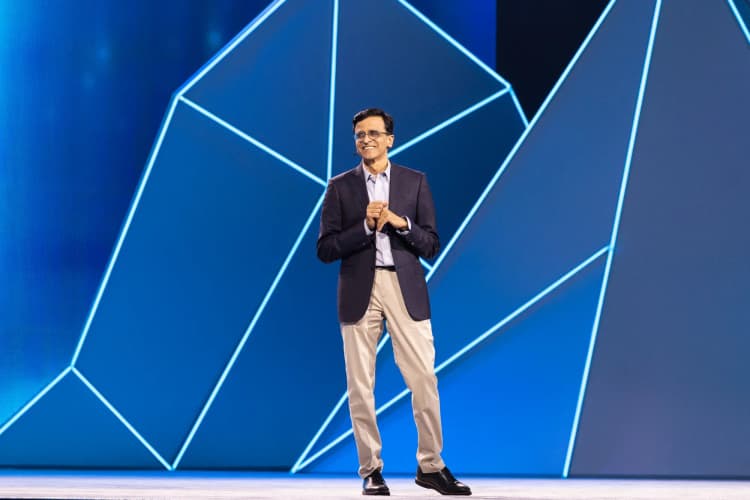
Snowflake Unveils Its Blueprint for the Agentic Enterprise
Snowflake’s latest AI push brings agents, model training and governance together on a single enterprise platform.
View
Claude Smadja Calls Out the AI Bubble
According to him, India is in a better place with the “Make in India” push “right on target”.
View
![[Exclusive] Tech Mahindra is Working on World Models, Eyes ARC-AGI Milestone This Year](/_next/image?url=https%3A%2F%2Fteenyfy-assets.s3.us-east-1.amazonaws.com%2Ftemp_exclusive_5de4a59518.jpg&w=750&q=75)
[Exclusive] Tech Mahindra is Working on World Models, Eyes ARC-AGI Milestone This Year
Earlier this year, the company launched an 8-billion-parameter Hindi-first education LLM under the IndiaAI Mission.
View

Google Expands Gemini Avatar to More Paid Users, Lets You Generate AI Content Featuring Yourself
Google is rolling out its Gemini Avatar feature to a wider group of paid Gemini subscribers. It allows users to create an AI-powered digital version of themselves that can be used to generate videos and other content within Gemini. The feature is powered by Google's Gemini Omni, Google's new AI model that is claimed to be capable of generating anything from any input. First discovered during an APK teardown in March, Gemini Avatar is designed to replicate a user's appearance and voice.
View
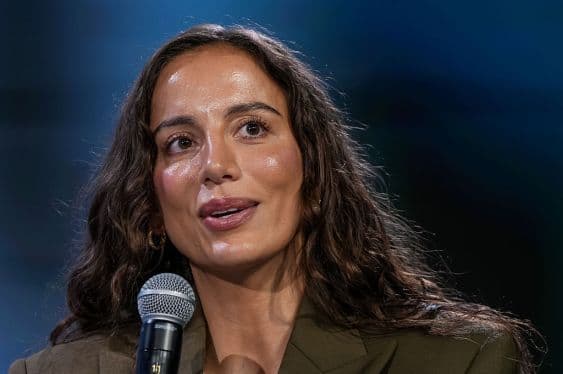
Mira Murati steps back into the spotlight, carefully
Mira Murati isn’t a natural creature of the conference stage. As the CTO of OpenAI, she was present but rarely the public face of the company. As CEO of her own company, Thinking Machines Lab, she has been even harder to find. So when she sat down with Bloomberg in San Francisco on Thursday — her first major media appearance in roughly 18 months — it was worth paying attention, even if she was careful not to say too much. The timing makes sense. Thinking Machines has spent the better part of a year and a half operating largely in the background: raising capital, hiring researchers, and shipping one product,Tinker, an API for fine-tuning open-source AI models. In the meantime, the companies competing for the same talent, customers, and headlines have only grown more omnipresent. OpenAI, where Murati spent six years as CTO, is constantly in the news cycle. Anthropic’s momentum is all that anyone can talk about right now. And xAI, Elon Musk’s AI venture, has been folded into SpaceX ahead of what is expected to be its massive public offering, generating its own gravitational pull on attention and investment. In that environment, staying heads down has diminishing returns; at some point, you have to make some noise just to remind the market you exist. Murati used the Bloomberg appearance to do exactly that and not much more. She previewed what Thinking Machines is calling “interaction models,” which she described as a fundamentally different kind of AI interface. Rather than the turn-based, prompt-and-response dynamic that defines most AI products today, she told interviewer Emily Chang, the company’s models are designed to process continuous streams of audio, text, and video in 200-millisecond intervals. The idea is that they can pick up on the texture of human communication — the interruptions, the mid-thought corrections, even pauses to think — in something closer to real time. But Murati was careful to frame it as a first step, not a finished product, and she declined to put a specific release date on anything. She also answered questions about the episode that first put her more squarely in the public eye: the chaotic week in November 2023 when OpenAI’s board fired Sam Altman and she became interim CEO. Inside OpenAI it came to be called “the blip.” Murati said she felt clear about her decisions in each moment — that protecting the mission and the team was the through-line that made the choices feel obvious even as the situation appeared to be falling apart from the outside. She said the company would have “imploded” if not for her involvement through that strange five-day stretch and its immediate aftermath. But she acknowledged that clarity of intent is not the same thing as clarity about consequences. In retrospect, she said, she would have pushed harder for more information, a better transition plan, and more transparency. What she did not say, at least not directly, is whether she thinks things turned out well. Asked whether she still trusts her former boss, she sidestepped the question, steering the conversation toward a larger concern that she returned to several times: the concentration of consequential decisions in too few hands — not just at OpenAI but across the industry. Her worry, she said, is less about the character of any individual leader (though she acknowledged that matters) and more about the absence of structural checks. Good people make bad calls. Well-intentioned organizations drift. Too much attention has been paid to virtue and too little to governance, she suggested. Chang also politely pressed her on the departures of several high-profile researchers from Thinking Machines in recent months , a subject Murati has largely avoided in public and that she downplayed on Thursday. First, she said, building a frontier AI lab from scratch compresses years of normal organizational volatility into months. She also acknowledged that compensation — the nine-figure packages that have become standard currency in the war for AI talent — captures people’s imaginations, but she suggested it isn’t usually the whole story. To some audience laughter, she said of her own competitive instincts, “When I wake up in the morning, I am not thinking about how to kill the competitor.” Naturally, Chang asked about what comes next for AI broadly, including for the humans who AI companies once said would be empowered by AI but who’ve more recently grown scared by talk of mass job displacement, not to mention a future where AI is used to create chemical weapons. Murati, who was born in Albania and speaks with a slight Eastern European accent, was measured in her response. She pushed back on the framing of inevitable dystopia or inevitable utopia, arguing that neither outcome is predetermined and that the period we’re in right now is the one that will determine which way things go. Still, she said — and not for the first time during the interview — that if humans take their hands off the wheel too soon, the future will look very different, and not better.
View
Anthropic Calls for Options to Pause AI Development
As self-improving AI models advance, Anthropic says governments and AI labs should develop verification systems that could support a slowdown or pause in frontier AI development.
View
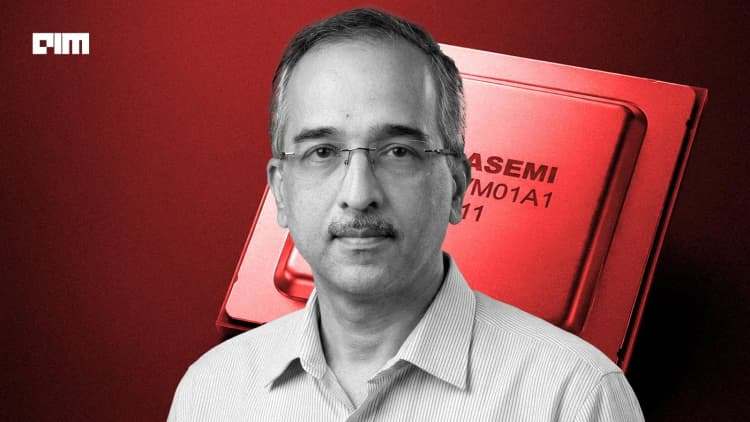
From Chip Talent to Chipmaker: NetraSemi Bets on India’s Semiconductor Future
As AI increasingly moves from the cloud to devices, NetraSemi’s E2000 demonstrates how Indian startups are positioning themselves at the intersection of Edge AI and semiconductor innovation.
View
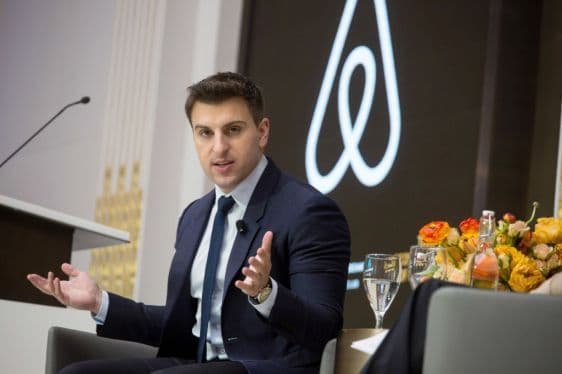
Airbnb’s Brian Chesky plans to launch a new AI lab
Airbnb CEO Brian Chesky has had enough of merely being an artificial intelligence kingmaker. He now plans to back a new AI lab of his own. The news,broken by Bloombergand confirmed to TechCrunch by a person familiar with the situation, marks Chesky as one of many Silicon Valley machers who are unsatisfied with the models coming out of the frontier labs. While Airbnb has adopted AI coding tools, Chesky said last year it hasn’t struck an LLM partnership because existing products weren’t quite ready. Still, Chesky has plenty of insight. He met Sam Altman in 2006 through Y Combinator, which incubated Airbnb, and stayed in touch. When OpenAI took off, he began meeting regularly with Altman to offer advice about managing a hypergrowth tech company. Chesky, who was reportedly considered a potential OpenAI board member, helped broker Altman’s return to power after its board of directors fired the CEO for lack of candor. Chesky advised Altman on public relations and rallied support for him among Silicon Valley bigwigs. Now, however, he appears to be entering competition with his mentee’s company. It’s not clear what the focus of Chesky’s new AI lab will be, although the Bloomberg article mentions user interaction and design, areas that he has emphasized at Airbnb. That’s not unlike what Brett Adcock is doing atHark, the AI lab he launched late last year to develop a novel user interface for an AI assistant, although the startup is also emphasizing hardware products. Chesky also won’t be going into “founder mode” at this operation; a person familiar with the situation says he will remain as Airbnb’s CEO and not lead the new lab himself. Whoever gets the job will have to contend not only with the other AI labs, but also with a founding chair (we presume) known as a micromanager. A representative for Airbnb and Chesky declined to comment.
View
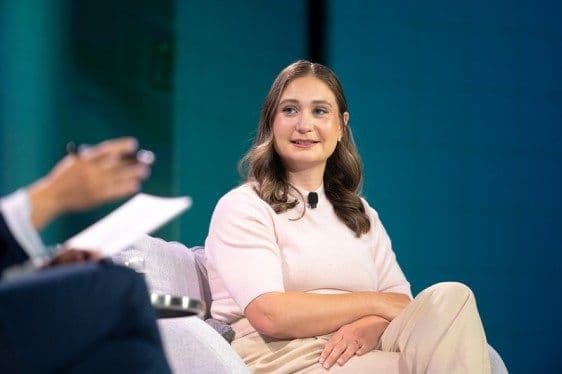
Ahead of its IPO, Anthropic’s Daniela Amodei shrugs off doubts about AI’s returns
Private investors have been falling over themselves to get a piece of Anthropic, given the AI model maker is growing at a dizzying pace. Multiple investors told TechCrunch that the company’s$65 billion fundraiseat a $965 billion valuation, announced last week, was greatly oversubscribed. Now, with that private demand still strong, Anthropic has revealed that it’s taking steps toward a public listing by filingconfidentially for an IPO. Co-founder Daniela Amodei, speaking at the Bloomberg Tech conference on Thursday, said the decision comes down to capital. “It’s a really big upfront cost to train the models and to serve inference on them,” she said. “My guess is that over time, the sort of core set of companies that are working to advance the frontier are just going to need access to capital, and I think the public market is very well suited to that.” Anthropic has been growing at a breakneck pace. The company announced that annualized revenue crossed $47 billion in May, up dramatically fromroughly $9 billionat the end of 2025. That trajectory faces a real test, though. Companies such as Uber have said that while AI can deliver returns, not all of their AI spending has proven productive, raising the prospect that corporations could begin to rein in those budgets and slow growth across the sector. That isn’t fazing Amodei, who believes businesses are still early in figuring out how to deploy AI effectively. “The use cases today, I expect will continue to be the primary driver of efficiency or creativity, whether that’s coding, financial services, legal, [or] health care,” she said. “But as the business community gets more familiar with the tools, we’re all going to learn together. My hope is that over time it’ll be more incorporated into the day-to-day of how humans do our work, and there will actually be a lot more value realized.” Amodei also addressed why, unlike rivals OpenAI and Elon Musk’s xAI, Anthropic isn’t building its own data centers to meet the company’s growing compute needs. “Anthropic’s view has always been wanting to plan for the best outcome but not overextend ourselves such that we’re buying more compute than we could productively use,” she said. “It’s really hard to predict that perfectly. We would much prefer to be on the side of having a little bit more demand for the product than we’re able to serve than the inverse.” Last month, the company surprised the AI industry by partnering with xAI for compute capacity, a deal later disclosed in SpaceX’s S-1 filing to cost Anthropic$1.25 billionper month.
View

Apple approves Poke as the first AI agent on its Messages for Business platform
Poke, astartup that turns using AI agentsinto something as simple as sending a text message, has become the first AI agent approved to run onApple’s Messages for Business platform. Previously, the platform was designed for businesses — airlines, retailers, hotel chains, and others — to communicate with their own customers through iMessage, offering a standardized interface that supports both automated chat and live agents. Until now, it hadn’t been open to stand-alone third-party AI agents. Launched in March, Poke is one of the first AI agents designed to be accessible to everyday users who don’t have the technical skill set or inclination to work with command-line tools or more complex agentic systems, like OpenClaw. Today, Poke can help with common activities, like daily planning, managing your calendar, tracking your health and fitness, controlling your smart home, and editing your photos, all via text message. To date, it’s relayed some 100 million messages, the company tells TechCrunch. The AI service operates over SMS, Telegram, and, in some markets, WhatsApp. Now Poke will be able to add iMessage to its supported platforms. Say hi to the new Poke! 🌴Now officially approved by Apple to text on Apple Messages.As the first and only AI agent. Chat now:https://t.co/VIWYU64dUIpic.twitter.com/AtZxupI2Ji The news of Poke’s launch on Apple’s Messages for Business comes just days ahead of Apple’s anticipatedWorldwide Developers Conference on Monday,where it’s expected to introduce an AI-optimized version of Siri along with other AI tools and services for app developers. It is alsorumoredthat Apple would open its App Store to AI agents. That’s not quite the case here with Poke. Apple’s Messages for Business platform isn’t about offering a consumer-facing mobile app, but rather a way for consumers to interact with a business through iMessage’s interface directly. This allows consumers to reach out to businesses for information, support, appointment scheduling, and more, without having to call them by phone. Poke’s users ask the AI agent a question or make a request, and it responds via text. For founders and investors, the more interesting detail may be the business model it opens up.Marvin von Hagen, co-founder ofThe Interaction Company of California, the Palo Alto-based startup behind Poke, says his startup will pay Apple on a per-user basis. While he can’t share the exact pricing, he notes that it’s significantly lower than Meta AI, after it increased fees in response to EU regulation that required it to permit third-party AI agents on WhatsApp. That per-user toll structure, applied at scale, represents a potentially meaningful new revenue stream for Apple but also a new cost of distribution that AI agent startups will need to factor in. “I think that Apple is just noticing this is the best way to offer AI, and … actually, good for them, because they charge us. They charge us per user on the platform and actually make money with this, especially if it becomes really big,” von Hagen says. He believes Apple’s support for AI agents will grow over time as well. Getting Apple’s approval required the company to verify that it could offer live support, if needed, and that its AI agent was clearly identified as such. Poke also submitted testimonies from its messaging providers and customized its user interface to meet Apple’s guidelines. For instance, Poke on iMessage has to show link previews instead of inline links, as before, and it uses Apple’s style guide for things like buttons and interface elements. “This took a couple of months to adhere to all of these standards, and it will take anyone else who wants to build on this — it will also take them a couple of months to get through this approval process,” von Hagen said. As for being the first? That had a lot to do with trust. “It was also just important that we were very aligned in terms of the positioning of the company,” he noted, explaining that many consumer products today are about getting to numbers through questionable tactics. “We care about quality, we care to have a brand that signals trust,” von Hagen said. It’s not clear if Apple will announce any news related to AI agents on its Message for Business platform at WWDC next week, and von Hagen isn’t clued into Apple’s plans. However, Poke is currently rolling out invites to existing users that will allow them to optionally move over to the iMessage experience, if they prefer. Backed by Spark Capital, General Catalyst, and other angels, the 10-person startup recently added another$10 million to its coffers, on top of last year’s $15 million seed round. It’s now valued at $300 million, post-money. Apple was not immediately available for comment.
View
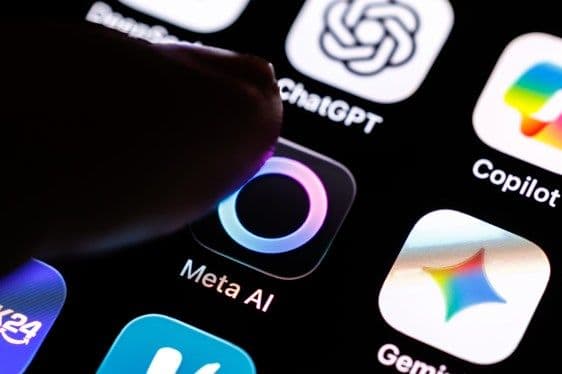
Meta steals a tactic from Tesla and builds data centers in tents
Just when you thought the AI data center boom couldn’t get any crazier, Meta has gone and built data centers in tents. The strategy appears to borrow in equal parts from Tesla and xAI. In a bid to cut construction time in half, Meta has built six tents — or “rapid deployment structures” as the company describes them — outside of New Albany, Ohio, according to Michael Thomas, founder ofCleanview, which tracks data center deployments. Thomas’ findings aren’t totally new. Meta CEO Mark Zuckerbergspoke to The Informationlast year about his plan to use weatherproof tents to house the company’s multi-gigawatt data centers. But Thomas’ images and review of local permits showcase the speed of construction and scale of the project. According to city permits reviewed by Thomas, Meta started building five 125,000-square-foot tents between April and June. The satellite images he shared in his post on X show the structures have all been built. The use of tents is reminiscent of those Tesla built in the parking lot of its Fremont, California factory when it was rushing to roll out the Model 3. The site is also powered by 200 megawatts ofmodular gas turbinesnearby, a tactic popularized by competitor xAI. Inside the tents, AI chips, likely worth billions of dollars, will go about their business. Meta is building dozens of massive tents at campuses across the US, sticking billions of dollars of chips inside, and powering them with off-grid turbines.The AI race has officially entered its Mad Max phase.Over the last month, I reviewed hundreds of documents and satellite…pic.twitter.com/U8yDZUlEO0 The tents have sprung up as Meta has struggled to release its AI models to developers. A recentreportin The Wall Street Journal found that Meta’s latest model, Muse Spark, is complete, but the APIs that developers rely on to access it have been repeatedly delayed. Meta has said it intends to spend up to $145 billion on data centers and other capital expenditures. Wall Street hasn’t liked the sound of that, with Meta’s stock trading down 5% this year. Putting AI chips in tents is one way to trim the bill. TechCrunch has reached out to Meta for comment and will update this article if it responds.
View
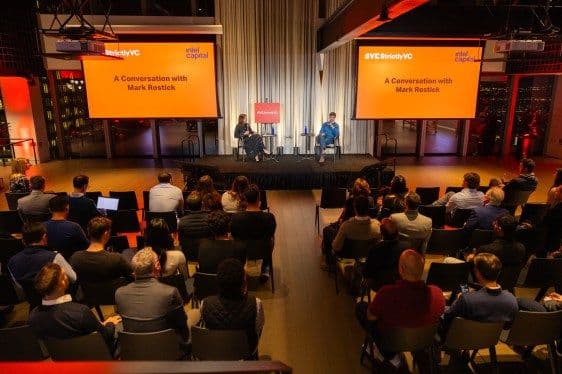
Defense tech, AI, and fundraising take center stage at StrictlyVC Los Angeles on June 18
With just two weeks to go,StrictlyVC Los Angelesis quickly approaching. On Thursday, June 18, at The Aerospace Corporation Campus in El Segundo, investors, founders, and tech leaders will gather for an evening of conversations exploring some of the most consequential shifts taking place across venture capital, defense technology, artificial intelligence, and advanced industry.Secure your spot here. For executives navigating a rapidly changing technology landscape, StrictlyVC offers something increasingly difficult to find: direct access to the people building, funding, and shaping the next generation of companies. The conversations are candid, the audience is highly curated, and the insights extend far beyond what can be found in headlines, podcasts, or social media feeds. The evening begins withEthan Thornton, founder ofMach Industries. In his session, “Built for a New Era of Defense Technology,” Thornton will share his perspective on building a hard tech company at speed and how advances in autonomy, manufacturing, and national security are transforming the defense sector. His story reflects a broader movement of founders tackling ambitious challenges in industries undergoing rapid change. The conversation continues withDelian AsparouhovofFounders FundandSaif KhawajaofShinkei Systems. Together, they will discuss the rise of physical AI and how developments in robotics, automation, and artificial intelligence are creating new opportunities to transform the physical world. Their discussion will offer insight into what it takes to build and scale breakthrough technologies beyond software alone. Also joining the lineup isCarter Reum, co-founder and partner atM13. In his session, “Finding the Next Big Thing,” Reum will explore how AI is reshaping industries and how investors are moving beyond short-term hype to identify companies built for long-term durability. He will share his perspective on where innovation is creating the most meaningful opportunities and how venture investing is evolving as new categories emerge. Additional speakers and conversations will be announced soon as the StrictlyVC Los Angeles agenda continues to grow.Stay updated on the latest speaker announcements and event news. Beyond the conversations on stage,StrictlyVC Los Angelesis designed to bring together the people driving innovation across technology and venture capital. Throughout the evening, attendees will have opportunities to connect with founders, investors, and operators in an environment that encourages meaningful discussion and the exchange of ideas. Whether you are looking to expand your network, gain new perspectives, or discover emerging opportunities, the value of the event extends well beyond the scheduled sessions.Secure your spot here.
View