Latest AI News

WWDC 2026: Apple Unveils Its New Gemini-Powered AI Architecture That Will Enable Siri AI
Apple kicked off its annual developer conference on Monday. This year's Worldwide Developers Conference (WWDC) started with the keynote presentation from the Cupertino-based tech giant, during which Apple unveiled its new iOS 27, iPadOS 27, macOS 27, visionOS 27, and watchOS 27. However, the keynote presentation also marked the reintroduction of the tech giant's new AI-powered voice assistance, Siri AI, which was first demonstrated during WWDC 2024. Earlier this year, the Tim Cook-led company partnered with Google, allowing Gemini to power the revamped Siri and Apple's foundational AI models. Now, the company has unveiled its new Gemini-powered AI architecture.
View

Apple Delays Siri AI Launch in EU on iOS 27, iPadOS 27 Due to DMA Rules; Cites Privacy and Security Risks
Apple on Monday unveiled iOS 27 and other corresponding operating systems for the iPhone, iPad, and Mac. While the latest updates bring several quality-of-life upgrades, the most notable introduction is Siri AI, Apple's smarter version of Siri that was promised nearly two years ago. The Cupertino-based tech giant's major overhaul of the voice assistant will be released with iOS 27 later this year. However, Apple said that users in the European Union (EU) will not receive the new Siri AI experience upon the release of iOS 27 and iPadOS 27.
View
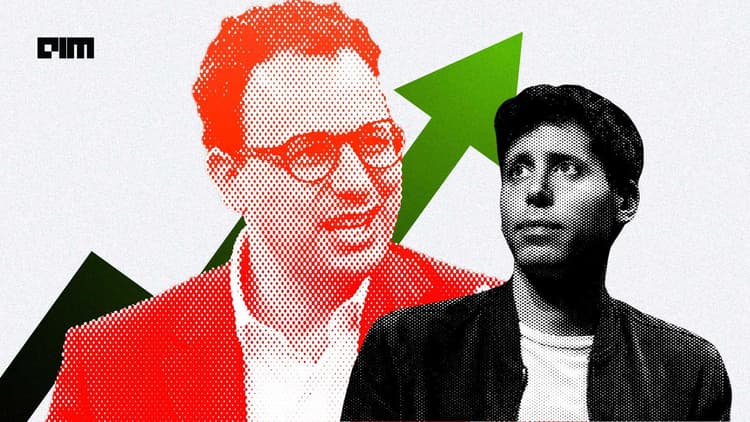
OpenAI Files for IPO After SpaceX and Anthropic
The filing comes as ChatGPT reaches about 900 million weekly active users and OpenAI pushes to expand the product beyond conversational AI.
View
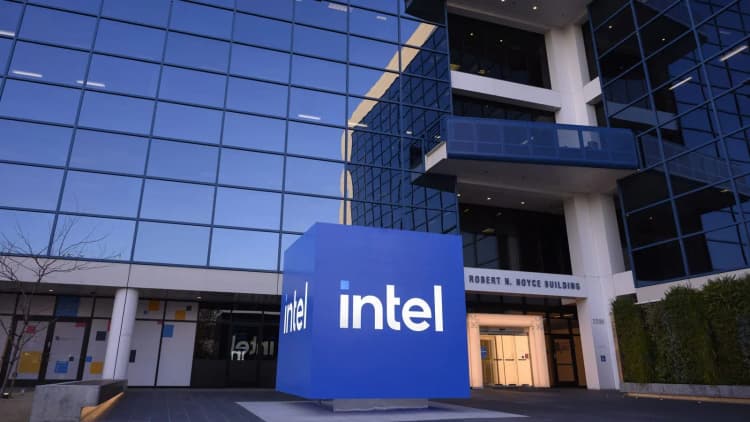
Google Orders Over 3 Mn AI Chips From Intel: Report
NVIDIA is also reportedly testing Intel’s technology for some of its most advanced future AI chip designs.
View
Why India’s Data Centers Need UEI to Survive the Impending Power Crunch
Experts call for an AI-powered unified energy interface to manage electricity systems and enable smarter distribution.
View

Intel, Cadence Expand Partnership to Design Intel 14A Chip
The collaboration focuses on design optimisation, AI-driven tools, and production-ready chip development to meet future computing needs.
View

TCS Sets Up Dedicated GCC Unit to Oversee Strategy, AI-Led Transformation for Clients
TCS has launched a dedicated Global Value and Innovation Centres business unit and appointed veteran executive Soumen Roy to lead it.
View
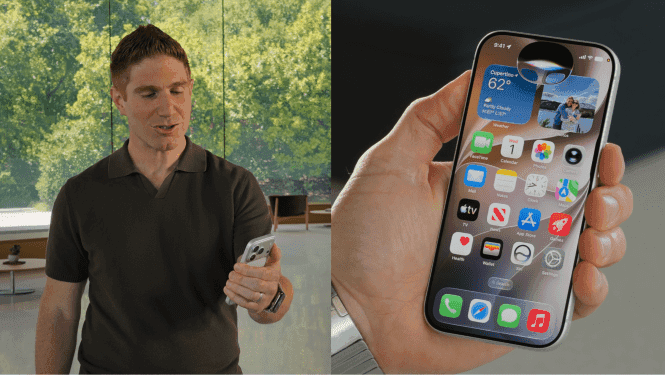
Apple’s WWDC AI demos looked more real after $250M false ad settlement
The vibe of Apple’s 2026 Worldwide Developers Conference felt like a spouse proudly listing all the items on a honey-do-list they’d finally completed. Rather than showcase something exciting and new, Apple launched the keynote detailing fixes tolast year’s “Liquid Glass”design; anoverhaul of its awful search function;improvements to its Playground feature; and so on. Perhaps most importantly,two years after promising but failing to launch a smarter Siri, Apple finally showed off an overhauled version of its AI-powered voice assistant. But the most telling detail wasn’t what Apple announced. It was how it chose to show some things off. Many of the Apple Intelligence demoes featured someone standing, phone in hand, pressing buttons or using voice commands in real time, while another camera showed off the phone’s response. These weren’t live onstage, anything-could-go wrong demos; they were pre-taped. But they looked far more like proof of working features than what Apple showed at WWDC 2024, when the companyunveiled Apple Intelligence and a new Sirito the world through slickly produced videos that turned out to be more promise than product. This demonstration style was noticed, with comments on X on Monday comparing today’s keynote to those 2024 so-called “vaporware” demos. Apple said at that time that the features would be available soon to those who upgraded tothe iPhone 15 Pro and newer devices with M1chips or better. But by March 2025, Apple admitted toDaring Fireballthat rolling out the features shown via production video was “going to take us longer than we thought to deliver.” Not long after, the Cupertino companyfaced a lawsuit in federal courtalleging false advertising over the features shown at that 2024 event — a case that carried real reputational risk for a company whose brand has long been built on the promise that its products just work. Last month, Apple agreed to paya $250 million settlementon the suit, without admitting wrongdoing. Monday’s presentation appeared designed, at least in part, to avoid a repeat. There were still plenty of fully produced videos of features, like the one showing how to adjust Siri’s voice and another demonstrating improved voice-to-text transcription. But many of the AI features were shown in this “live-like” format, with someone using the feature on an actual device. The implicit message being that these features work on actual devices, and you will soon have them. Apple also is not requiring users to buy the latest iPhone to get these features. The new Siri will be available through the new iOS 27 on iPhone 15 Pro and Pro Max and all iPhone 16 models and later,according to the company. The current model is the iPhone 17, meaning most users who upgraded in the past couple of years won’t need to buy new hardware to get access. It’s a concession, perhaps, that Apple won’t lock the features behind new devices to create upgrade pressure when it promised, two years ago, that such features would be available on iPhone 15. Apple also said the new features will be available across its broader hardware lineup, including the iPad mini (A17 Pro), iPad models with M1 or later, MacBook Neo (A18 Pro), Mac models with M1 or later, Apple Vision Pro, Apple Watch Series 10 or later, Apple Watch Ultra 2 or later, and Apple Watch SE 3 when paired with an Apple Intelligence-enabled iPhone nearby.
View
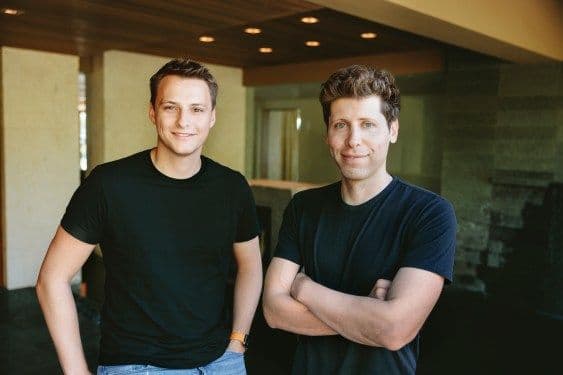
As OpenAI files for IPO, Sam Altman’s eye-scanning company is doing layoffs, report says
OpenAI announced on Monday that it confidentiallyfiled for an IPO, marking what could become one of the defining public offerings of the decade. And then there’s OpenAI CEO Sam Altman’s other company,Tools for Humanity, which is reportedly conducting layoffs, according toBusiness Insider. TechCrunch has reached out to the company for confirmation. You might know Tools for Humanity better through its verification project known as World — and its related device, a creepy silver orb that wants to scan your eyeballs. The idea is that the company will be able to verify people’s identities using unique iris scans, helping to distinguish human activity from bot activity in the increasingly automated world that Tools for Humanity co-founder and chairman Altman is constructing. The company would also use these scans to validate people’s identities to support the trade of its own cryptocurrency, Worldcoin. These vague, suspicious ambitions were enough toraise moneyat a$2.5 billion valuationfrom investors like Andreessen Horowitz, Bain Capital, and other funds backing blockchain companies. But now the company is reportedlydownsizingas it struggles to create revenue. In the U.S., companies likeTinder, Zoom, and Docusign have partnered on Altman’s side project. Internationally, Tools for Humanity has facedregulatory and ethical concerns. In Kenya, India, and Hong Kong, for example, people were offered the equivalent of$50 in Worldcoinin exchange for their biometric data. Kenya later banned World from operating in the country, citing privacy and financial concerns; meanwhile, South Korea fined the company $830,000 forallegedly violatinglocal privacy law. Who would’ve thought? People don’t feel great about giving their biometric data to a startup in exchange for $50 worth of crypto.
View
Mercor’s Brendan Foody calls out Sequoia over ‘dual-pricing’ valuation tricks
In recent days, founders and founders-turned-investors took to X to sharehorror storiesabout being mistreated by VCs. Their complaints ranged from VCs falling asleep during pitch meetings to investors suggesting a founder fire a co-founder. Brendan Foody, co-founder of the AI talent platform Mercor, which was last valued at$10 billion, went so far as to call out Sequoia, arguably one of the most elite VC firms in the world. “The “sequoia scam” is worse than a single horror story,” Foodywrote on X. “in the last 6 [months] ive seen a half dozen rounds where sequoia invests in 2 tranches. everyone pretends they only did the higher valuation. founders misrepresent this to their employees & then shop it to angels too.” TechCrunch has previouslyreported on VCsinvesting in the same round at different valuations. Under this mechanism, the lead VC firm invests a significant chunk of its capital at a lower, preferential valuation, while putting a much smaller portion of capital in at a drastically higher price. The massive “headline” valuation that gets announced manufactures the perception of a dominant market winner, masking the fact that the lead investor’s actual average entry price was significantly lower. The disparity can be stark. For example, when the AI-driven IT helpdesk startup Serval announced a $75 million Series B at a $1 billion valuation, the announcement didn’t tell the whole story. According to The Wall Street Journal, Sequoia’s actual lowest entry point valued the company at just $400 million — less than half the headline figure. The gap between those two numbers is the gap between perception and reality that Foody is pointing at. Serval isn’t alone. At Aaru, a startup that uses AI to simulate user behavior for market research, lead investor Redpoint backed the company at a $450 million valuation despite an announced $1 billion headline price. Sequoia’s Shaun Maguirepushed backon Foody’s characterization directly. “TBH I have seen some of this behavior but I think it’s unfair to call it the ‘Sequoia scam,’” Maguire wrote in response to Foody on X. “This has happened approximately five times during my seven years at Sequoia. What happens is other investors are willing to pay a high price for a hot company — usually AI — at multiples above what we’re willing to pay. So we try to decouple the company-building relationship with our partner from the capital, and this leads to two tranches at different valuations in close succession. “I’m not aware of anything shady here,” Maguire continued, “but if you’ve seen it I’d love to know. VC is a repeated game, so it just doesn’t make sense for us to try to mislead people. And if anyone has, I’d love to know. And in general, congrats on the success of Mercor — it was a miss for us.” Maguire’s response frames the practice as a market reality rather than a deliberate maneuver — Sequoia, he suggests, is simply unwilling to pay what competitors will pay for the hottest deals, so it structures its participation differently. Whether that explanation fully holds up depends on a question Maguire doesn’t address: what founders are telling the people who don’t already know about the lower tranche. Although Sequoia appears to use this pricing mechanism most frequently, Foody acknowledged it isn’t the only firm using this tactic. And while the dual-pricing structures certainly inflate a startup’s perceived worth and help attract top talent, calling the practice a “scam” may be going too far. That’s because employee stock options should theoretically be priced based on the blended value of all tranches — not the headline number — according to Jason Woo, partner in valuation and financial modeling at Armanino, whose firm provides the independent 409A appraisals startups use to set option prices. A 409A is supposed to reflect a company’s fair market value, giving employees a strike price that’s insulated from whatever valuation gets announced in a press release. There’s a catch: 409A valuations are widely understood to skew low. Because a lower strike price means a smaller tax bill for the company, there is a structural incentive to keep that number down. The appraisal that’s supposed to protect employees from an inflated headline valuation is also, by design, not trying particularly hard to reach the top of the range. The angel question is more complicated. Unlike employees, angels are writing checks, not receiving options. There is no independent appraiser standing between an angel investor and whatever number a founder chooses to share. The dual-pricing structure is just one of way VCs and founders game the perception of success in a hyper-competitive market. Another, more pervasive tactic involves manipulating or outright overstating annual recurring revenue (ARR). The VC Niko Bonatsos, a longtime veteran of General Catalyst who more recently founded Verdict Capital, addressed this issue during one ofTechCrunch’s eventsin Athens last month. “We [at Verdict] mostly invest before metrics, before product, before the company [has fully taken shape] but I do have a past portfolio, and sometimes the conversations are telling. I’ll get a call or an email with a very high ARR number. I’ll think: I didn’t remember that company doing so well. So I reach out to the founder: ‘What happened? Why are the numbers so strong?’ And the answer is: ‘Oh yeah, it’s 365 times the revenue we made yesterday because one of our campaigns hit.’ So yeah, some of these terms have lost meaning.” Foody declined to comment further. Sequoia didn’t immediately respond to a request for comment. — With additional reporting from Connie Loizos
View
Why Apple’s slow-and-steady AI bet is starting to look pretty smart
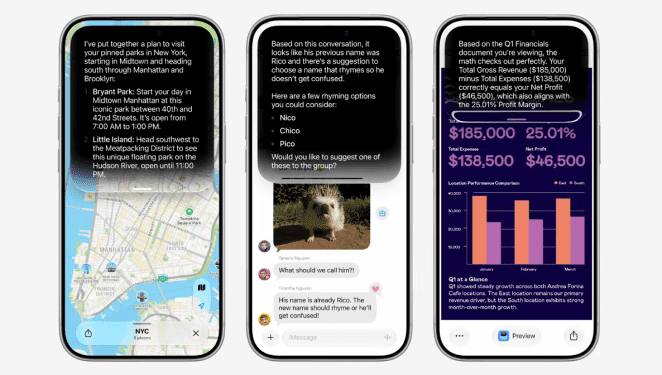
For years, Apple has been accused of being one of the biggest stragglers in the AI arms race. Doubters havearguedthat Apple’s lack of a clear AI strategy have cost it its edge, and Wall Street analystshave worriedthat the gap could start hurting iPhone sales. Now, the company has unveiled what it is billing as its biggest AI launch to date:Siri AI, which embeds new automated capabilities (fueled by a partnership with Google Gemini) into the very spine of its software. Is it enough to get people to stop saying that Apple is “losing” the AI race? To be honest, nobody really knows. But the question itself may be the wrong one. A better one might be: are Apple customers actually going to use these features and, if they do, will it help Apple’s business? Before we address that question, we should note that Monday’s announcements also came with an interesting comment from Craig Federighi, Apple’s senior vice president of software engineering. “Some appear to be racing forward, seemingly pursuing AI for the sake of AI, without clear regard for the people — all of us — that it’s ultimately meant to serve,” Federighi said during his remarks. “At Apple, our mission has always been to turn the potential of advanced technology into helpful and intuitive products for everyone.” The not-so-veiled defiance on display here seems like both a response to Apple’s “behind-on-AI” criticism and an effort to acknowledge thedeeply ambivalent— and, according to some polls,increasingly negative— sentiments that many consumers have about the AI industry. It’s also a shrewd message at a moment when Americans are worried that AI willtake their jobsand rot their brains. Apple is positioning itself as the AI company that’s actually on your side. Judging by Monday’s demos, that positioning has some substance behind it. Siri can now surface information buried deep in your inbox or text history and surface helpful information and offer helpful suggestions based on it. It can use what Apple calls onscreen awareness to give you context about what you’re looking at. And — using Gemini — it can pull near-instantaneous up-to-date information from the web and deliver it right to your device. Siri is also designed to work seamlessly across Apple devices, giving users increased flexibility and, like other AI chatbots, it stores chat histories so users can revisit past conversations. By building AI functionalities into its disembodied, ethereal assistant, Apple also has the potential to eat into the advantages of competitors whose apps can only reach users through its own App Store. For those competitors, having Apple’s AI embedded at the operating system level is a meaningful threat to their distribution advantage. The keyword here is “potential” since this version of Siri won’t be available to consumers until later this year, as a beta. A final verdict will have to wait, but what’s already clear is that Apple is doing its best to court its audience — whether theyend up going for it or not. Apple is obviously a hardware company, and these updates are designed to make that hardware incrementally more user-friendly and convenient, keeping users glued to their devices a little while longer. The contrast with its competitors is instructive and maybe the most important signal in Monday’s announcements for anyone watching where the AI industry is actually headed. Take OpenAI, which, despite shipping updates at a relentless pace, has struggled to define who it’s actually selling to, oscillating betweenconsumers and enterprises. Or Meta, which is pouring gargantuan sums into AI without a clear explanation of how it connects to the company’score advertising business. Apple’s more measured approach is starting to look optimal by comparison — and more financially sound. For the most part, Apple hasn’t needed a gangbusters AI strategy. It postedhistoric iPhone saleslast quarter. And as questions mount over AI’sprofitabilityand real-world utility, Apple is spending significantly less than its competitors — roughly$14 billion in capexplanned this year, against a cumulative$900 billionbeing committed by other tech giants — while still earning huge amounts of revenue. That revenue has come from the AI industry itself viataxes on AI companiesthat use its App Store to platform their apps. In short, Apple is spending less, making more, and now launched a suite of AI features that — for many iPhone users — will feel indistinguishable from the other AI applications already available to them through the App Store. If that doesn’t exactly count as “winning the AI race,” it may be the smartest way to run it.
View
WWDC 2026: Apple Unveils Siri AI With Major Apple Intelligence Upgrades
Apple unveiled a revamped Apple Intelligence strategy alongside iOS 27, iPadOS 27, macOS 27, watchOS 27, tvOS 27, and visionOS 27 at WWDC 2026. The company announced major upgrades to Siri, expanded AI capabilities across its software ecosystem, and new tools aimed at both users and developers. Apple also introduced Siri AI, the latest version of its digital assistant powered by Apple Intelligence. The Cupertino-based tech giant also unveiled the second generation of its Apple Foundation Models, which are designed to process and understand speech, text, and images.
View