Latest AI News

Sources: Cursor in talks to raise $2B+ at $50B valuation as enterprise growth surges
AI coding startup Cursor is nearing new funding in which the four-year-old company would raise at least $2 billion in fresh capital, according to four sources familiar with the matter. Returning investors Thrive and Andreessen Horowitz are expected to lead the financing at a $50 billion valuation, prior to the new capital injection, the people said. Battery Ventures, a new investor, may also participate in the financing, according to two sources. Strategic investor Nvidia is also expected to write a check, one person said. Although the round is already oversubscribed, the deal terms are not final and may still change. The financing, if completed, would nearly double Cursor’s previous$29.3 billion post-money valuation, assigned to the company during its last fundraise six months ago. Despite fierce competition from other AI-coding offerings, such as Anthropic’s Claude Code and OpenAI’s revamped Codex, Cursor’s revenue continues to climb rapidly. Cursor forecasts ending 2026 with an annualized revenue run rate of more than $6 billion, two people said. This trajectory implies the company expects to at least triple its annualized revenue over the next 10 months. In February, Cursor reached $2 billion in annualized revenue, calculated by projecting its most recent monthly sales over a year,Bloomberg reported. Like many AI-coding startups reliant on third-party models, Cursor operatedatnegative gross marginsuntil recently, meaningit cost more to run the product than the startup could charge for it. The introduction of a proprietaryComposer modellast November, along with the ability to call on less expensive models like China’s Kimi, has helped the company achieve slight gross margin profitability, the people said. On a more granular level, the company has reached positive gross margins on its sales to large enterprises, but continues to lose money on individual developer accounts, according to one person. By relying less on outside providers, Cursor is trying to avoid being replaced by its own suppliers, most notably Anthropic, whose Claude Code has emerged as the startup’s main rival. Cursor and Battery Ventures declined comment. Thrive, a16z, and Nvidia didn’t respond to request for comment. Cursor, previously known as Anysphere, was co-founded in 2022 by Michael Truell, Sualeh Asif, Arvid Lunnemark, and Aman Sanger while they were students at MIT.
View
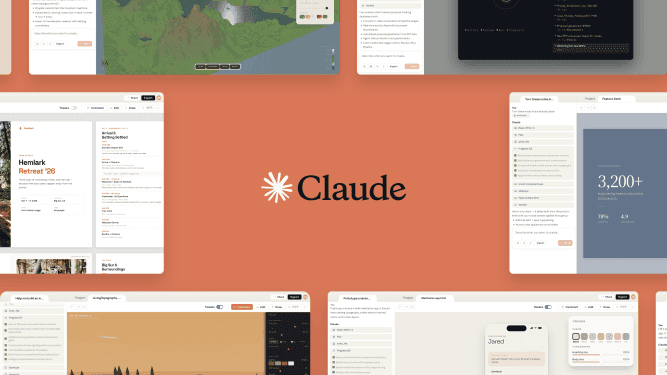
Anthropic launches Claude Design, a new product for creating quick visuals
Anthropicannouncedon Friday that it’s launching Claude Design, a new experimental product that lets users create visuals like prototypes, slides, one-pagers, and more using Claude. The company says Claude Design is intended to help people like founders and product managers without a design background share their ideas more easily. With Claude Design, users describe what they want, and Claude will create an initial version. From there, users can refine the visuals with direct edits or requests. For example, you could ask Claude to “prototype a serene mobile meditation app. It should have calming typography, subtle nature-inspired colors, and a clean layout.” You could then tweak the colors, the size of the typography, or ask Claude to add a dark mode toggle. While Claude Design may initially seem like it’s looking to compete with popular design app Canva, whichhas just expanded its own AI capabilities,Anthropic told TechCrunch that it’s intended to complement it rather than replace it. The company said its new product is built for people who aren’t starting from a design tool and need to get from an idea to something visual quickly. Once teams create presentation decks or prototypes, they can export them as PDFs, URLs, PPTX files, or send them to Canva. Once in Canva, they are fully editable and collaborative, Anthropic says. Claude Design can also apply a team’s design system to every project it creates so that the results are consistent with the company’s overall visual style. Anthropic says Claude Design is able to do this by reading a company’s codebase and design files. Additionally, teams can refine these components and maintain more than one design system. The new product is powered by Claude Opus 4.7 and is available in research preview for Claude Pro, Max, Team, and Enterprise subscribers. The launch highlights Anthropic’s ongoing push into the enterprise and prosumer categories, as competition intensifies around AI workplace tools. In January, Anthropic rolled outClaude Cowork, an agentic assistant built for complex tasks. A few weeks later, the company broughtagentic plug-ins to Coworkthat are designed to automate specialized tasks within a company’s various departments. Today’s announcement comes a few days afterBloombergreported that VCs have been offering the company a preemptive funding round that wouldvalue it at $800 billion or more, which would almost match or even surpass its rival OpenAI. But so far, Anthropic isn’t interested in the latest offers, according to the report.
View

Tokenmaxxing, OpenAI’s shopping spree, and the AI Anxiety Gap
The gap between AI insiders and everyone elseis widening, and the spending, suspicion, and even new vocabulary are starting to show it. While OpenAI is busy buying up everything fromfinance appstotalk shows, a certain shoe company justrebranded as an AI infrastructure play, and Anthropic unveiled a model it says istoo powerful to release publicly …but apparently not too powerful to demo to Federal Reserve Chair Jerome Powell. On this episode of TechCrunch’sEquitypodcast, Kirsten Korosec, Anthony Ha, and Sean O’Kane dig into what’s actually being built in AI infrastructure, who’s winning the enterprise battle between OpenAI and Anthropic, and more of the week’s headlines. Listen to the full episode to hear about: Subscribe to Equity onYouTube,Apple Podcasts,Overcast,Spotifyand all the casts. You also can follow Equity onXandThreads, at @EquityPod.
View

Wipro’s ₹15,000 Crore Buyback Exposes Indian IT’s R&D Gap
₹15,000 crore payout raises debate on capital use amid weak growth and shifting industry economics.
View

Canva Introduces Canva AI 2.0, Brings Agentic Capabilities and Memory to Perform Design Tasks
Canva introduced a major upgrade to its artificial intelligence (AI) suite on Thursday. Dubbed Canva AI 2.0, the new suite brings an agentic system that understands layered design and can complete complex tasks using a conversational interface. The suite was first previewed at the Canva Create 2026 event, which was hosted at Hollywood Park in Los Angeles, California. New features in the suite include multi-channel campaign design, memory, web research, task scheduling, and an improved overall experience.
View
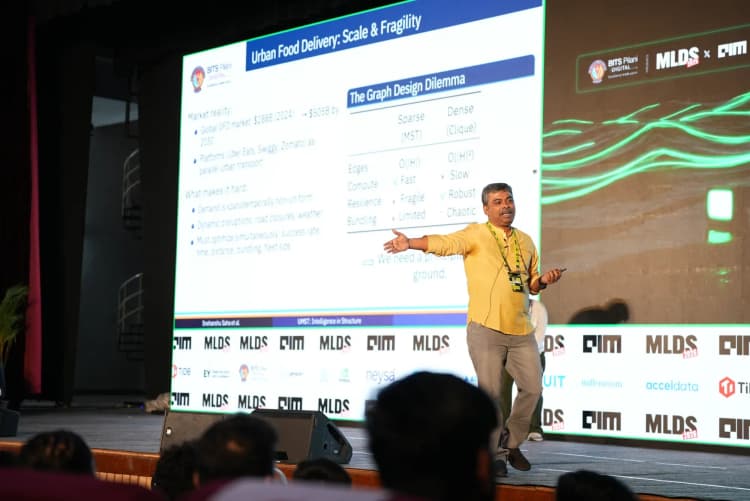
Why Smarter Systems May Beat Smarter Models
At MLDS 2026, BITS Pilani highlighted the importance of thoughtful design and operational frameworks in driving the future of AI.
View

The Apple AI Victory Everyone Missed
MLX leverages Apple Silicon’s performance to help developers deploy powerful on-device AI apps on Mac devices.
View

OpenAI Launches GPT-Rosalind for Life Sciences Research, Targets Drug Discovery Workflows
The model is named after Rosalind Franklin, whose work contributed to the discovery of DNA’s structure.
View

After Sora, Lyra 2.0 Shows Where AI Video is Headed Next
AI video is moving beyond clips to persistent, explorable environments with real-world simulation potential.
View

Anthropic Releases Claude Opus 4.7 AI Model, Calls It Less Advanced Than Claude Mythos
Anthropic, on Thursday, released another major update to its Opus model, dubbed Claude Opus 4.7. The new artificial intelligence (AI) model comes just days after the San Francisco-based startup released Claude Mythos, a model which is so capable at cybersecurity tasks that the company has limited its access. Opus 4.7 is built using the same architecture but has been intentionally kept less advanced to ensure that it cannot be used to carry out cyberattacks. Compared to the older Opus model, the latest iteration also brings improvements across coding and vision-related tasks.
View

OpenAI Upgrades Codex With Computer Use, Image Generation Capabilities
OpenAI, on Thursday, released a major update to Codex, its coding-focused platform for desktop. The new update brings computer use, image generation, native access to the web, and other personalisation tools to users, significantly upgrading the usability of the tool. The new features are first arriving on macOS and will be rolled out to Windows and the integrated development environment (IDE) soon. Interestingly, the capability arrived the same day Anthropic released Claude Opus 4.7, which also focuses on bringing improvements to software engineering.
View

Firstsource Unveils Kairos to Bridge AI-to-Execution Gap
The new OS claims to turn AI ambition into measurable results, tackling a 540-basis-point performance gap in enterprises.
View