Want to get featured here? Explore premium visibility opportunities.

Contact us

AI News‘What a joke’: Github Copilot’s new token-based billing spurs consternation among devs

‘What a joke’: Github Copilot’s new token-based billing spurs consternation among devs

11:12 PM IST · May 30, 2026
‘What a joke’: Github Copilot’s new token-based billing spurs consternation among devs

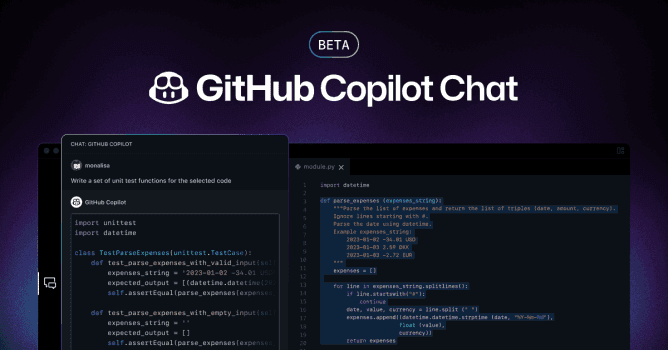
The golden age of Microsoft’s Github Copilot appears to be at an end — for the little guy, at least. The company is switching its billing system from a flat subscription rate to a token-usage system that has the potential to bill users at a significantly higher rate. Bigger enterprises may still have the juice for it, but smaller companies and workers could find themselves wondering how they’re supposed to balance the monthly budget. The changes, whichwill take place June 1, mean that users will charged based on how many tokens they burn through as they work instead of a low flat rate based on requests. Some developers with financial whiplash have taken to places like Reddit and X to bemoan what — in many cases — appears to be a drastic escalation in cost. “What a joke,” one Redditorrecently wrote, claiming that, while they currently only pay around $29 per month, the new rate will balloon their costs to nearly $750 a month. “This new usage model is just stupidly expensive. I’m adjusting mine by cancelling. At that cost, it is no longer cost-effective or useful in any practical way.” Anotheruser posted“WOW, didn’t expect new pricing model to be this ridiculous,” sharing a screenshot that appeared to show that their costs had shot up from around $50 to some $3,000. The increases sound extreme. However, some Copilot users have bitten back at this criticism — noting that, if you know what you’re doing, you really shouldn’t be blowing through quite so many tokens on a regular basis. The people spending this much are vibe-coders with little actual development knowledge, those critics maintain. “The vast difference between some of us working all day and still barely having overage and then these screenshots. I struggle to believe it’s complexity differences in the workload,” wrote one user. “The only way it gets crazy like that is if you are purely ‘vibe coding’ with a ton of bloated iterations,” they later added. “It’s pretty affordable for even small outfits if used as a tool, on pretty much any provider.” Others have focused on the mind-boggling economics behind the company’s previous model. “Holy fuck how much money was copilot losing,” one Redditorasked in a recent post. It’s a good question. The economics behind Copilot have not always seemed so easy to grasp, and the amount that the company must have spent to subsidize the ongoing vibe-coding escapades of its user base is similarly mysterious and hidden from public view. While some have criticized the changes and others have critiqued those critiques, still other online voices have argued that developers have a perfectly good reason to be upset, given that Microsoft encouraged users to use its chatbot indiscriminately and now appear to be pulling the rug out from under them. “To all the people blaming…the people who actually used the system the way that Microsoft built it (and even encouraged it to be used this way), honestly the only one at fault here is Microsoft. Microsoft provided this billing method and they kept making it easier and easier to burn through massive numbers of tokens on single premium requests that could churn for hours or even days while spawning dozens or even hundreds of sub-agents,” one user wrote. TechCrunch reached out to Microsoft for comment, but did not hear back by publication time.

read more


Latest AI News

View All News →
Billionaire Ambani wants AI in every call, app, and home

Billionaire Ambani wants AI in every call, app, and home

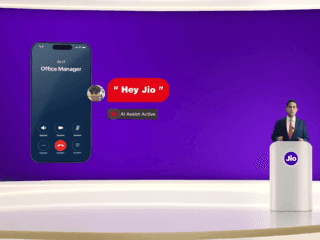
As India searches for a homegrown contender in the global artificial intelligence race, billionaire Mukesh Ambani is positioning Reliance Industries as a national champion, rolling out AI services for phone calls, mobile apps, and connected homes. At itsannual shareholder meetingon Friday, the Mumbai-based conglomerate announced Jio Call Agent, an AI assistant that can join phone calls to transcribe conversations, generate summaries, and perform tasks such as booking cabs, ordering food, and making reservations. The service, which can be activated by saying “Hey Jio,” is expected to launch later this year for Jio’s more than 500 million users. By embedding the service directly into its telecom network rather than offering it as a stand-alone app, Jio is betting AI assistance can become a native feature of phone calls. The approach could reduce consumers’ reliance on third-party call-assistant apps and give Reliance a powerful distribution advantage in an increasingly crowded AI market. Reliance also unveiled an AI-powered version of its MyJio app that can perform tasks on behalf of users, from activating eSIMs to selecting roaming plans, through natural-language requests. The company further introduced TeleFrame, a home display that uses AI agents to proactively surface information and recommendations, such as weather alerts, schedules, and household reminders. The product appears to echo a broader industry push toward ambient AI assistants for the home, an area being explored by companies such asAmazonandGoogle. The announcements mark the next phase of Reliance’s AI ambitions as India seeks to build domestic capabilities in a field largely dominated by U.S. and Chinese technology companies. The push follows thelaunch of Reliance Intelligencelast year, through which the conglomerate aims to develop AI infrastructure and services for consumers, businesses, and governments, including applications that support 22 Indian languages. “India should not be a mere consumer of AI created elsewhere. It must become a creator, adopter, and a global leader in AI,” Ambani, age 69, said. Reliance has been ramping up its AI ambitions through partnerships withGoogle,Meta, andNvidia. Earlier this year, the company announced plans toinvest $110 billion in AI infrastructureas it seeks to establish itself as a major player in India’s emerging AI ecosystem. At the shareholder meeting, Reliance also unveiled a suite of AI services for healthcare, education, agriculture, and small businesses. The products, branded JioHealthIQ, JioLearnIQ, JioKrishiIQ, and AI Vyapar, are designed to operate across multiple Indian languages and cater to local needs, the company said. The shareholder meeting also brought a major development for investorsawaiting Jio’s stock market debut. Ambani said Jio Platforms’ board had approved a draft prospectus for an initial public offering that would include a fresh issue of up to 270 million shares, according to a stock exchange filing. The announcements also raise questions about how Reliance will handle user data as it expands AI services across phone calls, mobile apps, and connected homes. While the company said the services would operate with user consent, it did not answer questions about whether data generated through the products could be used to train AI models or shared with technology partners. Reliance’s AI ambitions come as Indian companies remain heavily reliant on foreign AI models and cloud providers.Recent restrictions on accessto some of Anthropic’s latest models have underscored that dependency, showing how decisions made overseas can affectstartups and businessesbuilding AI products in India — the kind of supply-chain risk that’s pushing Indian conglomerates toward building their own stack rather than renting someone else’s. Last week, Reliance announced acollaboration with Meta to establish an AI data centerin the western state of Gujarat, building on Meta’s earlier investment in Jio Platforms and a joint venture launched last year to develop AI solutions for enterprise customers in India and overseas markets. Reliance is not alone in pursuing AI opportunities.Tata Consultancy Services,Infosys, and rivalAdani Grouphave also expanded their AI initiatives and partnerships with global players, including Anthropic, Google, and OpenAI, as India’s largest corporations race to secure a leading role in the country’s AI future. Nonetheless, for Reliance, the stakes are particularly high; it’s preparing Jio for a long-awaited stock market debut and needs new growth drivers, with the conglomerate’s shares down about 17% this year.

7 hours ago

View

The US banned Anthropic’s Fable 5 release, but the numbers don’t seem to care

The US banned Anthropic’s Fable 5 release, but the numbers don’t seem to care

Just as last week was ending, the US governmentforced Anthropic to pull its two newest models, Fable 5 and Mythos 5, citing national security concerns after Amazon researchers allegedly found a way to bypass Fable 5’s guardrails. Cybersecurity researchers havesince signed an open lettercalling the move dangerous, and Anthropic itself noted the same jailbreaks exist in other models. So is this a genuine security concern, or just the latest chapter in a messy relationship between Anthropic and the Trump administration? On this episode of TechCrunch’sEquitypodcast, hosts Anthony Ha, Sean O’Kane, and Rebecca Bellan unpack what the ban means for developers building on Anthropic’s platform and for anyone watching the IPO, why itmight accidentally be good for the company, and more of the week’s headlines. Listen to the full episode to hear more about: Subscribe to Equity onYouTube,Apple Podcasts,Overcast,Spotifyand all the casts. You also can follow Equity onXandThreads, at @EquityPod.

7 hours ago

View

Is the US government’s Anthropic ban accidentally helping the brand?

Is the US government’s Anthropic ban accidentally helping the brand?

Loading the player… Just as last week was ending, the US governmentforced Anthropic to pull its two newest models, Fable 5 and Mythos 5, citing national security concerns after Amazon researchers allegedly found a way to bypass Fable 5’s guardrails. Cybersecurity researchers havesince signed an open lettercalling the move dangerous, and Anthropic itself noted the same jailbreaks exist in other models. So is this a genuine security concern, or just the latest chapter in a messy relationship between Anthropic and the Trump administration? On this episode of TechCrunch’sEquitypodcast, hosts Anthony Ha, Sean O’Kane, and Rebecca Bellan unpack what the ban means for developers building on Anthropic’s platform and for anyone watching the IPO, why itmight accidentally be good for the company, and more of the week’s headlines. Subscribe to Equity onYouTube,Apple Podcasts,Overcast,Spotifyand all the casts. You also can follow Equity onXandThreads, at @EquityPod.

7 hours ago

View

Jio AI Call Agent Explained: What It Is, How It Works, Features and More

Jio AI Call Agent Explained: What It Is, How It Works, Features and More

Reliance held the 49th edition of its annual general meeting (AGM) with shareholders on Friday. The Indian conglomerate unveiled various new artificial intelligence (AI) innovations that its telecom service provider (TSP) arm, Reliance Jio, plans to join in the coming months in the country. Among the many announcements, the company revealed its plan to integrate AI directly into its network. The company claims that this will allow the TSP to introduce a voice-based AI call agent for its subscribers. During the presentation, the company demonstrated the AI agent's capabilities, showing that it will be able to transcribe calls and generate call summaries without asking users to download a standalone app.

11 hours ago

View