Want to get featured here? Explore premium visibility opportunities.

Contact us

AI NewsThe three hard-tech moonshots fueling SpaceX’s unbelievable IPO

The three hard-tech moonshots fueling SpaceX’s unbelievable IPO

11:35 PM IST · June 10, 2026

The three hard-tech moonshots fueling SpaceX’s unbelievable IPO

SpaceX is coming to market on Friday, and investors can barely contain their excitement. The $75 billion stock offering is reportedlydeeply over-subscribed, with some institutional investors ponying up for$10 billion blocksof Elon Musk’s empire. There are lots of reasons to be skeptical of the investment — big IPOs tend to sink, the company is losing money, and Musk’s erratic online behavior would be terrifying coming from any other tech CEO — but it doesn’t seem to be slowing anyone down. Tech investors have learned to never bet against Elon, whatever the business logic indicates. But a dispassionate look at SpaceX’s financial plans can still tell us a lot about what they’re betting on: A business centered around orbital data centers that emerged in the last 18 months as Musksought a visionthat would unite his conglomerate ahead of its IPO. In true Musk style, it’s a bold scheme, and one that requires at least three near-impossible feats of engineering: a reusable rocket, a brand-new American chip foundry, and a sprint to build satellites faster than ever before. That kind of business plan can be difficult to score. This week, two analyses tried to offer a more a sober assessment of SpaceX’s plan — one from Morningstar, the financial research firm, and another from Aswath Damodaran, a New York University finance professor who takes a special interest in corporate valuation. Both exercises find SpaceX significantly less valuable than the nearly $1.8 trillion assessment proffered by the company’s bankers. Morningstarassigns a valueof about $825 billion, while Damodaransuggeststhe company is worth $1.2 trillion. The significant difference is, in many ways, the result of bolting a world-beating space monopoly to a far riskier AI business. Morningstar’s analyst characterizes the difference between their assessment of a fair value of $63 a share, and SpaceX’s offering price of $135, as a $72 call option on the company’s ability to deliver orbital data centers at the rate and capability that Musk believes is possible. In both analyses, the high margins of the company’s space launch business and its satellite internet network are the most attractive things about the company, while its AI business is the most uncertain. Part of the question is, what is SpaceX’s AI business? In the company’sS-1market analysis, it frames its largest opportunity in enterprise AI — that its models will power coding tools built by the team it acqui-hired from Cursor, or the company’s Macrohard project, which is intended to equip digital agents with the capabilities to perform white-collar labor. SpaceX assessed the total market for that business as $22.7 trillion, compared to $2.4 trillion for AI infrastructure and just under $2 trillion for the company’s space efforts. But that contradicts the company’s recent deals to sell significant amounts of compute toAnthropicandGoogle, ostensible competitors in the model business. That’s not out of place for a Musk company; SpaceX frequently launches satellites operated by competitors to its Starlink network. It just usually does that from a place of strength, not while playing catch-up. Acting like a neocloud might be good near-term business, but it raises the question of where value will accrue in the AI tech stack: Is it better to be a compute provider or a model-builder, if you can’t be both? The scaling logic that dominates the AI business demands that serious frontier labs constantly train new and more powerful models (or, as Muskadmittedin his recent lawsuit against Sam Altman, by distilling capabilities from other companies’ models). Any competitor not rushing ahead is likely to fall behind, although the rising abilities of cheaper open source models might undermine that dynamic. Space data centers are one way to square the circle, providing so much compute that SpaceX could effectively do both. In avideo interviewreleased by SpaceX this week, Musk laid out the logic for why SpaceX is best positioned to deliver on data centers. The core of the argument was that SpaceX is the only company capable of putting a lot of mass on orbit cheaply, building a lot of solar panels, and building a lot of chips. In general, industry experts see space data centers at scale being about a decade away, but Musk argued (with a lot of caveats) that they are much closer. “This is not a promise of what we’ll do,” Musk said in the video. “This is what we are going to try to do, and think we probably can do, which is to get to roughly an annualized rate of a gigawatt per year by the end of next year, in terms of space AI compute.” Based on his expected maximum power delivery of 150 kW per satellite, that’s a production rate of 6,666 satellites a year, or about 556 a month. That’s roughly twice the reported current production rate of Starlink satellites, which is just 70 a week. Though Musk says that the AI satellites are simpler in architecture, that’s a lot to ask for a production facility that hasn’t been built yet. The company is also still building out its solar panel production facility. That’s before we get to Terafab, the company’s much-discussed chip foundry, which Musk sees feeding into the later stages of this product as the company tries to scale up to a terawatt of annual compute production. Chip fabs are some of the hardest modern industrial projects, typically costing billions of dollars and taking as long as a decade to build. Then there’s the most vital question: What about Starship, the key to SpaceX’s ability to economically put all those chips in orbit? A recent test flight went well enough, but it didn’t suggest that rapid reusability is right around the corner. SpaceX may end up reusingjust the boosterat first, which would raise the costs of the space data center roll-out. For now, the company is still undergoing a mishap investigation for the FAA to understand why the booster stage failed to make a controlled reentry as planned. SpaceX hasn’t responded to questions about when the vehicle will fly again, thought it has said it expects to begin launching Starlink satellites with it by the end of this year. But take that with a grain of salt: Consider that NASA, which has a nearly $4 billion contract with SpaceX to use Starship as a moon lander, still isn’t ready to commit to a test mission with the vehicle scheduled for late 2027. As public investors get their hands on SpaceX shares, they’ll find themselves owning a near-monopoly on access to space in the U.S. and Europe, a world-spanning communications network, and a wager on the most ambitious infrastructure project of the AI era. Those projects depend on SpaceX creating something never seen before — a fully reusable rocket. The company will also need to build a high-rate production facility for AI satellites, but do so in 18 months, not the decade it took to develop its Starlink manufacturing. Finally, it will need to build a chip foundry in the U.S., something even dedicated silicon firms are reluctant to take on. Musk is right that SpaceX is the only company positioned to build any of this anytime soon, but that speaks to the magnitude of the challenge as much as the company’s likelihood of achieving it. Musk used to say he wouldn’t take SpaceX public until he reached Mars, since fickle investors might lose faith along the way. Those plans may have been put on hold, but what he’s laid out ahead of the company’s IPO could be just as difficult.

read more

Latest AI News

View All News →
Almost half of U.S. singles feel negatively about AI in dating, Match says

Almost half of U.S. singles feel negatively about AI in dating, Match says

Dating app giant Match Group — which owns apps like Tinder, Hinge, and OkCupid — conducted astudyto determine how U.S. singles really feel about the relationship between AI and dating. Turns out, people don’t want AI messing with every aspect of human life. Across the industry, dating apps are experimenting with AI. Bumble introduced adating assistant named Bee, and Tinder isspendingso much on AI tools that it’s slowed its hiring process. Meanwhile, Hinge’s CEOstepped downlast year to launch a more AI-focused dating app altogether. But according to Match’s survey of 1,000 people aged 18 to 39, 47% of singles have a negative view of AI’s use in romantic contexts. This perspective varies depending on what the AI is being used for. About 40% of singles say they would refuse to date someone who uses an AI companion app, and that figure rises to 51% among women ages 18 to 24. However, only 12% of 18- to 24-year-olds said that they had used a companion app over the last three months, and only about a third of those users said they were seeking genuine connections with those chatbots. While Match says that people harbor a “near-universal” disapproval of actually dating an AI, like in the movie “Her,” that doesn’t mean that respondents are wholly opposed to AI features within apps. Some 64% of respondents said they could see how AI might help them in their dating journey. If we’re being pedantic,technically, every major dating app has already used some form of matching algorithm since before we knew what a GPT was. This survey refers to the new crop of AI features that basically every app is introducing, which help users punch up their profiles, choose photos, and keep conversations flowing. What dating app developers should take away from this survey is that people are not entirely closed off to AI; they just don’t want to be in a relationship with a robot, nor do they want to feel as though their dating experiences are overly inundated with technology that feels inauthentic. “Ask singles what they want from AI in dating, and the answer is pretty consistent: help with the hard parts, but hands off for the human parts,” Match wrote in a blog post. “Yes, they’ll use it to help them punch up a profile or for help figuring out what to say when a conversation goes quiet, but the actual connection is still theirs to create.” Hopefully, this message reaches dating entrepreneurs like Bumble founder Whitney Wolfe Herd, who suggested that dating app users could havepersonal bots that date other users’ bots. It’s pretty normal nowadays to say you met your partner online, but “his bot asked my bot out, and our bots hit it off” will never be a socially acceptable meet-cute.

1 hour ago

View

OpenAI is bringing on some big guns in the lead-up to its IPO

OpenAI is bringing on some big guns in the lead-up to its IPO

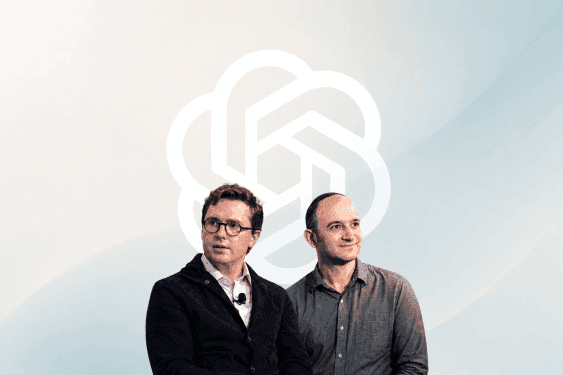
OpenAI is bringing on some big names to the team in the lead-up to its public debut: Google DeepMind AI legend Noam Shazeer and former Trump White House AI policy official Dean Ball. Shazeer, a co-lead at Gemini and the founder of AI role-playing startup Character AI,announced his departure on Wednesday. He had been at Google since 2000, leaving only for a three-year period when he left to co-found Character AI. Two years ago,Google re-hired Shazeerin a $2.7 billion deal that gave the tech giant access to the startup’s technology. The move is the latest in a series of shufflings between the top AI labs, including Google, OpenAI, Anthropic, and Meta. Shazeer is credited for being one of the foundational minds behind modern generative AI. He co-authored the seminal 2017 paper “Attention Is All You Need,” which introduced the Transformer architecture. Before leaving Google, Shazeer had also reportedly been stirring the pot when it came to political issues. According toThe Information,Shazeer voiced opinions on internal messaging boards on transgender identity and Israel’s war in Gaza that resulted in management deleting his posts. Whether those controversies will follow him to his new employer remains to be seen. In the meantime, OpenAI is also shoring up its policy credentials by bringing Ball to the team. Ball had a brief stint last year in the White House, where he helped publish America’s AI Action Plan before stepping down to rejoin the techno-libertarian think tank the Foundation for American Innovation as a senior fellow. “I am pleased and honored to announce that, on July 6, I’ll be joining OpenAI as leader of a new team called Strategic Futures,”Ball wrote on X on Thursday. “Our mandate will be to help the company’s leadership shape frontier AI policy.” Ball will report directly to Chief Strategy Officer Jason Kwon. The “small, high-agency team” will focus on “matters pertaining to: catastrophic risk, recursive self-improvement, labor market impact, and the relationship between the frontier labs, governments (particularly the U.S. Federal Government), and society,” Ball wrote in ablog post. The Strategic Futures team will cover both public-facing policy and internal governance, he added. That last is important — Ball noted that “almost by necessity,” AI labs will have to lead on AI governance decisions. “In other words,internal governancewill be more central to the future of AI than most people realize,” Ball wrote. Ball’s decision to join OpenAI — arguably an AI favorite in the administration — comes as Anthropic battles once again with the U.S. government. Late last week, President Donald Trump ordered anexport control ban on Anthropic’s latest models,Fable 5 and Mythos 5, leading to the AI firm being forced to take the models down entirely to avoid noncompliance. For anyone who had “government interference” on their S-1 risk factor bingo card, Ball is what it looks like when a company locks in its insider status while a rival is squeezed. TechCrunch has reached out to OpenAI for more information.

1 hour ago

View

Snap spins off AI video team into new company, Dotmo, due to costs

Snap spins off AI video team into new company, Dotmo, due to costs

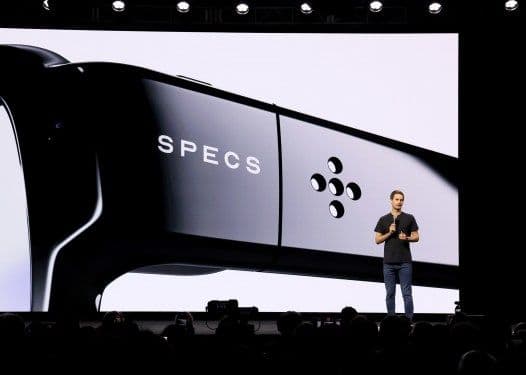
Snap will be spinning off an internal generative AI video team into a separate company. The new company — dubbed Dotmo — will focus on developing AI models that can create interactive gaming experiences, Snap told TechCrunch. Snap cited the high costs of conducting such work internally as one of the reasons for the spinoff. While technically a separate company, Dotmo will retain its close ties to the Snapchat creator. For one thing, Snap will provide Dotmo with a license to adapt its technology for gaming and interactive entertainment platforms. At the same time, the initial Dotmo team will consist of a group of current Snap staff who are leaving Snap to launch the new venture. Additionally, while Dotmo won’t be funded by Snap directly, the company says that Bobby Murphy, its chief technology officer, will act as lead investor and will have a significant personal stake in the new firm. Though a financial backer, Murphy will continue to work for Snap full-time as its CTO and continue to lead its GenAI research and development initiatives. In exchange for the talent and the technology license, Snap will get a large equity stake in Dotmo, the company said — a position that could prove rewarding if the company prospers in the future. Dotmo may also eventually seek outside funding, Snap said. The move marks Snap’s second major spinoff effort this year. Earlier in 2026, Snapspun off Specs into a new companyto focus exclusively on the development of its smart glasses line. (Snap’s recent unveiling of Specswasn’t exactly a home runfor the company. Snap’s stock tanked afterconcerns were raisedabout the hefty price tag attached to the new smart glasses, which is around $2,200.) Snap also underwent a round of layoffs earlier this year, during whichsome 1,000 jobs were cut. Dotmo represents a different kind of spinoff than the Specs operation, in that its team will be focused on developing digital experiences that aren’t currently a part of Snap’s core business priorities, a Snap representative said. However, it could still be considered a partner in the future if the fit seems right, they added. Spin-offs can be a cost savings strategy for companies, although they can serve a variety of other purposes — like showing off a particular asset, generating investor attention, or providing operational flexibility to the team involved. In spinning out Dotmo, Snap may be reducing the financial burden associated with its AI efforts, while still maintaining exposure to any potential upside through its equity stake.

1 hour ago

View

AI inference startup Baseten reportedly raising $1.5B months after its last mega-round

AI inference startup Baseten reportedly raising $1.5B months after its last mega-round

AI inference company Baseten is close to finalizing a stunning $1.5 billion funding round at a $13 billion valuation,the Wall Street Journal reports. Just five months ago, the startup announced that it had raised a$300 million Series Eat a $5 billion valuation. And that round was just nine months after raising a$150 million Series D. If finalized, this latest round would represent a 160% increase in valuation in less than half a year. However, the WSJ reports that this is asplit-priced round, a tactic startups are using to boost their headline valuation and make lead investors look good on paper. Some investors in this latest funding round are reportedly coming in at a $13 billion valuation, while others at $11 billion, sources told the Journal. This deal is said to be co-led by Spark Capital, Sands Capital, Altimeter Capital, and Wellington Management. Launched in 2019, Baseten is a startup benefiting from what The Next Wave hailed the “inference gold rush,” in which VCs are pouring enormous amounts of money into companies building the inference layer. Inference is what the model does after a user submits a prompt. Baseten promises to handle inference quickly while controlling costs by routing requests to the best-for-task model, especially to competent, less-expensive open source alternatives.

1 hour ago

View