Want to get featured here? Explore premium visibility opportunities.

Contact us

AI NewsStartup Battlefield 200 applications close in one week: Window to nominate and apply for the most promising startups ends May 27

Startup Battlefield 200 applications close in one week: Window to nominate and apply for the most promising startups ends May 27

10:53 PM IST · May 20, 2026
Startup Battlefield 200 applications close in one week: Window to nominate and apply for the most promising startups ends May 27

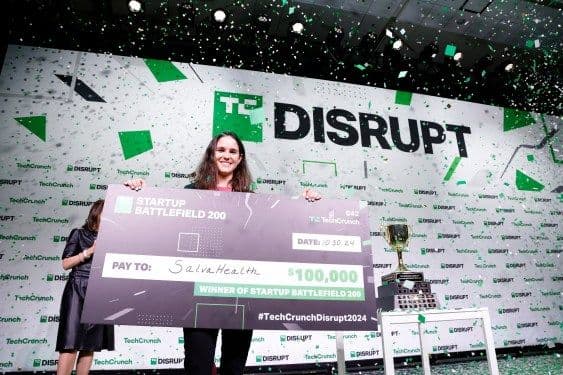
Your shot at VC access, global visibility, TechCrunch coverage, and $100,000 in equity-free funding is gone in a week. Startup Battlefield 200 applicationsclose May 27. If you’re building a breakout startup — or know a founder who is — this is the moment to act. Apply todayfor the opportunity to take the stage atTechCrunch Disrupt 2026, October 13-15, alongside 200 of the world’s most promising early-stage startups. Pre-Series A founders, consider this your final countdown reminder: the strongest startups are already entering the arena, and theapplication window is closing fast. If your startup has already been nominated,don’t wait to complete your application. This final week moves quickly, and last-minute submissions risk getting buried as applications surge ahead of the deadline. Know a startup that deserves the spotlight?Nominate them nowso they still have time to apply before May 27. Some of the most consequential companies in tech history didn’t launch with splashy fundraising announcements. They started with a pitch. Dropbox demoed to a room full of skeptics. Cloudflare took the stage before most people understood what edge networking meant. Discord was still a scrappy gaming startup called Hammer & Chisel. They all passed through the same crucible: Startup Battlefield 200. That’s not a coincidence — it’s a pattern. And it starts with an application. Startup Battlefield 200has never been a competition for the most polished companies. It’s a competition for the most promising ones. Pre-launch is fine. No revenue is fine. What matters is whether what you’re building genuinely changes something — not incrementally, but meaningfully. If you or a founder you know is building something impactful, then the application itself becomes the first pitch.Apply before May 27. Startup Battlefield 200is where breakout companies get discovered. Selected startups will showcase live on the Disrupt Stage in front of 10,000+ attendees, leading VCs, global media, and the broader TechCrunch audience. This is your opportunity to gain investor exposure, receive direct VC feedback, and prove your company belongs among the next generation of category-defining startups. Every one of the 200 selected companies receives: And every selected company pitches, whether on the Disrupt Stage or the Pitch Showcase Stage. Both put founders in front of the investors, media, and partners who attend Disrupt specifically to find what’s next. You don’t need to make the top 20 for this experience to change your trajectory.Get started by nominating and applying here. More than 1,700 companies have competed in Startup Battlefield 200. Together, they’ve raised over $32 billion and generated more than 250 exits, including acquisitions by Microsoft, Google, Salesforce, Uber, and Amazon. The network runs so deep that alumni have even acquired each other: Dropbox acquired fellow Battlefield 200 alum DocSend in 2021. This is also the same launchpad that helped accelerate companies like Fitbit, Trello, and Mint. Behind every one of those outcomes was a founder willing to make a bet on themselves publicly, in front of people who were paying attention.Apply and learn more here. We’re looking for ambitious early-stage startups building innovative, potentially category-defining products. Applications are open globally across all industries. Most selected companies are pre-Series A, though select Series A startups may qualify on a case-by-case basis. To apply, startups should have: Thousands apply every year. Only 200 are selected. Just 20 finalists pitch live on the Disrupt Stage. One startup takes the crown and wins $100,000 in equity-free funding. The founders who wait until they feel ready often wait too long. You do not need to be polished. You need to be promising. If you’ve been sitting on this, here’s the reality: the worst outcome is you don’t get selected this cycle — and you come back next year with a stronger application because you went through the process. The stage matters. The community lasts. The milestone is real. But the deadline is now one week away. If you’re building something category-defining — or know a startup that deserves the spotlight —submit your nomination and complete your application before May 27.

read more


Nobel laureate John Jumper is leaving DeepMind for rival Anthropic

Nobel laureate John Jumper is leaving DeepMind for rival Anthropic

John Jumper, who shared a recent Nobel Prize in chemistry, announced Friday that he’s making the leap to Anthropic after “nearly 9 years” at Google DeepMind. Ina post on X, Jumper wrote that DeepMind CEO Demis Hassabis “took a real chance letting me lead the AlphaFold team just six months after finishing my PhD, and the entire GDM team taught me so much about how to do great science.” Jumper (pictured above right, with Hassabis) added, “GDM is a special place, and I’ll still be excited to hear about what amazing things they discover next.” Bloomberg reports that Jumper wasa key member of Google’s team developing coding tools, which the company has struggled to sell to businesses. Character AI co-founder Noam Shazeer also announced this week thathe’s leaving DeepMind— though in Shazeer’s case, he’s joining OpenAI. Jumper and Hassabis won the Nobel Prize in 2024for their work on AlphaFold, an AI model that can predict the 3D structure of proteins based on their genetic sequences.

2 hours ago

View

Nobel-Winning AlphaFold Scientist John Jumper Leaves Google DeepMind for Anthropic

Nobel-Winning AlphaFold Scientist John Jumper Leaves Google DeepMind for Anthropic

For his work on AlphaFold, Jumper shared the 2024 Nobel Prize in Chemistry with Demis Hassabis and scientist David Baker.

10 hours ago

View

How Hexaware's GIFT City Move Gives Indian IT a New Financial Frontier

How Hexaware's GIFT City Move Gives Indian IT a New Financial Frontier

Hexaware plans to create nearly 1,000 high-skilled jobs over the next three years.

14 hours ago

View

Encryption, spyware, and now Mythos: History shows why cyber export control doesn’t work

Encryption, spyware, and now Mythos: History shows why cyber export control doesn’t work

Last Friday, citing unspecified national security concerns, the White Houseordered Anthropicto restrict the export of its powerful AI models Fable and Mythos to anyone outside of the United States, as well as foreign nationals inside the country. Shortly after, the AI giant hastily pulled the plug on both models, which have now been unavailable to anyone for a week. The episode is the first real test of whether the U.S. government can use export controls to contain frontier AI the way it has tried, with very uneven results, to contain encryption and spyware before it. And dramatic as it may sound, how this standoff gets resolved could shape not just Anthropic’s access to foreign markets but the rulebook that other AI labs will have to build around. Some context first.Ever since Anthropic launched Mythos in April, the company has marketed it assome kind of Doomsday cyber machinethat could wreak havoc on the internet if released too widely — which is why, before the ban,only around 150 vetted companies and government organizationshad access to it at all. The goal was helping defenders secure their software and services before the bad guys could reach Mythos-like capabilities. So what triggered the ban? Two subsequent events, reportedly. The first: Anthropic gave a South Korean telecom access to Mythos through its limited partner program, and U.S. officials grew alarmed after identifying the company as one they suspected had ties to China. (The company,widely reportedto be SK Telecom, hasdeniedany China connection.) Amazon CEO Andy Jassy also reportedlyalerted the administrationafter Amazon’s own researchers, he said, found a way around Fable 5’s safeguards. Anthropic disputes the “jailbreak” label, calling it a narrow, already-patched issue rather than a wholesale defeat of the model’s safety measures. The result was the same: the Commerce Department issued an export control directive, and Anthropic had to scramble to immediately limit access to its products — within roughly 90 minutes of being notified, by some accounts. None of this is new, though. Governments have tried to use export controls to limit the proliferation of what they see as dangerous cyber technology for decades, but their track record has been middling at best. The U.S. government was behind what is perhaps history’s most spectacular failure of this approach in the early to mid-1990s. At the time, computer scientists were developing encryption technologies to secure data as it traveled over the internet. One of those encryption products was called Pretty Good Privacy, or PGP, a popular software that could encrypt data and make it virtually impossible to unscramble even if intercepted as it traveled to its intended recipient over the internet. The U.S. government initially saw PGP as a dangerous weapon, fearing it would prevent its intelligence agencies from snooping on emails as they crossed their wires. To stop the distribution of PGP, the U.S. Customs Serviceopened a criminal investigationagainst PGP’s creator Phil Zimmermann for allegedly violating arms export controls. He fought back by publishing PGP’s source codeas a printed book, igniting what is known today as the “Crypto Wars.” Zimmermann later won a key battle when the investigation was closed, paving the way for crucial end-to-end encryption algorithms such as the one used by billions of Signal and WhatsApp users. Later during the early 2010s, researchers began discovering Western-made spyware used against dissidents in the Middle East. In response, several governments agreed to expandthe Wassenaar Arrangement, an international treaty that limits the export of dual-use software and technologies that are used in both civilian and military applications. The idea was to classify surveillance and hacking software as dual-use, thus forcing spyware makers to get export licenses to sell their products abroad. Contact UsDo you have more information about the Mythos ban? From a non-work device and network, you can contact Lorenzo Franceschi-Bicchierai securely on Signal at +1 917 257 1382, or via Telegram and Keybase @lorenzofb, oremail. But Wassenaar has always had two inherent weaknesses. There are several countries that don’t adhere to the agreement, including Israel, which houses some of the world’s most active spyware makers. The agreement also depends on countries applying it to companies within their borders at their own discretion. For a time, the Italian government allowed one of the country’s then-top spyware makers, Hacking Team, a license to export its tools around the world, despite the company’s track record of selling spyware tooppressivegovernmentsthatused itto hack journalists and human rights activists. Since then,othercountriesin Europe have been lax with spyware makers like Italy. Despite numerous scandals, Europe, home tomany spyware and hacking tools makers, hascontinually failed to curb the export of spywareto authoritarian regimes. Critics say that a recently renewed effort across the bloc of 27 member states to tackle its growing problem of spyware exports to authoritarian states “does not go far enough.” Several spyware makers, such as Intellexa, a sanctioned consortium of spyware companies,  have simply moved their operations to countries with lax export controls. Other spyware makers sought to move their operations to Saudi Arabia for similar reasons. There have been some wins. Germany-based spyware maker FinFishershut down in 2022after a multi-year investigation by German prosecutors into the company forallegedly selling spywareto Turkey without an export license. Investigators previously found the FinFisher spyware had beendeployed on the phonesof critics of Turkey’s government. As of the time of writing, the impasse between Anthropic and the Trump administration remains. There is a reasonable chance the administration will buckle and lift the restriction in the interest of keeping American AI companies competitive worldwide — a move that would amount to tacit acknowledgment that AI labs elsewhere, including in China, will likely reach similar capabilities regardless of what the U.S. restricts. Or, American AI companies could end up needing government approval before serving foreign customers at all, a compliance burden that would invariably dent their bottom line. Given the past experiences that world governments have had with trying to control the reach of software, government-mandated export controls are unlikely to be the right approach to stop malicious actors from abusing powerful dual-use cyber technologies.

18 hours ago

View