Want to get featured here? Explore premium visibility opportunities.

Contact us

AI NewsSriram Krishnan is leaving his role as White House AI advisor

Sriram Krishnan is leaving his role as White House AI advisor

11:27 PM IST · June 6, 2026
Sriram Krishnan is leaving his role as White House AI advisor

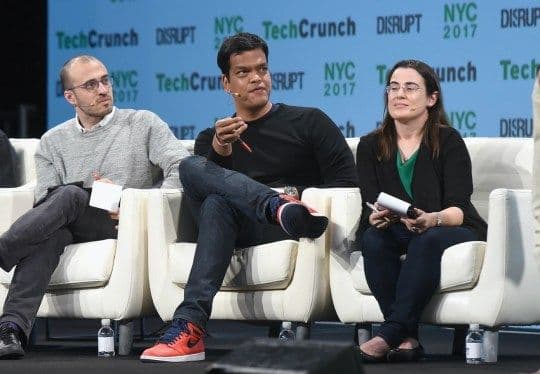
Former tech executive and VC Sriram Krishnan is leaving the Trump administration at the end of June. “It is hard to express how big a privilege it has been to serve the American people and how grateful I am to have had the opportunity to do so,” Krishnan said ina post on X. “First and foremost, it has been an honor to serve under President [Donald Trump]. Without his leadership, we would not be leading in the AI race.” Krishnan, who’s been serving asa senior policy advisoron artificial intelligence at the White House, was one of a number of tech industry figures totake roles in the second Trump administration. Krishnan has led product teams at Microsoft, Twitter, Yahoo, Facebook, and Snap, and he was most recently a partner at Andreessen Horowitz, a firm whose foundersthrew their support behind Trumpduring the 2024 election. In his post, Krishnan highlighted some “key public accomplishments,” starting with the administration’s AI Action Plan, which prioritized data center construction over regulation and safety. Since then, Trump has signed several executive orders around AI, including one thatseeks to challenge state-level AI regulationsand another focused on oversight that wasdelayed and narrowed after industry pushback. Trump has also endorsed the idea thatthe government could take an equity stake in major AI companies. Krishnan noted that the person he “worked [most] closely with over the last 18 months” was David Sacks, the investor and podcaster whostepped down as AI and crypto czarearlier this year and became co-chair of the President’s Council of Advisors on Science and Technology. “[Sacks’] continuing advocacy for America winning on AI has been and continues to be crucial,” Krishnan said. Next, Krishnan said he will be “building institutions” that tackle big challenges for “America and its allies.”According to The Washington Post, he’s planning to start an outside institution that will still give him a role in influencing Trump’s AI policy. “Whether it is energy, data centers or a clear path for Americans to experience the benefits of AI, there are many tough issues we all need to navigate together,” Krishnan said.

read more

India's Compliance Maze: How TeamLease RegTech Is Using AI to Tame a 13,000-Change Beast

India's Compliance Maze: How TeamLease RegTech Is Using AI to Tame a 13,000-Change Beast

Enterprises in India face up to 11,000 compliance instances annually from over 3.2 million regulatory websites. TeamLease RegTech is deploying AI to shift compliance from reactive record-keeping to predictive, intelligence-driven risk management for businesses nationwide.

1 hour ago

View

Meta Strikes Fresh Data Centre Agreements With Crusoe: Report

Meta Strikes Fresh Data Centre Agreements With Crusoe: Report

The latest deal reflects Meta’s ongoing efforts to expand its AI infrastructure as demand for large-scale computing resources continues to grow.

1 hour ago

View

Source: Elastic agrees to buy CRV-backed DeductiveAI for up to $85M

Source: Elastic agrees to buy CRV-backed DeductiveAI for up to $85M

DeductiveAI, a startup that uses AI to catch and resolve bugs in software, has agreed to be sold to enterprise software company Elastic for up to $85 million, according to a person with knowledge of the deal. Deductive, which was founded in 2023, came out stealth last November when it announced a$7.5 million seedround led by CRV with participation from Databricks Ventures, Thomvest Ventures, and PrimeSet.  The investment valued the startup at $33 million, according to PitchBook. Elastic and Deductive did not respond to multiple requests for comment. TechCrunch will update this article if either company responds. The sale marks a speedy exit for Deductive, which is operating in a fast-growing sector known as AI site reliability engineering (AI SRE). Building AI-powered SRE tools has become an important area, driven by the massive influx of AI-written code. Replacing manual debugging with AI enables human SREs to shift focus from constantly fixing outages and other problems, to spending more time on helping with product development. The acquisition reflects a broader trend in which established tech incumbents are looking to buy AI-native startups to integrate agentic technologies into their existing product suites, the source told TechCrunch. Elastic, which went public in 2018, is best known for Elasticsearch, the search and analytics engine that helps organizations store, search, analyze, and monitor large amounts of data in near real time. The company’s observability software — essentially tools that let engineers monitor software systems and detect security threats — could benefit from Deductive’s tech. According to the source, integrating Deductive’s AI technology into Elastic will enhance its observability platform by giving customers tools to automatically monitor performance and resolve system failures in real-time. Deductive was co-founded by Rakesh Kothari, who was previously VP of engineering at Lightspeed-backed business analytics startup ThoughtSpot, and Sameer Agarwal, who formerly worked at Apache Software Foundation and Meta. Agrawal was one of the founding engineers at Databricks. While Deductive reached roughly $1 million in annual recurring revenue (ARR,) according to the source, the startup’s growth lagged behind Resolve AI, one of the sectors’ perceived early winners. The two-year-old Resolve was co-founded by former Splunk executive Spiros Xanthos and Mayank Agarwal. Greylock and Lightspeed-backed startup was last valued at$1.5 billionwhen it raised a $40 million Series A extension in April.

5 hours ago

View

Almost half of U.S. singles feel negatively about AI in dating, Match says

Almost half of U.S. singles feel negatively about AI in dating, Match says

Dating app giant Match Group — which owns apps like Tinder, Hinge, and OkCupid — conducted astudyto determine how U.S. singles really feel about the relationship between AI and dating. Turns out, people don’t want AI messing with every aspect of human life. Across the industry, dating apps are experimenting with AI. Bumble introduced adating assistant named Bee, and Tinder isspendingso much on AI tools that it’s slowed its hiring process. Meanwhile, Hinge’s CEOstepped downlast year to launch a more AI-focused dating app altogether. But according to Match’s survey of 1,000 people aged 18 to 39, 47% of singles have a negative view of AI’s use in romantic contexts. This perspective varies depending on what the AI is being used for. About 40% of singles say they would refuse to date someone who uses an AI companion app, and that figure rises to 51% among women ages 18 to 24. However, only 12% of 18- to 24-year-olds said that they had used a companion app over the last three months, and only about a third of those users said they were seeking genuine connections with those chatbots. While Match says that people harbor a “near-universal” disapproval of actually dating an AI, like in the movie “Her,” that doesn’t mean that respondents are wholly opposed to AI features within apps. Some 64% of respondents said they could see how AI might help them in their dating journey. If we’re being pedantic,technically, every major dating app has already used some form of matching algorithm since before we knew what a GPT was. This survey refers to the new crop of AI features that basically every app is introducing, which help users punch up their profiles, choose photos, and keep conversations flowing. What dating app developers should take away from this survey is that people are not entirely closed off to AI; they just don’t want to be in a relationship with a robot, nor do they want to feel as though their dating experiences are overly inundated with technology that feels inauthentic. “Ask singles what they want from AI in dating, and the answer is pretty consistent: help with the hard parts, but hands off for the human parts,” Match wrote in a blog post. “Yes, they’ll use it to help them punch up a profile or for help figuring out what to say when a conversation goes quiet, but the actual connection is still theirs to create.” Hopefully, this message reaches dating entrepreneurs like Bumble founder Whitney Wolfe Herd, who suggested that dating app users could havepersonal bots that date other users’ bots. It’s pretty normal nowadays to say you met your partner online, but “his bot asked my bot out, and our bots hit it off” will never be a socially acceptable meet-cute.

9 hours ago

View