Want to get featured here? Explore premium visibility opportunities.

Contact us

AI NewsRed Hat’s OpenClaw maintainer just made enterprise Claw deployments a lot safer

Red Hat’s OpenClaw maintainer just made enterprise Claw deployments a lot safer

10:17 PM IST · April 28, 2026

Red Hat’s OpenClaw maintainer just made enterprise Claw deployments a lot safer

On Tuesday, Red Hat principal software engineer Sally O’Malleyreleaseda new open source tool called Tank OS to make it easier to deploy and manage OpenClaw agents more safely. “This was a fun project that I put together on the weekend that I knew would be a really good fit for AI and where we’re going,” she told TechCrunch, adding that she wanted to give it “to the masses.” Tank OS is geared toward power users looking to run OpenClaw on their own computers and toward IT pros managing fleets of corporate OpenClaw agents. It makes OpenClaw safer and easier to maintain en masse. Countless people, companies, and startups are already inventing better ways to work with OpenClaw — theopen source projectthat installs an AI agent on a local computer. There is also a growing number of startups building competing claw alternatives that they say are safer (like NanoClaw). What makes O’Malley’s project notable is that she is an OpenClaw maintainer. That means she’s among the select software engineers working with creator Peter Steinberger to decide which features and bugs get worked on. In her case, she focuses on making OpenClaw work better in enterprise use cases, and with Red Hat’s various flavors of the Linux operating system. (While Steinbergerwas hired by OpenAI,hestill leads the independent open source OpenClawproject.) O’Malley joined OpenClaw because she sees it working to “enable everyone to run AI in a safe way, that’s open,” she said. But she got to thinking about what will happen when OpenClaw invades an enterprise and decided to build a tool for that eventuality. She began with an open source container tool called Podman, created by a colleague at Red Hat. Containers are a way to run apps separately from the underlying computer, with everything the app needs to run, bundled together. They can run a Linux app on a Windows or Mac machine, for instance. Podman is a particularly secure way to do this because it’s “rootless,” meaning it doesn’t give the containers any privileges from the underlying machine, Red Hat says. Tank OS loads OpenClaw onto Red Hat’s Fedora Linux OS in a Podman container and makes that container a bootable image, meaning it will run and launch OpenClaw when you start the computer. Her tool includes everything needed to make OpenClaw useful without human oversight, like state (the part that allows it to remember); the ability to store API keys (the credentials for accessing subscriptions and services); and other features. Users can run multiple Tank OS instances on a machine to do different tasks, never sharing passwords or credentials between them, and no OpenClaw instance can gain access to anything else running on the computer. While O’Malley knows that the OpenClaw project is working to make the agent safer, she says that “it’s an incredibly powerful application,” but can also be “dangerous” if not configured properly. “It’s not a tool that you can use easily unless you do have some sort of technical experience,” she said. Stories abound, such as the Meta AI security researcherwhose Claw started deleting all of her work email,or an agent thatdownloaded in plain text all of a user’s WhatsApp DMs.There’s also a growingcrop of malwareaimed at OpenClaw users. To be sure, Tank OS isn’t really for techno novices either, she says. You have to be comfortable installing and maintaining software on your computer, she says. Tank OS is also not the only OpenClaw implementation working in containers.NanoClaw, for instance, is doing a similar thingwith well-known container company Docker. But Tank OS is intended to be especially useful for IT pros (aka, Red Hat’s main customers) who may one day manage fleets of OpenClaw agents on corporate computers. It allows them to update the agents the same way they already manage other containers. “My role within OpenClaw is really my interest in it,” O’Malley said. “How it’s going to look scaled out when there are millions of these autonomous agents talking to one another.”

read more

Latest AI News

View All News →
SpaceX inks compute deal with Reflection AI, an open source AI lab

SpaceX inks compute deal with Reflection AI, an open source AI lab

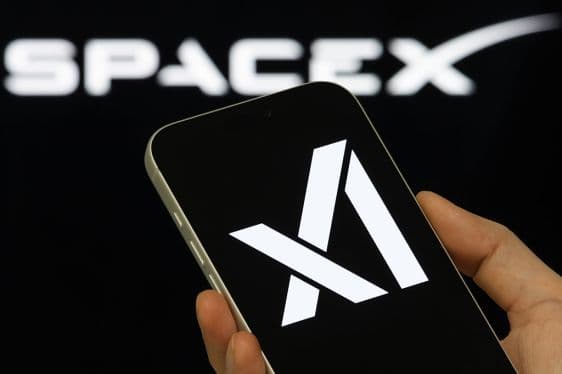
First cameAnthropic, thenGoogle. Now, open source AI startup Reflection is tapping SpaceX for its abundant source of AI chips. Reflection AI will pay $150 million a month beginning July 1, 2026 through 2029 for immediate access to Nvidia’s latest GB300 AI chips and supporting hardware across SpaceX’s Colossus 2 data center near Memphis, Tennessee, the company told TechCrunch. The deal is worth up to $6.3 billion and either company has the option to end the contract with 90 days’ notice after the first three months. The deal is smaller than SpaceX’s deals with Anthropic and Google, which cost the companies $1.25 billion per month and $920 million per month, respectively. Those contracts also run through July 2029, although Elon Musk haspublicly downplayedthe three-year term, emphasizing that the contracts can be canceled at any time. Reflection used the compute deal — its first — to tout the value ofits open-weight AI strategy, which it has pitched as an open source alternative to closed frontier labs like Anthropic and OpenAI. Open-weight AI models, which publicly release their trained parameters, have received more attention following theU.S. government’s banof Anthropic’s closed models, Fable and Mythos. Thestartup, which was founded in 2024 by two former Google DeepMind researchers, said the compute deal is one of the largest announced open AI infrastructure commitments to date. “Recent events highlight how important open source is to the AI ecosystem, with more nations and enterprises recognizing the risks and costs associated with exclusively depending on closed models,” a spokesperson said in an emailed statement. “Our deal with SpaceXAI signals Reflection’s strategic importance within the frontier AI ecosystem, and more compute means more runway to build the world’s best open models at scale.” TheColossus data centerwas originally built by xAI, a company founded by Elon Musk that is now part pf SpaceX, for its own AI efforts. As its internal pursuits have faltered, SpaceX leveraged its valuable AI chip holdings and began renting them out to some of the world’s top AI labs.

2 hours ago

View

Amazon is testing Alexa+ in India with Hindi support

Amazon is testing Alexa+ in India with Hindi support

Amazon is planning to increase the footprint of its new conversational AI assistant Alexa+ to India and is inviting users in the country to test out a Hindi-language version. The company sent out emails to some customers, which were seen by TechCrunch, asking users to fill out a form in Hindi by June 22 to join the beta-testing program. “You are invited to join the Alexa+ Beta programme in India. We are creating a new Alexa experience, and your feedback will be important to refine what Alexa+ will be able to do. By joining the Alexa+ Beta programme, you’ll be notified when the testing experience in Hindi (India) is available to you,” the email read. The email added that the beta software would have bugs and might give inaccurate information or mispronounce local nuances. The company confirmed that it is testing Alexa+ in India but didn’t provide a comment. At the moment, Alexa+ is not available in India, and it is not clear when it will launch in the country. Amazon launched Alexa in India with English support in 2017 and addedHindi compatibility in 2019. More than 600 million people speak Hindi in India, and Amazon is trying to tap the market of native speakers who might speak both Hindi and English in a code-mixed way. Companies know that voice might be a big factor in AI tool usage in India and are findingnew ways to have people talk to assistants. Amazon first announcedthe generative AI-powered conversational assistant Alexa+ in 2025. However, its rollout was slow, and the new experience was madeavailable to all U.S. users only in February. This year, the company has increased Alexa+’s footprint to countries like the U.K., Canada, Brazil, Mexico, Italy, and Germany, with support for local context. Amazon offers Alexa+ to Prime customers for free, and others can pay a monthly fee to access the updated assistant.

2 hours ago

View

Micron Invests in Anthropic, Partners on AI Memory Infrastructure

Micron Invests in Anthropic, Partners on AI Memory Infrastructure

Micron and Anthropic will work together on memory and storage technologies used in AI training and inference

2 hours ago

View

The founder conference built for growth: TechCrunch Founder Summit pass rates increase June 26

The founder conference built for growth: TechCrunch Founder Summit pass rates increase June 26

Founders don’t grow alone. They learn from peers tackling similar challenges, connect with those who have already navigated the road ahead, and build relationships with investors aligned with their vision. For the next five days, save up to $190 on your pass toTechCrunch Founder Summit 2026. On November 4 in Boston, TechCrunch Founder Summit 2026 brings together 1,000+ founders and investors for a day focused on growth, execution, and building lasting connections. This is TechCrunch’s flagship founder conference, designed for founders first. The experience centers on peer-to-peer learning, candid conversations, and practical, expert-led insights, with opportunities to connect directly with investors aligned with your goals and stage of growth. Early Bird pricing is available through June 26 at 11:59 p.m. PT. Save up to $190 on your pass or save even more with group discounts of up to 30% for teams of four or more.Register here. TechCrunch Founder Summitis built to help founders accelerate growth by learning directly from experienced operators, successful founders, and investors who understand the realities of building a company. At Founder Summit, you’ll connect with: Whether you’re preparing to raise capital, refining your pitch, or working toward your next milestone, Founder Summit creates opportunities for meaningful conversations and high-value connections.Grab your Early Bird ticket savings before June 26. Founder Summitsessions focus on the moments that shape a company’s trajectory. Breakout and roundtable discussions are designed to be actionable, relevant, and immediately useful. Past topics have included: These sessions are designed to give founders the clarity, confidence, and strategies needed to reach the next stage.Register nowto lock in up to $190 in ticket savings. Past speakers have shared candid lessons on building companies, raising capital, and navigating growth, including: Additional speakers have included leaders from Sequoia Capital, NFX, Underscore VC, Glasswing Ventures, Wing Venture Capital, Construct Capital, Greylock, and Precursor Ventures. The 2026 agenda is taking shape, with additional founders, operators, and investors to be announced soon.Visit the event websitefor the latest updates. If you’re interested in leading the conversation in a roundtable or breakout session,submit your speaking topicfor a chance to be voted onto the agenda by the TechCrunch audience. TechCrunch Founder Summit 2026is where founders come to learn faster, connect more intentionally, and gain practical insights for growth. Join founder-focused conversations. Learn proven strategies. Build relationships that support your next stage of growth. Save up to $190 on your pass and up to 30% when registering as a group by June 26 at 11:59 p.m. PT.Register now and secure your spot in Boston. Interested in exhibiting at TechCrunch Founder Summit 2026?Reserve your exhibit tableand connect directly with founders, investors, and startup decision-makers.

6 hours ago

View