Want to get featured here? Explore premium visibility opportunities.
Contact us
Latest AI News
View All News →
OpenAI launches new initiative to help find and patch open-source bugs
OpenAIannounced a new initiativeon Monday designed to help the open source community improve its cybersecurity game and ward off bugs. “Patch the Planet,” (which is a not-so-subtle allusion to “Hack the Planet,” the iconic catch phrase from the 1995 movieHackers) will see OpenAI team up with the security companyTrail of Bitsto help open source maintainers secure their projects. OpenAI said security staff from Trail of Bits will work directly with open source maintainers to review potential code issues. OpenAI’s security tools — like Codex Security — will be used to assist in the process. “Many maintainers are already being asked to sort through more reports, more quickly, with the same limited time and resources,” OpenAI said Monday. “Patch the Planet is built to reduce that burden, not add to it: security engineers review findings before they reach maintainers, work with projects to develop patches and tests, and build reusable workflows that help teams continue improving security after the first fixes land.” In other words, Trail of Bits engineers will function more or less like code EMTs — there to help open source project maintainers identify and triage potential issues, all supported by OpenAI’s software. It sounds like an ambitious project, and it’s somewhat unclear how it will function in the long term, or how it plans to scale up (if at all). Open source projects are the digital bedrock upon which the commercial software industry rests, but, unfortunately, due to the decentralized and poorly monitored structure of that ecosystem, much of the software is insecure. Bugs in open-source projects can turn into major problems for commercial codebases.The log4j debaclefrom several years ago — when a bad vulnerability was discovered in a widely used open source utility — is a good example. Much of the concern surrounding tools like Mythos (Anthropic’s highly publicized security tool) seems to stem from the fact that AI can now automatically identify existing bugs within codebases and set about creating exploits for them. While theautomation of cybercrimeis not new, these tools undoubtedly have the potential to make it significantly more convenient for bad actors. OpenAI is turning that formula on its head by using AI to help the open source community better protect itself. It’s hard not to read it as a competitive swipe at Anthropic, while also recognizing that it’s something the open source community desperately needs.
View
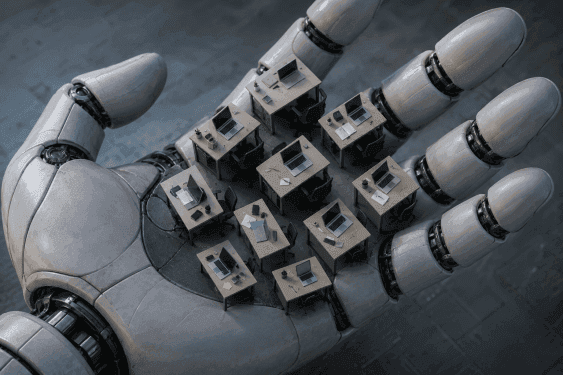
The running list: major tech layoffs in 2026 where employers cited AI
Oracle disclosed Monday that it has reduced its workforce by 21,000 employees over the past 12 months, a decline of 13%, which means more cuts than was previously known, including jobs eliminated because of AI. “The adoption and deployment of AI technologies across our operations have resulted, and may continue to result, in reductions to our workforce,” the company said in anannual financial regulatory filing. The revelation puts new numbers to what feels to many in the tech industry like an epidemic: companies reporting record revenues while simultaneously culling their workforces, pointing to AI as both the engine of growth and the reason for the cuts. Tech layoffs hit theirhighest single monthin years in May, and AI was the most-cited reason, according to outplacement firm Challenger, Gray & Christmas. We recently wrote about why that rationale is something companiesmay want to rethink, not least because for many of these companies, the headcount they’re now cutting was hired during the pandemic hiring surge, raising questions about what’s really going on. Below, a running look — in reverse chronological order — at the bigger tech companies that have announced significant layoffs this year with AI as a stated factor. GitLab— June 3, 2026. In one of the most recent cuts on this list, GitLab laid off roughly 350 workers, about14% of its staff, to fund AI infrastructure investment and handle surging traffic from AI workflows. CEO Bill Staples said agentic workloads are “pushing competitors to the brink” and that the company had begun a “generational rebuild” of its core infrastructure to support what he called 100x growth requirements. GitLab is exiting 22 countries, flattening management layers, and partnering with an unspecified AI lab to rebuild its platform for agent-scale workloads. The company reported first-quarter revenue of $264 million, up 23% year-over-year, and expects to incur $30 to $35 million in restructuring costs. Google— ongoing through May. Alphabet’s Google hasquietly cutemployees across its Cloud division, including its Threat Intelligence Group and Mandiant-linked cybersecurity staff, even as Cloud revenue grew 63% to exceed $20 billion for the first time and its backlog nearly doubled to over $460 billion. Over the past year, Google has cut more than a third of the managers overseeing small teams — 35% fewer managers with fewer direct reports. Unlike most companies on this list, Google has never announced a single overall number — the cuts have come through a rolling performance review process, a voluntary buyout program, and structural reorganizations, with outside estimates putting the 2026 total at between 1,500 and 3,000+ engineers. Intuit— May 20, 2026. Intuit announced plans to eliminateroughly 3,000 jobs— about 17% of its total workforce — in a restructuring centered on reducing complexity and reallocating resources toward AI. CEO Sasan Goodarzi reportedly told staff the company is reducing complexity and simplifying the structure, so it can deliver better products. Meta— May 20-21, 2026. Meta laid off about 8,000 employees, roughly 10% of its workforce, while moving about 7,000 employees into new AI-focused roles (that theyreportedly hate). Zuckerberg told staff the cuts were necessary because “success isn’t a given” in AI. Cisco— May 14, 2026. Cisco announced it’s cutting nearly4,000 jobs, about 5% of its workforce, despite reporting better-than-expected profit and revenue. CFO Mark Pattersonsaid: “This was really not a savings-driven restructure… this is more [about] realigning … resources around silicon, optics, security and AI.” Cloudflare— May 7-8, 2026. Cloudflare cut about 20% of its workforce (1,100 people), reporting quarterly revenue of $639.8 million, up 34% year-over-year and thehighest single quarterin company history. CEO Matthew Princewrote that“the vast majority of those we laid off last week were measurers” — middle management, finance, legal, internal auditing, and revenue recognition. General Motors— May 12, 2026. GM eliminated 500 to 600 jobs, largely in IT roles in Austin, Texas, and Warren, Michigan, saying it was reevaluating its workforce needs amid uncertain market conditions. A person familiar with the cuts told CNBC thatAI played a role in the decisionbut that it wasn’t the only reason. GM’s statement said it was “transforming its Information Technology organization to better position the company for the future.” Despite the cuts, the company still had roughly 80 open IT positions, including roles in AI, motorsports, and autonomous vehicles. Coinbase— May 5, 2026. The crypto exchange said it was cutting about 700 employees, or 14% of its staff, as part of a restructuring aimed at addressing market volatility and increasing AI efficiency. The company flattened its organizational structure to five layers below the CEO and COO, and said it would experiment with “one-person teams” combining engineering, design, and product roles. CEO Brian Armstrong wrote that AI had changed the pace of work dramatically — “engineers useAI to ship in days what used to take a team weeks” — and that the company needed to “leverage AI across every facet of our jobs.” PayPal— May 5, 2026. PayPal announced plans to cut around 20% of its workforce over the next two to three years — north of 4,500 jobs — as part of a turnaround strategy centered on AI adoption and organizational simplification. CEO Enrique Lores told investors the company would “aggressively adopt AI” in its development processes and formed a new “AI transformation and simplification” team reporting directly to him, tasked with redesigning the company’s processes “function by function.” Lores framed the cuts as removing organizational layers, and said AI would extend well beyond coding into customer service, support operations, and risk management.Microsoft— April-May 2026. Microsoft offered buyouts structured as voluntary separations, without disclosing how many employees these would impact. CFO Amy Hood said total headcount declined year-over-year in fiscal Q3, and is expected to keep declining as the company focuses on “building high-performing teams that operate with pace and agility”amid rising AI investment. Snap— April 16, 2026. Snap cut roughly16% of its global workforce— about 1,000 full-time employees — and closed more than 300 open roles, with CEO Evan Spiegel citing AI advancements as a key driver. “Rapid advancements in artificial intelligence enable our teams to reduce repetitive work, increase velocity, and better support our community, partners, and advertisers,” Spiegel wrote in a memo filed with the SEC. The company said it had already seen small squads using AI tools to drive progress across Snapchat+, ad platform performance, and infrastructure efficiency. IBM— rolling through 2026. Between Q4 2025 cuts and April 2026 Red Hat engineering reductions, estimates range from 3,000 to 9,000 U.S. positions eliminated, bringing IBM’s cumulative total since September 2024 above 15,000. Bloomberg reported IBM plans to triple its U.S. entry-level hiring for AI and hybrid-cloud roles, even as roughly 200 HR positions were replaced by AI agents. An IBM spokesperson described the Q4 2025 round as aroutine rebalancingaffecting “a low single-digit percentage” of its global workforce. Atlassian— March 11, 2026. Atlassian cut about1,600 jobs(10% of its workforce) to “rebalance” toward AI and enterprise sales, even as shares rose nearly 2% on the news. CEO Mike Cannon-Brookes said: “Our approach is not ‘AI replaces people.’ But it would be disingenuous to pretend AI doesn’t change the mix of skills we need or the number of roles required in certain areas. It does.”Dell— Jan 30 (though disclosed in March 2026). Dell’s total workforce fell about10%in fiscal 2026 — roughly11,000 jobs— to about 97,000 employees from 108,000 a year earlier, with $569 million spent on severance. The cuts came as Dell projected its AI-optimized server revenue could double in fiscal 2027. Oracle— March 5-31, 2026. As noted above, Oracle began telling employees it would be cutting thousands of jobsvia terminal emails. The cuts came even as Oracle posted $3.7 billion in quarterly net income, up 27% year-over-year, with remaining performance obligations up 325% to $553 billion — savings redirected toward AI data centers. The cuts that would later total 21,000 over 12 months, as Oracle disclosed in its June 22 annual filing. Block— February 26-27, 2026. Jack Dorsey’s Block cut 4,000 jobs — nearly half its workforce, down to under 6,000 from over 10,000. Dorsey wrote on X: “We’re already seeing that the intelligence tools we’re creating and using, paired with smaller and flatter teams, are enabling a new way of working which fundamentally changes what it means to build and run a company.” He added: “I think most companies are late. Within the next year, I believe the majority of companies will reach the same conclusion andmake similar structural changes.”Salesforce— February 10, 2026. Salesforce laid off fewer than 1,000 employees across marketing, product management, data analytics, and its Agentforce AI unit. The companytold Fortune, “Because of the benefits and efficiencies of Agentforce, we’ve seen the number of support cases we handle decline and we no longer need to actively backfill support engineer roles.” This followed an earlier cut of about 4,000 customer-support roles, shrinking that team from roughly 9,000 to 5,000, with CEO Marc Benioff saying the company needed “less heads” because AI agents handle the work.Amazon— January 28, 2026. Amazon cut16,000 corporate jobs, following 14,000 cuts in October 2025 — about 9% of its corporate workforce in three months. The company said it was part of “strengthen[ing] our organization by reducing layers, increasing ownership, and removing bureaucracy.” CEO Andy Jassy had said in June 2025 that, “As we roll out more generative AI and agents, it should change the way our work is done. We will need fewer people doing some of the jobs that are being done today… in the next few years, we expect that this will reduce our total corporate workforce as we get efficiency gains from using AI extensively across the company.”
View

Google DeepMind bets $75M on AI’s future in Hollywood with A24 deal
A new alliance has formed between a Hollywood studio and a tech juggernaut. On Monday, Google DeepMind announceda $75 million investment (per the WSJ)into popular indie film studio A24, known for hits like “Marty Supreme,” “Everything Everywhere All At Once,” and the latest blockbuster “Backrooms.” Google DeepMind is billing the investment as a partnership, a“first-of-its-kind”that will see the two companies create AI tools for filmmaking, with Google DeepMind receiving “feedback and guidance from leading artists.” A24 has recently worked with big names like Timothée Chalamet and Anne Hathaway on several projects. “We believe the best way to develop tools that empower artists is to work directly with them,” Demis Hassabis, Google DeepMind co-founder and CEO, said in a press release. “By collaborating with filmmakers and industry leaders like A24 from the beginning, we can build new AI features to support artists in authentic, meaningful storytelling that helps enable their creative vision.” Though controversy has swirled around Hollywood over the use of AI in movies, A24 would be far from the first studio to explore integrating AI into the creative process. Netflixannounced earlier this year that it was buyingBen Affleck’s company, InterPositive, which creates AI tools for filmmakers. Last year, meanwhile, Amazon’sMGM Studios launchedan AI unit focused on developing tools for television and movie production.
View
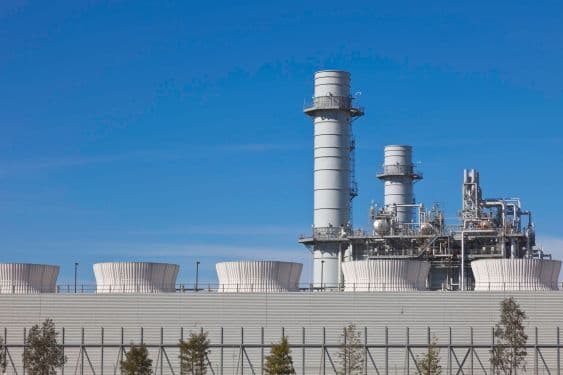
Nvidia wants to cut data center water use, but that’s not the same as fixing AI’s water problem
Nvidia just announced a warm-water cooling system that it says can dramatically reduce the amount of water a data center uses — eliminating “pretty much all water usage” inside the data center, according to an Nvidia executive in apress release. “The water consumption challenge for data centers is largely solved,” Josh Parker, chief sustainability officer at Nvidia, recentlytoldAxios. But that’s only part of the water story. As long as AI data centers run on fossil fuels — a choice tech companies areincreasingly making— the savings stop at the data center’s walls. The core issue is how Nvidia measures data center water use. According to its blog post, the company essentially draws a line around the data center. Anything inside gets counted, and anything outside gets ignored. To be fair, Nvidia’s system does appear to deliver on its facility-level promise — the coolant runs in a closed loop, filled once and recirculated for the life of the facility, meaning no new water is consumed to cool the chips. In favorable climates, the company says, that can amount to a 100% reduction in on-site water use. TechCrunch has asked Nvidia to clarify the matter, and we’ll update this article if we receive a reply. The problem is, water use outside of the data center — primarily in electricity generation and chip manufacturing — candoubleortriplethe total water footprint of a facility. That means Nvidia’s solution addresses about a quarter to a third of AI data centers’ total water consumption. The new system is clever, pumping coolant into racks at 45°C (113°F). That’s hot for humans but not for computer chips. After passing through a server, the coolant emerges at 55°C (131°F), Nvidia said, bringing a significant amount of heat away from the hardware. At that temperature, the outside air in most climates can draw heat off passive radiators without evaporative cooling or, in some cases, fans. A data center without fans or chillers would not only use less water, but it would also be more efficient and quieter. But no data center can operate without an electricity supply, and many types of power plants are themselves major water consumers. Fossil fuel power plants are one of the largest water users in the U.S., consuming 2.7 billion gallons per day,accordingto the U.S. Geological Survey — most of it for evaporative cooling. Natural gas power plants use 1.17 liters of water for every kilowatt-hour of electricity they generate, according to arecent study. Coal plants are even more water-intensive, using 2.2 liters per kilowatt-hour. Fossil fuel power plants collectively generate about half of all data center power today,accordingto the IEA. Hydropower dams, which supply around 10% of data center power, don’t consume water in the same direct way, but evaporation from their reservoirs amounts to 6.8 liters lost per kilowatt-hour generated. Geothermal, a source that tech companies are starting to explore, varies widely — it can be higher or lower depending on the specific technology. Some enhanced geothermal startups, like Fervo, havepledgedto use mostly “degraded” water that would otherwise go unused. Wind and solar power, on the other hand, use vanishingly small amounts of water, about 0.01 liters and 0.03 liters per kilowatt-hour, respectively — figures that include the water needed for manufacturing and cleaning solar panels. While renewables are providing a growing share of new electricity capacity, natural gas and coal are expected to provide more than 40% of new electricity needed to meet data center demand through 2030, the IEA projects. Without major changes to that trajectory, data centers will still consume large amounts of water, regardless of what Nvidia does inside its walls.
View
Submit your Tool

PoweredByAI.app is an AI Tools Directory helping individuals, businesses, and creators discover the best AI tools for writing, coding, design, productivity, and more.
© 2026 , Product of011BQ. All rights reserved.