Want to get featured here? Explore premium visibility opportunities.

Contact us

AI NewsOpenAI launches ChatGPT for personal finance, will let you connect bank accounts

OpenAI launches ChatGPT for personal finance, will let you connect bank accounts

10:46 PM IST · May 15, 2026

OpenAI launches ChatGPT for personal finance, will let you connect bank accounts

On Friday, OpenAI launched a new set of personal finance tools in preview for ChatGPT Pro subscribers in the U.S., letting them connect their accounts and ask questions ranging from spending analysis to future financial planning. OpenAI has partnered with the financial connection service Plaid to manage the account connections. Users can connect to over 12,000 financial institutions, including Schwab, Fidelity, Chase, Robinhood, American Express, and Capital One. Once users connect these accounts, they will see a dashboard of their portfolio performance, spending, subscriptions, and upcoming payments. The new product comes just one month after OpenAIacquired the team behind personal finance startup Hiro, which was backed by firms like Ribbit, General Catalyst, and Restive, in April. OpenAI said that the Hiro team’s expertise in finance was useful in launching this product but didn’t specify if the entire feature was built by them. OpenAI users can access the tool by selecting “Get started” in the “Finances” option in the sidebar, or typing “@Finances, connect my accounts” in a ChatGPT conversation. Once users do that, the chatbot will guide them about linking accounts through Plaid. The company said it plans to support Intuit soon, which would enable analysis such as the impact of a stock sale on taxes or the odds of a credit card approval. According to OpenAI, more than 200 million users already ask financial questions to ChatGPT every month. The company also noted that the new GPT-5.5 model is stronger at reasoning with context, which is crucial for answering finance-related questions. The company said it worked with finance experts to create a benchmark for the model to improve on personal finance questions. With the new financial tool integration, users can get detailed answers to questions such as “I feel like I’ve been spending more recently. Has anything changed?” or “Help me build a plan to be ready to buy a house in my area in the next 5 years.” Users can go to Settings > Apps > Finances to remove connections to certain accounts if they want. Once they disconnect a service, the synced data will be removed from ChatGPT in 30 days. What’s more, users can also view and delete financial memories from the Finances page. Generalized chatbots are designed to answer anything, leading people to ask questions about data-sensitive topics such as health, finance, and personal life. AI companies are realizing this and making specialized products for these sectors. BothOpenAI and Anthropichave launched health-related tools. Earlier this month, Perplexity launched its ownfinancial research product based on its Computer agent. OpenAI said its personal finance tools will be available on ChatGPT on the web and on iOS for Pro users. It noted that, based on the feedback from these users, it wants to improve the product before making it available to Plus users.

read more


Latest AI News

View All News →
How Katha Room Went From Telling Indian Bedtime Stories to Being an Apple Award Finalist

How Katha Room Went From Telling Indian Bedtime Stories to Being an Apple Award Finalist

Katha Room hosts more than 250 stories across five languages and has notched over 10,000 downloads on iOS and Android combined, while being bootstrapped.

37 minutes ago

View

In the Weights is your new AI-centric vanity search

In the Weights is your new AI-centric vanity search

Anyone who’s Googled themselves recently knows that it doesn’t quite hit the way it used to. Sure, there’severything going on with Google search itself, but there’s also an inescapable feeling that web search isn’t the canonical source of information that it used to be, with just as many people learning about who you and I might be from chatbots. Thomas Dimson and Joey Flynn had a similar feeling, leading them to createIn the Weights. The“weights”in question are the numerical parameters that shape an AI model’s training and output, so the websitepurportsto measure how well “a model is able to recall someone without using tools like web search.” “Being in the weights means your existence was deemed important in the process of creating superhuman artificial intelligence,” the website says. To achieve this, In the Weights supposedly queries different models (including Grok, Gemini, multiple versions of GPT, Claude, and Llama, plus lesser known models) with a question similar to, “Who is <name>? Give up to 10 results, each with a short description and confidence.” It then “cluster[s] similar descriptions together and assign[s] a strength score.” For example,this humble tech bloggerreceived a strength score of 641, placing me in the top 6% of names. I was feeling pretty good until I saw thatmultipleTechCrunchcolleaguesscored even higher. And theleaderboardhas been shifting as I write this post, with “Home Alone” star Macaulay Culkin currently in the top slot with a strength score of 988, neck-and-neck with opera singer Luciano Pavarotti. The results also show which models returned which answers for a given name, and they highlight potential hallucinations — apparently GPT-5.4 Mini says that Anthony Ha is an “ambiguous name form that could refer to multiple people with the initials A.H.A.” Asked why he built In the Weights, Dimson told TechCrunch via email that he and Flynn were looking to “get the creative juices flowing again” after leaving OpenAI (which they both joined throughthe acquisition of their design startup Global Illumination). Dimson said he was thinking about how “Google vanity searches are the wrong objective in 2026 as more traffic moves to LLMs” and about the fact that “so many lives are encoded somehow in a bunch of floating point numbers inside the AI brain.” He also said the direction of the site was “sealed” bya tongue-in-cheek blog postriffing on AI weights and Terry Bisson’s classic short story“They’re Made Out of Meat.” “Reception has been insane so far, we thought this would be a mild curiosity but it seems like it has struck a nerve of wanting to see if you live forever in the super intelligence (the comparison factor doesn’t hurt either!)” Dimson added. While I’m not as convinced that being “remembered” by a chatbot is a guaranteed ticket to immortality, I can’t deny that I find the results both intriguing and jealousy-inducing, especially since they’re codified in an easy-to-compare score. (AI critic Anthony Moserscoffedthat this is “literally the same as asking 13 chatbots to tell you about yourself.”) Also helping: The fact that the site features a cute,Nintendo-inspiredretro design. Dimson said he plans to dig in further into why different models in the same series return different results, which models are biased towards different types of people, and which people “should have a Wikipedia article but don’t.”

8 hours ago

View

Signal’s Meredith Whittaker wants you to remember that AI chatbots ‘are not your friends’

Signal’s Meredith Whittaker wants you to remember that AI chatbots ‘are not your friends’

Asked about the privacy implications of chatbots like ChatGPT and Claude, Signal President Meredith Whittaker answered, “These are not your friends. These are not conscious beings. These are not sentient interlocutors.” Whittaker made those comments ina broader interview with Bloombergabout policy, privacy, and Signal. She acknowledged that she uses AI tools “to format a document here and there,” but insisted, “I don’t ask them questions. I’m very serious about my thinking and writing, and I don’t want the process of working through an idea [
] to be foreclosed or eclipsed by the response of a system that’s averaging what’s already out there.” As for Microsoft AI CEOMustafa Suleyman’s predictionthat users could let Microsoft Copilot handle all their Christmas shopping this year, Whittaker argued this scenario — where Copilot is eavesdropping on the family group chat to determine who wants want — means giving it “access to my credit card, my browser, my Signal, the ability to message my siblings on my behalf, my home address [and] my calendar.” “What you’ve just described is a system with very pervasive access across multiple applications and services,” Whittaker said. “In the context of Signal, it would constitute a kind of a backdoor.”

8 hours ago

View

Nobel laureate John Jumper is leaving DeepMind for rival Anthropic

Nobel laureate John Jumper is leaving DeepMind for rival Anthropic

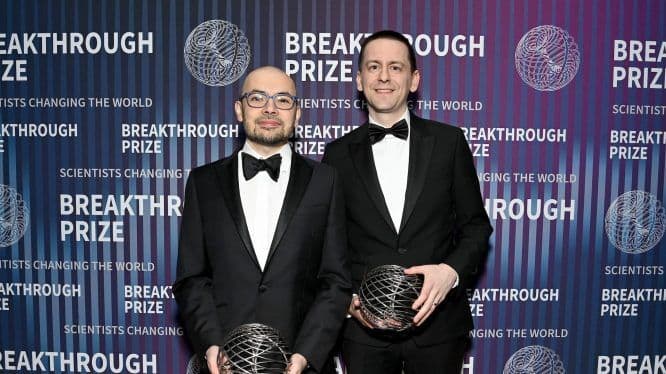
John Jumper, who shared a recent Nobel Prize in chemistry, announced Friday that he’s making the leap to Anthropic after “nearly 9 years” at Google DeepMind. Ina post on X, Jumper wrote that DeepMind CEO Demis Hassabis “took a real chance letting me lead the AlphaFold team just six months after finishing my PhD, and the entire GDM team taught me so much about how to do great science.” Jumper (pictured above right, with Hassabis) added, “GDM is a special place, and I’ll still be excited to hear about what amazing things they discover next.” Bloomberg reports that Jumper wasa key member of Google’s team developing coding tools, which the company has struggled to sell to businesses. Character AI co-founder Noam Shazeer also announced this week thathe’s leaving DeepMind— though in Shazeer’s case, he’s joining OpenAI. Jumper and Hassabis won the Nobel Prize in 2024for their work on AlphaFold, an AI model that can predict the 3D structure of proteins based on their genetic sequences.

12 hours ago

View