Want to get featured here? Explore premium visibility opportunities.

Contact us

AI NewsNvidia chases $200B CPU market with AI agent PCs from Microsoft, Dell, and HP

Nvidia chases $200B CPU market with AI agent PCs from Microsoft, Dell, and HP

3:14 AM IST · June 2, 2026
Nvidia chases $200B CPU market with AI agent PCs from Microsoft, Dell, and HP

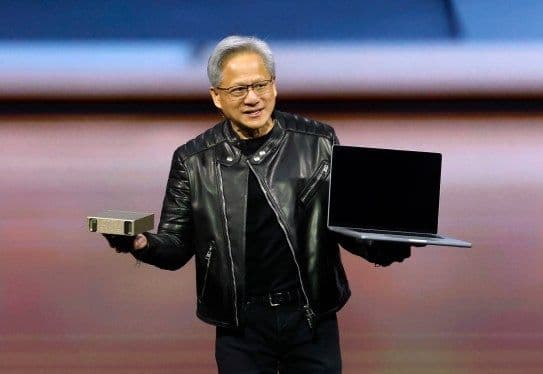
Nvidia opened Taipei’s enormous Computex trade show on Sunday with a spark, literally. The chipmaker unveiled a new PC CPU called the RTX Spark, which it dubbed a “superchip,” and named a who’s who list of PC makers that will soon deliver AI PCs powered by it. The super-fast, 1-petaflop chip is designed to run AI agents like OpenClaw or Hermes Agent securely, according to Nvidia. Such RTX Spark Windows PCs will be available this fall from ASUS, Dell, HP, Lenovo, Microsoft Surface and MSI, with models from Acer and Gigabyte to follow. In addition to being equipped with secure sandboxes (jointly developed with Microsoft) to run agents securely, the PCs will also have enough CPU, GPU, RAM and underlying Nvidia CUDA software to run local versions of large language models. Nvidia said that its RTX technology will deliver faster performance for AI, better image quality, and support for AI features in more than 1,000 games and applications. The chipmaker is marketing this as an alternative for creators making AI content, as well as providing a significant upgrade to its traditional market of gamers. Nvidia said more than 100 Windows software makers have signed on to support the new chip, including Adobe, Blender, ComfyUI, Riot Games and Xbox. But Nvidia founder and CEO Jensen Huang’s vision for these new PCs is far larger. He wants to end the days of launching apps, pointing, clicking and typing. “With RTX Spark and Microsoft Windows, you ask — and the PC does the work,” he said in the press release. “Frontier models. Creative workflows. RTX games. All on a laptop.” Last month, after delivering another record quarter, Huang promised investors he had found a new$200 billion market for Nvidia in selling CPUsfor AI, not just GPUs. He made specific mention of the high-end server CPU released earlier this year called Vera — of which Nvidia says it has already sold $20 billion worth. He also hinted at his bigger ambitions. “We’ll have billions of agents, and those billions of agents will all use tools. And those tools are going to be like PCs, just like us humans using using PCs today,” he said on the earnings call in May. “We’re going to need a lot more CPUs.” Nvidia ARM-based Windows devices have been tried before — and failed. Back in 2013,Microsoft famously had to write off $900 millionon its Nvidia ARM-based Surface RT, with partners like Dell also bailing on the product. But at this point, after delivering record after record of quarterly revenue, it’s hard to bet against Huang as he pursues his PC dreams once again. And this chip is an entirely different beast. It’s more powerful, not less. Microsoft is positioning its own RTX Spark PC as so mighty that it named it the Surface Laptop Ultra, and iscalling it“the most powerful Surface Laptop ever built.” Still, PC manufacturers have not released a lot of specifics about each of their offerings, including pricing. These systems appear to be full-fledged Windows versions of theDGX Spark mini-computerthat Nvidia already sells to developers for about $4,800. We’ll have to wait and see if these PCs will compete on price with the affordable Mac Mini that has becomea popular choice for running OpenClaw. Or perhaps they will sit at the high end of the PC market, like Nvidia’s own agent-running mini computer. Either way, if Nvidia has cracked the code on bringing AI agents easily, safely, and usefully to the masses, it could — and should — be big.

read more

Billionaire Ambani wants AI in every call, app, and home

Billionaire Ambani wants AI in every call, app, and home

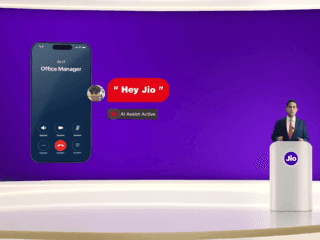
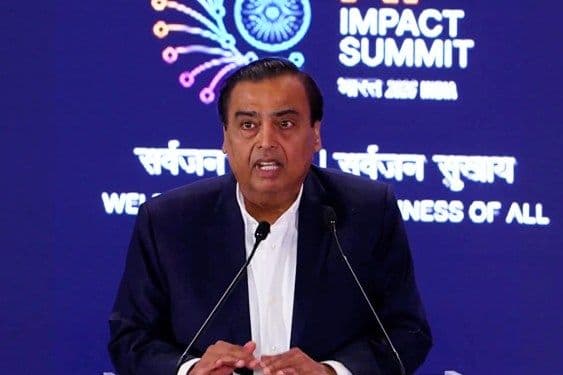
As India searches for a homegrown contender in the global artificial intelligence race, billionaire Mukesh Ambani is positioning Reliance Industries as a national champion, rolling out AI services for phone calls, mobile apps, and connected homes. At itsannual shareholder meetingon Friday, the Mumbai-based conglomerate announced Jio Call Agent, an AI assistant that can join phone calls to transcribe conversations, generate summaries, and perform tasks such as booking cabs, ordering food, and making reservations. The service, which can be activated by saying “Hey Jio,” is expected to launch later this year for Jio’s more than 500 million users. By embedding the service directly into its telecom network rather than offering it as a stand-alone app, Jio is betting AI assistance can become a native feature of phone calls. The approach could reduce consumers’ reliance on third-party call-assistant apps and give Reliance a powerful distribution advantage in an increasingly crowded AI market. Reliance also unveiled an AI-powered version of its MyJio app that can perform tasks on behalf of users, from activating eSIMs to selecting roaming plans, through natural-language requests. The company further introduced TeleFrame, a home display that uses AI agents to proactively surface information and recommendations, such as weather alerts, schedules, and household reminders. The product appears to echo a broader industry push toward ambient AI assistants for the home, an area being explored by companies such asAmazonandGoogle. The announcements mark the next phase of Reliance’s AI ambitions as India seeks to build domestic capabilities in a field largely dominated by U.S. and Chinese technology companies. The push follows thelaunch of Reliance Intelligencelast year, through which the conglomerate aims to develop AI infrastructure and services for consumers, businesses, and governments, including applications that support 22 Indian languages. “India should not be a mere consumer of AI created elsewhere. It must become a creator, adopter, and a global leader in AI,” Ambani, age 69, said. Reliance has been ramping up its AI ambitions through partnerships withGoogle,Meta, andNvidia. Earlier this year, the company announced plans toinvest $110 billion in AI infrastructureas it seeks to establish itself as a major player in India’s emerging AI ecosystem. At the shareholder meeting, Reliance also unveiled a suite of AI services for healthcare, education, agriculture, and small businesses. The products, branded JioHealthIQ, JioLearnIQ, JioKrishiIQ, and AI Vyapar, are designed to operate across multiple Indian languages and cater to local needs, the company said. The shareholder meeting also brought a major development for investorsawaiting Jio’s stock market debut. Ambani said Jio Platforms’ board had approved a draft prospectus for an initial public offering that would include a fresh issue of up to 270 million shares, according to a stock exchange filing. The announcements also raise questions about how Reliance will handle user data as it expands AI services across phone calls, mobile apps, and connected homes. While the company said the services would operate with user consent, it did not answer questions about whether data generated through the products could be used to train AI models or shared with technology partners. Reliance’s AI ambitions come as Indian companies remain heavily reliant on foreign AI models and cloud providers.Recent restrictions on accessto some of Anthropic’s latest models have underscored that dependency, showing how decisions made overseas can affectstartups and businessesbuilding AI products in India — the kind of supply-chain risk that’s pushing Indian conglomerates toward building their own stack rather than renting someone else’s. Last week, Reliance announced acollaboration with Meta to establish an AI data centerin the western state of Gujarat, building on Meta’s earlier investment in Jio Platforms and a joint venture launched last year to develop AI solutions for enterprise customers in India and overseas markets. Reliance is not alone in pursuing AI opportunities.Tata Consultancy Services,Infosys, and rivalAdani Grouphave also expanded their AI initiatives and partnerships with global players, including Anthropic, Google, and OpenAI, as India’s largest corporations race to secure a leading role in the country’s AI future. Nonetheless, for Reliance, the stakes are particularly high; it’s preparing Jio for a long-awaited stock market debut and needs new growth drivers, with the conglomerate’s shares down about 17% this year.

3 hours ago

View

The US banned Anthropic’s Fable 5 release, but the numbers don’t seem to care

The US banned Anthropic’s Fable 5 release, but the numbers don’t seem to care

Just as last week was ending, the US governmentforced Anthropic to pull its two newest models, Fable 5 and Mythos 5, citing national security concerns after Amazon researchers allegedly found a way to bypass Fable 5’s guardrails. Cybersecurity researchers havesince signed an open lettercalling the move dangerous, and Anthropic itself noted the same jailbreaks exist in other models. So is this a genuine security concern, or just the latest chapter in a messy relationship between Anthropic and the Trump administration? On this episode of TechCrunch’sEquitypodcast, hosts Anthony Ha, Sean O’Kane, and Rebecca Bellan unpack what the ban means for developers building on Anthropic’s platform and for anyone watching the IPO, why itmight accidentally be good for the company, and more of the week’s headlines. Listen to the full episode to hear more about: Subscribe to Equity onYouTube,Apple Podcasts,Overcast,Spotifyand all the casts. You also can follow Equity onXandThreads, at @EquityPod.

3 hours ago

View

Is the US government’s Anthropic ban accidentally helping the brand?

Is the US government’s Anthropic ban accidentally helping the brand?

Loading the player… Just as last week was ending, the US governmentforced Anthropic to pull its two newest models, Fable 5 and Mythos 5, citing national security concerns after Amazon researchers allegedly found a way to bypass Fable 5’s guardrails. Cybersecurity researchers havesince signed an open lettercalling the move dangerous, and Anthropic itself noted the same jailbreaks exist in other models. So is this a genuine security concern, or just the latest chapter in a messy relationship between Anthropic and the Trump administration? On this episode of TechCrunch’sEquitypodcast, hosts Anthony Ha, Sean O’Kane, and Rebecca Bellan unpack what the ban means for developers building on Anthropic’s platform and for anyone watching the IPO, why itmight accidentally be good for the company, and more of the week’s headlines. Subscribe to Equity onYouTube,Apple Podcasts,Overcast,Spotifyand all the casts. You also can follow Equity onXandThreads, at @EquityPod.

3 hours ago

View

Jio AI Call Agent Explained: What It Is, How It Works, Features and More

Jio AI Call Agent Explained: What It Is, How It Works, Features and More

Reliance held the 49th edition of its annual general meeting (AGM) with shareholders on Friday. The Indian conglomerate unveiled various new artificial intelligence (AI) innovations that its telecom service provider (TSP) arm, Reliance Jio, plans to join in the coming months in the country. Among the many announcements, the company revealed its plan to integrate AI directly into its network. The company claims that this will allow the TSP to introduce a voice-based AI call agent for its subscribers. During the presentation, the company demonstrated the AI agent's capabilities, showing that it will be able to transcribe calls and generate call summaries without asking users to download a standalone app.

7 hours ago

View