Want to get featured here? Explore premium visibility opportunities.

Contact us

AI NewsMeta’s months-old AI unit is a soul-crushing gulag, say the engineers stuck inside it

Meta’s months-old AI unit is a soul-crushing gulag, say the engineers stuck inside it

7:44 AM IST · June 13, 2026

Meta’s months-old AI unit is a soul-crushing gulag, say the engineers stuck inside it

Anyone who works at Meta or knows anyone who works at Meta will tell you the same thing: It is not a happy place, particularly given the seeminglyendlesslayoffsthe company hasexecutedover thelast few years— cuts that have only accelerated as the company funnels billions into AI. Now, anew reportin Wired suggests the company’s Applied AI team is on the verge of revolt. The drama kicked off when someone hijacked a livestreamed, employee-only presentation this week with an expletive-laden meltdown, demanding that attendees tell a senior Meta AI executive that he was “a piece of sh*t.” One presenter reportedly covered their face with their hands. That outburst, Wired reports, reflects simmering rage inside the three-month-old unit of roughly 6,500 engineers and product managers who have been tasked with supporting the company’s AI research ambitions. Employees describe being forced into the group with no real choice: join or quit. Many call themselves “draftees.” Their assigned work? Generating puzzles and coding problems to train AI models. “It’s literally the gulag,” one employee told Wired. “Most people find the work soul-crushing,” said another. Areportlast month in Business Insider shed light on how many employees learned they’d be moved into the group — through a surprise email, a process that one self-described draftee described later on Reddit as “quite random.” According to an internal announcement in April reviewed by Business Insider, Meta’s AI models still lacked the knowledge to outperform humans at technical tasks like coding. “For agents to understand how people actually complete everyday tasks using computers, we need to train our models on real examples,” the post read. In a leaked audio recording from an internal meeting that same month, Meta CEO Mark Zuckerberg explained the logic behind drafting Meta’s own engineers rather than outside contractors: Alexandr Wang — who sold his data-labeling startup Scale AI to Meta for $14.3 billion before taking the chief AI officer role and heading up Meta Superintelligence Labs — knows the data-labeling world well, and the company believes Meta’s average employee has “significantly higher” intelligence than third-party contractors. Better, then, to enlist them. Meanwhile, more than 1,600 Meta employees company-wide have signed a petition protesting a program that monitors their clicks and keystrokes for AI training data. The mood across the company is dark enough that Meta’s chief product officer, Chris Cox, felt compelled to address the “brutal” environment on a call with employees this week. TechCrunch has reached out to Meta for comment. According to earlier reports, the Applied AI team is led by Maher Saba, a 12-year veteran of Meta who was previously a vice president in its Reality Labs division, the division that burned through$83 billionon the metaverse before Meta moved on to AI. The new organization reports up to Meta CTO Andrew Bosworth. Originally, it was structured in such a way that up to 50 employees reported to one manager. Zuckerberg, for his part, reportedly addressed the situation in an internal memo Friday, acknowledging that recent changes had “caused distress” and admitting the company had made mistakes that it plans to address. According to Wired, he added in his memo that “Meta’s north star is to be the best place for the most talented people in the world to make an impact.”

read more

Latest AI News

View All News →
Pixi’s new iOS app turns text messages into interactive AR experiences

Pixi’s new iOS app turns text messages into interactive AR experiences

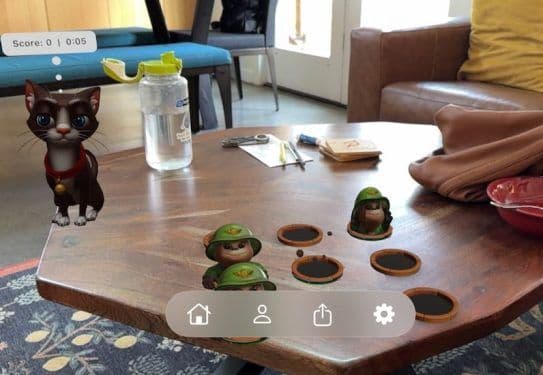
Forget stickers, GIFs, and emoji reactions.Pixiis betting that the next evolution of messaging is interactive augmented reality (AR). The startup launched its messaging-native app on theApp Storeon Wednesday, allowing users to send AI-powered AR characters through iMessage. Instead of appearing as static media, the characters come to life through the recipient’s iPhone camera, where they can react to their surroundings, interact with people, and respond in real time. While AR isn’t new and shiny anymore—companies likeSnaphave created AR filters and lenses for years—Pixi believes its approach is different. By combining AR with on-device AI, its characters can understand what’s happening around them and behave accordingly. A virtual cat, for example, reacts when a real dog walks past. (According to the company, all visual and audio processing remains on the device to preserve user privacy.) Pixi founder Mark Drummond (ex-DreamWorks Animation and ex-Apple) says the app is designed to bring a greater sense of presence and spontaneity to digital conversations. Rather than sending a text to wish someone a Happy Birthday, users can send characters that create a shared experience, turning a simple message into something closer to a digital gift or playful interaction. “The consumer problem we’re solving is thinking of a friend when they’re not present,” he told TechCrunch. “Sometimes the psychology is called pebbling or creative gifting. You’re sharing tokens of affection, basically cards, e-cards, and gifts. That’s your dad, or, in some cases, your granddad’s media. We can do better. We can do something that’s digitally native, and that uses everything we learned about AR on the iPhone.” Earlier this week, Drummond demonstrated the app for us, selecting the cat character, which performed a series of stand-up jokes on his desk. Notably, the cat appeared to respond to Drummond’s facial expressions. For instance, the experience concluded when he smiled, showcasing the character’s ability to perceive emotional cues. At launch, users will have access to a robot, a cat, and an animated envelope character that can react to their voice and “attack” their friends in a playful way. If they move, the envelope will chase them. There are also games like tic-tac-toe and whack-a-mole. Pixi plans to expand beyond just a few characters. The goal is to create a marketplace where studios, brands, and independent creators can share their unique characters for users to choose from. The company envisions this being used for events like movie premieres or product launches, allowing characters to generate excitement, such as when M&Ms release a new flavor. Drummond also mentioned introducing Alice in Wonderland as a character option, as she is an open intellectual property. He pointed out that “our Alice character needs to react to objects that she sees on your desktop in an ‘Alice-consistent’ way,” to demonstrate to partners how their creations will interact with the technology. In the future, Pixi hopes to allow users to create their own characters and personalities. “Part of our plan is to open up those generative AI capabilities to our [users], so they can prompt their way to say something, like, ‘I want a blue blob that threatens my friend and growls at them and keeps chasing them on the phone,’” Drummond explained. To send a character to your friend, download the app on iOS and use iMessage by tapping the plus sign button in the lower left corner. No installation is required to receive a Pixi message. Initially, the app will be available only for iPhone models 11 and newer, but there are plans to expand to Android devices and messaging platforms like WhatsApp and Instagram in the future. Also, while the app is free for users, brands will have the option to charge for their characters if they choose. “We’re going to encourage people to do it for free, because then people become your own brand ambassadors. You’re putting them in charge of using your characters to tell their own stories,” Drummond said.

42 minutes ago

View

Inside Indian Hospitals' Multi-Billion Dollar AI Pivot

Inside Indian Hospitals' Multi-Billion Dollar AI Pivot

Hospitals across India are integrating AI into clinical and administrative workflows, but adoption remains uneven.

42 minutes ago

View

Pramaana Labs Raises $27 Million in Seed Round Led by Khosla Ventures

Pramaana Labs Raises $27 Million in Seed Round Led by Khosla Ventures

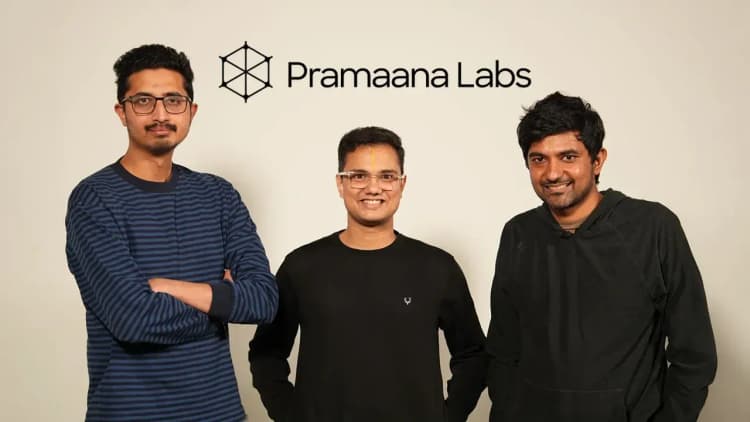
Pramaana Labs has raised $27 million in a seed round led by Khosla Ventures to build AI verification systems for regulated industries.

42 minutes ago

View

Niqo Robotics To Represent India at Bharat Innovates 2026 in France

Niqo Robotics To Represent India at Bharat Innovates 2026 in France

Indian agricultural robotics firm Niqo Robotics has been selected to represent India at the government’s flagship deep-tech conclave in France.

42 minutes ago

View