Want to get featured here? Explore premium visibility opportunities.

Contact us

AI NewsIs Silicon Valley ready to put robots in people’s homes? Hello Robot is.

Is Silicon Valley ready to put robots in people’s homes? Hello Robot is.

11:21 PM IST · June 4, 2026
Is Silicon Valley ready to put robots in people’s homes? Hello Robot is.

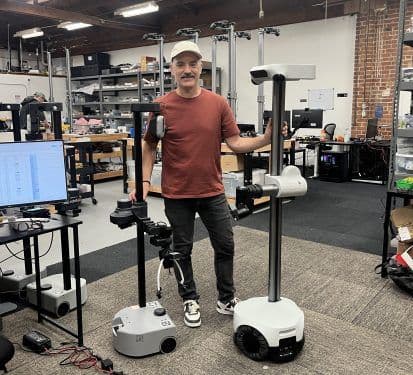
Martinez, California, is about as far as you can get from Silicon Valley and still be in the San Francisco Bay Area. Perched on the northeast edge of the bay, the small city is home to Hello Robot, a startup that itself is about as far as one can get from the maximalist promises of its robotics rivals 45 miles south. Hello Robot released the fourth iteration of its home assistance robot, Stretch, last month. And you might stretch to call it a humanoid robot. While Stretch boasts a vaguely human torso and sensor-studded head, its telescoping arm has a pair of pinchers, and it rides around on a heavy, omnidirectional wheeled base. When Stretch’s batteries run down, lights around its “eyes” glow — “it looks angry,” Blaine Matulevich, an engineer at the company, jokes. Hello Robot, founded in 2017 by CEO Aaron Edsinger, a former director of robotics at Google, and CTO Charlie Kemp, a professor at the Georgia Institute of Technology, is not building a foundation model or promising to take over every job a human can do. Hello Robot developed Stretch to do something many other robots aren’t doing: Working in real homes, with real people, at a time when most are behind glass in laboratories. This is vital. While the latest advances in artificial intelligence promise more capabilities for robots, there is a dearth of useful training data. And while simulation is improving, investors are increasingly focused on deployment. “Companies that deploy first accumulate site-specific recovery loops and workflow tolerances that no competitor can buy or synthesize,” Bullhound Capital wrote ina reporton the sector published last week. “In robotics, the moat isn’t just IP, but accumulated operating hours under real-world liability.” Keith Platt, an investor in Georgia who now sits on Hello Robot’s board, invested in the company after taking on Stretch as a housemate. Platt became quadriplegic in 2021, only able to control parts of his shoulders, his neck and his head. He began exploring adaptive technology, and in 2024 started working with Hello Robot, which has an occupational therapist on the team to support its work with Platt and other people with similar conditions. Platt controls his Stretch using a voice-operated iPhone app; he can task it to autonomously move to somewhere in his house, then take over direct control to manipulate objects and perform tasks. One deceptively simple project has been figuring out how to get Stretch to serve him a protein shake for breakfast, which normally requires the assistance of another person. “When we first started out with that activity, it took me independently — no one there — took almost two hours,” Platt told TechCrunch. “But I was gonna stick with it. It got down to where, within a few minutes, I could drink the whole shake and put it back on the counter.” Being dependent on people is a real challenge, both physically and emotionally, Platt says. Anything he can do to regain independence — like putting on or taking off his reading glasses, or brushing his teeth himself — “is huge.” Not just for him, but for the people who care about him. He predicts it would be “life-changing” for families if robotic assistants could enable people with mobility challenges to be able to safely spend a day at home, allowing their family members to work independently or leave the house without hiring a professional caregiver. Stretch comes from the factory with limited autonomy; focusing on having a human in the loop is intentional. “Being in control is a feature — it’s desired to be embodied in the robot,” Matulevitch said. And, Platt points out, he doesn’t worry about Stretch falling over if it suffers an error. For all the money flowing into startups designing brains for robots, their bodies still leave a lot to be desired. While components are getting cheaper, the state of the art still delivers heavy limbs that require high-energy, active balancing. A robotic hand and arm weighs much more than a human’s, and physics is unforgiving. When robots make mistakes, they damage things around them. One startup, the Bot Company,is being suedby a San Francisco Airbnb owner who says the company rented his apartment to work on its robot, which scratched furniture, broke appliances, and chipped bathroom tiles. “The state of hardware today is actually abysmal from the perspective of, ‘I want to have robots in my parents’ place,’” Mahi Shafiullah, a postdoc working on robotic hands at the University of California, Berkeley, told TechCrunch. He recalled industrial robots in his lab accidentally punching through a plastic kitchen play set they were supposed to carefully manipulate. Shafiullah ultimately came to use the third generation of Hello Robot’s Stretch as part of his PhD research at New York University. Models he helpeddevelop with Stretchwon the best demonstration prize at least year’s Computer Vision And Pattern Recognition (CVPR) conference. Hello Robot doesn’t promise that Stretch will have the complexity or capability of the humanoid robots that enamor the Valley, but its simpler design could make it more powerful. Edsinger compares his company to Waymo, which became the leading purveyor of self-driving cars by focusing on safety first (although the money helped). One leader in this field, 1X, was the subject of significant attention last year when it unveiled a humanoid robot, Neo, that people could buy to perform chores in their homes. The company says that it sold out of the 10,000 Neos it plans to build this year, but as of yet, none have actually been delivered. “Hello Robot has been really cautious and really caring about this problem, because I think they’re designing it to be around people first,” Shafiullah said. “And then they’re thinking about, where are the capabilities that they can fit in within those limitations?” Stretch 4 costs an affordable-for-a-robot $30,000, which is a bit more than robots from Chinese manufacturers, although Edsinger notes that those often don’t come with sensors or software included, add-ons that ultimately drive up the price. He expects to manufacture between 200 and 300 at the company’s Martinez headquarters, with the first run already sold out. Edsinger wants to keep the robot accessible to hackers and researchers on low budgets. One design criteria for Stretch is that it has to be shippable in a cardboard box via UPS or DHL— once wooden crates and installation teams are required, costs go up and accessibility declines. Hello Robot’s customers include researchers who use Stretch to test out increasingly sophisticated AI brains, enterprise customers who are testing Stretch’s utility in settings like data centers, and people working to develop in-home aides for people with disabilities. The combination of the robot’s comprehensive sensor suite, physical capabilities, and safe operations could make it a candidate to fill out the hopes of physical AI believers. “The algorithms may be there, but the data is not, and data is actually like 80% of the ingredient that matters,” Shafiullah said. Having a robot that can safely collect that data is another step forward. And Hello Robot intends to keep iterating. The lessons from the roll-out of Stretch 4 promise to feed into the company’s next bot, which could drive down the price and increase the capabilities enough to realize a vision of robot-human collaboration at home.

read more


Latest AI News

View All News →
Qualcomm Doesn't Want AI to Live on Your Phone, It Wants AI to Follow You Everywhere

Qualcomm Doesn't Want AI to Live on Your Phone, It Wants AI to Follow You Everywhere

The year 2026 can be largely related to the widespread adoption of Artificial Intelligence (AI) and the year of agentic AI. We have seen all the major brands building new AI agents, whether it be Meta, OpenAI, Google, Anthropic, and more. However, only a handful of players are focusing on the hardware that can power the new AI features. A few years down the line, the conversation around chips used to be fairly simple: faster cores, better cameras, longer battery life, and more.

1 hour ago

View

RIL AGM 2026: JioHotstar Gets GenAI Media Studio, AI Snapshot and Content Commerce Features

RIL AGM 2026: JioHotstar Gets GenAI Media Studio, AI Snapshot and Content Commerce Features

Reliance Industries Limited (RIL) announced several AI-powered initiatives for its media and entertainment business at the 49th Annual General Meeting (AGM) on Friday. The company outlined new features for JioHotstar, including JioStar GenAI Media Studio (JAMS), which is designed to streamline the content creation process. AI Snapshot, Content Commerce, and Multiview were also announced, with the aim of transforming how users discover, consume, and interact with content. During the annual meeting, RIL also highlighted the growth of its media ecosystem involving JioStar, Jio Studios, Network18, and JioHotstar.

1 hour ago

View

RIL AGM 2026: Jio Showcases AI Voice Agent for Calls, Jio TeleFrame AI Agents and JioBharat IQ Apps

RIL AGM 2026: Jio Showcases AI Voice Agent for Calls, Jio TeleFrame AI Agents and JioBharat IQ Apps

Reliance hosted its 49th annual general meeting (AGM) of shareholders on Friday. During the keynote presentation, the Indian conglomerate showcased new AI innovations coming to its platforms. Reliance has announced that it will launch five new AI platforms in India, namely JioBharat IQ, AI Vyapar, JioHealth IQ, JioLearn IQ, and JioKrishi IQ. On top of this, the company has also revealed that it is integrating AI directly into the Jio network to bring an AI-powered agent, which can be triggered with a voice command during calls. The AI agent will be available in all regional languages in the country. Additionally, the company has also unveiled the Jio TeleFrame, its new family of AI agents.

1 hour ago

View

The US says ASML’s top chip tool may be in China. ASML says it isn’t

The US says ASML’s top chip tool may be in China. ASML says it isn’t

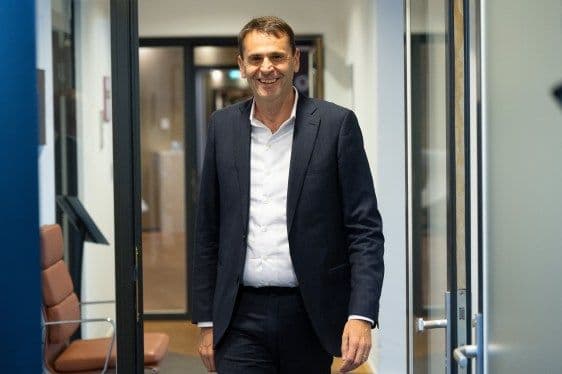
According to Bloomberg, U.S. Commerce Secretary Howard Lutnick has, in a series of recent meetings, told senior ASML executives he’s concerned that one of the Dutch chipmaker’s extreme ultraviolet lithography machines — the EUV systems that are the only tools on Earth capable of printing the most advanced semiconductor patterns —may have ended up in China. That would be a major breach of export controls that have barred ASML from selling EUV to China since the first Trump administration. It’s a serious claim. Senior administration officials told Bloomberg they have evidence that ASML shipped EUV-related components and transport equipment to China, though they’ve declined, repeatedly, to show it — to Bloomberg or, apparently, to ASML itself. The company says no such machine exists in China and has never existed there. The Commerce Department didn’t respond to Bloomberg’s questions about whether it has evidence of an actual EUV system on Chinese soil. You might think this isn’t worth paying attention to if you’re outside the chip industry, but it is. ASML is a Dutch company most people have never heard of, but it is, by a wide margin, the most important company in the global AI buildout that isn’t named Nvidia or one of the hyperscalers. It makes the only machines on the planet capable of EUV lithography — the process of printing the microscopic circuit patterns that define the most advanced chips. Every cutting-edge processor made by TSMC, the foundry behind Nvidia’s and Apple’s chips, depends on ASML tools that took the company roughly two decades and untold billions to develop. There is, at present, no second supplier. That monopoly has made ASML Europe’s most valuable public company, with a market capitalization that has been trading in the neighborhood of $700 billion as of this week, up sharply over the past year on the back of insatiable AI-driven chip demand. That scale is exactly why the China question matters so much. If even one EUV machine made it into Chinese hands, it would represent one of the most consequential breaches of the export-control regime the U.S. has built over the past several years to keep advanced AI capability out of Beijing’s military and industrial base. I sat down with ASML CEO Christophe Fouquetsix weeks ago, well before this story broke, and asked him directly about the China question. Fouquet told me ASML tracks every machine it has ever shipped — they’re either in active use with monitored customers or have been dismantled and returned to the company. He said the firm built an internal firewall years ago: employees who can access EUV technology, documentation, and training are walled off from those who can’t, and ASML’s China-based staff sit on the wrong side of that wall by design. He argued the only reason ASML could build an EUV machine at all was that 80% of it already existed from decades of prior knowledge, and that solving the one genuinely new problem — generating EUV light itself — took 20 years on its own. His broader point seemed to be that you can’t reverse-engineer a machine you’ve never had, and nobody in China has had one. There’s also a simpler commercial logic that cuts against the idea that ASML would risk its export license to quietly arm a Chinese customer. ASML does sell older-generation deep ultraviolet tools to China — gear it first shipped a decade ago — but Fouquet framed that explicitly as a protective calculation, not a loophole. The idea, he suggested, is that it keeps enough of a generational gap that customers can still do business — but without manufacturing its own future competitor. ASML expects roughly 20% of its 2026 revenue to come from already-permitted sales to China. Risking the EUV ban entirely would put that revenue, and the company’s standing as the most valuable monopoly in European industry, on the line over a single illegal sale. None of this proves the allegations are false. The government hasn’t yet made its evidence public, and it’s worth withholding judgment until it does. The Commerce Department, under Lutnick’s leadership, agreed late last year to put up to$150 million of taxpayer moneyinto xLight, a startup developing a next-generation light-source technology that’s been written about as a long-term challenge to the core of ASML’s EUV monopoly. xLight’s own CEOtold me last yearthat the company sees itself as a future partner to ASML, not a rival, building hardware meant to plug into ASML’s machines rather than replace them. When I put that framing to Fouquet in May, he was polite about it but unconvinced; ASML, he made clear, doesn’t see itself as needing xLight’s technology to keep its lead. Does that have anything to do with why Lutnick is suddenly pressing ASML on EUV? Nothing public connects the two. It could be entirely unrelated. But a federal official scrutinizing a monopoly while his own agency has money riding on a startup angling to improve that monopoly’s core technology is worth examining. xLight isn’t the only outside bet on the future of lithography. Peter Thiel — who has his own long-running ties to Trump’s political orbit — hasbacked Substrate, a separate startup explicitly pursuing its own EUV-rival technology, with ambitions to compete with ASML more directly than xLight says it intends to. As Bloomberg notes, a bipartisan bill moving through Congress would go much further than EUV — it calls for an effective ban on all of ASML’s deep ultraviolet (DUV) shipments to China, the less advanced lithography tools that account for roughly a fifth of the company’s expected 2026 revenue. The bill cleared a key committee in April, and the Trump administration hasn’t taken a formal position on it. Pictured above: ASML CEO Christophe Fouquet

1 hour ago

View