Want to get featured here? Explore premium visibility opportunities.

Contact us

AI NewsGoogle rolls out fake call detection to protect against AI deepfake impersonation scams

Google rolls out fake call detection to protect against AI deepfake impersonation scams

3:17 AM IST · June 3, 2026
Google rolls out fake call detection to protect against AI deepfake impersonation scams

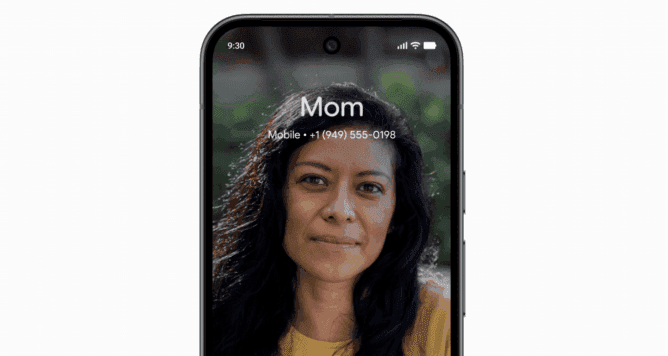
Google announced on Tuesday that Android is launching fake call detection to protect against AI deepfake impersonation scams. The feature is rolling out globally in Phone by Google to Android 12+ devices this month, starting with Pixel devices. As people increasingly refuse to answer calls from unknown numbers, scammers are shifting their tactics by spoofing trusted phone numbers and using AI deepfake technology to sound like authority figures, family members, or employers. For example, a person may receive a phone call showing the caller ID “Mom,” and the voice may sound exactly like her, but the caller is actually a scammer using AI tools to impersonate her and request money for a fake emergency. The new feature is on by default and works automatically behind the scenes. Google explains that the new feature works kind of like a “digital handshake between devices.” When a contact calls you, and you’re both using Phone by Google, their phone sends a silent confirmation signal to your device to verify the call is legitimate and actually coming from their phone. “If a scammer tries to impersonate your trusted contact, that initial confirmation signal will be missing,” Google explained in ablog post. “Your device will instantly notice this and ping your contact’s actual device to double-check. If their real device says, ‘I’m not making a call right now,’ you’ll get a warning on your screen advising you to hang up immediately.” The tech giant notes that it built this feature on top of Rich Communication Services (RCS), making it possible for other apps and companies to adopt the technology. The launch of fake call detection was announced alongside other updates from Android, including a new Google Photos feature that lets users mix and match outfits and try them on virtually. The new “wardrobe” feature catalogs the clothes you’re wearing in your photo library by turning them into snapshots you can browse on your phone. The feature is rolling out next week to eligible users in the U.S., India, and Brazil with Android 10+. Additionally, Google Play Books is getting a new “Catch me up” feature that lets users jump back into a story with a recap. Users can also highlight a passage to ask questions. These features are rolling out today for select English titles. Google is also making it possible to search entire outfits with its “Circle to Search” feature. Now the feature will be able to find every item in an outfit at once, getting rid of the need to search piece by piece. This update is now available on all Android 14+ devices that have Circle to Search.

read more

Latest AI News

View All News →
Billionaire Ambani wants AI in every call, app, and home

Billionaire Ambani wants AI in every call, app, and home

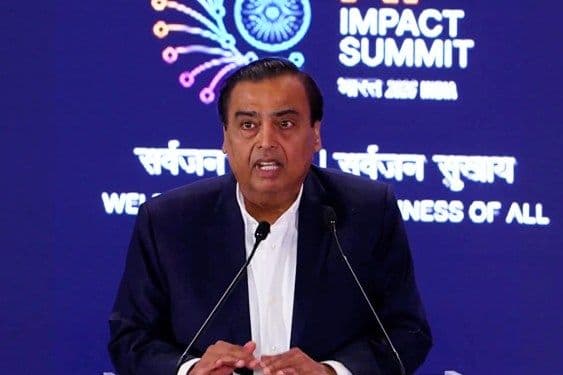
As India searches for a homegrown contender in the global artificial intelligence race, billionaire Mukesh Ambani is positioning Reliance Industries as a national champion, rolling out AI services for phone calls, mobile apps, and connected homes. At itsannual shareholder meetingon Friday, the Mumbai-based conglomerate announced Jio Call Agent, an AI assistant that can join phone calls to transcribe conversations, generate summaries, and perform tasks such as booking cabs, ordering food, and making reservations. The service, which can be activated by saying “Hey Jio,” is expected to launch later this year for Jio’s more than 500 million users. By embedding the service directly into its telecom network rather than offering it as a stand-alone app, Jio is betting AI assistance can become a native feature of phone calls. The approach could reduce consumers’ reliance on third-party call-assistant apps and give Reliance a powerful distribution advantage in an increasingly crowded AI market. Reliance also unveiled an AI-powered version of its MyJio app that can perform tasks on behalf of users, from activating eSIMs to selecting roaming plans, through natural-language requests. The company further introduced TeleFrame, a home display that uses AI agents to proactively surface information and recommendations, such as weather alerts, schedules, and household reminders. The product appears to echo a broader industry push toward ambient AI assistants for the home, an area being explored by companies such asAmazonandGoogle. The announcements mark the next phase of Reliance’s AI ambitions as India seeks to build domestic capabilities in a field largely dominated by U.S. and Chinese technology companies. The push follows thelaunch of Reliance Intelligencelast year, through which the conglomerate aims to develop AI infrastructure and services for consumers, businesses, and governments, including applications that support 22 Indian languages. “India should not be a mere consumer of AI created elsewhere. It must become a creator, adopter, and a global leader in AI,” Ambani, age 69, said. Reliance has been ramping up its AI ambitions through partnerships withGoogle,Meta, andNvidia. Earlier this year, the company announced plans toinvest $110 billion in AI infrastructureas it seeks to establish itself as a major player in India’s emerging AI ecosystem. At the shareholder meeting, Reliance also unveiled a suite of AI services for healthcare, education, agriculture, and small businesses. The products, branded JioHealthIQ, JioLearnIQ, JioKrishiIQ, and AI Vyapar, are designed to operate across multiple Indian languages and cater to local needs, the company said. The shareholder meeting also brought a major development for investorsawaiting Jio’s stock market debut. Ambani said Jio Platforms’ board had approved a draft prospectus for an initial public offering that would include a fresh issue of up to 270 million shares, according to a stock exchange filing. The announcements also raise questions about how Reliance will handle user data as it expands AI services across phone calls, mobile apps, and connected homes. While the company said the services would operate with user consent, it did not answer questions about whether data generated through the products could be used to train AI models or shared with technology partners. Reliance’s AI ambitions come as Indian companies remain heavily reliant on foreign AI models and cloud providers.Recent restrictions on accessto some of Anthropic’s latest models have underscored that dependency, showing how decisions made overseas can affectstartups and businessesbuilding AI products in India — the kind of supply-chain risk that’s pushing Indian conglomerates toward building their own stack rather than renting someone else’s. Last week, Reliance announced acollaboration with Meta to establish an AI data centerin the western state of Gujarat, building on Meta’s earlier investment in Jio Platforms and a joint venture launched last year to develop AI solutions for enterprise customers in India and overseas markets. Reliance is not alone in pursuing AI opportunities.Tata Consultancy Services,Infosys, and rivalAdani Grouphave also expanded their AI initiatives and partnerships with global players, including Anthropic, Google, and OpenAI, as India’s largest corporations race to secure a leading role in the country’s AI future. Nonetheless, for Reliance, the stakes are particularly high; it’s preparing Jio for a long-awaited stock market debut and needs new growth drivers, with the conglomerate’s shares down about 17% this year.

14 minutes ago

View

The US banned Anthropic’s Fable 5 release, but the numbers don’t seem to care

The US banned Anthropic’s Fable 5 release, but the numbers don’t seem to care

Just as last week was ending, the US governmentforced Anthropic to pull its two newest models, Fable 5 and Mythos 5, citing national security concerns after Amazon researchers allegedly found a way to bypass Fable 5’s guardrails. Cybersecurity researchers havesince signed an open lettercalling the move dangerous, and Anthropic itself noted the same jailbreaks exist in other models. So is this a genuine security concern, or just the latest chapter in a messy relationship between Anthropic and the Trump administration? On this episode of TechCrunch’sEquitypodcast, hosts Anthony Ha, Sean O’Kane, and Rebecca Bellan unpack what the ban means for developers building on Anthropic’s platform and for anyone watching the IPO, why itmight accidentally be good for the company, and more of the week’s headlines. Listen to the full episode to hear more about: Subscribe to Equity onYouTube,Apple Podcasts,Overcast,Spotifyand all the casts. You also can follow Equity onXandThreads, at @EquityPod.

14 minutes ago

View

Is the US government’s Anthropic ban accidentally helping the brand?

Is the US government’s Anthropic ban accidentally helping the brand?

Loading the player
 Just as last week was ending, the US governmentforced Anthropic to pull its two newest models, Fable 5 and Mythos 5, citing national security concerns after Amazon researchers allegedly found a way to bypass Fable 5’s guardrails. Cybersecurity researchers havesince signed an open lettercalling the move dangerous, and Anthropic itself noted the same jailbreaks exist in other models. So is this a genuine security concern, or just the latest chapter in a messy relationship between Anthropic and the Trump administration? On this episode of TechCrunch’sEquitypodcast, hosts Anthony Ha, Sean O’Kane, and Rebecca Bellan unpack what the ban means for developers building on Anthropic’s platform and for anyone watching the IPO, why itmight accidentally be good for the company, and more of the week’s headlines. Subscribe to Equity onYouTube,Apple Podcasts,Overcast,Spotifyand all the casts. You also can follow Equity onXandThreads, at @EquityPod.

14 minutes ago

View

Jio AI Call Agent Explained: What It Is, How It Works, Features and More

Jio AI Call Agent Explained: What It Is, How It Works, Features and More

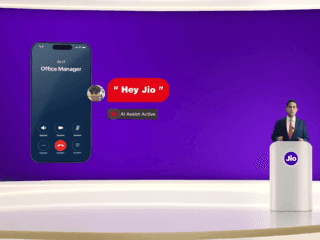
Reliance held the 49th edition of its annual general meeting (AGM) with shareholders on Friday. The Indian conglomerate unveiled various new artificial intelligence (AI) innovations that its telecom service provider (TSP) arm, Reliance Jio, plans to join in the coming months in the country. Among the many announcements, the company revealed its plan to integrate AI directly into its network. The company claims that this will allow the TSP to introduce a voice-based AI call agent for its subscribers. During the presentation, the company demonstrated the AI agent's capabilities, showing that it will be able to transcribe calls and generate call summaries without asking users to download a standalone app.

4 hours ago

View