Want to get featured here? Explore premium visibility opportunities.

Contact us

AI NewsGoogle is pitching an AI agent ecosystem to consumers who may not buy it

Google is pitching an AI agent ecosystem to consumers who may not buy it

10:55 PM IST · May 21, 2026

Google is pitching an AI agent ecosystem to consumers who may not buy it

One of the most promising introductions at Google’s I/O developer conference on Tuesday was a new way for consumers to use the web: AI agents. Unfortunately, it was also the most confusing. Google took the wraps offinformation agents, a reinvention of the aging Google Alerts service, now infused with AI. These AI agents are designed to operate in the background 24/7, helping users stay up to date on topics they’re interested in, like market trends, price tracking, or inclement weather warnings. Then there isGemini Spark,a “personal” AI agent that can help younavigate your digital lifeby integrating with Google products, like Gmail, Google Docs, and Google Workspace. The company says the assistant can handle everyday tasks like surfacing themes from newsletters, organizing your home inventory, and keeping track of what needs restocking, or helping you plan and manage a group trip with friends. Or, as Google showed off in a very engineering-minded example, you could use it to organize a neighborhood block party — as if that would require any management beyond a group chat or some emails. There’s also a name for how you track notifications from Spark: Android Halo. (Why an Android feature needs its own brand is beyond me, but a good guess is that Google’s internal product teams are fairly competitive and want to highlight their own work, even at the risk of confusing users.) Next, Gemini’s app is getting an AI agent that can compile a personalized digest from your Gmail inbox, calendar, and tasks, and provide anupdate called Daily Brief. Many of these products have not yet shipped, or at least won’t be available to the wider public right away. Instead, Google is targeting its heavier users for now: the “AI-pilled” subscribers of its new, only $100-per-monthGoogle Ultra plan. Google Pro and Ultra subscribers in the U.S. will get to use information agents starting this summer, and Spark will be available to Ultra subscribers “soon.” Halo will ship to Android users “later this year.” Daily Brief is rolling out in the U.S. to Ultra, Pro, and Plus subscribers. As a result of all these launches, we’ll soon have so many entry points for using AI agents that it may be overwhelming as to where to start. (Did I forget to mention the increasingly agentic Chrome web browser, too? Google showed off how you could talk to Chrome while shopping for cars online to configure the various options and trim levels you can afford without tapping on a keyboard and clicking around. Yay … I guess?) In a press briefing ahead of I/O, Google said it intends to bring its agentic features, including Spark, to free users “when the time is right.” But for the time being, the company’s more interested in iterating with a group of people, like the Ultra subscribers, who will push the limits of what Spark and AI agents can do. In the meantime, Google is furthering the divide between those who have already bought into (literally!) the promise of AI, and the average consumer using Google’s free tools, who’s likely distanced from the real-world improvements AI offers, likeagentic codingor AI-enabledcomputer use. Instead, consumers today largely think of AI as chatbots replacing traditional Google searches. They think of AI photo and video models not as impressive creative leaps, but as tools for making “AI slop” that now clutters their social feeds and result in unwanted data centers being built in their backyards. Google didn’t help its reputation on this front during the event, flashing goofy AI imagery between each presenter. It also played a corny AI-generated animation featuring Cinnamon Toast Crunch-esque talkingTensor chips. And in its Android glasses demo, Google showed how the devices — which will later support photo-taking — could use AI to transform photos users take into something else. This demo involved the presenter taking a picture of their view of the audience, which was modified to have a blimp floating overhead, and then sent to their Android Watch. Okay, neat, but is it worthsomeone’s home being torn downvia eminent domain to build new power linesfor a data center? People will need more than clever party tricks to accept such drastic societal changes. In previous years, Google introduced new consumer electronics devices, likePixel phones and Nest Hubs, alongside new Android features, like that restaurant-and-salon booking servicethat blew people away in 2018. Those pieces of technology were framed as attempts to smooth over some of life’s everyday hassles. Now the tech giant is showcasing its new models (butnot Gemini Pro 3.5, which wasn’t ready yet) alongside its developer platforms, and largely forgetting about who it’s building all this for: Regular folks. People who don’t want to think about whether it’s called Gemini or Spark or Halo or information agents, or where you go to use it. These people have real problems they want to solve. They struggle to pay bills and rent, or buy gas or groceries, as they try to find work in the face of AI recruiting systems that reject their résumés over smalltechnical details. They are people who are trying to balance stressful lives that have, of late, come to bear technology’s advances as burdens, especially with social media devouring screen time, addicting children, and turning social connection tools into a big, online shopping mall. Instead of tools to solve problems, the average tech-savvy consumer watching this year’s Google I/O saw a tech giant putting more AI into everything they use — from Docs and email inboxes to glasses and even Search,which is now more of an AI-first experience. If Google had tapped real consumer sentiment, it could have noted that AI agents would lower screen time usage. That is, instead of spending time researching, organizing, tracking, and monitoring information and news, agents could take over those daily tasks so users could go offline and live their real lives away from a computer. That’s a message that could resonate with consumers, particularly young people, who are today embracing nostalgic retro tech, adopting“old people” hobbies and craftsto de-stress, and rediscovering the power of real-life connections by ditching dating appsfor in-person eventsand experiences. In short, Google failed to sell just how cool AI agents are by not demonstrating any problems agents solve for everyday users and keeping these tools paywalled, limiting their reach. Meanwhile, messaging-first AI startups likePoke,Poppy,RPLY, andWingmanare presenting themselves as a way to interact more naturally with AI agents via a feature everyone uses daily: text messaging. Will you ever be able to message Spark? Reps at Google I/O vaguely said it will happen at some point in the future. This is such a different strategy from Google’s early days, when it introduced revolutionary products like Gmail, a free email service that vastly improved on existing options, or Google Search, which freely organized the early web and made it more accessible to everyone. Google I/O could have been a breakout moment when AI agents became available to everyone via a simple, free consumer product (with one brand name!). This product may even have people clamoring for the way they used to beg for Gmail invites. Instead, Google’s new AI agents — tools that can work for us and meet our personalized needs — remain largely out of reach for most.

read more

Nobel-Winning AlphaFold Scientist John Jumper Leaves Google DeepMind for Anthropic

Nobel-Winning AlphaFold Scientist John Jumper Leaves Google DeepMind for Anthropic

For his work on AlphaFold, Jumper shared the 2024 Nobel Prize in Chemistry with Demis Hassabis and scientist David Baker.

7 hours ago

View

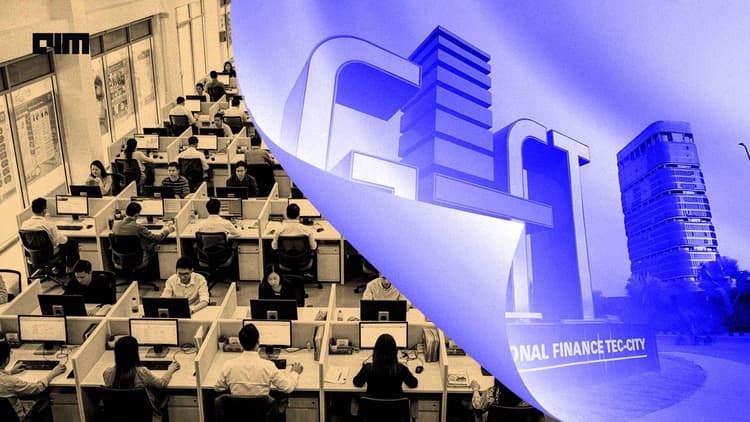
How Hexaware's GIFT City Move Gives Indian IT a New Financial Frontier

How Hexaware's GIFT City Move Gives Indian IT a New Financial Frontier

Hexaware plans to create nearly 1,000 high-skilled jobs over the next three years.

11 hours ago

View

Encryption, spyware, and now Mythos: History shows why cyber export control doesn’t work

Encryption, spyware, and now Mythos: History shows why cyber export control doesn’t work

Last Friday, citing unspecified national security concerns, the White Houseordered Anthropicto restrict the export of its powerful AI models Fable and Mythos to anyone outside of the United States, as well as foreign nationals inside the country. Shortly after, the AI giant hastily pulled the plug on both models, which have now been unavailable to anyone for a week. The episode is the first real test of whether the U.S. government can use export controls to contain frontier AI the way it has tried, with very uneven results, to contain encryption and spyware before it. And dramatic as it may sound, how this standoff gets resolved could shape not just Anthropic’s access to foreign markets but the rulebook that other AI labs will have to build around. Some context first.Ever since Anthropic launched Mythos in April, the company has marketed it assome kind of Doomsday cyber machinethat could wreak havoc on the internet if released too widely — which is why, before the ban,only around 150 vetted companies and government organizationshad access to it at all. The goal was helping defenders secure their software and services before the bad guys could reach Mythos-like capabilities. So what triggered the ban? Two subsequent events, reportedly. The first: Anthropic gave a South Korean telecom access to Mythos through its limited partner program, and U.S. officials grew alarmed after identifying the company as one they suspected had ties to China. (The company,widely reportedto be SK Telecom, hasdeniedany China connection.) Amazon CEO Andy Jassy also reportedlyalerted the administrationafter Amazon’s own researchers, he said, found a way around Fable 5’s safeguards. Anthropic disputes the “jailbreak” label, calling it a narrow, already-patched issue rather than a wholesale defeat of the model’s safety measures. The result was the same: the Commerce Department issued an export control directive, and Anthropic had to scramble to immediately limit access to its products — within roughly 90 minutes of being notified, by some accounts. None of this is new, though. Governments have tried to use export controls to limit the proliferation of what they see as dangerous cyber technology for decades, but their track record has been middling at best. The U.S. government was behind what is perhaps history’s most spectacular failure of this approach in the early to mid-1990s. At the time, computer scientists were developing encryption technologies to secure data as it traveled over the internet. One of those encryption products was called Pretty Good Privacy, or PGP, a popular software that could encrypt data and make it virtually impossible to unscramble even if intercepted as it traveled to its intended recipient over the internet. The U.S. government initially saw PGP as a dangerous weapon, fearing it would prevent its intelligence agencies from snooping on emails as they crossed their wires. To stop the distribution of PGP, the U.S. Customs Serviceopened a criminal investigationagainst PGP’s creator Phil Zimmermann for allegedly violating arms export controls. He fought back by publishing PGP’s source codeas a printed book, igniting what is known today as the “Crypto Wars.” Zimmermann later won a key battle when the investigation was closed, paving the way for crucial end-to-end encryption algorithms such as the one used by billions of Signal and WhatsApp users. Later during the early 2010s, researchers began discovering Western-made spyware used against dissidents in the Middle East. In response, several governments agreed to expandthe Wassenaar Arrangement, an international treaty that limits the export of dual-use software and technologies that are used in both civilian and military applications. The idea was to classify surveillance and hacking software as dual-use, thus forcing spyware makers to get export licenses to sell their products abroad. Contact UsDo you have more information about the Mythos ban? From a non-work device and network, you can contact Lorenzo Franceschi-Bicchierai securely on Signal at +1 917 257 1382, or via Telegram and Keybase @lorenzofb, oremail. But Wassenaar has always had two inherent weaknesses. There are several countries that don’t adhere to the agreement, including Israel, which houses some of the world’s most active spyware makers. The agreement also depends on countries applying it to companies within their borders at their own discretion. For a time, the Italian government allowed one of the country’s then-top spyware makers, Hacking Team, a license to export its tools around the world, despite the company’s track record of selling spyware tooppressivegovernmentsthatused itto hack journalists and human rights activists. Since then,othercountriesin Europe have been lax with spyware makers like Italy. Despite numerous scandals, Europe, home tomany spyware and hacking tools makers, hascontinually failed to curb the export of spywareto authoritarian regimes. Critics say that a recently renewed effort across the bloc of 27 member states to tackle its growing problem of spyware exports to authoritarian states “does not go far enough.” Several spyware makers, such as Intellexa, a sanctioned consortium of spyware companies,  have simply moved their operations to countries with lax export controls. Other spyware makers sought to move their operations to Saudi Arabia for similar reasons. There have been some wins. Germany-based spyware maker FinFishershut down in 2022after a multi-year investigation by German prosecutors into the company forallegedly selling spywareto Turkey without an export license. Investigators previously found the FinFisher spyware had beendeployed on the phonesof critics of Turkey’s government. As of the time of writing, the impasse between Anthropic and the Trump administration remains. There is a reasonable chance the administration will buckle and lift the restriction in the interest of keeping American AI companies competitive worldwide — a move that would amount to tacit acknowledgment that AI labs elsewhere, including in China, will likely reach similar capabilities regardless of what the U.S. restricts. Or, American AI companies could end up needing government approval before serving foreign customers at all, a compliance burden that would invariably dent their bottom line. Given the past experiences that world governments have had with trying to control the reach of software, government-mandated export controls are unlikely to be the right approach to stop malicious actors from abusing powerful dual-use cyber technologies.

15 hours ago

View

Billionaire Ambani wants AI in every call, app, and home

Billionaire Ambani wants AI in every call, app, and home

As India searches for a homegrown contender in the global artificial intelligence race, billionaire Mukesh Ambani is positioning Reliance Industries as a national champion, rolling out AI services for phone calls, mobile apps, and connected homes. At itsannual shareholder meetingon Friday, the Mumbai-based conglomerate announced Jio Call Agent, an AI assistant that can join phone calls to transcribe conversations, generate summaries, and perform tasks such as booking cabs, ordering food, and making reservations. The service, which can be activated by saying “Hey Jio,” is expected to launch later this year for Jio’s more than 500 million users. By embedding the service directly into its telecom network rather than offering it as a stand-alone app, Jio is betting AI assistance can become a native feature of phone calls. The approach could reduce consumers’ reliance on third-party call-assistant apps and give Reliance a powerful distribution advantage in an increasingly crowded AI market. Reliance also unveiled an AI-powered version of its MyJio app that can perform tasks on behalf of users, from activating eSIMs to selecting roaming plans, through natural-language requests. The company further introduced TeleFrame, a home display that uses AI agents to proactively surface information and recommendations, such as weather alerts, schedules, and household reminders. The product appears to echo a broader industry push toward ambient AI assistants for the home, an area being explored by companies such asAmazonandGoogle. The announcements mark the next phase of Reliance’s AI ambitions as India seeks to build domestic capabilities in a field largely dominated by U.S. and Chinese technology companies. The push follows thelaunch of Reliance Intelligencelast year, through which the conglomerate aims to develop AI infrastructure and services for consumers, businesses, and governments, including applications that support 22 Indian languages. “India should not be a mere consumer of AI created elsewhere. It must become a creator, adopter, and a global leader in AI,” Ambani, age 69, said. Reliance has been ramping up its AI ambitions through partnerships withGoogle,Meta, andNvidia. Earlier this year, the company announced plans toinvest $110 billion in AI infrastructureas it seeks to establish itself as a major player in India’s emerging AI ecosystem. At the shareholder meeting, Reliance also unveiled a suite of AI services for healthcare, education, agriculture, and small businesses. The products, branded JioHealthIQ, JioLearnIQ, JioKrishiIQ, and AI Vyapar, are designed to operate across multiple Indian languages and cater to local needs, the company said. The shareholder meeting also brought a major development for investorsawaiting Jio’s stock market debut. Ambani said Jio Platforms’ board had approved a draft prospectus for an initial public offering that would include a fresh issue of up to 270 million shares, according to a stock exchange filing. The announcements also raise questions about how Reliance will handle user data as it expands AI services across phone calls, mobile apps, and connected homes. While the company said the services would operate with user consent, it did not answer questions about whether data generated through the products could be used to train AI models or shared with technology partners. Reliance’s AI ambitions come as Indian companies remain heavily reliant on foreign AI models and cloud providers.Recent restrictions on accessto some of Anthropic’s latest models have underscored that dependency, showing how decisions made overseas can affectstartups and businessesbuilding AI products in India — the kind of supply-chain risk that’s pushing Indian conglomerates toward building their own stack rather than renting someone else’s. Last week, Reliance announced acollaboration with Meta to establish an AI data centerin the western state of Gujarat, building on Meta’s earlier investment in Jio Platforms and a joint venture launched last year to develop AI solutions for enterprise customers in India and overseas markets. Reliance is not alone in pursuing AI opportunities.Tata Consultancy Services,Infosys, and rivalAdani Grouphave also expanded their AI initiatives and partnerships with global players, including Anthropic, Google, and OpenAI, as India’s largest corporations race to secure a leading role in the country’s AI future. Nonetheless, for Reliance, the stakes are particularly high; it’s preparing Jio for a long-awaited stock market debut and needs new growth drivers, with the conglomerate’s shares down about 17% this year.

23 hours ago

View