Want to get featured here? Explore premium visibility opportunities.

Contact us

AI NewsCollecting robot training data is dirty, unglamorous work. Some AI labs are already paying XDOF to do it.

Collecting robot training data is dirty, unglamorous work. Some AI labs are already paying XDOF to do it.

11:53 PM IST · June 17, 2026
Collecting robot training data is dirty, unglamorous work. Some AI labs are already paying XDOF to do it.

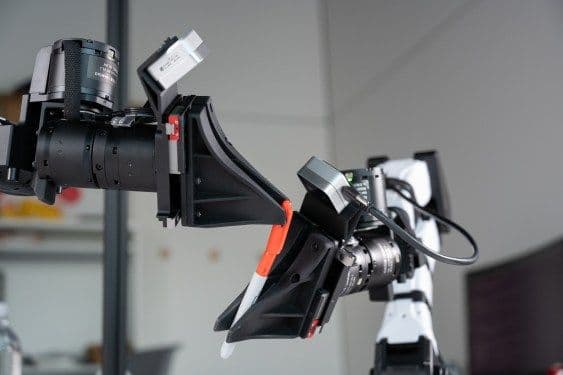
Two weeks ago, OpenAIsaidit would relaunch the robotics program it shuttered in 2021 — the latest signal that the biggest AI labs are racing to teach machines to operate in the physical world. But building capable robots requires something the AI industry doesn’t yet have, which is the training data to match that used for language models. That gap is creating a new kind of infrastructure business. Unlike LLMs that were trained on a vast sea of publicly available text, robots need data that captures physical interaction, and that kind of data barely exists. YouTube videos and footage captured by gig workers are low-fidelity and hard to reconcile with the physical world. XDOF(pronounced “ecks-doff”), emerging from stealth today, is betting that the next great bottleneck in AI isn’t models or chips, but the data feedback loop needed to teach robots how to interact with the physical world. The startup aims to build the data pipelines, collection tools, and annotation systems that frontier labs and robotics companies can’t easily build themselves — and has raised $70 million from Thrive Capital, Spark Capital, a16z, Lux, and WndrCo to do it. Co-founder and CEO Philipp Wu says XDOF, which has about 60 employees, is already working with 20 customers, including several frontier AI labs, but cannot name them. “All of the top labs are trying to pursue robotics,” Wu said. “We’ve already seen some of the downfalls of falling a little bit behind in the language model race … you don’t want to be in this type of situation where you pursue this technology too late, and everyone is in this boat where physical AI is the next frontier.” Wu ran into this problem himself as a PhD student at UC Berkeley. His focus was on enabling robots to learn skills from large-scale datasets. There was just one problem. “We didn’t have large-scale data to work with,” he told TechCrunch. “There was this chicken-and-egg problem — we first needed to actually collect data before we could even ask how to train a foundation model for robotics.” Wu and his future XDOF co-founder and CTO, Fred Shentu, worked on a project called GELLO, a low-cost teleoperation system that lets a human operator control a robotic arm to generate training data. “It ended up becoming a very influential paper in robotics, because a lot of people had similar needs and bottlenecks, and many started leveraging this type of device for data collection,” Wu said. Spotting the opportunity, Wu, Shentu, and third co-founder and Chief Operating Officer Nemo Jin launched XDOF in October 2024 to provide a data ecosystem for companies pursuing robotics models. Mindful that data provision alone can be a dead-end business, the company is also focused on data cleaning, tooling, and annotation — creating a self-reinforcing feedback loop for robot trainers. As a starting point, the company is partnering with UC Berkeley’s AI Research lab to release what it believes is the largest collection of high-quality robot training data ever assembled, dubbedABC. It includes 130,000 trajectories of robot manipulation data, 300 hours of simulation, and 100 hours of evaluations. That kind of scaled-up pre-training data has never been available to academia before. “We’ve seen in language, image generation, and other fields, that when models and data are released, the community achieves things that you wouldn’t necessarily have expected,” David McAllister, a Berkeley PhD student who helped organize the release, told TechCrunch. The team has already used the data to train robots on benchmark tasks like folding T-shirts and flattening boxes, or loading AirPods into their cases. The company plans to work across three tiers of a data pyramid. The most valuable tier is teleoperation data collected on the actual robot being deployed; next comes teleoperated robots gathering more general data, as with GELLO; and finally “egocentric” data gathered by humans performing everyday tasks, for which XDOF plans to build its own wearable sensors. “Your camera choice is going to affect the quality of your data — which is going to affect how your hand-tracking algorithm performs,” Wu said. “If you don’t design the hardware well from the start, the data you collect might have very specific problems that you didn’t anticipate.” The company plans to hire and train armies of teleoperators and egocentric data operators around the world — a labor-intensive model that raises an obvious question: Why aren’t the major labs doing this data production work themselves? “You need a warehouse of hundreds of thousands of square feet with hundreds of robots,” Wu said. “You need to maintain these robots, calibrate their physical parameters, and properly train operators.” It’s a build-out that requires focus, capital, and operational scale that most AI labs would rather outsource — which is precisely the market XDOF is betting on. The name XDOF is a play on the robotics term “degrees of freedom,” which describes the number of independent motions a robot can perform. Your arm, from shoulder to wrist, hasseven degrees of freedom. Humanoid robotics company Figure AI’s latest robot has 30. The X in the company’s name captures its ambition: “Arbitrary degrees of freedom, unlimited degrees of freedom,” Wu says.

read more

How to turn off AI in your Google Docs

How to turn off AI in your Google Docs

It happened to me: I opened a Google Doc to write an article, and I was immediately confronted with a text box inviting me to “write with Gemini.” I looked for some button to swipe away the garish AI display, but I could not find it. It made me mad. Now, instead of writing the article I’m supposed to be working on, I am writing about how to get the AI pop-ups off of your Google Docs screen, since it took me some time to figure out. You’re welcome. The first fix is pretty straightforward: Full disclosure: I was so enraged when I set out to find “bottom bar preferences” that I initially missed it entirely. Instead, I clicked “Ask something else” and asked Gemini to help me remove itself from my life. AI may not be human, but Gemini seemed to have some sort of survival instinct, because it told me to click the “X” icon. That does not remove Gemini. It simply closed the conversation, the one in which I was asking it how to turn itself off. Suspicious! Other aggrieved Google Docs users have reported features that I have yet to encounter, like a“help me write” featurethat hovers over your cursor while you work. This seems like something that would upset me, so it’s probably worth nipping that in the bud before it’s too late. Benjamin Franklinonce said, “An ounce of prevention is worth a pound of cure.” (He was talking about fire safety. I am talking about product design.) Instead of turning off each individual AI feature like a game of whac-o-mole, we can disable “smart features” across our Google workspace via Gmail. You should now be safe from annoying Gemini pop-ups that disrupt your writing process in Google Docs. You can rest easy.

2 hours ago

View

NEA’s Tiffany Luck on AI IPOs, personal agents, and the ROI reckoning

NEA’s Tiffany Luck on AI IPOs, personal agents, and the ROI reckoning

Tokenmaxxingwas the hottest trend in Silicon Valley earlier this year, with CEOs encouraging employees to push AI usage as far as it would go.Then the bill came due. Uber reportedly blew through its annual AI budget in a few months, some companies cut Claude licenses for parts of their org, and Meta killed its internal leaderboard. This tension between hype and ROI is exactly whereNEA partner Tiffany Lucklives these days. She got her start convincing companies that e-commerce was the future, and now she’s all in on AI, especially when it comes to the possibilities for “magic moments” in the consumer business. On this episode of TechCrunch’sEquitypodcast, Luck joins Rebecca Bellan to talk about the future of personal agents, her thoughts on this year’s AI IPOs, and how startups are stepping in to help enterprises track return on AI spend. Listen to the full episode to hear: Subscribe to Equity onYouTube,Apple Podcasts,Overcast,Spotifyand all the casts. You also can follow Equity onXandThreads, at @EquityPod.

6 hours ago

View

Anthropic becomes first AI startup to join the Frontier carbon removal coalition

Anthropic becomes first AI startup to join the Frontier carbon removal coalition

Anthropic is joining Frontier, the carbon removal collective, contributing to a new $915 million tranche of funding and marking its arrival as the first AI startup to join the group. The new funding nearly doubles pledges toFrontier, bringing the total to $1.8 billion. So far, Frontier has contracted nearly $700 million across more than 50 projects to remove 1.8 million tons of carbon. Companies that have pledged money to Frontier typically use the company’s carbon removal credits to reduce their publicly listed carbon footprints. The new funding will help bolster Frontier’s position in the carbon removal industry, but more notable are Anthropic’s pledges. While Google is a founding member, Anthropic is the first pure AI company to join the ranks. Its membership comes at a time when AI companies have been on an energy buying spree,not allof whichhas been squeaky clean. Joining Frontier is Anthropic’s first climate-related deal. The company has yet to produce a sustainability report, and ithas saidit favors an “all of the above” approach to energy, a statement which typically translates into large purchases of polluting power. But the move might signal changing attitudes within the company. Frontier was founded by tech companies, including Stripe, Google, and Shopify, to help them fulfill their climate pledges. The founding companies, and others, face a dilemma: Many want to hit zero emissions in the next decade or two, but there are some emissions they can’t eliminate today, like air travel. But at the same time, carbon removal was, and still is, a nascent industry without large players that could remove the amount of carbon companies needed. Frontier vets carbon removal companies and signs contracts for those it thinks will be able to deliver. Carbon removal credits, like the kind supported by Frontier, let companies continue to emit some pollution. The credits can be subtracted from their carbon footprint, similar to how profits might counter debts on a balance sheet. Frontier vets projects, serving as a sort of shared resource for companies interested in carbon removal. In the announcement of the new pledges, Frontier said that funding for future projects would come with a higher level of scrutiny. The organization said it will fund fewer projects, focusing on those that it thinks have the best chance at removing a gigaton — 1 billion metric tons — of CO2or more annually. New contracts will run around eight to 10 years, Frontier said. Since its launch in 2022, Frontier has backed a range of carbon removal technologies over the years, includingdirect air capture,enhanced rock weathering,bio-oil,ocean antacids, andbioenergy with carbon removal and sequestration. Frontier’s shift from lots of smaller bets to fewer larger ones mimicswhat appears to be happening at Microsoft, which has been the largest buyer of carbon removal credits. Though companies want the carbon removal market to grow and mature, they’re making it clear that they don’t want to underwrite it in perpetuity. For any new contract it signs, the carbon removal company must “show a path to government subsidy/support,” a Frontier spokesperson told TechCrunch. The UN Intergovernmental Panel on Climate Change has said that carbon dioxide removal technologywill be necessaryif the world is to reach net zero emissions, though few companies or consumers are interested in footing the bill. Like clean water, the problem is almost certain to fall on governments eventually. Frontier said it will contract as far out as 2040. It didn’t say what will happen after that, but it’s pretty clear they hope governments will have started to take the reins by then. Any if they don’t? At therate the climate is warming, we’ll have bigger problems on our hands.

6 hours ago

View

World leaders want American AI. They just don’t want America to be able to turn it off.

World leaders want American AI. They just don’t want America to be able to turn it off.

At the G7 Summit on Wednesday, world leaders like French President Emmanuel Macron and Indian Prime Minister Narendra Modi voiced concerns that the U.S. could cut off their countries’ access to top American AI models at any time. Macron warned G7 leaders and top AI executives — including Anthropic CEO Dario Amodei, OpenAI CEO Sam Altman, and President Donald Trump  — over lunch that if the U.S. “from one day to the next can turn off the switch,” it could not only harm the economies of European customers but also damage the AI firms themselves. The comments come a few days after the Trump administration blocked Anthropic from exporting its newest Mythos 5 and Fable 5 models on national security grounds. The order came after Amazon flagged to the White House that certain safety guardrails could be bypassed. Even thoughcybersecurity expertshaveargued that the capabilitiescited by the government are also present in models that remain freely available, including from OpenAI, Anthropic’s models are still on ice. The episode has exposed a risk that manyinternational companies have been grappling with: Any company or government that builds on U.S. AI infrastructure now has to reckon with the possibility that access can be revoked overnight, for reasons they may never be told. Prime Minister Modi also said he was concerned about Trump’s move to block Anthropic’s model, according to reporting fromFinancial Times, adding that democratic nations must have unfettered access to top AI models to protect critical infrastructure. “The recent restriction on access to Anthropic’s models confirms what we at Cohere have known all along: that companies and democratic nations remaining dependent on a small handful of big tech companies is dangerous to resilience,” Aidan Gomez, co-founder and CEO of Canadian enterprise AI firm Cohere, said in a statement shared with TechCrunch. “Digital sovereignty is not just about market competition or any one company or nation. It’s about who controls the foundational technology that will shape our economic security and national sovereignty for decades to come.” During the meeting, G7 leaders also discussed thecreation of a “trusted partners”scheme that would grant access for non-U.S. nations to advanced AI models from firms like Anthropic and OpenAI. The goal is to maintain a sort of open trade network that bypasses U.S. restrictions. Both countries and companies could be trusted partners, as long as they used the models to develop stronger defenses against rivals like China. But it’s not clear how far that trusted partner scheme would extend, or whether it’s an answer for a startup in Paris or Bangalore that just had its product break without warning. Regardless, Macron noted that it would make sense for Washington to back such a scheme and to ensure Mythos access was granted more broadly. Nobody would want to buy U.S. AI access if it could disappear overnight. The comments were made even as Europe and other non-U.S. countries attempt topush for AI sovereignty— an increasingly difficult case to make when American models keep pulling ahead and nobody wants to be left out.

6 hours ago

View