Want to get featured here? Explore premium visibility opportunities.

Contact us

AI NewsAs the browser wars heat up, here are the hottest alternatives to Chrome and Safari in 2026

As the browser wars heat up, here are the hottest alternatives to Chrome and Safari in 2026

7:12 PM IST · May 30, 2026

As the browser wars heat up, here are the hottest alternatives to Chrome and Safari in 2026

Google Chrome and Apple’s Safari currently dominate the web browser market, with Chrome holding a significant share due to the tech giant’s ongoing innovations, particularly in integrating generative AI into its search functionalities. However, users seeking alternatives will find a variety of browsers aiming to challenge these industry giants. To help navigate the competitive landscape of the browser wars, we’ve compiled an overview of some of the top alternative browsers available today. This includes browsers leveraging AI, open source browsers that promote customization and privacy, and “mindful browsers” — a new term that refers to browsers designed to enhance user well-being. Perplexity is the most recent startup in the space tolaunch an AI-powered web browser. CalledComet, the company’s new product acts as a chatbot-based search engine, and can perform actions like summarizing emails, browsing web pages, and performing tasks such as sending calendar invites. It’s currently only available to users with Perplexity’s $200/month Max plan, but there’s also a waitlist where people can sign up. The Browser Company, the startup behind the Arc browser,recently introducedDia, its AI-centric browser that looks similar to Google Chrome but with an AI chat tool. Currently available as aninvite-only beta, Dia is designed to help users navigate the web more easily. It’s able to look at every website that a user has visited and every website they’re logged into, enabling it to help you find information and perform tasks. For instance, Dia can provide information about the page a user is currently browsing, answer questions about a product, and summarize uploaded files. To get early access to Dia, users have to be an Arc member. Non-members can join the waitlist. Anotherrecent entryinto the AI agentic browser war is Opera’sNeon, which has contextual awareness and can do things like researching, shopping, and writing snippets of code. Notably, it can even perform tasks while the user is offline. Neon has yet to become available, but people can join the waitlist. It will be a subscription product; however, Opera hasn’t announced pricing yet. OpenAI recently launched its AI-powered web browser, calledAtlas. The browser allows users to ask ChatGPT about search results and browse websites within the chatbot instead of being directed to outside links. There’s also an “agent mode” for users to ask ChatGPT to complete tasks on their behalf. Atlas was first rumored to launch inJuly; however, it only became available on macOS in October. It’s expected to arrive on Windows, iOS, and Android devices soon. Backed by Y Combinator,Asideis an upcoming AI-first, browser-native automation platform built to autonomously complete tasks, fill out forms, and manage data on behalf of users. The company describes the experience simply: “Give it your passwords, browsing history, and browser context.” Unlike traditional automation tools that rely on integrations, Aside operates directly within the browser itself, allowing it to work across Gmail, Notion, Slack, Figma, and banking platforms. Users can sign up for the waitlist ahead of launch. Braveis among the more well-knownprivacy-first browsers, popular for its built-in ad and tracker blocking capabilities. It also has a gamified approach to browsing, rewarding users with its own cryptocurrency called Basic Attention Token (BAT). When users choose to opt in to view ads, supporting their favorite websites, they get a share of the ad revenue. Additional features include a VPN service,an AI assistant, anda video calling feature. DuckDuckGois anotherbrowserthat many people are probably already familiar with, thanks to its search engine by the same name. Launched in 2008, the company recently made significant investments in its browser to stay competitive byintroducing generative AI features, such as a chatbot. It alsoenhanced its scam blockerto detect a wider range of scams, including fake cryptocurrency exchanges, scareware tactics, and fraudulent e-commerce websites. In addition to blocking scams, DuckDuckGo prevents trackers and ads, and it doesn’t track user data, resulting in fewer pop-ups for users. Ladybird, led by GitHub co-founder and former CEO Chris Wanstrath, has an ambitious mission compared to other rivals: It aims to build an entirely new open source browser from scratch. This means it will not rely on code from existing browsers, a feat that has rarely been accomplished. Most alternative web browsers depend on the Chromium open source project maintained by Google, which is the most widely used base for many browsers. Like other privacy-focused browsers, Ladybird will offer features to minimize data collection, such as a built-in ad blocker and the ability to block third-party cookies. The browser has yet to be launched, with an alpha version scheduled for release in 2026 for early adopters, available on Linux and macOS. Vivaldiis a Chromium-basedbrowsercreated by one of the original developers of the Opera browser. Its biggest selling point is its customizable user interface, which allows users to change the appearance and enable or disable features. One unique feature is that the browser window changes color to match the website being viewed. Other key features include ad blocking, a password manager, no user data tracking, and productivity tools such as a calendar and notes. Operalaunchedthe Air browser in February, becoming one of the first mindfulness-themed browsers in the space. WhileOpera Airfunctions like a typical web browser, it includes unique features designed to support mental well-being. These features consist of break reminders and breathing exercises. Another feature, called “Boosts,” provides a selection of binaural beats to either help improve focus or relaxation. SigmaOSis a Mac-only browser featuring a workspace-style interface that emphasizes productivity. It displays tabs vertically, allowing users to treat them like a to-do list that can be marked as complete or snoozed for later. Users can create workspaces — essentially groups of tabs — to better organize different activities, such as separating work from entertainment. This Y Combinator-backed browser hasbeen aroundfor a few years now and has most recently begun introducing moreAI features,including the ability to summarize various elements of a web page, such as ratings, reviews, and prices. It also has anAI assistantthat can answer questions, translate text, and rewrite content. SigmaOS is free to use, but users who want more than three workspaces can subscribe to a plan for $8 per month, which provides unlimited workspaces. Zen Browseraims to create a “calmer internet” with its open source browser. Zen lets users organize tabs into Workspaces, and offers Split View to view two tabs side by side, among other productivity-focused features. Users can also enhance their browsing experience with community-made plug-ins and themes, such as a mod that makes the tab background transparent. This story has been updated after publication to include newly launched browsers.

read more


Billionaire Ambani wants AI in every call, app, and home

Billionaire Ambani wants AI in every call, app, and home

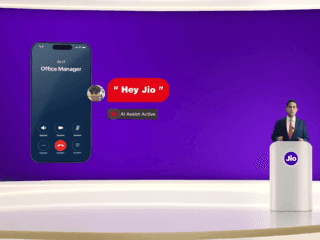
As India searches for a homegrown contender in the global artificial intelligence race, billionaire Mukesh Ambani is positioning Reliance Industries as a national champion, rolling out AI services for phone calls, mobile apps, and connected homes. At itsannual shareholder meetingon Friday, the Mumbai-based conglomerate announced Jio Call Agent, an AI assistant that can join phone calls to transcribe conversations, generate summaries, and perform tasks such as booking cabs, ordering food, and making reservations. The service, which can be activated by saying “Hey Jio,” is expected to launch later this year for Jio’s more than 500 million users. By embedding the service directly into its telecom network rather than offering it as a stand-alone app, Jio is betting AI assistance can become a native feature of phone calls. The approach could reduce consumers’ reliance on third-party call-assistant apps and give Reliance a powerful distribution advantage in an increasingly crowded AI market. Reliance also unveiled an AI-powered version of its MyJio app that can perform tasks on behalf of users, from activating eSIMs to selecting roaming plans, through natural-language requests. The company further introduced TeleFrame, a home display that uses AI agents to proactively surface information and recommendations, such as weather alerts, schedules, and household reminders. The product appears to echo a broader industry push toward ambient AI assistants for the home, an area being explored by companies such asAmazonandGoogle. The announcements mark the next phase of Reliance’s AI ambitions as India seeks to build domestic capabilities in a field largely dominated by U.S. and Chinese technology companies. The push follows thelaunch of Reliance Intelligencelast year, through which the conglomerate aims to develop AI infrastructure and services for consumers, businesses, and governments, including applications that support 22 Indian languages. “India should not be a mere consumer of AI created elsewhere. It must become a creator, adopter, and a global leader in AI,” Ambani, age 69, said. Reliance has been ramping up its AI ambitions through partnerships withGoogle,Meta, andNvidia. Earlier this year, the company announced plans toinvest $110 billion in AI infrastructureas it seeks to establish itself as a major player in India’s emerging AI ecosystem. At the shareholder meeting, Reliance also unveiled a suite of AI services for healthcare, education, agriculture, and small businesses. The products, branded JioHealthIQ, JioLearnIQ, JioKrishiIQ, and AI Vyapar, are designed to operate across multiple Indian languages and cater to local needs, the company said. The shareholder meeting also brought a major development for investorsawaiting Jio’s stock market debut. Ambani said Jio Platforms’ board had approved a draft prospectus for an initial public offering that would include a fresh issue of up to 270 million shares, according to a stock exchange filing. The announcements also raise questions about how Reliance will handle user data as it expands AI services across phone calls, mobile apps, and connected homes. While the company said the services would operate with user consent, it did not answer questions about whether data generated through the products could be used to train AI models or shared with technology partners. Reliance’s AI ambitions come as Indian companies remain heavily reliant on foreign AI models and cloud providers.Recent restrictions on accessto some of Anthropic’s latest models have underscored that dependency, showing how decisions made overseas can affectstartups and businessesbuilding AI products in India — the kind of supply-chain risk that’s pushing Indian conglomerates toward building their own stack rather than renting someone else’s. Last week, Reliance announced acollaboration with Meta to establish an AI data centerin the western state of Gujarat, building on Meta’s earlier investment in Jio Platforms and a joint venture launched last year to develop AI solutions for enterprise customers in India and overseas markets. Reliance is not alone in pursuing AI opportunities.Tata Consultancy Services,Infosys, and rivalAdani Grouphave also expanded their AI initiatives and partnerships with global players, including Anthropic, Google, and OpenAI, as India’s largest corporations race to secure a leading role in the country’s AI future. Nonetheless, for Reliance, the stakes are particularly high; it’s preparing Jio for a long-awaited stock market debut and needs new growth drivers, with the conglomerate’s shares down about 17% this year.

7 hours ago

View

The US banned Anthropic’s Fable 5 release, but the numbers don’t seem to care

The US banned Anthropic’s Fable 5 release, but the numbers don’t seem to care

Just as last week was ending, the US governmentforced Anthropic to pull its two newest models, Fable 5 and Mythos 5, citing national security concerns after Amazon researchers allegedly found a way to bypass Fable 5’s guardrails. Cybersecurity researchers havesince signed an open lettercalling the move dangerous, and Anthropic itself noted the same jailbreaks exist in other models. So is this a genuine security concern, or just the latest chapter in a messy relationship between Anthropic and the Trump administration? On this episode of TechCrunch’sEquitypodcast, hosts Anthony Ha, Sean O’Kane, and Rebecca Bellan unpack what the ban means for developers building on Anthropic’s platform and for anyone watching the IPO, why itmight accidentally be good for the company, and more of the week’s headlines. Listen to the full episode to hear more about: Subscribe to Equity onYouTube,Apple Podcasts,Overcast,Spotifyand all the casts. You also can follow Equity onXandThreads, at @EquityPod.

7 hours ago

View

Is the US government’s Anthropic ban accidentally helping the brand?

Is the US government’s Anthropic ban accidentally helping the brand?

Loading the player… Just as last week was ending, the US governmentforced Anthropic to pull its two newest models, Fable 5 and Mythos 5, citing national security concerns after Amazon researchers allegedly found a way to bypass Fable 5’s guardrails. Cybersecurity researchers havesince signed an open lettercalling the move dangerous, and Anthropic itself noted the same jailbreaks exist in other models. So is this a genuine security concern, or just the latest chapter in a messy relationship between Anthropic and the Trump administration? On this episode of TechCrunch’sEquitypodcast, hosts Anthony Ha, Sean O’Kane, and Rebecca Bellan unpack what the ban means for developers building on Anthropic’s platform and for anyone watching the IPO, why itmight accidentally be good for the company, and more of the week’s headlines. Subscribe to Equity onYouTube,Apple Podcasts,Overcast,Spotifyand all the casts. You also can follow Equity onXandThreads, at @EquityPod.

7 hours ago

View

Jio AI Call Agent Explained: What It Is, How It Works, Features and More

Jio AI Call Agent Explained: What It Is, How It Works, Features and More

Reliance held the 49th edition of its annual general meeting (AGM) with shareholders on Friday. The Indian conglomerate unveiled various new artificial intelligence (AI) innovations that its telecom service provider (TSP) arm, Reliance Jio, plans to join in the coming months in the country. Among the many announcements, the company revealed its plan to integrate AI directly into its network. The company claims that this will allow the TSP to introduce a voice-based AI call agent for its subscribers. During the presentation, the company demonstrated the AI agent's capabilities, showing that it will be able to transcribe calls and generate call summaries without asking users to download a standalone app.

11 hours ago

View