Want to get featured here? Explore premium visibility opportunities.

Contact us

AI NewsApple plays catch-up at WWDC

Apple plays catch-up at WWDC

3:29 AM IST · June 9, 2026
Apple plays catch-up at WWDC

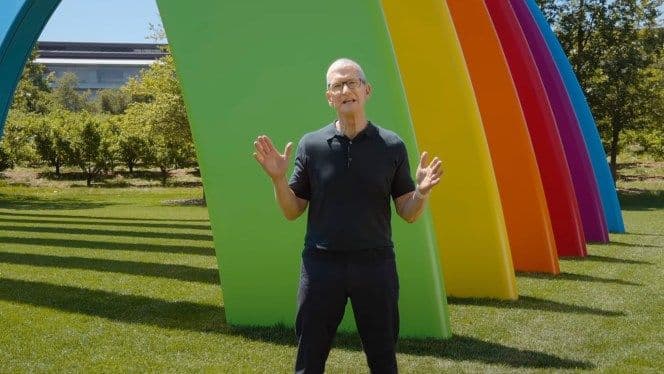
Apple’s Worldwide Developer Conference on Monday started off with an apology of sorts. Instead of jumping right into the headline news about arevamped AI-powered Siri, Apple’s senior vice president of Software Engineering, Craig Federighi spent the first stretch of the keynote on a list of repairs. For the past two years, Apple has been racing to catch up in AI while frustrations with its core software quietly added up: a design overhaul users hated, a search function that barely worked, a file-sharing feature that routinely failed, and a Health app that ignored half its user base. Apple didn’t say any of that on Monday. But the structure of its WWDC keynote said it for them, leading with fixes before features, and framing a better Siri as one item on a long list of improvements rather than the main event. At minimum, the sequencing suggests Apple believes the foundation needs shoring up before it can credibly ask users to trust it with something as consequential as AI. “Instead of just introducing a host of new features, we’re also taking the features you already rely on and making them even better, because we believe the best operating systems aren’t just built on big breakthroughs, they’re built on sweating the details,” Federighi said. It’s the kind of statement that would be unremarkable from most companies, but from Apple, it was as close to an admission of fault as you’ll get. (Sweating the details is exactly what critics said the company had stopped doing.) Federighi didn’t have to wait long to prove the point. The first item on the list was the company’scontroversial Liquid Glass designlanguage that first arrived in iOS 26 and promptly triggered consumer backlash over readability and usability concerns. While visually impressive, Liquid Glass’s glass-like aesthetic made certain on-screen elements harder to see. Users pointed out numerous ways the update was undercooked, particularly on the Mac, and begged Apple for tools to restore the more frosted look. The company approached the moment carefully, saying “really appreciates” the user feedback it received over Liquid Glass over the past year. “While we think this is a great new default look, we also know that some users would like Liquid Glass to be even more clear, and others prefer a more tinted appearance,” said Apple’s director of human interface design, Shubham Kedia, during the keynote address. (Nobody, for the record, is asking for it to be even clearer.) Apple, which had alreadytweakedthe design before today, is now allowing users to dial it back entirely with a new slider that goes all the way to “fully tinted.” A few other small but telling updates followed. Apple showed a “more uniform” toolbar in macOS designed to better distinguish controls and text from the content beneath them, in another usability improvement. App icons received additional Liquid Glass refinements to make them “sharper and more defined,” even when set to clear mode. Then came performance improvements. iPhone and iPad apps now launch 30% faster, new photos appear up to 70% faster in your library, and files are transferred up to 80% faster when using AirDrop, a notoriously flaky file-sharing system. In a subtle acknowledgment that people are holding onto their phones longer these days, Apple said it extended performance improvements to all models back to iPhone 11, a phone released in 2019. Apple also addressed several long-standing friction points: smoother transitions between Wi-Fi and cellular, a new indicator that lets you know when your messages are taking longer to go through (useful when you’re on low bandwidth or sending a large file), and a rebuilt search experience that the company describes as “more stable, more efficient, and more comprehensive of content.” New content will be indexed almost immediately, and a new ranking system in Mail will surface the most relevant results appear first. (The fact that this needed fixing at all says something about how far Apple’s search had fallen behind.) Apple’s Health app — which had gone years without meaningfully supporting half its user base — addedsupport for perimenopauseand menopause tracking. It’s a long-overdue move that arrives as the menopause care market hits its stride: earlier this year, menopause telehealth startup Midi Health crossed a $1 billion valuation, and dedicated investment in the category topped $294 million between 2022 and last year. iCloud shared photo albums can now accept contributions from Android and Windows users, making the feature far more useful for shared trips and group events. Apple also rolled out improvedscreen time controls for parentsbefore turning to the main event: theannouncement of the AI-enhanced Siri. The sequencing was intentional. By stacking a long list of smaller improvements up front, Apple reframed itsSiri updateas one piece of a broader effort, rather than the make-or-break AI moment the industry has been watching for. That framing is probably smart. Siri is launching into “beta” for consumers later this year, but not in the EU or China, where Apple still has regulatory hurdles to clear. For a feature that was supposed to define Apple’s AI strategy, “beta, coming later, not everywhere” is a pretty noteworthy hedge. Apple outlined other smaller AI advances, like how Apple Intelligence will be able to organize your webpages’ tabs, analyze webpages for information, check pages for updates, and more. You can even generate a custom Safari extension on the fly using AI, which sounds interesting. Passwords and Safari can now work together to suggest and apply stronger passwords automatically. Apple Intelligence is also adding helpful reply suggestions in Messages based on conversation context. For instance, if someone asks you for photos, Apple’s AI can point you to the right ones. Calendar can now create events from natural language commands — something third-party apps like Fantastical have offered for years, which makes this a catch-up feature. And AI will be able to surface key information when you make a phone call, like a confirmation code when calling an airline. Meanwhile, the Home app will use AI to summarize events, catching up with companies like Amazon and Google, which have moved on to more advanced territory, things likefire detectionandfacial recognition. (We’d like to thank Apple for staying away from the latter, however.) Image Playground — Apple’sAI image generation app— appears to have finally crossed the threshold from novelty to useful. Earlier versions produced images that were kitschy and difficult to apply practically; the updated model can generate something as functional as a business flyer or a cleanly edited photo. Apple also announced it will open image generation to developers via an API, a move that turns a consumer feature into a potential platform. AI can also nowedit photosmore substantively — removing distracting items from a scene or expanding its edges using generative models, similar to what Google Photos offers. The standout is Spatial Reframing, which lets you adjust a photo’s composition after the fact using Apple’s on-device spatial models. It even works retroactively on photos already in your library, meaning years of existing images are now fair game.

read more


Source: Elastic agrees to buy CRV-backed DeductiveAI for up to $85M

Source: Elastic agrees to buy CRV-backed DeductiveAI for up to $85M

DeductiveAI, a startup that uses AI to catch and resolve bugs in software, has agreed to be sold to enterprise software company Elastic for up to $85 million, according to a person with knowledge of the deal. Deductive, which was founded in 2023, came out stealth last November when it announced a$7.5 million seedround led by CRV with participation from Databricks Ventures, Thomvest Ventures, and PrimeSet.  The investment valued the startup at $33 million, according to PitchBook. Elastic and Deductive did not respond to multiple requests for comment. TechCrunch will update this article if either company responds. The sale marks a speedy exit for Deductive, which is operating in a fast-growing sector known as AI site reliability engineering (AI SRE). Building AI-powered SRE tools has become an important area, driven by the massive influx of AI-written code. Replacing manual debugging with AI enables human SREs to shift focus from constantly fixing outages and other problems, to spending more time on helping with product development. The acquisition reflects a broader trend in which established tech incumbents are looking to buy AI-native startups to integrate agentic technologies into their existing product suites, the source told TechCrunch. Elastic, which went public in 2018, is best known for Elasticsearch, the search and analytics engine that helps organizations store, search, analyze, and monitor large amounts of data in near real time. The company’s observability software — essentially tools that let engineers monitor software systems and detect security threats — could benefit from Deductive’s tech. According to the source, integrating Deductive’s AI technology into Elastic will enhance its observability platform by giving customers tools to automatically monitor performance and resolve system failures in real-time. Deductive was co-founded by Rakesh Kothari, who was previously VP of engineering at Lightspeed-backed business analytics startup ThoughtSpot, and Sameer Agarwal, who formerly worked at Apache Software Foundation and Meta. Agrawal was one of the founding engineers at Databricks. While Deductive reached roughly $1 million in annual recurring revenue (ARR,) according to the source, the startup’s growth lagged behind Resolve AI, one of the sectors’ perceived early winners. The two-year-old Resolve was co-founded by former Splunk executive Spiros Xanthos and Mayank Agarwal. Greylock and Lightspeed-backed startup was last valued at$1.5 billionwhen it raised a $40 million Series A extension in April.

3 hours ago

View

Almost half of U.S. singles feel negatively about AI in dating, Match says

Almost half of U.S. singles feel negatively about AI in dating, Match says

Dating app giant Match Group — which owns apps like Tinder, Hinge, and OkCupid — conducted astudyto determine how U.S. singles really feel about the relationship between AI and dating. Turns out, people don’t want AI messing with every aspect of human life. Across the industry, dating apps are experimenting with AI. Bumble introduced adating assistant named Bee, and Tinder isspendingso much on AI tools that it’s slowed its hiring process. Meanwhile, Hinge’s CEOstepped downlast year to launch a more AI-focused dating app altogether. But according to Match’s survey of 1,000 people aged 18 to 39, 47% of singles have a negative view of AI’s use in romantic contexts. This perspective varies depending on what the AI is being used for. About 40% of singles say they would refuse to date someone who uses an AI companion app, and that figure rises to 51% among women ages 18 to 24. However, only 12% of 18- to 24-year-olds said that they had used a companion app over the last three months, and only about a third of those users said they were seeking genuine connections with those chatbots. While Match says that people harbor a “near-universal” disapproval of actually dating an AI, like in the movie “Her,” that doesn’t mean that respondents are wholly opposed to AI features within apps. Some 64% of respondents said they could see how AI might help them in their dating journey. If we’re being pedantic,technically, every major dating app has already used some form of matching algorithm since before we knew what a GPT was. This survey refers to the new crop of AI features that basically every app is introducing, which help users punch up their profiles, choose photos, and keep conversations flowing. What dating app developers should take away from this survey is that people are not entirely closed off to AI; they just don’t want to be in a relationship with a robot, nor do they want to feel as though their dating experiences are overly inundated with technology that feels inauthentic. “Ask singles what they want from AI in dating, and the answer is pretty consistent: help with the hard parts, but hands off for the human parts,” Match wrote in a blog post. “Yes, they’ll use it to help them punch up a profile or for help figuring out what to say when a conversation goes quiet, but the actual connection is still theirs to create.” Hopefully, this message reaches dating entrepreneurs like Bumble founder Whitney Wolfe Herd, who suggested that dating app users could havepersonal bots that date other users’ bots. It’s pretty normal nowadays to say you met your partner online, but “his bot asked my bot out, and our bots hit it off” will never be a socially acceptable meet-cute.

7 hours ago

View

OpenAI is bringing on some big guns in the lead-up to its IPO

OpenAI is bringing on some big guns in the lead-up to its IPO

OpenAI is bringing on some big names to the team in the lead-up to its public debut: Google DeepMind AI legend Noam Shazeer and former Trump White House AI policy official Dean Ball. Shazeer, a co-lead at Gemini and the founder of AI role-playing startup Character AI,announced his departure on Wednesday. He had been at Google since 2000, leaving only for a three-year period when he left to co-found Character AI. Two years ago,Google re-hired Shazeerin a $2.7 billion deal that gave the tech giant access to the startup’s technology. The move is the latest in a series of shufflings between the top AI labs, including Google, OpenAI, Anthropic, and Meta. Shazeer is credited for being one of the foundational minds behind modern generative AI. He co-authored the seminal 2017 paper “Attention Is All You Need,” which introduced the Transformer architecture. Before leaving Google, Shazeer had also reportedly been stirring the pot when it came to political issues. According toThe Information,Shazeer voiced opinions on internal messaging boards on transgender identity and Israel’s war in Gaza that resulted in management deleting his posts. Whether those controversies will follow him to his new employer remains to be seen. In the meantime, OpenAI is also shoring up its policy credentials by bringing Ball to the team. Ball had a brief stint last year in the White House, where he helped publish America’s AI Action Plan before stepping down to rejoin the techno-libertarian think tank the Foundation for American Innovation as a senior fellow. “I am pleased and honored to announce that, on July 6, I’ll be joining OpenAI as leader of a new team called Strategic Futures,”Ball wrote on X on Thursday. “Our mandate will be to help the company’s leadership shape frontier AI policy.” Ball will report directly to Chief Strategy Officer Jason Kwon. The “small, high-agency team” will focus on “matters pertaining to: catastrophic risk, recursive self-improvement, labor market impact, and the relationship between the frontier labs, governments (particularly the U.S. Federal Government), and society,” Ball wrote in ablog post. The Strategic Futures team will cover both public-facing policy and internal governance, he added. That last is important — Ball noted that “almost by necessity,” AI labs will have to lead on AI governance decisions. “In other words,internal governancewill be more central to the future of AI than most people realize,” Ball wrote. Ball’s decision to join OpenAI — arguably an AI favorite in the administration — comes as Anthropic battles once again with the U.S. government. Late last week, President Donald Trump ordered anexport control ban on Anthropic’s latest models,Fable 5 and Mythos 5, leading to the AI firm being forced to take the models down entirely to avoid noncompliance. For anyone who had “government interference” on their S-1 risk factor bingo card, Ball is what it looks like when a company locks in its insider status while a rival is squeezed. TechCrunch has reached out to OpenAI for more information.

7 hours ago

View

Snap spins off AI video team into new company, Dotmo, due to costs

Snap spins off AI video team into new company, Dotmo, due to costs

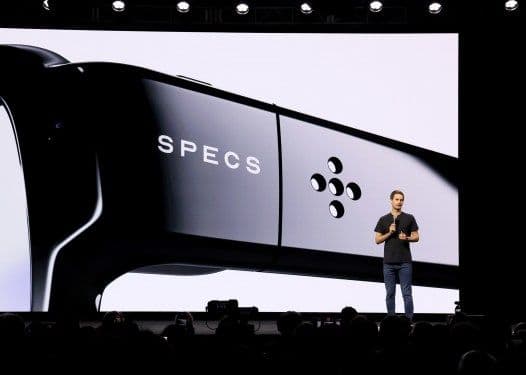
Snap will be spinning off an internal generative AI video team into a separate company. The new company — dubbed Dotmo — will focus on developing AI models that can create interactive gaming experiences, Snap told TechCrunch. Snap cited the high costs of conducting such work internally as one of the reasons for the spinoff. While technically a separate company, Dotmo will retain its close ties to the Snapchat creator. For one thing, Snap will provide Dotmo with a license to adapt its technology for gaming and interactive entertainment platforms. At the same time, the initial Dotmo team will consist of a group of current Snap staff who are leaving Snap to launch the new venture. Additionally, while Dotmo won’t be funded by Snap directly, the company says that Bobby Murphy, its chief technology officer, will act as lead investor and will have a significant personal stake in the new firm. Though a financial backer, Murphy will continue to work for Snap full-time as its CTO and continue to lead its GenAI research and development initiatives. In exchange for the talent and the technology license, Snap will get a large equity stake in Dotmo, the company said — a position that could prove rewarding if the company prospers in the future. Dotmo may also eventually seek outside funding, Snap said. The move marks Snap’s second major spinoff effort this year. Earlier in 2026, Snapspun off Specs into a new companyto focus exclusively on the development of its smart glasses line. (Snap’s recent unveiling of Specswasn’t exactly a home runfor the company. Snap’s stock tanked afterconcerns were raisedabout the hefty price tag attached to the new smart glasses, which is around $2,200.) Snap also underwent a round of layoffs earlier this year, during whichsome 1,000 jobs were cut. Dotmo represents a different kind of spinoff than the Specs operation, in that its team will be focused on developing digital experiences that aren’t currently a part of Snap’s core business priorities, a Snap representative said. However, it could still be considered a partner in the future if the fit seems right, they added. Spin-offs can be a cost savings strategy for companies, although they can serve a variety of other purposes — like showing off a particular asset, generating investor attention, or providing operational flexibility to the team involved. In spinning out Dotmo, Snap may be reducing the financial burden associated with its AI efforts, while still maintaining exposure to any potential upside through its equity stake.

7 hours ago

View

Apple plays catch-up at WWDC