Want to get featured here? Explore premium visibility opportunities.

Contact us

AI NewsAnthropic’s safety warnings may have just backfired — the government has pulled the plug on its most powerful AI

Anthropic’s safety warnings may have just backfired — the government has pulled the plug on its most powerful AI

11:44 AM IST · June 13, 2026

Anthropic’s safety warnings may have just backfired — the government has pulled the plug on its most powerful AI

The U.S. government on Friday ordered Anthropic to immediately shut off access to two of its most powerful AI models — Claude Fable 5 and Claude Mythos 5 — citing national security concerns. Anthropicannounced on Xthat it has complied, but it made clear it thinks the governmentgot this one wrong. The directive, which Anthropic said it received on Friday at 5:21 pm ET, forces the company to disable both models for all users worldwide — not just the foreign nationals the government’s export control order was nominally aimed at. Access to Anthropic’s other models isn’t affected. Why does any of this matter? Mythos is Anthropic’s most capable AI model, one the companypreviewed in early Apriland has kepttightly restrictedever since because of what Anthropic described as its exceptional ability to find security vulnerabilities in software. According to Anthropic, Mythos identified flaws in every major operating system and web browser it tested, so rather than release it broadly, the company launched a controlled program called Project Glasswing, sharing it with roughly 50 vetted organizations, including Amazon, Apple, Google, Microsoft, and CrowdStrike, to use for defensive cybersecurity work. Fable 5, released just three days ago, was Anthropic’s answer to the obvious commercial pressure: a version of Mythos fitted with guardrails that block responses in high-risk areas like cybersecurity and biology, making it safe enough for general release, the company argued. It was immediately the most capable AI model available to the public, according to benchmark tests from Vals AI, a company that tracks AI tech performance. The government’s directive is framed as an export control action, restricting foreign national access to the models. But in alengthy blog post, Anthropic says its understanding is that the underlying concern is a claimed jailbreak of Fable 5. So far, the company says, the government has provided only verbal evidence of a “potential narrow, non-universal jailbreak” — one that, as Anthropic describes it, amounts to prompting the model to read a specific codebase and identify software flaws. And by the way, adds the company, it’s a “level of capability” that’s already widely available in other publicly accessible models, including OpenAI’s GPT-5.5. It’s also used routinely by cybersecurity professionals for defensive purposes, says Anthropic. Anthropic’s broader argument is that its strongest safeguards operate through independent classifier systems that function separately from the model itself, meaning that even if someone convinces Fable to keep talking past a refusal, the underlying protections against the most dangerous outputs remain in place. Clearly, none of that was enough to stop the government from acting, and Anthropic isn’t hiding its frustration. “We disagree that the finding of a narrow potential jailbreak should be cause for recalling a commercial model deployed to hundreds of millions of people,” the company wrote. “If this standard was applied across the industry, we believe it would essentially halt all new model deployments for all frontier model providers.” Anthropic is widely expected to pursue an IPO this year and has staked much of its public identity on being the safety-conscious alternative to its rivals. The irony isn’t lost on observers that the very caution Anthropic displayed in restricting Mythos — which it promoted as a model so dangerous it couldn’t be released publicly — has now apparently attracted exactly the kind of government scrutiny that could disrupt its business most. OpenAI’s Sam Altman must be enjoying this, at least. In April, he told podcaster Ashlee Vance that Anthropic’s handling of Mythos amounted to “fear-based marketing.” “It is clearly incredible marketing to say, ‘We have built a bomb. We were about to drop it on your head. We will sell you a bomb shelter for $100 million,’” Altman said. Altman, whose company is also widely expected to pursue an IPO as soon as possible, didn’t predict a government shutdown, but he identified something that has come back to bite Anthropic for now, which is that when you spend months telling the world your AI is uniquely dangerous, the world — the U.S. government included — tends to listen.

read more
Latest AI News

View All News →
Pixi’s new iOS app turns text messages into interactive AR experiences

Pixi’s new iOS app turns text messages into interactive AR experiences

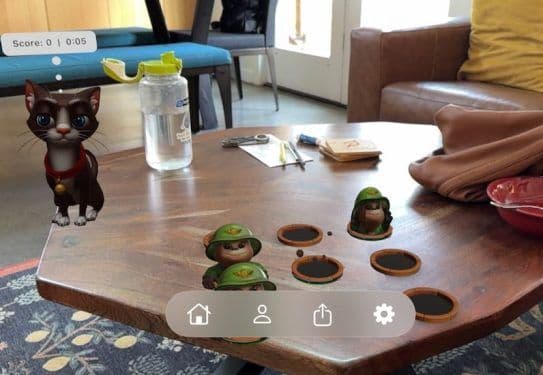
Forget stickers, GIFs, and emoji reactions.Pixiis betting that the next evolution of messaging is interactive augmented reality (AR). The startup launched its messaging-native app on theApp Storeon Wednesday, allowing users to send AI-powered AR characters through iMessage. Instead of appearing as static media, the characters come to life through the recipient’s iPhone camera, where they can react to their surroundings, interact with people, and respond in real time. While AR isn’t new and shiny anymore—companies likeSnaphave created AR filters and lenses for years—Pixi believes its approach is different. By combining AR with on-device AI, its characters can understand what’s happening around them and behave accordingly. A virtual cat, for example, reacts when a real dog walks past. (According to the company, all visual and audio processing remains on the device to preserve user privacy.) Pixi founder Mark Drummond (ex-DreamWorks Animation and ex-Apple) says the app is designed to bring a greater sense of presence and spontaneity to digital conversations. Rather than sending a text to wish someone a Happy Birthday, users can send characters that create a shared experience, turning a simple message into something closer to a digital gift or playful interaction. “The consumer problem we’re solving is thinking of a friend when they’re not present,” he told TechCrunch. “Sometimes the psychology is called pebbling or creative gifting. You’re sharing tokens of affection, basically cards, e-cards, and gifts. That’s your dad, or, in some cases, your granddad’s media. We can do better. We can do something that’s digitally native, and that uses everything we learned about AR on the iPhone.” Earlier this week, Drummond demonstrated the app for us, selecting the cat character, which performed a series of stand-up jokes on his desk. Notably, the cat appeared to respond to Drummond’s facial expressions. For instance, the experience concluded when he smiled, showcasing the character’s ability to perceive emotional cues. At launch, users will have access to a robot, a cat, and an animated envelope character that can react to their voice and “attack” their friends in a playful way. If they move, the envelope will chase them. There are also games like tic-tac-toe and whack-a-mole. Pixi plans to expand beyond just a few characters. The goal is to create a marketplace where studios, brands, and independent creators can share their unique characters for users to choose from. The company envisions this being used for events like movie premieres or product launches, allowing characters to generate excitement, such as when M&Ms release a new flavor. Drummond also mentioned introducing Alice in Wonderland as a character option, as she is an open intellectual property. He pointed out that “our Alice character needs to react to objects that she sees on your desktop in an ‘Alice-consistent’ way,” to demonstrate to partners how their creations will interact with the technology. In the future, Pixi hopes to allow users to create their own characters and personalities. “Part of our plan is to open up those generative AI capabilities to our [users], so they can prompt their way to say something, like, ‘I want a blue blob that threatens my friend and growls at them and keeps chasing them on the phone,’” Drummond explained. To send a character to your friend, download the app on iOS and use iMessage by tapping the plus sign button in the lower left corner. No installation is required to receive a Pixi message. Initially, the app will be available only for iPhone models 11 and newer, but there are plans to expand to Android devices and messaging platforms like WhatsApp and Instagram in the future. Also, while the app is free for users, brands will have the option to charge for their characters if they choose. “We’re going to encourage people to do it for free, because then people become your own brand ambassadors. You’re putting them in charge of using your characters to tell their own stories,” Drummond said.

36 minutes ago

View

Inside Indian Hospitals' Multi-Billion Dollar AI Pivot

Inside Indian Hospitals' Multi-Billion Dollar AI Pivot

Hospitals across India are integrating AI into clinical and administrative workflows, but adoption remains uneven.

36 minutes ago

View

Pramaana Labs Raises $27 Million in Seed Round Led by Khosla Ventures

Pramaana Labs Raises $27 Million in Seed Round Led by Khosla Ventures

Pramaana Labs has raised $27 million in a seed round led by Khosla Ventures to build AI verification systems for regulated industries.

36 minutes ago

View

Niqo Robotics To Represent India at Bharat Innovates 2026 in France

Niqo Robotics To Represent India at Bharat Innovates 2026 in France

Indian agricultural robotics firm Niqo Robotics has been selected to represent India at the government’s flagship deep-tech conclave in France.

36 minutes ago

View