Want to get featured here? Explore premium visibility opportunities.

Contact us

AI NewsAndrew Yang thinks the next big startup opportunity is lowering the cost of living

Andrew Yang thinks the next big startup opportunity is lowering the cost of living

11:44 AM IST · June 13, 2026
Andrew Yang thinks the next big startup opportunity is lowering the cost of living

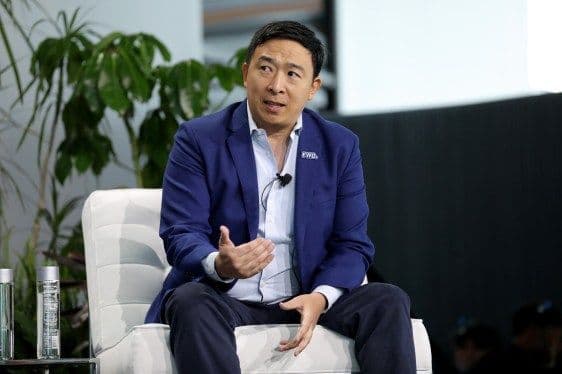
Loading the player… Entrepreneur and former presidential candidate Andrew Yang has a theory about where the next wave of startup opportunity lies, and it starts with a question most founders aren’t asking: what if the business model was giving money back instead of extracting it? Yang was inspired by Mark Cuban. Not by his wealth, or his celebrity, but by Cost Plus Drugs — Cuban’s startup that sells pharmaceuticals at cost. Yang made a list. “Housing, education, food, fuel, transportation, media, and wireless,” Yang told TechCrunch on a recent episode ofEquity. “The things we all spend money on.” He picked wireless and last Septemberlaunched Nobile Mobile, a new mobile virtual network operator that provides cell service for a fraction of what traditional carriers charge and gives customers money back if they use less data. As AI threatens to compress wages and displace workers, Yang sees a business opportunity in bringing down the cost of living. Cost Plus Drugs, Noble Mobile, dumb phone makers likeLight Phone, and even online grocery store Misfits Markets are early examples of an emerging business category where the startup’s value proposition is the margin it gives back to the customer. “AI is going to suck up a lot of the value and the jobs, and then Americans are going to look up and say, ‘How do I meet basic needs?’” Yang said. He believes meeting people’s needs “less expensively” is “a very rich vein of opportunity.” That instinct didn’t emerge from nowhere. Yang first launched himself into the public eye during his 2020 presidential campaign, during which he advocated for Universal Basic Income as a means of combating AI-related workforce displacement and wealth concentration. The campaign didn’t succeed but the thesis has only grown more relevant. Yang is still an advocate for UBI, arguing that the value generated by AI companies needs to be redistributed into the hands of the average American. But whether the government will be the vehicle for that redistribution, or whether it will just use any collected wealth to “plug a hole and do something not terribly productive,” Yang is less certain. “There is room for a direct connection between the money and the people,” he said. That’s where the market comes in. Where policy fails, Yang argues, market incentives can step in. Noble Mobile is his attempt to prove the point. Since its launch last September, the company has grown to “thousands and thousands” of customers and is bringing in “millions in revenue.” “We’re unit profitable per customer, but we just share the profits with our subscribers with the idea that it’ll make you happy, you’ll stay around, and maybe you’ll tell your friends and family,” Yang said. The pitch is simple. Yang noted that the average monthly savings of $50, invested and compounded over 40 years, could amount to $24,000 — enough for a retirement down payment. And in thiseconomy, who isn’t thinking about little ways they can upgrade their personal finance? Whether investors will share that enthusiasm is another question entirely. Even if the opportunity is real, capital is concentrated heavily in AI right now, while consumer-facing businesses with thin margins and a social mission are a hard sell. “I had at least one investor say to me around Noble Mobile, ‘Love you, Andrew, want to work with you — if you could just make this an AI company, we’ll invest,’” Yang said. The tide might be changing, though, simply because even the most wealthy, extractive companies need an economy in which consumers have enough buying power to purchase their products. “The value being concentrated in the hands of a handful of folks and firms is just bad for everybody,” he said. “There are some folks I know in Silicon Valley who are open to that for a variety of reasons…[like] they just don’t want to have to hire private security.” Yang encouraged founders and investors to take on problems they’re passionate about and find a way to build a valuable enterprise on top of it. “Think bigger and more broadly about trying to tackle problems and don’t subscribe so much to groupthink, because there are some valuable opportunities out there,” he said.

read more
Latest AI News

View All News →
Pixi’s new iOS app turns text messages into interactive AR experiences

Pixi’s new iOS app turns text messages into interactive AR experiences

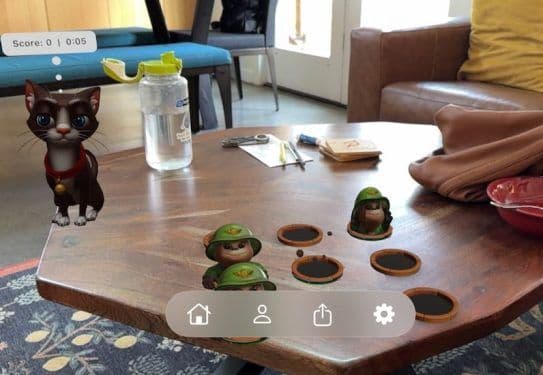
Forget stickers, GIFs, and emoji reactions.Pixiis betting that the next evolution of messaging is interactive augmented reality (AR). The startup launched its messaging-native app on theApp Storeon Wednesday, allowing users to send AI-powered AR characters through iMessage. Instead of appearing as static media, the characters come to life through the recipient’s iPhone camera, where they can react to their surroundings, interact with people, and respond in real time. While AR isn’t new and shiny anymore—companies likeSnaphave created AR filters and lenses for years—Pixi believes its approach is different. By combining AR with on-device AI, its characters can understand what’s happening around them and behave accordingly. A virtual cat, for example, reacts when a real dog walks past. (According to the company, all visual and audio processing remains on the device to preserve user privacy.) Pixi founder Mark Drummond (ex-DreamWorks Animation and ex-Apple) says the app is designed to bring a greater sense of presence and spontaneity to digital conversations. Rather than sending a text to wish someone a Happy Birthday, users can send characters that create a shared experience, turning a simple message into something closer to a digital gift or playful interaction. “The consumer problem we’re solving is thinking of a friend when they’re not present,” he told TechCrunch. “Sometimes the psychology is called pebbling or creative gifting. You’re sharing tokens of affection, basically cards, e-cards, and gifts. That’s your dad, or, in some cases, your granddad’s media. We can do better. We can do something that’s digitally native, and that uses everything we learned about AR on the iPhone.” Earlier this week, Drummond demonstrated the app for us, selecting the cat character, which performed a series of stand-up jokes on his desk. Notably, the cat appeared to respond to Drummond’s facial expressions. For instance, the experience concluded when he smiled, showcasing the character’s ability to perceive emotional cues. At launch, users will have access to a robot, a cat, and an animated envelope character that can react to their voice and “attack” their friends in a playful way. If they move, the envelope will chase them. There are also games like tic-tac-toe and whack-a-mole. Pixi plans to expand beyond just a few characters. The goal is to create a marketplace where studios, brands, and independent creators can share their unique characters for users to choose from. The company envisions this being used for events like movie premieres or product launches, allowing characters to generate excitement, such as when M&Ms release a new flavor. Drummond also mentioned introducing Alice in Wonderland as a character option, as she is an open intellectual property. He pointed out that “our Alice character needs to react to objects that she sees on your desktop in an ‘Alice-consistent’ way,” to demonstrate to partners how their creations will interact with the technology. In the future, Pixi hopes to allow users to create their own characters and personalities. “Part of our plan is to open up those generative AI capabilities to our [users], so they can prompt their way to say something, like, ‘I want a blue blob that threatens my friend and growls at them and keeps chasing them on the phone,’” Drummond explained. To send a character to your friend, download the app on iOS and use iMessage by tapping the plus sign button in the lower left corner. No installation is required to receive a Pixi message. Initially, the app will be available only for iPhone models 11 and newer, but there are plans to expand to Android devices and messaging platforms like WhatsApp and Instagram in the future. Also, while the app is free for users, brands will have the option to charge for their characters if they choose. “We’re going to encourage people to do it for free, because then people become your own brand ambassadors. You’re putting them in charge of using your characters to tell their own stories,” Drummond said.

36 minutes ago

View

Inside Indian Hospitals' Multi-Billion Dollar AI Pivot

Inside Indian Hospitals' Multi-Billion Dollar AI Pivot

Hospitals across India are integrating AI into clinical and administrative workflows, but adoption remains uneven.

36 minutes ago

View

Pramaana Labs Raises $27 Million in Seed Round Led by Khosla Ventures

Pramaana Labs Raises $27 Million in Seed Round Led by Khosla Ventures

Pramaana Labs has raised $27 million in a seed round led by Khosla Ventures to build AI verification systems for regulated industries.

36 minutes ago

View

Niqo Robotics To Represent India at Bharat Innovates 2026 in France

Niqo Robotics To Represent India at Bharat Innovates 2026 in France

Indian agricultural robotics firm Niqo Robotics has been selected to represent India at the government’s flagship deep-tech conclave in France.

36 minutes ago

View