Want to get featured here? Explore premium visibility opportunities.

Contact us

AI NewsAlmost half of U.S. singles feel negatively about AI in dating, Match says

Almost half of U.S. singles feel negatively about AI in dating, Match says

3:56 AM IST · June 19, 2026

Almost half of U.S. singles feel negatively about AI in dating, Match says

Dating app giant Match Group — which owns apps like Tinder, Hinge, and OkCupid — conducted astudyto determine how U.S. singles really feel about the relationship between AI and dating. Turns out, people don’t want AI messing with every aspect of human life. Across the industry, dating apps are experimenting with AI. Bumble introduced adating assistant named Bee, and Tinder isspendingso much on AI tools that it’s slowed its hiring process. Meanwhile, Hinge’s CEOstepped downlast year to launch a more AI-focused dating app altogether. But according to Match’s survey of 1,000 people aged 18 to 39, 47% of singles have a negative view of AI’s use in romantic contexts. This perspective varies depending on what the AI is being used for. About 40% of singles say they would refuse to date someone who uses an AI companion app, and that figure rises to 51% among women ages 18 to 24. However, only 12% of 18- to 24-year-olds said that they had used a companion app over the last three months, and only about a third of those users said they were seeking genuine connections with those chatbots. While Match says that people harbor a “near-universal” disapproval of actually dating an AI, like in the movie “Her,” that doesn’t mean that respondents are wholly opposed to AI features within apps. Some 64% of respondents said they could see how AI might help them in their dating journey. If we’re being pedantic,technically, every major dating app has already used some form of matching algorithm since before we knew what a GPT was. This survey refers to the new crop of AI features that basically every app is introducing, which help users punch up their profiles, choose photos, and keep conversations flowing. What dating app developers should take away from this survey is that people are not entirely closed off to AI; they just don’t want to be in a relationship with a robot, nor do they want to feel as though their dating experiences are overly inundated with technology that feels inauthentic. “Ask singles what they want from AI in dating, and the answer is pretty consistent: help with the hard parts, but hands off for the human parts,” Match wrote in a blog post. “Yes, they’ll use it to help them punch up a profile or for help figuring out what to say when a conversation goes quiet, but the actual connection is still theirs to create.” Hopefully, this message reaches dating entrepreneurs like Bumble founder Whitney Wolfe Herd, who suggested that dating app users could havepersonal bots that date other users’ bots. It’s pretty normal nowadays to say you met your partner online, but “his bot asked my bot out, and our bots hit it off” will never be a socially acceptable meet-cute.

read more

Almost half of U.S. singles feel negatively about AI in dating, Match says

Almost half of U.S. singles feel negatively about AI in dating, Match says

Dating app giant Match Group — which owns apps like Tinder, Hinge, and OkCupid — conducted astudyto determine how U.S. singles really feel about the relationship between AI and dating. Turns out, people don’t want AI messing with every aspect of human life. Across the industry, dating apps are experimenting with AI. Bumble introduced adating assistant named Bee, and Tinder isspendingso much on AI tools that it’s slowed its hiring process. Meanwhile, Hinge’s CEOstepped downlast year to launch a more AI-focused dating app altogether. But according to Match’s survey of 1,000 people aged 18 to 39, 47% of singles have a negative view of AI’s use in romantic contexts. This perspective varies depending on what the AI is being used for. About 40% of singles say they would refuse to date someone who uses an AI companion app, and that figure rises to 51% among women ages 18 to 24. However, only 12% of 18- to 24-year-olds said that they had used a companion app over the last three months, and only about a third of those users said they were seeking genuine connections with those chatbots. While Match says that people harbor a “near-universal” disapproval of actually dating an AI, like in the movie “Her,” that doesn’t mean that respondents are wholly opposed to AI features within apps. Some 64% of respondents said they could see how AI might help them in their dating journey. If we’re being pedantic,technically, every major dating app has already used some form of matching algorithm since before we knew what a GPT was. This survey refers to the new crop of AI features that basically every app is introducing, which help users punch up their profiles, choose photos, and keep conversations flowing. What dating app developers should take away from this survey is that people are not entirely closed off to AI; they just don’t want to be in a relationship with a robot, nor do they want to feel as though their dating experiences are overly inundated with technology that feels inauthentic. “Ask singles what they want from AI in dating, and the answer is pretty consistent: help with the hard parts, but hands off for the human parts,” Match wrote in a blog post. “Yes, they’ll use it to help them punch up a profile or for help figuring out what to say when a conversation goes quiet, but the actual connection is still theirs to create.” Hopefully, this message reaches dating entrepreneurs like Bumble founder Whitney Wolfe Herd, who suggested that dating app users could havepersonal bots that date other users’ bots. It’s pretty normal nowadays to say you met your partner online, but “his bot asked my bot out, and our bots hit it off” will never be a socially acceptable meet-cute.

1 hour ago

View

OpenAI is bringing on some big guns in the lead-up to its IPO

OpenAI is bringing on some big guns in the lead-up to its IPO

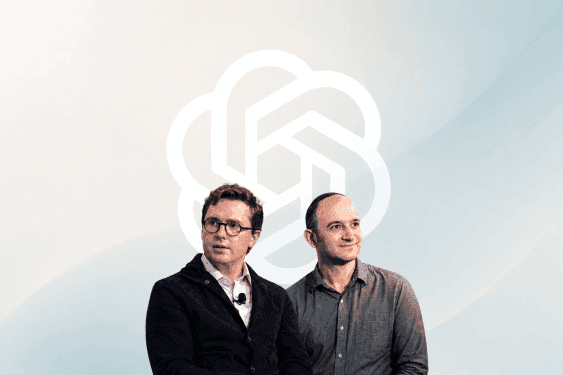
OpenAI is bringing on some big names to the team in the lead-up to its public debut: Google DeepMind AI legend Noam Shazeer and former Trump White House AI policy official Dean Ball. Shazeer, a co-lead at Gemini and the founder of AI role-playing startup Character AI,announced his departure on Wednesday. He had been at Google since 2000, leaving only for a three-year period when he left to co-found Character AI. Two years ago,Google re-hired Shazeerin a $2.7 billion deal that gave the tech giant access to the startup’s technology. The move is the latest in a series of shufflings between the top AI labs, including Google, OpenAI, Anthropic, and Meta. Shazeer is credited for being one of the foundational minds behind modern generative AI. He co-authored the seminal 2017 paper “Attention Is All You Need,” which introduced the Transformer architecture. Before leaving Google, Shazeer had also reportedly been stirring the pot when it came to political issues. According toThe Information,Shazeer voiced opinions on internal messaging boards on transgender identity and Israel’s war in Gaza that resulted in management deleting his posts. Whether those controversies will follow him to his new employer remains to be seen. In the meantime, OpenAI is also shoring up its policy credentials by bringing Ball to the team. Ball had a brief stint last year in the White House, where he helped publish America’s AI Action Plan before stepping down to rejoin the techno-libertarian think tank the Foundation for American Innovation as a senior fellow. “I am pleased and honored to announce that, on July 6, I’ll be joining OpenAI as leader of a new team called Strategic Futures,”Ball wrote on X on Thursday. “Our mandate will be to help the company’s leadership shape frontier AI policy.” Ball will report directly to Chief Strategy Officer Jason Kwon. The “small, high-agency team” will focus on “matters pertaining to: catastrophic risk, recursive self-improvement, labor market impact, and the relationship between the frontier labs, governments (particularly the U.S. Federal Government), and society,” Ball wrote in ablog post. The Strategic Futures team will cover both public-facing policy and internal governance, he added. That last is important — Ball noted that “almost by necessity,” AI labs will have to lead on AI governance decisions. “In other words,internal governancewill be more central to the future of AI than most people realize,” Ball wrote. Ball’s decision to join OpenAI — arguably an AI favorite in the administration — comes as Anthropic battles once again with the U.S. government. Late last week, President Donald Trump ordered anexport control ban on Anthropic’s latest models,Fable 5 and Mythos 5, leading to the AI firm being forced to take the models down entirely to avoid noncompliance. For anyone who had “government interference” on their S-1 risk factor bingo card, Ball is what it looks like when a company locks in its insider status while a rival is squeezed. TechCrunch has reached out to OpenAI for more information.

1 hour ago

View

Snap spins off AI video team into new company, Dotmo, due to costs

Snap spins off AI video team into new company, Dotmo, due to costs

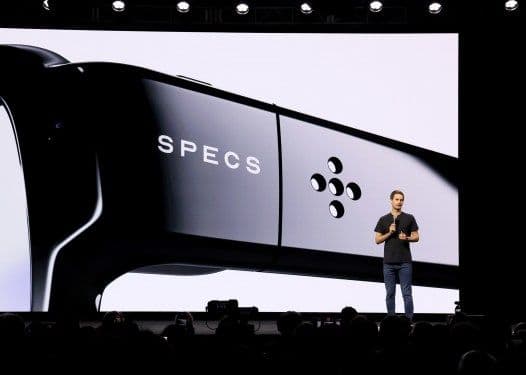
Snap will be spinning off an internal generative AI video team into a separate company. The new company — dubbed Dotmo — will focus on developing AI models that can create interactive gaming experiences, Snap told TechCrunch. Snap cited the high costs of conducting such work internally as one of the reasons for the spinoff. While technically a separate company, Dotmo will retain its close ties to the Snapchat creator. For one thing, Snap will provide Dotmo with a license to adapt its technology for gaming and interactive entertainment platforms. At the same time, the initial Dotmo team will consist of a group of current Snap staff who are leaving Snap to launch the new venture. Additionally, while Dotmo won’t be funded by Snap directly, the company says that Bobby Murphy, its chief technology officer, will act as lead investor and will have a significant personal stake in the new firm. Though a financial backer, Murphy will continue to work for Snap full-time as its CTO and continue to lead its GenAI research and development initiatives. In exchange for the talent and the technology license, Snap will get a large equity stake in Dotmo, the company said — a position that could prove rewarding if the company prospers in the future. Dotmo may also eventually seek outside funding, Snap said. The move marks Snap’s second major spinoff effort this year. Earlier in 2026, Snapspun off Specs into a new companyto focus exclusively on the development of its smart glasses line. (Snap’s recent unveiling of Specswasn’t exactly a home runfor the company. Snap’s stock tanked afterconcerns were raisedabout the hefty price tag attached to the new smart glasses, which is around $2,200.) Snap also underwent a round of layoffs earlier this year, during whichsome 1,000 jobs were cut. Dotmo represents a different kind of spinoff than the Specs operation, in that its team will be focused on developing digital experiences that aren’t currently a part of Snap’s core business priorities, a Snap representative said. However, it could still be considered a partner in the future if the fit seems right, they added. Spin-offs can be a cost savings strategy for companies, although they can serve a variety of other purposes — like showing off a particular asset, generating investor attention, or providing operational flexibility to the team involved. In spinning out Dotmo, Snap may be reducing the financial burden associated with its AI efforts, while still maintaining exposure to any potential upside through its equity stake.

1 hour ago

View

AI inference startup Baseten reportedly raising $1.5B months after its last mega-round

AI inference startup Baseten reportedly raising $1.5B months after its last mega-round

AI inference company Baseten is close to finalizing a stunning $1.5 billion funding round at a $13 billion valuation,the Wall Street Journal reports. Just five months ago, the startup announced that it had raised a$300 million Series Eat a $5 billion valuation. And that round was just nine months after raising a$150 million Series D. If finalized, this latest round would represent a 160% increase in valuation in less than half a year. However, the WSJ reports that this is asplit-priced round, a tactic startups are using to boost their headline valuation and make lead investors look good on paper. Some investors in this latest funding round are reportedly coming in at a $13 billion valuation, while others at $11 billion, sources told the Journal. This deal is said to be co-led by Spark Capital, Sands Capital, Altimeter Capital, and Wellington Management. Launched in 2019, Baseten is a startup benefiting from what The Next Wave hailed the “inference gold rush,” in which VCs are pouring enormous amounts of money into companies building the inference layer. Inference is what the model does after a user submits a prompt. Baseten promises to handle inference quickly while controlling costs by routing requests to the best-for-task model, especially to competent, less-expensive open source alternatives.

1 hour ago

View