AI NewsAI is spitting out more potential drugs than ever. This startup wants to figure out which ones matter.
AI is spitting out more potential drugs than ever. This startup wants to figure out which ones matter.
10:08 PM IST · April 22, 2026
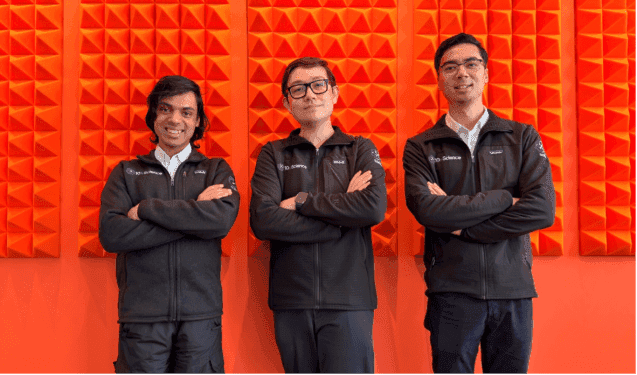
AI’s biggest impact in science is Google DeepMind’s use of a deep learning modelto predictthe complex structures of proteins — the molecules that drive virtually every process in living cells. But as AI models continue to spit out more candidates for potential treatments, there’s an emerging bottleneck: actually characterizing all those candidates in practice, for testing and mass production. That’s the goal of10x Science, a startup founded in December 2025 that announced a $4.8 million seed round today, led by Initialized Capital and with backing from Y Combinator, Civilization Ventures, and Founder Factor. Its three founders are David Roberts and Andrew Reiter, experienced biochemists, and Vishnu Tejas, a serial founder with expertise in computer science and AI models. “When biopharma tries to create a drug candidate, they have all of these really nice prediction tools,” Roberts told TechCrunch. “You can add as many candidates as you want to the top of the funnel, but they all have to pass through this characterization process. Everything needs to be measured.” Understanding the structure of proteins is key for researchers developing biologic drugs, which are produced in living cells and use sophisticated design to specifically target diseases and conditions. For example, they can be designed to target specific cells, like Keytruda, a popular drug sold by Merck that helps the immune system identify and attack cancers. 10x’s three founders worked together in the Stanford lab of Nobel laureate Dr. Carolyn Bertozzi, where they studied the interactions between cancer cells and the immune system, and were frustrated by their inability to understand precisely what was happening on a molecular level. The most accurate way to assess molecules is through a complex technique called mass spectrometry, a way of determining their atomic structure by measuring them in an electric field. The relatively new technique generates complex data that requires significant expertise to interpret, and analyzing it takes up a lot of time. 10x’s platform combines deterministic algorithms rooted in chemistry and biology with AI agents that can interpret that data. The team had to do significant work to train the models on spectrometry data and make its analyses traceable, a key requirement for a tool that will be used to help companies achieve regulatory compliance. Matthew Crawford is a scientist at Rilas Technologies, a firm that runs chemical analyses for other companies — saving clients like biotech startups from having to invest several million dollars in their own spectrometry equipment and the experts to operate it. Crawford has been using the 10x Science platform for several weeks and says it is speeding up his work. Crawford said the model surprised him with its ability to explain its conclusions, find the right data for analyses on its own, and adapt to evaluating different kinds of molecules. While some AI tools he has experimented with in the past over-promised or suffered accuracy issues, he says this one makes reasonable assumptions, something he attributes to the deep domain expertise of its creators. “I ran a particular protein through it, and it just kind of figured out, from what I named the file, what the protein probably was,” Crawford said. “It then searched databases online for the sequence for that protein, so I didn’t have to program in the sequence.” 10x executives say they’re also working with multiple major pharmaceutical companies, as well as academic researchers. The plan is to use this seed funding to hire more engineers and continue to refine the model and offer it to new customers. If they are able to gain traction characterizing proteins, Roberts hopes the company will expand to offer a new kind of understanding of biology, combining protein structure with other data about cells. “The deeper thing behind what we’re building is actually a new way to define molecular intelligence,” Roberts said. For its investors, 10x offers a useful way into the biotech space that isn’t dependent on a specific drug succeeding and winning regulatory approval. If the company works out the way its founders hope, it will become an important tool for drug development, whether or not the eventual products succeed in the marketplace. “This is a SaaS platform that pharma has to pay for, every single month, to go through all of these potential candidates,” Zoe Perret, a partner at Initialized, said. She’s counting on the deep experience of the founders to protect the company from competitors; there simply aren’t that many people who understand these methods and the data they produce. What the platform could do, Crawford says, is help unlock the techniques for researchers who could benefit from these methods but lack the time or resources to deploy them. “Groups here are trying to make a new drug,” he told TechCrunch. “They just want to get a quick, simple answer out of mass spec, and then it opens up a whole can of worms. This software is going to help keep that can of worms closed and just get them the answer they actually need to then do the next thing in their research.”
read more