Want to get featured here? Explore premium visibility opportunities.
Contact us
Latest AI News
View All News →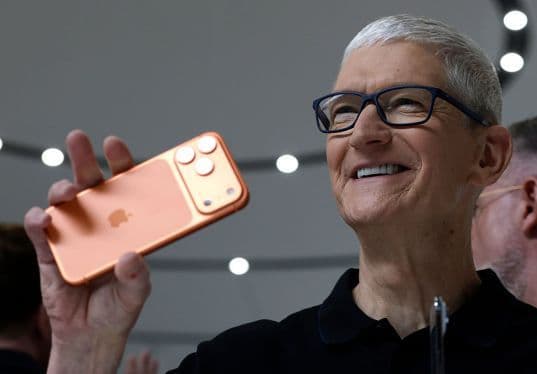
Beyond Siri: Here are the practical AI features coming to your iPhone in iOS 27
Siri’s AI overhaulmay have been the headline announcement atApple’s Worldwide Developers Conferenceearlier this month, but Apple’s broader AI strategy is taking shape through a series of smaller features embedded across its software. Rather than asking consumers to adopt the new AI-powered version of Siri to get all the benefits that AI brings, the company is weaving AI into the apps and services people already use, with a focus on solving real-world problems. The result is that your iPhone will be able to split restaurant bills among friends, secure your passwords after data breaches, automate tasks, and organize information with less manual effort, among other things. Individually, these features may not be as dramatic as a Siri that finally understands your personal context and can take action on your behalf. But combined, they showcase a vision for AI that’s less about chatting with a bot and more about making Apple’s software itself feel smarter and more capable. BeyondSiri AI, here are the smaller AI features in iOS 27 that we’re most looking forward to using. The features are live now in the developer beta and will soon arrive in the public beta, before iOS 27’s general public release later this fall. When iOS 27 rolls out later this fall, customers will be able to split the restaurant bill using Apple Cash. Powered by Apple Intelligence, you simply take a photo of the receipt (or upload a photo), and you’ll then see a new option that lets you choose to split the bill with others. Apple Intelligence works to extract the key details from the bill, like the items ordered and the quantities, the tip, and the total. You can choose the items you ordered from the receipt and then share a request for others to do the same by messaging the group chat. Others can select their items and quantities — even selecting a half (1/2) if they split with another. To pay, you double-click just as you would for any other Apple Cash transaction. The bill-splitting option doesn’t feel complicated because it only shows up when it’s needed and works with existing apps and services people already know, like Messages and Apple Cash. It’s also smart enough to request everyone’s share of the tax and tip along with the item prices. Thanks to password managers like Apple’s Passwords app or others from third parties like 1Password, Dashlane, or Bitwarden, you’ve now likely created complex passwords that aren’t prone to being easily guessed. Unfortunately, that’s no longer enough to keep passwords secure. As numerous data breaches have shown us over the years, your passwords often still end up in the hands of bad actors through no fault of your own. Apple’s new password-updating feature will now leverage AI to agentically take action on users’ behalf by identifying both weak and compromised passwords — like those found in a data breach. Instead of forcing you to manually update your passwords, the feature securely navigates websites, signing in and upgrading your passwords to new, more secure versions. If you thought the feature thatautomatically displaysthe SMS passcode you need to sign into a website right above the keyboard is one of the best things Apple has ever introduced, you’re going to like the new one-tap suggestions in iOS 27. Using Apple Intelligence, the Messages app will offer a variety of one-tap suggestions based on the topics of users’ conversations. For instance, if a friend texts to ask you to bring them something when you meet up, the one-tap suggestion might ask if you’d like to add the request to your reminders. If someone asks you to share the photos from an event, Apple Intelligence can suggest the right photos to send using its understanding of keywords, locations, and the people in their Photos Library. Or, if you’re planning a dinner date or work meeting, Messages can prompt you to add the event to your Calendar. And so on. Again, the feature itself just appears like a useful tool in your chat, not as an obviously AI-powered addition. Another under-the-radar option coming in iOS 27 will make phone calls with companies’ customer service departments slightly less stressful, as it will surface necessary information you may need to provide the business rep who answers. For instance, if you’re calling about your airline reservation, the Call Context feature will display your confirmation code directly on the call screen. To work, the feature is leveraging Apple Intelligence to pull the information from your email in Mail, running entirely on the device for privacy. What’s more, it’s a tool that just works in the background; it doesn’t require you to speak to an AI assistant to extract the information — the necessary details just appear. Replicating a feature that third-party apps like Fantasical have had for years, Apple will now also allow you to add or change Calendar events just by describing them in natural language. Under the hood, Apple Intelligence extracts the contacts and locations and creates a title for the event on your behalf. The feature makes it easier to add things to your Apple Calendar without having to think about which field needs information entered. One of the more powerful apps on iPhone, Shortcuts, has been out of reach for many users because of the technical overhead involved. The app lets you script tasks and workflows and create automations that make your life easier. But using Shortcuts could be a frustrating experience for non-power users, who would have to seek out online tutorials or other resources, like Shortcut galleries, to find the tools they needed. In iOS 27, you can just describe what you want your iPhone to do. Apple suggests you could configure your alarm every night based on what events you have on your calendar the next day, or make it so your favorite productivity apps open in a certain way every time you connect your Magic Keyboard with an iPad. But you don’t even have to get quite that nerdy — Shortcuts can also perform other everyday tasks, like automatically texting your partner with your ETA when you leave work, or turning on the porch lights when your DoorDash order is arriving. Smart home users know their apps can often drown them with a slew of unimportant notifications that are really all one single event. For instance, if your partner comes home, raises the smart garage door, checks the mail, and then enters the house, you could get one notification per action — which starts to feel like spam. With Apple Intelligence in iOS 27, the Home app can make sense of the multiple actions and how they’re connected, so it sends a single notification related to the overall activity: that someone arrived at home and closed the garage door. The AI can also help you find clips you need, like a package delivery or other event, via search. And the Home app will feature noteworthy clips for review at the top of the screen. Another less obvious AI feature is the tab organizer in the Safari web browser. Using Apple Intelligence, Safari can now understand what you’re browsing across websites, then organize your tabs into relevant topics. For instance, if you’ve got multiple tabs open related to a trip you’re planning, Safari could add all those to a tab group for travel. These appear at the top of the browser, above the webpage, for easy access when you’re ready to return to your web research. Apple notes that the AI that does this work for you also respects users’ privacy, as it doesn’t expose your browsing data to anyone — even Apple.
View

When the Trump administration cracks down on Anthropic, who benefits?
Anthropic recentlytook its two newest AI models offlinedue to an export control order from the Trump administration, prompting broad debates about AI policy anddigital sovereignty. On the latest episode ofTechCrunch’s Equity podcast, Sean O’Kane, Rebecca Bellan, and I discussed what actually prompted the administration’s moves against Anthropic, and what this might mean for the broader AI ecosystem. As Sean put it, “Anthropic has not had the best relationship with the Trump administration in a way that stands apart from the other leading AI labs,” so perhaps other Anthropic’s rivals don’t need to worry about a similar crackdown. But Rebecca also noted that leading cybersecurity experts have “signed an open letter to ask Trump to revoke the order, and they say it’s actually dangerous to have to pull these advanced cybersecurity capabilities from network defenders in the U.S.” And we wondered whether this could all end up being good publicity for Anthropic, especially since — in Rebecca’s words — “everybody loves a bad boy.” Keep reading for a preview of our conversation, edited for length and clarity. Rebecca Bellan:As I’m sure many of our listeners know, the U.S. government basically just forced Anthropic to pull its two newest models offline — Fable 5, and then there was also Mythos 5, which was the one that was available to current Mythos users, [whereas] Fable 5 was more available to the public. They sent a letter [last] Friday that cited “national security concerns.” No one knows what those concerns are. That report has not been made public, they gave no specifics and told [Anthropic] that they had to ensure that those models couldn’t be used by any foreign nationals. So Anthropic was like, “Okay, I guess we have to just pull the models entirely, because we don’t know when someone’s a foreign national. A lot of our own employees are foreigners.” But really, [reports said] the White House got tipped off to this because of some Amazon researchers that allegedly found a way to bypass Fable 5’s guardrails.Amazon CEO Andy Jassy raised these concerns with the White House, and it just kind of spiraled from there. Sean O’Kane:This all moved really fast, especially for a Friday afternoon into a weekend. And it’s at the same time that the administration was ostensibly trying to negotiate some sort of treaty for the war that it started in Iran. Rebecca:Friday evening for us in New York. They love a distraction. Sean:Let’s step real far back for a moment. Anthropic has not had the best relationship with the Trump administration in a way that stands apart from the other leading AI labs — I think there’s an element, at least, of that playing here. So do you think that this is going to have implications for those other companies? Do you think that the Trump administration would be less inclined to sort of turn off the tap on one of those competitors? Anthony Ha:Part of the context here is that both the reporting andan analysis from independent security expertssuggest that the actual security risk from Anthropic is not that unique. So a lot of this seems to stem as much from parts of the Trump administration and Anthropic just [not getting] along very well. Whatever risks there are, those things are gonna blow up out of proportion just because it seems like they can’t have a civil phone call with each other. If you’re another company — on the one hand, maybe that’s advantageous to you, because you can say, “Well, we just don’t get these guys mad at us and we can do what we want.” But that’s also not a great regulatory landscape to just [say], “Boy, I hope they don’t get mad at us.” Rebecca:On the one hand, it definitely feels retaliatory — after the government labeled Anthropic a supply chain risk, there’s this big lawsuit going on between them, it really feels like the White House is just looking out for any excuse to pummel Anthropic. And I feel that way not only because that was my initial reaction, but because of what a lot of cybersecurity researchers have said. They say that this should never have triggered an export control [order]. They’ve all signed an open letter to ask Trump to revoke the order, and they say it’s actually dangerous to have to pull these advanced cybersecurity capabilities from network defenders in the U.S. Anthropic itself said some of the same jailbreaks could have been found in several other AI models. Cynically, it’s like: Okay, are you just pausing Anthropic so that others can catch up to where Anthropic was? But at the same time, I’ve also seen reactions that [say]: Anthropic kinda had this coming. They’re like, “This is too dangerous for anyone to use, but not us, we’re the good guys.” They’re talking out of both sides of their mouth. A week before Fable came out, they were [saying], “Hey, we need to slow down AI, guys. It’s getting really dangerous.” But then boom, “Here’s our most insane ever, super powerful model, go off.” Anthony:In some ways this feels like a microcosm of a lot of the discussion around AI, where people like Sam Altman and Jensen Huang are [saying], “Hey, let’s try to lower the temperature. Why is everybody mad at us?” Well, you spent the last couple years essentially saying you’ve built this God machine that will take jobs away from everyone. It’s not exactly a shock that people don’t feel great about this. And there’s something about the way Anthropic talks about Mythos in particular, where they’re like, “This is the most incredibly powerful model ever, it’s too dangerous to release to the public.” And so on some level, [you say,] “Well, okay, let’s say that we take that seriously then. That means that there’s going to be an incredible level of scrutiny around it.” And I do wonder — it does seem like Anthropic is not happy about this. I want to be careful about not overstating how this could be beneficial to them. But we also ran some stories about Ramp analysis tohighlight the fact that the last big blow-up between Anthropic and the Trump administration was good for the company, in at least some ways. Downloads of Claude shot up. I think a lot of people who maybe had thought of ChatGPT asthechatbot,theAI assistant before, suddenly they were looking at Claude as maybe the more responsible one, the more “resistance” one. And in the same way, [while] Anthropic is very stressed out about this, this could, again, make their models seem even more powerful. Rebecca:Definitely. “We’re so dangerous.” Everyone loves a bad boy, right? Everyone’s like, “It’s the most powerful model, even Trump says so. Of course, I’ve got to get my hands on it.”
View

How Katha Room Went From Telling Indian Bedtime Stories to Being an Apple Award Finalist
Katha Room hosts more than 250 stories across five languages and has notched over 10,000 downloads on iOS and Android combined, while being bootstrapped.
View

In the Weights is your new AI-centric vanity search
Anyone who’s Googled themselves recently knows that it doesn’t quite hit the way it used to. Sure, there’severything going on with Google search itself, but there’s also an inescapable feeling that web search isn’t the canonical source of information that it used to be, with just as many people learning about who you and I might be from chatbots. Thomas Dimson and Joey Flynn had a similar feeling, leading them to createIn the Weights. The“weights”in question are the numerical parameters that shape an AI model’s training and output, so the websitepurportsto measure how well “a model is able to recall someone without using tools like web search.” “Being in the weights means your existence was deemed important in the process of creating superhuman artificial intelligence,” the website says. To achieve this, In the Weights supposedly queries different models (including Grok, Gemini, multiple versions of GPT, Claude, and Llama, plus lesser known models) with a question similar to, “Who is <name>? Give up to 10 results, each with a short description and confidence.” It then “cluster[s] similar descriptions together and assign[s] a strength score.” For example,this humble tech bloggerreceived a strength score of 641, placing me in the top 6% of names. I was feeling pretty good until I saw thatmultipleTechCrunchcolleaguesscored even higher. And theleaderboardhas been shifting as I write this post, with “Home Alone” star Macaulay Culkin currently in the top slot with a strength score of 988, neck-and-neck with opera singer Luciano Pavarotti. The results also show which models returned which answers for a given name, and they highlight potential hallucinations — apparently GPT-5.4 Mini says that Anthony Ha is an “ambiguous name form that could refer to multiple people with the initials A.H.A.” Asked why he built In the Weights, Dimson told TechCrunch via email that he and Flynn were looking to “get the creative juices flowing again” after leaving OpenAI (which they both joined throughthe acquisition of their design startup Global Illumination). Dimson said he was thinking about how “Google vanity searches are the wrong objective in 2026 as more traffic moves to LLMs” and about the fact that “so many lives are encoded somehow in a bunch of floating point numbers inside the AI brain.” He also said the direction of the site was “sealed” bya tongue-in-cheek blog postriffing on AI weights and Terry Bisson’s classic short story“They’re Made Out of Meat.” “Reception has been insane so far, we thought this would be a mild curiosity but it seems like it has struck a nerve of wanting to see if you live forever in the super intelligence (the comparison factor doesn’t hurt either!)” Dimson added. While I’m not as convinced that being “remembered” by a chatbot is a guaranteed ticket to immortality, I can’t deny that I find the results both intriguing and jealousy-inducing, especially since they’re codified in an easy-to-compare score. (AI critic Anthony Moserscoffedthat this is “literally the same as asking 13 chatbots to tell you about yourself.”) Also helping: The fact that the site features a cute,Nintendo-inspiredretro design. Dimson said he plans to dig in further into why different models in the same series return different results, which models are biased towards different types of people, and which people “should have a Wikipedia article but don’t.”
View
Submit your Tool
PoweredByAI.app is an AI Tools Directory helping individuals, businesses, and creators discover the best AI tools for writing, coding, design, productivity, and more.
© 2026 , Product of011BQ. All rights reserved.